Today's post is a bit of a followup to a post we did a while ago regarding the best methods (in our opinion) for treating our new butcher block counter tops. Now that we're several months into the rather proud ownership of beautiful wood kitchen counters, I think it's time we take a quick look back and fill you in on a few developments and revelations we've had since our install. We've adjusted our approach slightly and it's working really well.
From our initial research and investigations most die hard butcher block people suggest you only need to use a mineral oil or chestnut oil to treat the wood. Based on this advice we went ahead and applied mineral oil to the counters in a daily, then weekly, then monthly fashion. We made sure to check on the counters often and reapply when it seemed to be getting a little dry, and we made sure to wipe up any standing water so it wouldn't be allowed to sit, soak in, and stain or otherwise affect the counters. In all, we felt our counter treatment was going well, until we visited my parents' house over Thanksgiving.
My parents installed butcher block on their kitchen island a few years ago and they've really liked it. Over Thanksgiving we had the opportunity to check out what they've been using to treat their counters. The first thing I noticed was just how smooth their counters felt compared to our counters. That's my mom at the sink in the photo above, mid Thanksgiving meal prep, so please excuse any disorganization or mess, she had no idea I was taking the photo.
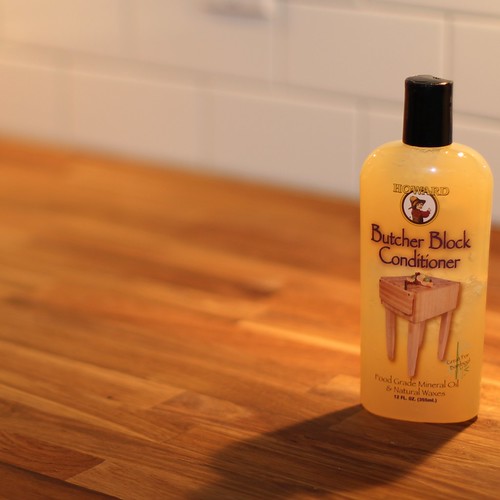
I asked my parents what they use to treat their wood and they broke out their butcher block supply arsenal. We're talking multiple bottles here folks. I get my overkill honestly. Of the items they used one struck me over the rest, the Howard's mineral oil plus natural (bees') waxes.
While we've been using the mineral oil to treat our counters, I've noticed how it works. It goes on the surface, soaks into the wood, and then we wipe away any excess. This seems to work well for the short term treatment, but the oil doesn't fill any voids or build up the surface of the counter, leaving any rough surface texture feeling in place. In the case of my parents' counters, though it's a different and smoother species of wood (cherry I believe?), their surface is almost a little shiny, like it had been polished. They've never treated it with more than the products they showed me, so I assumed it had to be the added waxes they've been using.
 Continue Reading Full Post

