Today's post is a little later than usual since a few coworkers and I were running around the Lincoln Memorial this morning taking photos of the Space Shuttle as it arrived and flew around the city on the back of a 747 transport. Here's one of the better photos of the morning.
I'll try to get some more and my experience up in the next couple of days. Coming from someone who has always been a bit of a space nerd, it was really something cool and I'm very glad I had a chance to see it. But now, back to your regularly scheduled Toolbox Tuesday.
One significant aspect of old home ownership and restoration is the general appreciation for and retention of the materials or items that are original or period to your home. I've spent a lot of time in previous posts talking about the particular attention to detail I tend to give to authentic and salvaged hardware in our home, but that's just the tip of the iceberg. In addition to hardware, you'd be hard pressed to find any old house that retains much of its historic fabric that doesn't also posses its original thick plaster walls.
Plaster and lath, often mixed using horse (or even human) hair in the scratch and base coat, is one of those characteristics of old homes that are too quickly torn out when many begin undertaking a renovation of any magnitude. The perception that is it difficult to restore, even harder to maintain, and an inferior product compared to the cheap as flimsy drywall options are all as incorrect as they could possibly be.
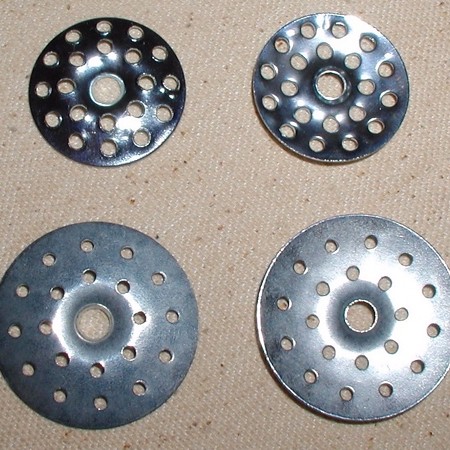
Throughout our time renovating the house I've gone to great lengths to ensure that we save as much of the home's original plaster and lath walls and ceilings as possible. During this time there have been few items more useful than plaster buttons when it comes to bringing our cracked, sagging, an near ruined plaster back from the brink and ready for another hundred years hanging in place.
"Plaster buttons you say?"
Exactly. Other old home owners take notice, this could be one seriously valuable blog post if your house was built prior to the mid 1950s.
When we purchased our home, every single room had a ceiling that had seen better days. Most were textured, crumbling, cracking, and suffering from a series of bad and uneven patch jobs. After digging out the poor attempts at patching, we were left with rooms that looked like this.
 Continue Reading Full Post

