<?xml version="1.0" encoding="utf-8"?>
<feed xmlns="http://www.w3.org/2005/Atom" xmlns:media="http://search.yahoo.com/mrss/">
  <title>Old Town Home Category: 'Woodworking'</title>
  <updated>2018-04-20T14:46:29.447-04:00</updated>
  <id>http://www.oldtownhome.com/woodworking/index.atom</id>
  <link rel="alternate" href="http://www.oldtownhome.com/woodworking/index.atom" />
  <author>
    <name>Alex and Wendy</name>
    <uri>http://www.oldtownhome.com/</uri>
    <email>wendy@oldtownhome.com</email>
  </author>
  <entry>
    <guid>6c5fe079-b3e7-4b83-94cc-384ec4f448b6</guid>
    <id>https://www.oldtownhome.com/2018/4/20/Two-Part-Crown-Install-Tips-Tricks/</id>
    <title>Two Part Crown Install Tips &amp;amp; Tricks</title>
    <summary type="html"><![CDATA[<p>The last time we tried to install two part crown moulding, I think we almost got a divorce. </p><p>Okay, so I may be exaggerating a little, but it wasn't pretty. The first time we tried to <a href="https://www.oldtownhome.com/2017/2/10/Two-Part-Crown-Molding-to-Test-Our-Patience-and-Our-Marriage/" target="_blank">install two part crown was in our living room project</a>, and it was ugly. I'm talking ugly on both the initial work on the install, and our frustrated communication with each other. </p><p>At one point in the process Wendy got so frustrated with me (which was likely well deserved as I had gotten very frustrated with the crown moulding) that she had to walk away and cool off, lest she end up maiming me with my own nail gun. The problem was that she chose to walk away to take a walk around the yard (and out of ear shot) without realizing I was standing on a ladder and holding the crown in place above my head...with one end already nailed...and my nail gun out of reach. I ended up holding that piece in place for nearly 20 minutes until Wendy returned. Upon her return, I politely asked her to hand me my nail gun before my arms fell asleep.</p><p>Though we really love how the crown turned out in the living room, the strife it caused during the process had us a little gun shy when it came to doing the same in our dining room project. Two part crown helps mask wavy plaster walls, and provides a great nailing backer for crown when studs aren't predictable or available, but the difficulty of install when your ceiling and walls are not consistent (because you live in an old house), certainly makes it tricky. But alas, we want to be cohesive on the first floor, so two part crown it is!</p><p>
</p><div class="MediaContainer PhotoContainer"><a href="https://farm1.staticflickr.com/788/41357820911_2a365f42dd_z.jpg" rel="PhotoPopup" popupheight="480" popupwidth="640"><img alt="" src="https://farm1.staticflickr.com/788/41357820911_2a365f42dd.jpg" width="500" height="375" style="border-width: 0px; border-style: solid;"></a></div><p>One thing is for sure, our dining room project is humming right along! We last gave you an update on our Master of Plaster base coat. The next time we were back at the house we followed the base coat up with a quick finish coat of plaster to complete the room. The finish coat goes on smooth and easy, and is very thin. The best part is that you can work really fast with the finish coat, so the whole room only took a few hours.</p> <a href="https://www.oldtownhome.com/2018/4/20/Two-Part-Crown-Install-Tips-Tricks/">more</a>]]></summary>
    <published>2018-04-20T14:46:29.447-04:00</published>
    <updated>2018-04-20T14:46:29.447-04:00</updated>
    <link rel="alternate" href="https://www.oldtownhome.com/2018/4/20/Two-Part-Crown-Install-Tips-Tricks/" />
    <author>
      <name>Alex</name>
    </author>
    <content type="html"><![CDATA[<p>The last time we tried to install two part crown moulding, I think we almost got a divorce. </p>
<p>Okay, so I may be exaggerating a little, but it wasn't pretty. The first time we tried to <a href="https://www.oldtownhome.com/2017/2/10/Two-Part-Crown-Molding-to-Test-Our-Patience-and-Our-Marriage/" target="_blank">install two part crown was in our living room project</a>, and it was ugly. I'm talking ugly on both the initial work on the install, and our frustrated communication with each other. </p>
<p>At one point in the process Wendy got so frustrated with me (which was likely well deserved as I had gotten very frustrated with the crown moulding) that she had to walk away and cool off, lest she end up maiming me with my own nail gun. The problem was that she chose to walk away to take a walk around the yard (and out of ear shot) without realizing I was standing on a ladder and holding the crown in place above my head...with one end already nailed...and my nail gun out of reach. I ended up holding that piece in place for nearly 20 minutes until Wendy returned. Upon her return, I politely asked her to hand me my nail gun before my arms fell asleep.</p>
<p>Though we really love how the crown turned out in the living room, the strife it caused during the process had us a little gun shy when it came to doing the same in our dining room project. Two part crown helps mask wavy plaster walls, and provides a great nailing backer for crown when studs aren't predictable or available, but the difficulty of install when your ceiling and walls are not consistent (because you live in an old house), certainly makes it tricky. But alas, we want to be cohesive on the first floor, so two part crown it is!</p>
<p>
</p>
<div class="MediaContainer PhotoContainer"><a href="https://farm1.staticflickr.com/788/41357820911_2a365f42dd_z.jpg" rel="PhotoPopup" popupheight="480" popupwidth="640"><img alt="" src="https://farm1.staticflickr.com/788/41357820911_2a365f42dd.jpg" width="500" height="375" style="border-width: 0px; border-style: solid;" /></a></div>
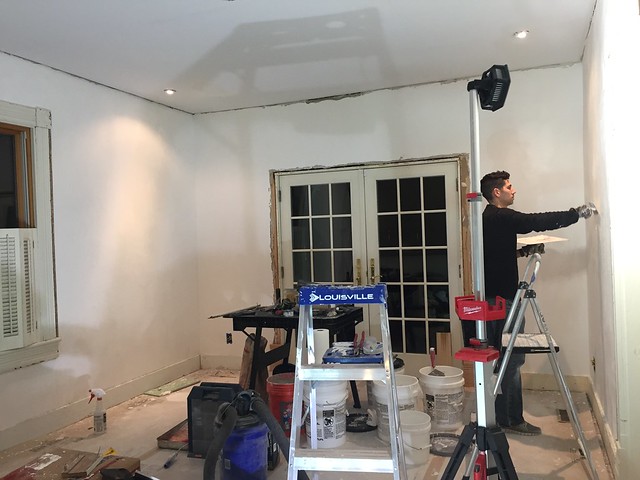
<p>One thing is for sure, our dining room project is humming right along! We last gave you an update on our Master of Plaster base coat. The next time we were back at the house we followed the base coat up with a quick finish coat of plaster to complete the room. The finish coat goes on smooth and easy, and is very thin. The best part is that you can work really fast with the finish coat, so the whole room only took a few hours.</p>
<p>
</p>
<div class="MediaContainer PhotoContainer"><a href="https://farm5.staticflickr.com/4712/26522017748_6059c88865_z.jpg" rel="PhotoPopup" popupheight="480" popupwidth="640"><img alt="" src="https://farm5.staticflickr.com/4712/26522017748_6059c88865.jpg" width="500" height="375" style="border-width: 0px; border-style: solid;" /></a></div>
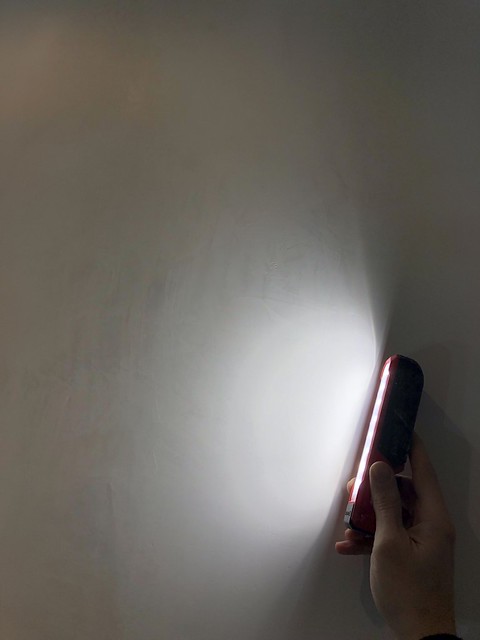
<p>Applying some light at a very harsh angle showed us just how smooth and great the wall was looking.</p>
<p>
</p>
<div class="MediaContainer PhotoContainer"><a href="https://farm5.staticflickr.com/4722/39641823724_970d9ac4a0_z.jpg" rel="PhotoPopup" popupheight="640" popupwidth="480"><img alt="" src="https://farm5.staticflickr.com/4722/39641823724_970d9ac4a0.jpg" width="375" height="500" style="border-width: 0px; border-style: solid;" /></a></div>
<p>After giving enough time to fully cure, Wendy and I moved into the daunting phase of hanging crown. We'd hoped for the best but prepared for the worst. We had a pre-game pep talk to remind ourselves to be patient with the other if things went sideways, and tried to come up with a better game plan than the first time around.</p>
<p>Our first attempt at the two part crown had an underlying failure that was based on the simple assumption that the ceiling was level around the room. When we installed three pieces of backer and then tried to put the crown on that backer, and it was all completely off, we were shocked. "Fool me once, shame on you...fool me twice...uhhhh...you ain't gonna fool me again."</p>
<h2>Prep Work</h2>
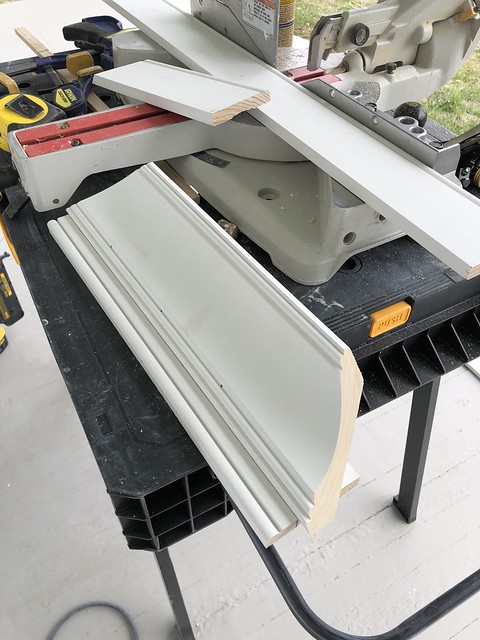
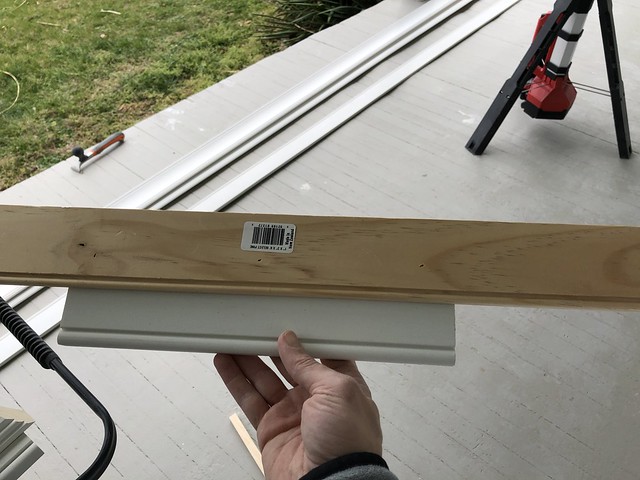
<p>This time around we decided to do things a little differently. The first step in our process was to create a few templates or jigs that would help us identify issues *before* nailing pieces of trim in place, rather than after. This would hopefully prevent the need to pull installed pieces off of the wall as we had to do previously.</p>
<p>The first template was a representation of the two part crown itself. This would allow me to hold it in place around the room in sections and mark the bottom line on the wall with pencil. The line represents where the bottom of the backer would fall if it more or less followed the ceiling all of the way around the room.</p>
<p>
</p>
<div class="MediaContainer PhotoContainer"><a href="https://farm1.staticflickr.com/923/26718277727_0ed1193344_z.jpg" rel="PhotoPopup" popupheight="640" popupwidth="480"><img alt="" src="https://farm1.staticflickr.com/923/26718277727_0ed1193344.jpg" width="375" height="500" style="border-width: 0px; border-style: solid;" /></a></div>
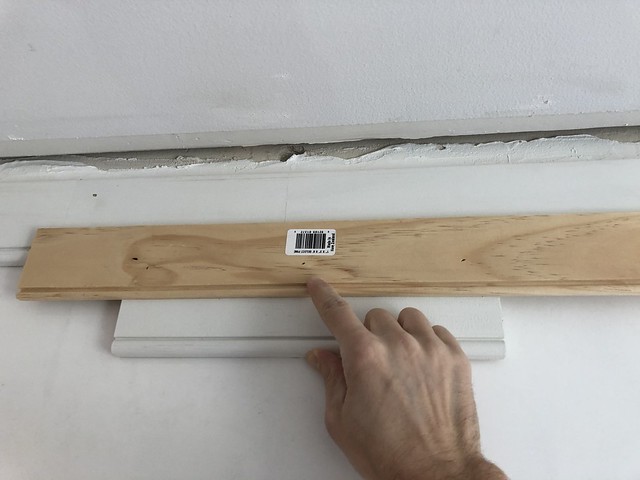
<p>The second template was a reveal representation. Its job was to allow us to set a pencil line on the installed backer that indicates where the bottom of the crown piece should fall on the backer to provide a consistent reveal. This would allow us to force the crown up or down in order to make sure we didn't have an exposer of backer that was either too large or small, even if the ceiling dipped or rolled around the room.</p>
<p>
</p>
<div class="MediaContainer PhotoContainer"><a href="https://farm1.staticflickr.com/845/40694218045_e96ec2ce4e_z.jpg" rel="PhotoPopup" popupheight="480" popupwidth="640"><img alt="" src="https://farm1.staticflickr.com/845/40694218045_e96ec2ce4e.jpg" width="500" height="375" style="border-width: 0px; border-style: solid;" /></a></div>
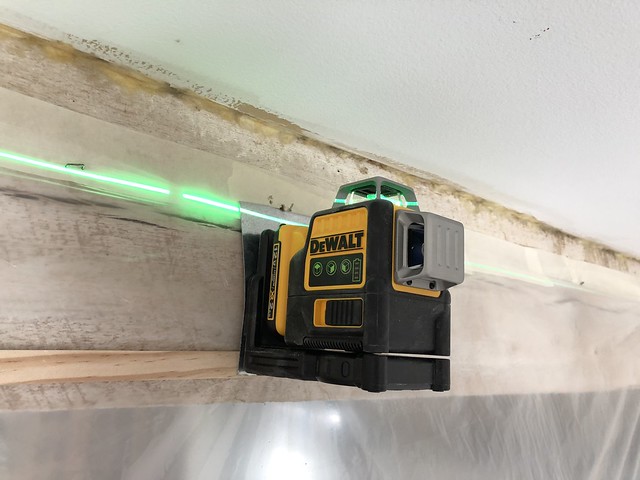
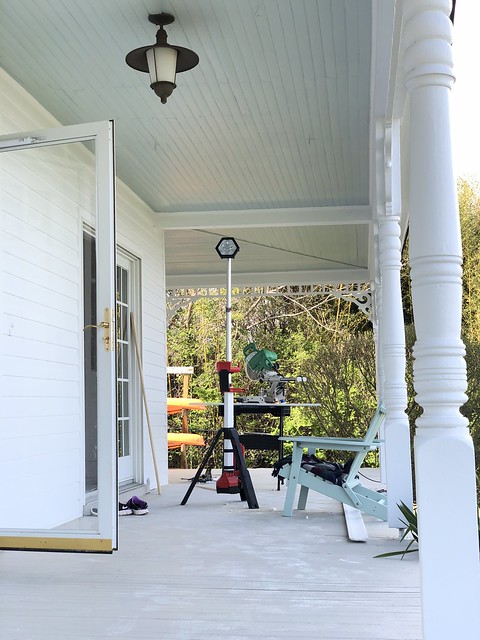
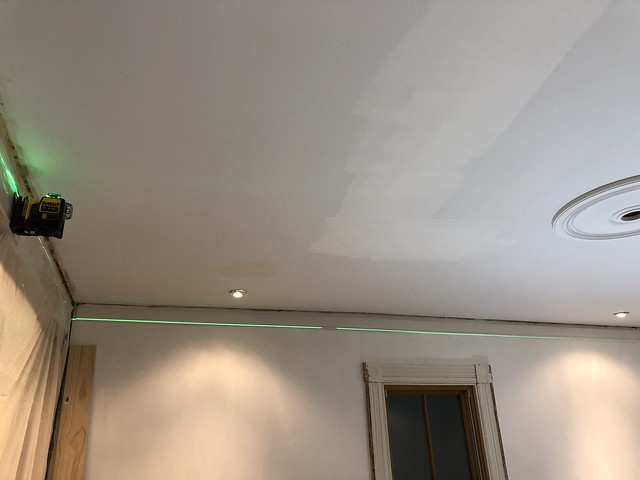
<p>Equipped with the bottom pencil line from the first template, the other critical piece of this install was the use of a laser line that would show us where the bottom of the backer would sit if the room were level, ceiling wasn't wavy, and walls were all square and plumb....HAHAHAHAHA! Good one, right?</p>
<p>
</p>
<div class="MediaContainer PhotoContainer"><a href="https://farm1.staticflickr.com/800/41545786652_8e29aeec05_z.jpg" rel="PhotoPopup" popupheight="480" popupwidth="640"><img alt="" src="https://farm1.staticflickr.com/800/41545786652_8e29aeec05.jpg" width="500" height="375" style="border-width: 0px; border-style: solid;" /></a></div>
<p>No expensive tripods needed here. I just screwed a piece of metal from some leftover duct to the beam and then used the magnets from the laser level housing to position it where it needed to be.&nbsp;</p>
<p>The laser line ultimately let us see where we needed to fudge the backer up or down in an attempt to split the difference if the ceiling was too out of whack. When it came to installing the backer piece we wanted to hit as close as we could to the pencil line, but the laser allowed us to also make sure we were not making the gap between the ceiling and the line too small or too tall. </p>
<h2>Install </h2>
<p>Armed with our pencil and laser lines, we got to installing. Our install process for two part crown isn't what I first imagined back before we'd first tried installing it. I assumed we'd install all backer pieces, then we'd install all crown on the backer. The reality of what works best for us is far different. </p>
<p>
</p>
<div class="MediaContainer PhotoContainer"><a href="https://farm1.staticflickr.com/900/26718273627_4878fd8440_z.jpg" rel="PhotoPopup" popupheight="640" popupwidth="480"><img alt="" src="https://farm1.staticflickr.com/900/26718273627_4878fd8440.jpg" width="375" height="500" style="border-width: 0px; border-style: solid;" /></a></div>
<p>When doing crown I prefer to work from left to right, in a clockwise motion around the room (if you think of the room as the face of the clock seen from above). This lets me cope my joints in the room on the left, which tends to work best for my preferences and moderate preference to left handedness. </p>
<p>The first step in our process is to install the first length of backer. We're coping all of the joints, so this first piece should be the easiest from a cut perspective since you don't need to worry about any corners. You just cut the two ends flat and to the right length of the room. </p>
<p>
</p>
<div class="MediaContainer PhotoContainer"><a href="https://farm1.staticflickr.com/842/26718244067_ce28d82ac4_z.jpg" rel="PhotoPopup" popupheight="480" popupwidth="640"><img alt="" src="https://farm1.staticflickr.com/842/26718244067_ce28d82ac4.jpg" width="500" height="375" style="border-width: 0px; border-style: solid;" /></a></div>
<p>Now here's a key tool improvement this time around. We used a <a href="https://amzn.to/2Hh7VaE" target="_blank">little 30' pocket laser distance measurer</a> to get our cut lengths. The first install we did we tried to use a tape measure. Most of the lengths are more than 12', you need someone standing at either end holding the tape, you need to worry about sag in the middle, stand out, accurate measurements, adding on 3" to your measurement to account for the tape etc. It's a pain! With the laser measurer you get a dead nuts measurement every time and it's clear, quick, and easy. For only about $30, you can't go wrong adding this to your list of tools.</p>
<p>
</p>
<div class="MediaContainer PhotoContainer"><a href="https://farm1.staticflickr.com/919/26718232767_cb05273de8_z.jpg" rel="PhotoPopup" popupheight="640" popupwidth="480"><img alt="" src="https://farm1.staticflickr.com/919/26718232767_cb05273de8.jpg" width="375" height="500" style="border-width: 0px; border-style: solid;" /></a></div>
<p>We cut our first backer piece to length and nailed it in place, trying our best to hit the pencil line on the bottom. The backer can flex slightly, so I like to tack it in place with a nail on one end, then move to the other end and tack it there. At that point the whole backer is on the wall, but can be flexed up or down to hit the pencil line. </p>
<p>Before nailing anything else on the backer I use the reveal jig to provide a consistent line where the crown will be installed. Most importantly this shows me where I can nail to be sure the crown will cover the nail hole. This way we can shoot as many nails as needed without worrying about filling those holes since they'll all be covered. We're shooting for roughly 1" of reveal on the bottom of each piece of backer.</p>
<p>
</p>
<div class="MediaContainer PhotoContainer"><a href="https://farm1.staticflickr.com/821/26718265917_b315e9354d_z.jpg" rel="PhotoPopup" popupheight="480" popupwidth="640"><img alt="" src="https://farm1.staticflickr.com/821/26718265917_b315e9354d.jpg" width="500" height="375" style="border-width: 0px; border-style: solid;" /></a></div>
<p>When it comes to nailing all of the backer piece in place we were able to flex it slightly up or down to match the pencil line.The flat piece of backer flexes far easier than crown. I used 2-1/2" 16ga nails on the backer and tried to hit studs wherever possible.</p>
<p>After the first backer piece was installed we then moved onto the next backer piece. The idea here is to stay one backer piece ahead of each crown piece. So the order in this room is:</p>
<p>
</p>
<ol>
    <li>1st Backer</li>
    <li>2nd Backer</li>
    <li>1st Crown</li>
    <li>3rd Backer</li>
    <li>2nd Crown</li>
    <li>4th Backer</li>
    <li>3rd Crown</li>
    <li>4th Crown</li>
</ol>
<p>This order lets us ensure the crown and backer work well together without getting out too far ahead of the crown, which can lead to the whole thing being out of whack, which results in needing to take down sections to rework, which results in spousal spats and abandonment while holding pieces of moulding above your head. The other important piece is to not fully nail the next piece of backer into place until you finish up the prior crown piece. This lets you test fit the next crown piece before moving forward with nailing. We just tack the two ends of the backer and then move back to installing the crown.</p>
<p>Before installing the first piece of crown on the first piece of backer, you need to accommodate for the fact that a final backer piece will butt up against the first end of the first backer piece. In other words, you can't install the crown from wall to wall or it will get in the way of the last backer piece. (Trust me, I made this mistake the first time and had to cope the last backer piece to the crown profile like a schmo.) To account for the final backer piece I just held a scrap of backer against the first backer piece and gave myself a pencil line not to exceed with the crown. </p>
<p>
</p>
<div class="MediaContainer PhotoContainer"><a href="https://farm1.staticflickr.com/898/39374258360_e957974a7a_z.jpg" rel="PhotoPopup" popupheight="480" popupwidth="640"><img alt="" src="https://farm1.staticflickr.com/898/39374258360_e957974a7a.jpg" width="500" height="375" style="border-width: 0px; border-style: solid;" /></a></div>
<p>Much like the first piece of backer, the first piece of crown is easiest because there is no need to cope either end. Again, using the laser distance measurer we grabbed our length and cut it flat on the saw. When it came to putting this piece in place we first held it up to be sure it would hit our reveal pencil line nicely, then proceeded with nailing. We used 1-1/2" 18ga nails at the bottom of the crown to nail it into the backer, and 2-1/2" 16ga nails to attach it to the ceiling joists.</p>
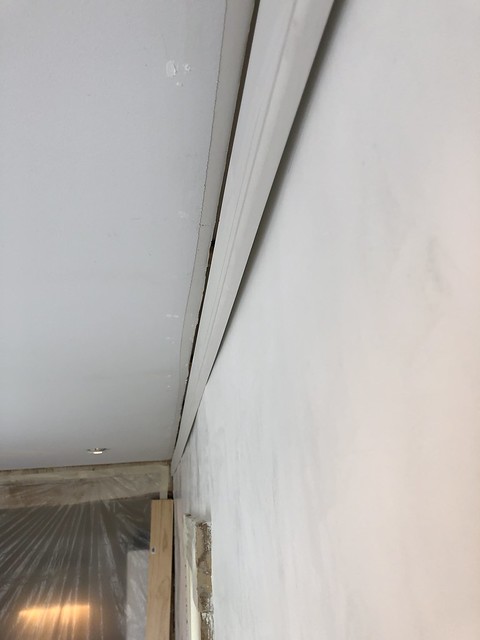
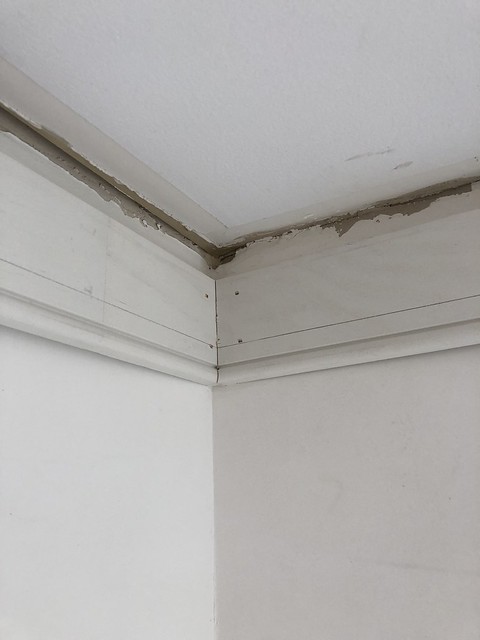
<p>One trick I learned to deal with situations where the crown would nail well above the reveal pencil line was to pull the backer piece away from the wall slightly. Usually, in these situations, this was due to the fact that the plaster wall is a little wavy and the backer was nailed too snug against the wall. This would leave a gap between the crown and the backer, and then you push the crown back to nail it in place, the flex of the crown would force it up, leaving too large of a reveal. Prying the backer away from the wall and then nailing again with some shims behind the backer lets the crown nail with a good reveal, and you can easily fill any gaps created at the bottom of the backer with caulk, which will look far better than filling crown and backer gaps with caulk. Here's an example of just how wonky some old walls can be.&nbsp;</p>
<p>
</p>
<div class="MediaContainer PhotoContainer"><a href="https://farm1.staticflickr.com/833/26718278447_ec3798edc7_z.jpg" rel="PhotoPopup" popupheight="640" popupwidth="480"><img alt="" src="https://farm1.staticflickr.com/833/26718278447_ec3798edc7.jpg" width="375" height="500" style="border-width: 0px; border-style: solid;" /></a></div>
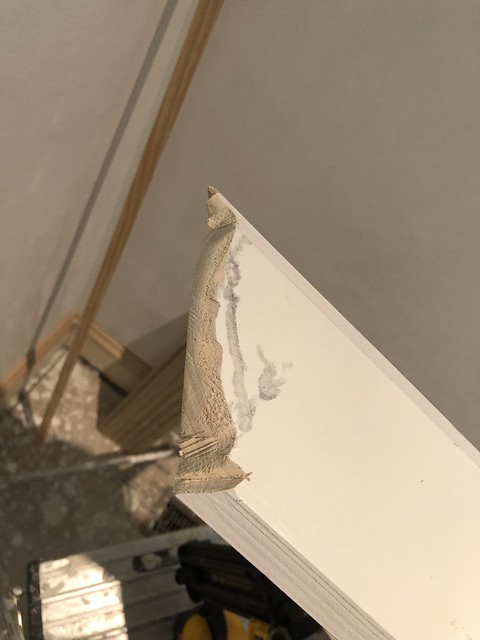
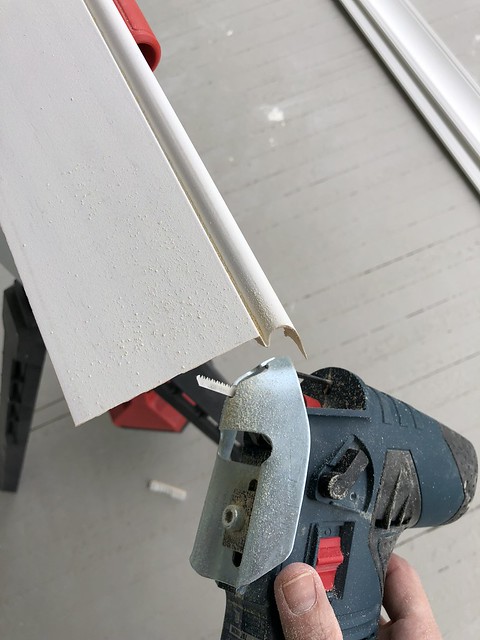
<p>When it comes to coping, we're using a combination of a jigsaw with a special "<a href="ttps://amzn.to/2HkgzW8" target="_blank">Coping Foot</a>" installed on its base, a scroll saw, and a set of wood rasps. Coping is not nearly as difficult as I once thought it was, it just takes a little patience. The most important part is to cut the piece you're coping as if you're mitering the joint. The angled cut gives you a good vision into the material you ultimately need to remove when you're cutting away the cope. </p>
<p>
</p>
<div class="MediaContainer PhotoContainer"><a href="https://farm1.staticflickr.com/906/41586562161_edba3ca6d5_z.jpg" rel="PhotoPopup" popupheight="640" popupwidth="480"><img alt="" src="https://farm1.staticflickr.com/906/41586562161_edba3ca6d5.jpg" width="375" height="500" style="border-width: 0px; border-style: solid;" /></a></div>
<p>Cutting from the back of the moulding while watching what you're cutting from the top works best for me using the jigsaw. I also leave a little extra on the cut area and clean it up with the rasps to make a clean joint.&nbsp;</p>
<p>
</p>
<div class="MediaContainer PhotoContainer"><a href="https://farm1.staticflickr.com/941/26718258337_eeeaa29496_z.jpg" rel="PhotoPopup" popupheight="640" popupwidth="480"><img alt="" src="https://farm1.staticflickr.com/941/26718258337_eeeaa29496.jpg" width="375" height="500" style="border-width: 0px; border-style: solid;" /></a></div>
<p>There are some guys out there that can use a rotary sanding disc on an angle grinder to sand away the area of the board that needs to be coped. I haven't this yet but it looks so wonderful and effortless (through tons and tons of practice) that I really want to give it a shot soon. I know it makes a huge mess of dust through, so you need to do it outside and with a good dust mask. But using the jigsaw method I'm left with a small gap that will caulk/paint closed pretty nicely.&nbsp;</p>
<p>
</p>
<div class="MediaContainer PhotoContainer"><a href="https://farm1.staticflickr.com/819/41545794272_124cf588bd_z.jpg" rel="PhotoPopup" popupheight="640" popupwidth="480"><img alt="" src="https://farm1.staticflickr.com/819/41545794272_124cf588bd.jpg" width="375" height="500" style="border-width: 0px; border-style: solid;" /></a></div>
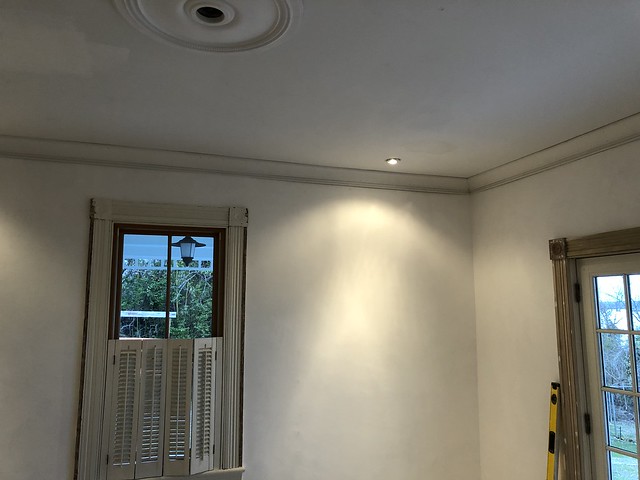
<p>With coping in hand and our process defined, we slowly worked our way around the room until we had most of our crown installed. The best news of all, we had somehow used this improved process and our pre-DIY pep talk promoting civility in the face of adversity to overcome our prior finish carpentry demons. I don't believe we had a single disagreement or even moment of contention during this install.</p>
<p>
</p>
<div class="MediaContainer PhotoContainer"><a href="https://farm1.staticflickr.com/937/40875555774_2c19159f86_z.jpg" rel="PhotoPopup" popupheight="480" popupwidth="640"><img alt="" src="https://farm1.staticflickr.com/937/40875555774_2c19159f86.jpg" width="500" height="375" style="border-width: 0px; border-style: solid;" /></a></div>
<p>There's nothing like a good timelapse video to make a long process look like it runs much smoother and faster than in reality, so here are our first few hours working on the crown.</p>
<p>
</p>
<div class="MediaContainer VideoEmbed"><iframe width="560" height="349" src="https://www.youtube.com/embed/tWkMWydKXI4?wmode=transparent&amp;hd=1" frameborder="0" allowfullscreen="true"></iframe></div>
<p>Since we're going to be wrapping the exposed beams in the room, the room does have what amounts to four "walls" for moulding, so we left one end of the room uninstalled. The 4th piece of backer and 3rd and 4th piece of crown will need to wait until the beam wrapping is done, so there's still room for a little squabble or two, but I'd say our results this time around, both from a finish carpentry, and a healthy marriage aspect, are greatly improved.</p>
<p>
</p>
<div class="MediaContainer PhotoContainer"><a href="https://farm1.staticflickr.com/900/27716481628_f5571e8bc9_z.jpg" rel="PhotoPopup" popupheight="640" popupwidth="480"><img alt="" src="https://farm1.staticflickr.com/900/27716481628_f5571e8bc9.jpg" width="375" height="500" style="border-width: 0px; border-style: solid;" /></a></div>
<p>Wrapping the beam and posts with wood will be difficult as there are a lot of bows and issues to deal with. We're also not going to finish the backs of them yet since what we ultimately do in the kitchen will dictate how we finish that work. But we'll get it to a point where you won't be able to tell the back isn't finished when you're in the dining room.</p>
<p>Since we really only get to work on this project one or two days per week, we have a few weeks left before we're 100% complete. At this point it's starting to look really good and like a true room, so that has us both really excited! We're still looking for that perfect antique farmhouse table with just the right amount of rustic patina to look great in the room. We know we could build one from reclaimed lumber, but there's something about sitting around a dinner table that has seen its share of stories that you'll never know that is so romantic that we'll be patient until we find one.</p>
<p>As far as the two part crown goes, now that we've installed it in a second room and have a good system down, it's far less daunting for the rest of the first floor. We're both really happy with how it's looking and the profiles we've chosen work really well with our old home. </p><p><a href="https://www.oldtownhome.com/2018/4/20/Two-Part-Crown-Install-Tips-Tricks/">Read Full Post</a></p>]]></content>
    <category term="Crown Moulding" />
    <category term="Header Image" />
    <category term="Projects:Home Improvement" />
    <category term="Water House Dining Room" />
    <category term="Woodworking" />
    <PostImage>https://c1.staticflickr.com/1/858/39779458730_0405f28f00_c.jpg</PostImage>
    <media:thumbnail url="https://c1.staticflickr.com/1/858/39779458730_0405f28f00_t.jpg" />
    <ExtensionElements>
      <Item>PostImage</Item>
      <Item>media:thumbnail</Item>
    </ExtensionElements>
  </entry>
  <entry>
    <guid>e8a59de0-a877-41a6-a1f8-aec05e7c220d</guid>
    <id>https://www.oldtownhome.com/2017/12/4/How-To-Install-a-Salvaged-Door-with-Antique-Hinges/</id>
    <title>How To Install a Salvaged Door with Antique Hinges</title>
    <summary type="html"><![CDATA[<p>We love architectural salvage! But sometimes making something old fit in something new can be a challenge.&nbsp;</p><p>Over the years we've worked to install various old architectural salvage items in our home. From transom windows to doors and hinges to locks, using old materials in your renovation not only adds character you just can't get from new products, it can also make a renovation look appropriate in an old home, like it's always been that way.&nbsp;</p><p>For example, our entry hall before and after, with reproduction mouldings, a salvaged leaded glass transom with antique hardware, and minor reconfiguration.</p><p>
</p><p class="MediaContainer PhotoContainer"><a href="https://farm5.staticflickr.com/4548/38816782701_458e4b1a28_z.jpg" rel="PhotoPopup" popupheight="427" popupwidth="640"><img alt="" src="https://farm5.staticflickr.com/4548/38816782701_458e4b1a28.jpg" width="500" height="333" style="border-width: 0px; border-style: solid;"></a></p><p class="MediaContainer PhotoContainer"><em>Before and After of our entry hallway with salvaged leaded glass transom</em></p> <a href="https://www.oldtownhome.com/2017/12/4/How-To-Install-a-Salvaged-Door-with-Antique-Hinges/">more</a>]]></summary>
    <published>2017-12-04T13:42:00.000-05:00</published>
    <updated>2017-12-04T13:42:00.000-05:00</updated>
    <link rel="alternate" href="https://www.oldtownhome.com/2017/12/4/How-To-Install-a-Salvaged-Door-with-Antique-Hinges/" />
    <author>
      <name>Alex</name>
    </author>
    <content type="html"><![CDATA[<p>We love architectural salvage! But sometimes making something old fit in something new can be a challenge.&nbsp;</p>
<p>Over the years we've worked to install various old architectural salvage items in our home. From transom windows to doors and hinges to locks, using old materials in your renovation not only adds character you just can't get from new products, it can also make a renovation look appropriate in an old home, like it's always been that way.&nbsp;</p>
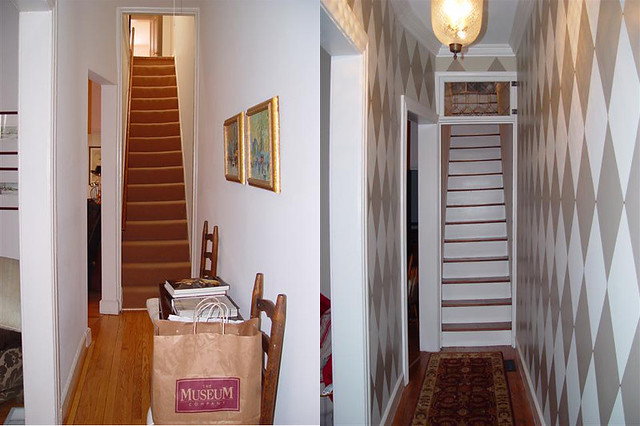
<p>For example, our entry hall before and after, with reproduction mouldings, a salvaged leaded glass transom with antique hardware, and minor reconfiguration.</p>
<p>
</p>
<p class="MediaContainer PhotoContainer"><a href="https://farm5.staticflickr.com/4548/38816782701_458e4b1a28_z.jpg" rel="PhotoPopup" popupheight="427" popupwidth="640"><img alt="" src="https://farm5.staticflickr.com/4548/38816782701_458e4b1a28.jpg" width="500" height="333" style="border-width: 0px; border-style: solid;" /></a></p>
<p class="MediaContainer PhotoContainer"><em>Before and After of our entry hallway with salvaged leaded glass transom</em></p>
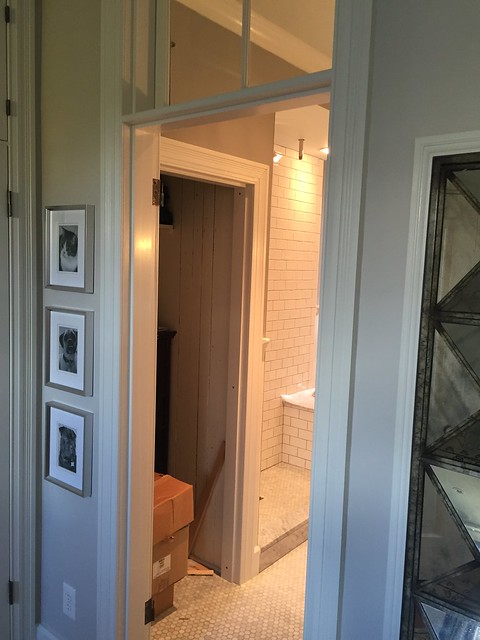
<p>Or our master bathroom door with custom reproduction door jamb, salvaged door, custom reproduction transom window with wavy glass, and salvaged hinges, door lock, and transom lift mechanism.</p>
<p>
</p>
<div class="MediaContainer PhotoContainer"><a href="https://farm6.staticflickr.com/5575/14976647181_a46a1c4cd9_z.jpg" rel="PhotoPopup" popupheight="640" popupwidth="480"><img alt="" src="https://farm6.staticflickr.com/5575/14976647181_a46a1c4cd9.jpg" width="375" height="500" style="border-width: 0px; border-style: solid;" /></a></div>
<p>But one of the most significant challenges we've faced in our home is the seemingly simple task of making an old salvaged door work in a jamb for which it wasn't built. However, we've accomplished this very job in scenarios where the door was too large, too small, out of square, or badly damaged. It wasn't without struggle, and we've gotten much better at it over the years. I'm sure there are tons of tips and tricks out there to make this process much easier, but the following is our process, advice, and useful guidance that has worked well for us in our experiences as we've honed our skills.</p>
<p>
</p>
<div class="MediaContainer PhotoContainer"><a href="https://farm7.staticflickr.com/6206/6134838451_33a1550ac7_z.jpg" rel="PhotoPopup" popupheight="640" popupwidth="478"><img alt="" src="https://farm7.staticflickr.com/6206/6134838451_33a1550ac7.jpg" width="374" height="500" style="border-width: 0px; border-style: solid;" /></a></div>
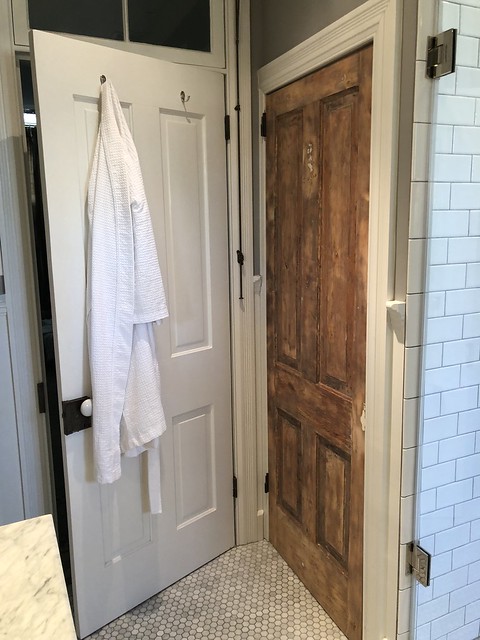
<p>Our master bathroom has a small closet nestled between the doorway to the room and the shower. This closet is both extra storage and houses many of my clothes.&nbsp;</p>
<p>
</p>
<div class="MediaContainer PhotoContainer"><a href="https://farm4.staticflickr.com/3949/15146304673_93ce356273_z.jpg" rel="PhotoPopup" popupheight="640" popupwidth="480"><img alt="" src="https://farm4.staticflickr.com/3949/15146304673_93ce356273.jpg" width="375" height="500" style="border-width: 0px; border-style: solid;" /></a></div>
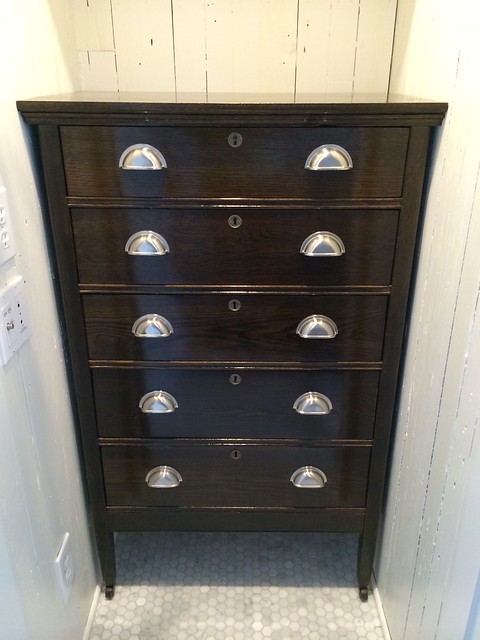
<p>Its walls are made up of original pine flooring and it sports an antique oak dresser that's essentially built right into the opening. It's not coming out any time soon, but we've build the door jamb and casings so they can be removable in the event someone wants to take the dresser out without destroying it.</p>
<p>
</p>
<div class="MediaContainer PhotoContainer"><a href="https://farm4.staticflickr.com/3881/15001463805_86c82238df_z.jpg" rel="PhotoPopup" popupheight="640" popupwidth="480"><img alt="" src="https://farm4.staticflickr.com/3881/15001463805_86c82238df.jpg" width="375" height="500" style="border-width: 0px; border-style: solid;" /></a></div>
<p>This tight space is also home to a pretty great plaster rhino that I tend to use as a hat rack of sorts.</p>
<p>
</p>
<div class="MediaContainer PhotoContainer"><a href="https://farm5.staticflickr.com/4537/38118736234_a0e61c0d5c_z.jpg" rel="PhotoPopup" popupheight="640" popupwidth="480"><img alt="" src="https://farm5.staticflickr.com/4537/38118736234_a0e61c0d5c.jpg" width="375" height="500" style="border-width: 0px; border-style: solid;" /></a></div>
<p>The door jamb in this closet is a custom jamb built from 4/5 poplar and meant to be a similar size and look to the original jambs in our 1886 house. This means that the opening is completely custom, which certainly makes mounting a door somewhat of a challenge.&nbsp;</p>
<p>One other wrinkle here is that I wanted the light in the closet to turn on when the door was opened, and off when it was closed. As a result we mounted a contact closure switch in the jamb to work in conjunction with the light switch on the wall.</p>
<h2>Prerequisites</h2>
<p>When I'm working to mount a salvaged door there are a few prerequisites I like to check before we get started.&nbsp;</p>
<h3>Prereq 1 - Jamb</h3>
<p>The jamb and door opening are critical when working with salvaged doors. The ideal scenario is to have an opening that is square, plumb, and level. Sometimes this is not possible, sometimes it is. Regardless, you need understand if the opening is out of square, has a wonky angle somewhere, or has some other issue to be aware of (like if the floor is going to be an obstruction as the door is opened). This will all impact how you ultimately trim your door to fit.</p>
<p>
</p>
<div class="MediaContainer PhotoContainer"><a href="https://farm5.staticflickr.com/4578/27058518639_0b964ceef1_z.jpg" rel="PhotoPopup" popupheight="640" popupwidth="480"><img alt="" src="https://farm5.staticflickr.com/4578/27058518639_0b964ceef1.jpg" width="375" height="500" style="border-width: 0px; border-style: solid;" /></a></div>
<p>Once you have a good idea on the jamb, it's time to move on to the next item.</p>
<h3>Prereq 2 - The Door</h3>
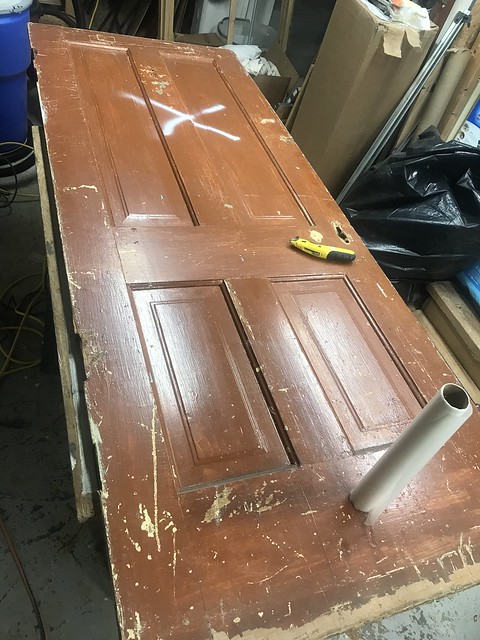
<p>First, the door. Our primary goal is always to find a door with the right look and profiles to match the other doors or general style of our house. For us we have two styles of interior doors, both of which are four panel raised panel doors. One style has a single bevel on the panel and is for the bedrooms. The other is a double bevel panel and is primarily used for smaller rooms and closets. We were lucky enough several years ago to find a large set of doors that were nearly an identical match to our closet doors. We bought six of these doors many years ago (f<a href="https://www.oldtownhome.com/2013/1/22/Master-Bedroom-Building-Our-Dream-Closet-Part-1/">ive were used for our bedroom closets</a>) and one has been patiently waiting in our basement to eventually be our bathroom's closet door.</p>
<p>
</p>
<div class="MediaContainer PhotoContainer"><a href="https://farm5.staticflickr.com/4448/23878431728_bd56af1aec_z.jpg" rel="PhotoPopup" popupheight="640" popupwidth="480"><img alt="" src="https://farm5.staticflickr.com/4448/23878431728_bd56af1aec.jpg" width="375" height="500" style="border-width: 0px; border-style: solid;" /></a></div>
<p>From this point forward I plan to only ever work with doors that will either fit the current opening, or are larger than the current opening. It's pretty easy to cut doors down to size, but it's a whole other thing to make them larger. We did this very thing on several of our interior doors as well as our new front door and French doors, and it was an undertaking that I'd like to avoid in the future.</p>
<p>
</p>
<div class="MediaContainer PhotoContainer"><a href="https://farm7.staticflickr.com/6150/5997625687_b53b391dd2_z.jpg" rel="PhotoPopup" popupheight="480" popupwidth="640"><img alt="" src="https://farm7.staticflickr.com/6150/5997625687_b53b391dd2.jpg" width="500" height="375" style="border-width: 0px; border-style: solid;" /></a></div>
<p>The other thing that's important to consider about your door is warping. Quite often salvaged doors have some level of warp to them. In many scenarios, this is not a problem as it is minor and will be disguised by the door's opening. But if you're doing a double door (like our closet for example), and the two doors warp away from each other, the problem will be very noticeable and they'll never look like they are completely closed. You need to determine your tolerance for warping in your situation and take a square and straight edge with you to the salvage yard.</p>
<p class="MediaContainer PhotoContainer"><a href="https://farm5.staticflickr.com/4531/26901705599_c618494292_z.jpg" rel="PhotoPopup" popupheight="640" popupwidth="480"><img alt="" src="https://farm5.staticflickr.com/4531/26901705599_c618494292.jpg" width="375" height="500" style="border-width: 0px; border-style: solid;" /></a></p>
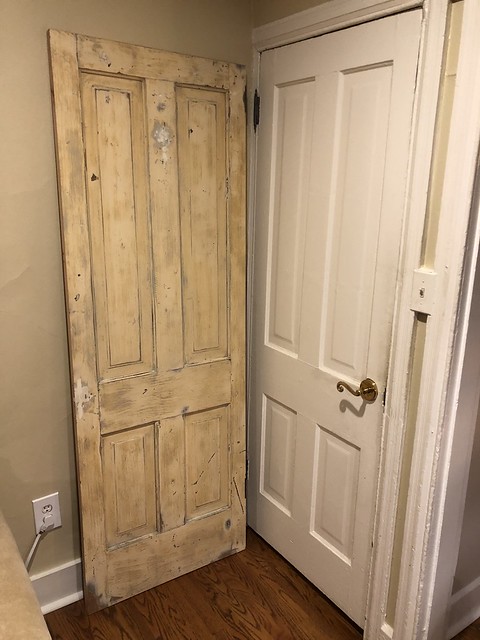
<p class="MediaContainer PhotoContainer"><em>The door on the right is the final remaining original unstripped door with 1980s hardware in the house. The door on the left is our matched salvaged door.</em></p>
<p>Once the door is selected, I like to start the process by doing any paint stripping and repair before I get to mounting it in its opening. It certainly means more work up front, but it helps ensure that the work you do to square and mount the door isn't impacted by any repairs you need to make later.</p>
<p>
</p>
<div class="MediaContainer PhotoContainer"><a href="https://farm5.staticflickr.com/4474/37717127412_abcef21c65_z.jpg" rel="PhotoPopup" popupheight="640" popupwidth="480"><img alt="" src="https://farm5.staticflickr.com/4474/37717127412_abcef21c65.jpg" width="375" height="500" style="border-width: 0px; border-style: solid;" /></a></div>
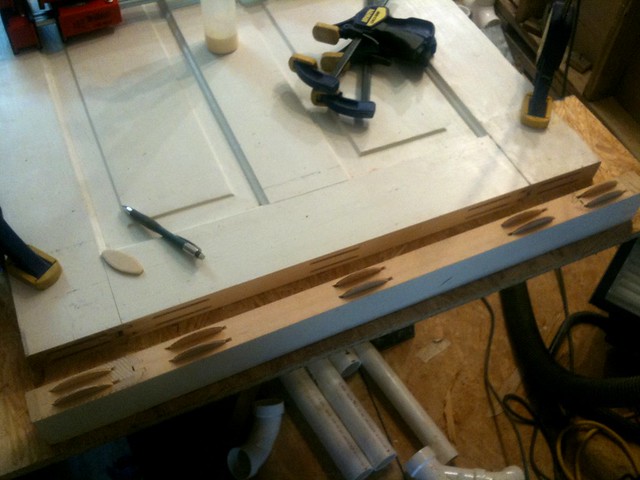
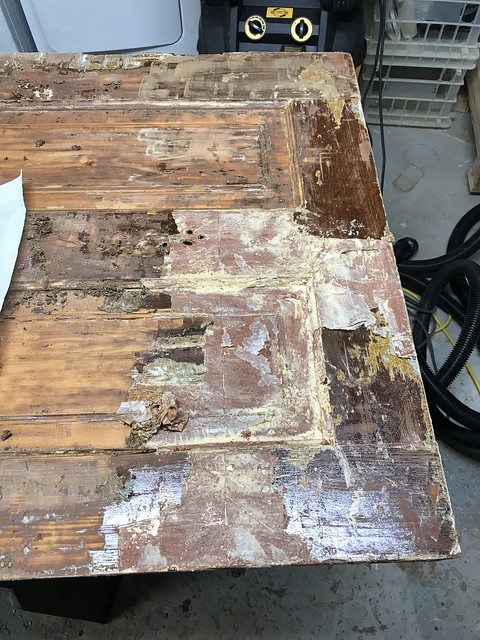
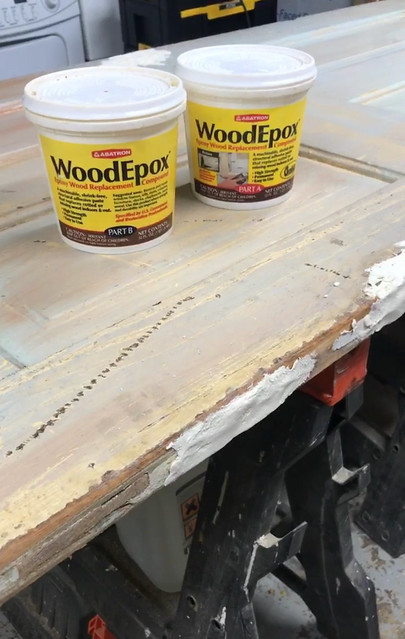
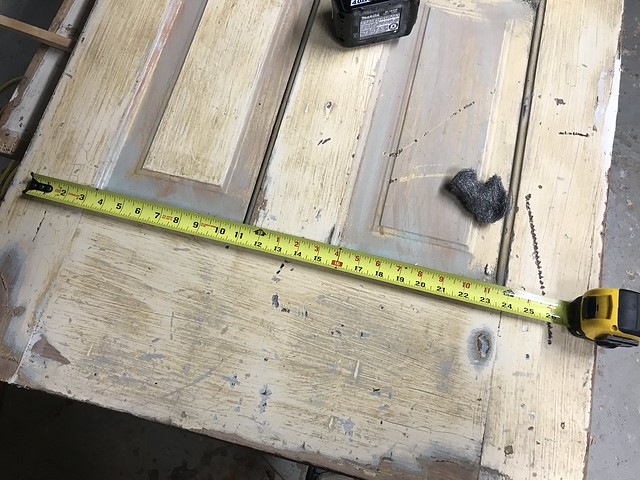
<p>After stripping if the door is loose or has any missing parts or major issues, I'll re-glue, apply epoxy, and do my initial sanding to get everything ready for mounting. This includes filling any old hinge mortises with epoxy to give myself a clean slate to work from. I'd rather do this than try to deal with trying to make old hinge mortises match up in the door jamb.&nbsp;(But keep in mind, if you're trimming large pieces of the sides off, there's no need to epoxy the old hinge mortises since you'll just cut it all off. I've made this stupid move several times.)&nbsp;</p>
<p>
</p>
<div class="MediaContainer PhotoContainer"><a href="https://farm5.staticflickr.com/4520/38835092841_3484d00a1c_z.jpg" rel="PhotoPopup" popupheight="640" popupwidth="405"><img alt="" src="https://farm5.staticflickr.com/4520/38835092841_3484d00a1c.jpg" width="316" height="500" style="border-width: 0px; border-style: solid;" /></a></div>
<p>When the door is all set and any epoxy is sanded, we're ready for the next item.</p>
<h3>Prereq 3 - Hardware</h3>
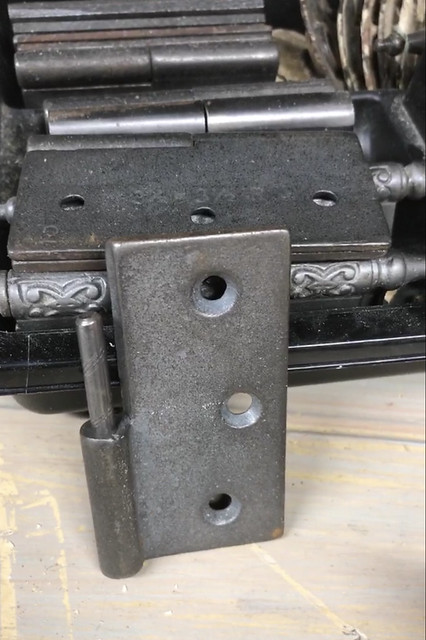
<p>You'll want to figure out the hardware you're using early in the process. Figuring out the hinges you want to use is the most important piece, but the lockset and anything else is important as well. We're using antique cast iron hinges and surface mount rim locks on all of our doors, so consistency has certainly helped us hone our process.</p>
<p>
</p>
<div class="MediaContainer PhotoContainer"><a href="https://farm5.staticflickr.com/4555/38787465922_4c5ff01d47_z.jpg" rel="PhotoPopup" popupheight="480" popupwidth="640"><img alt="" src="https://farm5.staticflickr.com/4555/38787465922_4c5ff01d47.jpg" width="500" height="375" style="border-width: 0px; border-style: solid;" /></a></div>
<p>If you're doing your whole house, even over a long period of time, take some time up front to come up with the plan you want to follow for all of your house's hardware. While salvaged hardware may be a bit harder to source and work with, the end result of using only salvaged hardware is really the icing on the cake of an old house renovation.</p>
<p>But one thing you must do, please use plain old slot head screws. And where appropriate, <a href="https://www.oldtownhome.com/2012/2/24/How-To-Easily-Antique-Screws/">antique those screws to look old</a>, not all shiny and new.</p>
<h3>Prereq 4 - Tools</h3>
<p>The following tools are the tools that we've found work best and are invaluable for this process, beyond the standards of tape measure, pencil, etc.&nbsp;</p>
<p>
</p>
<div class="MediaContainer PhotoContainer"><a href="https://farm5.staticflickr.com/4528/27039233019_cd48f3a1f9_z.jpg" rel="PhotoPopup" popupheight="479" popupwidth="640"><img alt="" src="https://farm5.staticflickr.com/4528/27039233019_cd48f3a1f9.jpg" width="500" height="375" style="border-width: 0px; border-style: solid;" /></a></div>
<p>I'm also outlining the specific model of tool we're using for each.</p>
<ol>
    <li>Laser Distance Measurer - <a target="_blank" href="https://www.amazon.com/gp/product/B072NF73DS/ref=as_li_tl?ie=UTF8&amp;camp=1789&amp;creative=9325&amp;creativeASIN=B072NF73DS&amp;linkCode=as2&amp;tag=oltoho-20&amp;linkId=0a3f500d3a4c6bcad798f877f3b720ff">DeWALT Pocket Laser Distance Measurer</a><img alt="" src="//ir-na.amazon-adsystem.com/e/ir?t=oltoho-20&amp;l=am2&amp;o=1&amp;a=B072NF73DS" width="1" height="1" style="border: none !important; margin: 0px !important;" /></li>
    <li>Hinge Mortising Jig - <a target="_blank" href="https://www.amazon.com/gp/product/B00004TI3O/ref=as_li_tl?ie=UTF8&amp;camp=1789&amp;creative=9325&amp;creativeASIN=B00004TI3O&amp;linkCode=as2&amp;tag=oltoho-20&amp;linkId=a5d5c314c406298f0eda62e6a17edb71">Porter-Cable Hinge Template</a><img alt="" src="//ir-na.amazon-adsystem.com/e/ir?t=oltoho-20&amp;l=am2&amp;o=1&amp;a=B00004TI3O" width="1" height="1" style="border: none !important; margin: 0px !important;" /></li>
    <li>Router - <a target="_blank" href="https://www.amazon.com/gp/product/B074C31YML/ref=as_li_tl?ie=UTF8&amp;camp=1789&amp;creative=9325&amp;creativeASIN=B074C31YML&amp;linkCode=as2&amp;tag=oltoho-20&amp;linkId=9d7bcc0a0d83630e725d5f52b01ee9a6">Makita Cordless Compact Router</a><img alt="" src="//ir-na.amazon-adsystem.com/e/ir?t=oltoho-20&amp;l=am2&amp;o=1&amp;a=B074C31YML" width="1" height="1" style="border: none !important; margin: 0px !important;" /></li>
    <li>Track Saw - <a target="_blank" href="https://www.amazon.com/gp/product/B01LG5X8Z6/ref=as_li_tl?ie=UTF8&amp;camp=1789&amp;creative=9325&amp;creativeASIN=B01LG5X8Z6&amp;linkCode=as2&amp;tag=oltoho-20&amp;linkId=420e9ac2109ee29188b02cd9a3c24685">Festool Cordless Track Saw</a><img alt="" src="//ir-na.amazon-adsystem.com/e/ir?t=oltoho-20&amp;l=am2&amp;o=1&amp;a=B01LG5X8Z6" width="1" height="1" style="border: none !important; margin: 0px !important;" /></li>
    <li>Chisels - <a target="_blank" href="https://www.amazon.com/gp/product/B0051PCQ7Y/ref=as_li_tl?ie=UTF8&amp;camp=1789&amp;creative=9325&amp;creativeASIN=B0051PCQ7Y&amp;linkCode=as2&amp;tag=oltoho-20&amp;linkId=7213884a3b9c6b0b81a35a87ea829161">Stanley 750 Series Chisel Set</a><img alt="" src="//ir-na.amazon-adsystem.com/e/ir?t=oltoho-20&amp;l=am2&amp;o=1&amp;a=B0051PCQ7Y" width="1" height="1" style="border: none !important; margin: 0px !important;" /></li>
    <li>Hand Plane - <a target="_blank" href="https://www.amazon.com/gp/product/B0000223QX/ref=as_li_tl?ie=UTF8&amp;camp=1789&amp;creative=9325&amp;creativeASIN=B0000223QX&amp;linkCode=as2&amp;tag=oltoho-20&amp;linkId=4682fd3019305c6bba14d5bfa821eeb5">Stanley Low Angle Plane</a><img alt="" src="//ir-na.amazon-adsystem.com/e/ir?t=oltoho-20&amp;l=am2&amp;o=1&amp;a=B0000223QX" width="1" height="1" style="border: none !important; margin: 0px !important;" /></li>
</ol>
<p><strong>Okay, lets get started!</strong></p>
<h2>Step 1 - Jamb Hinge Mortising</h2>
<p>Once our door is ready to go I'm going to actually turn my attention to the hinge jamb mortising. In our case we are using 3-1/2"x3-1/2" antique cast iron lift off hinges for our doors throughout our second floor. We're using decorative salvaged removable pin hinges on the first floor, but these old lift-off hinges upstairs are great. They are moderately forgiving when it comes to alignment, can be mounted easily by one person, and have a great old look to them.</p>
<p>
</p>
<div class="MediaContainer PhotoContainer"><a href="https://farm5.staticflickr.com/4516/23910026947_7fd53b10df_z.jpg" rel="PhotoPopup" popupheight="640" popupwidth="426"><img alt="" src="https://farm5.staticflickr.com/4516/23910026947_7fd53b10df.jpg" width="333" height="500" style="border-width: 0px; border-style: solid;" /></a></div>
<p>Since the door had its prior hinge mortises filled with epoxy, we can mount our hinges pretty much wherever we need them to sit in the jamb. To do this I simply held the hinges in place and gave myself some pencil marks where the hinge mortises need to sit.&nbsp;</p>
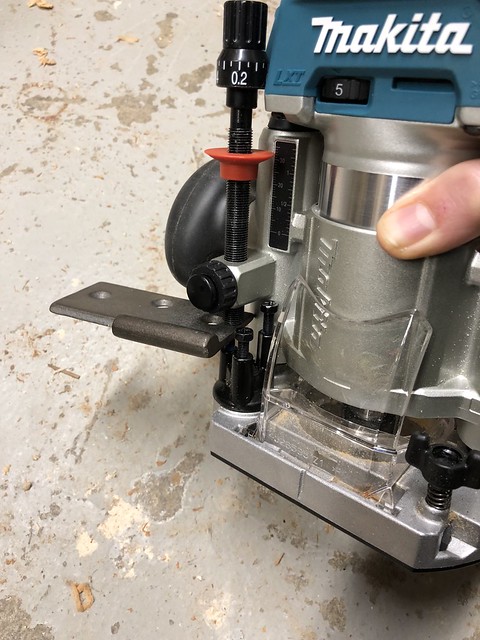
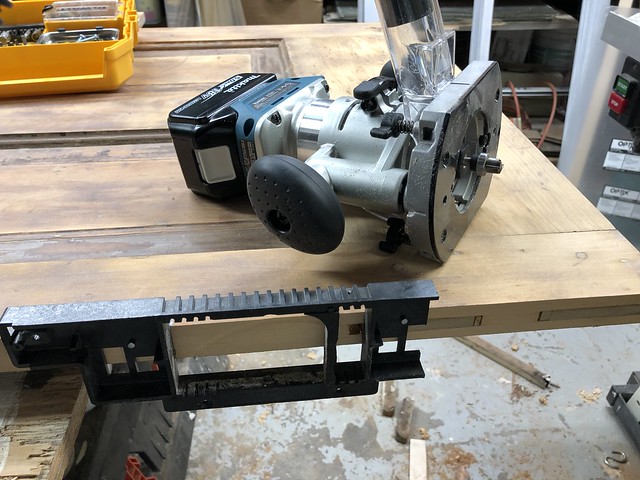
<p>Using a standard mortising template and router with collared bit I cut out the mortises for the hinges. In this case we are doing this in a finished space, and are using the new Makita cordless router with the plunge base and dust extraction attachment. This really helped to keep the mess down on what is typically a pretty dusty process. The mortising template expects a modern jamb and door, so I've had to modify it a bit to work for our needs. I cut off the end then drove a few nails through the middle of it to hold it in place.</p>
<p>
</p>
<div class="MediaContainer PhotoContainer"><a href="https://farm5.staticflickr.com/4490/37862060702_ce86353dcd_z.jpg" rel="PhotoPopup" popupheight="640" popupwidth="480"><img alt="" src="https://farm5.staticflickr.com/4490/37862060702_ce86353dcd.jpg" width="375" height="500" style="border-width: 0px; border-style: solid;" /></a></div>
<p>Setting the correct depth on the router is key here. I find using a plunge base tends to really help this situation. I can essentially zero out the setting so that the router bit is flush with the jamb, then I pull the stop on the plunge base up a little and actually use one side of the hinge to set a gap between the stop of the router and the base. Then, removing the hinge you can let the bit plunge all of the way down to the stop and you've got yourself a perfect depth. This is important with old hinges since they are always just a little variable on size. And on the lift-off hinges we're using, the thickness is tapered from the front to back, so we set our depth to by the midway point of the hinge.</p>
<p>
</p>
<div class="MediaContainer PhotoContainer"><a href="https://farm5.staticflickr.com/4524/23970624697_b02531daa2_z.jpg" rel="PhotoPopup" popupheight="640" popupwidth="480"><img alt="" src="https://farm5.staticflickr.com/4524/23970624697_b02531daa2.jpg" width="375" height="500" style="border-width: 0px; border-style: solid;" /></a></div>
<p>If you're using old hinges (or any hinges) with square corners, you're going to need to make the rounded corners of your mortises square. There are several tools that promise to do this quickly and easily, but I find using a good and sharp chisel is all you really need. Mark the edges of the corner with the chisel, then begin working the material until it's a nice and flat corner. I also try to remove a little more material with the chisel in order to accommodate the slightly graduated thickness of the hinge.</p>
<p>
</p>
<div class="MediaContainer PhotoContainer"><a href="https://farm5.staticflickr.com/4478/37183309644_dda0625794_z.jpg" rel="PhotoPopup" popupheight="640" popupwidth="480"><img alt="" src="https://farm5.staticflickr.com/4478/37183309644_dda0625794.jpg" width="375" height="500" style="border-width: 0px; border-style: solid;" /></a></div>
<p>A little sanding after the chisel and you've got yourself a nice flat hinge mortise.</p>
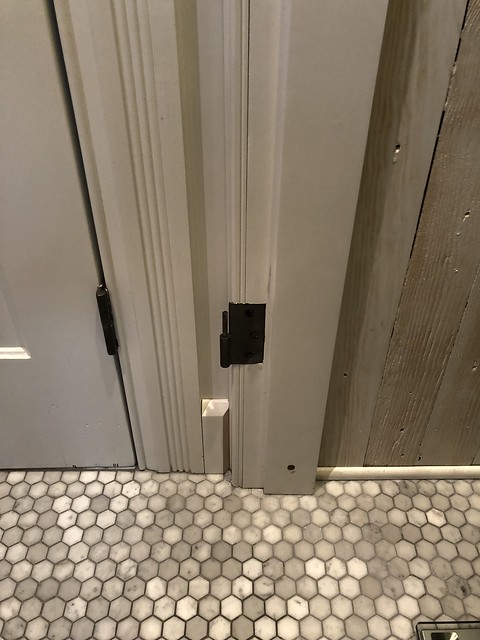
<p>After mortising the jamb I mount the jamb half of the hinges into the mortise and then move onto the next step.&nbsp;</p>
<p class="MediaContainer PhotoContainer"><a href="https://farm5.staticflickr.com/4555/38803765932_11da1c3a5e_z.jpg" rel="PhotoPopup" popupheight="640" popupwidth="480"><img alt="" src="https://farm5.staticflickr.com/4555/38803765932_11da1c3a5e.jpg" width="375" height="500" style="border-width: 0px; border-style: solid;" /></a></p>
<p class="MediaContainer PhotoContainer"><em>The tiny baseboard piece is just resting in place right now.</em></p>
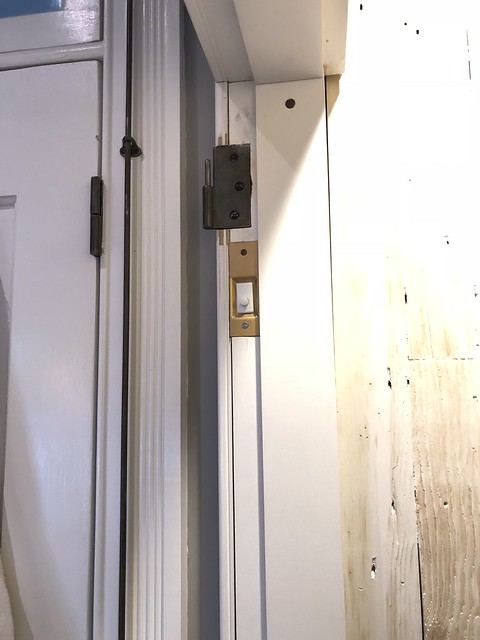
<p>You might notice that our upper hinge in this door is very high. That's as a result of a mistake I made on the contact closure switch. I mounted the switch too high on the jamb and as a result the hinge had to be a little too high or WAY too low.&nbsp;</p>
<p>
</p>
<div class="MediaContainer PhotoContainer"><a href="https://farm5.staticflickr.com/4548/27058515509_d3ae534916_z.jpg" rel="PhotoPopup" popupheight="640" popupwidth="480"><img alt="" src="https://farm5.staticflickr.com/4548/27058515509_d3ae534916.jpg" width="375" height="500" style="border-width: 0px; border-style: solid;" /></a></div>
<p>I went with a little too high. I also had a minor issue with the router bit and template, which caused it to jump slightly and took a little too much material from behind the upper hinge. I'll end up filling that with a little wood filler once everything is said and done.</p>
<h2>Step 2 - Trimming the Door</h2>
<p>With our hinges in place on the jamb we want to get the door fitting nice and tight in the opening. Please note, it will be way too tight to fit properly at this step, but it's always easy to take more off, much harder to add material back, so we want it to be slightly oversized.&nbsp;</p>
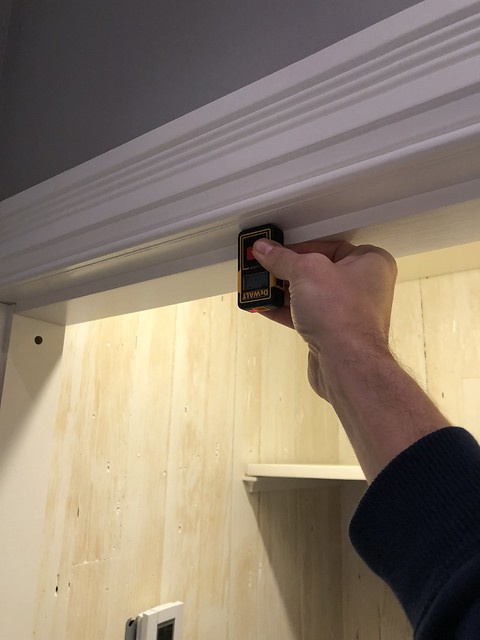
<p>My first step is to use a small laser measuring device to determine the height and width of the jamb opening at several different locations. This little DeWalt pocket laser distance measurer is perfect. It has a max range of 30', is USB chargeable, and is extremely accurate in my experience. I take measurements at three places across the top of the jamb, and at three places down the sides. The hope is that they are all the same and the opening is square. If it's close enough I can go onto the next step. But if something is seriously out of square and we'll need to transfer this over to the door, it may be easiest to make a simple template of the opening with some thin mdf and hot glue (think counter top template), and then use it to transfer the measurements over to your door.&nbsp;</p>
<p>
</p>
<div class="MediaContainer PhotoContainer"><a href="https://farm5.staticflickr.com/4543/24787173668_639c009c0f_z.jpg" rel="PhotoPopup" popupheight="640" popupwidth="480"><img alt="" src="https://farm5.staticflickr.com/4543/24787173668_639c009c0f.jpg" width="375" height="500" style="border-width: 0px; border-style: solid;" /></a></div>
<p>With our measurements of the door jamb in hand, we need to begin trimming the door. I like to start with trimming the height of the door to be correct. Keep in mind that old doors are typically built with mortise and tenon joints. This means that the door is holding itself together, and you don't want to compromise that if you don't have to. In our case, I needed to take off enough material from the height that if I cut it all from the bottom, it could have compromised the door's structure. Rather than taking it all from the bottom, I opted to take some from the bottom and some from the top.</p>
<p>
</p>
<div class="MediaContainer PhotoContainer"><a href="https://farm5.staticflickr.com/4554/24901485538_920a2beef6_z.jpg" rel="PhotoPopup" popupheight="640" popupwidth="360"><img alt="" src="https://farm5.staticflickr.com/4554/24901485538_920a2beef6.jpg" width="281" height="500" style="border-width: 0px; border-style: solid;" /></a></div>
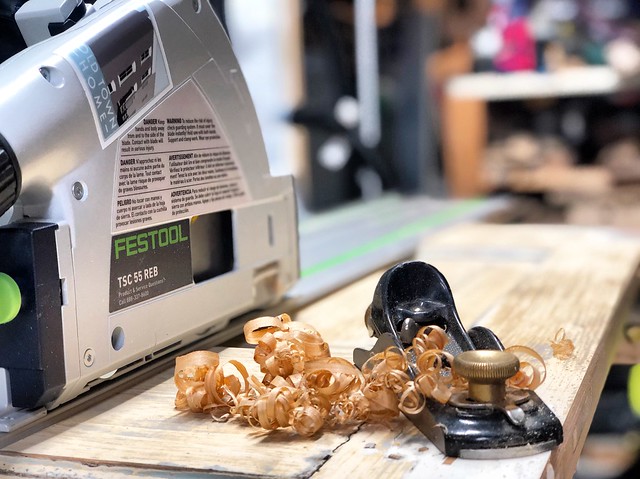
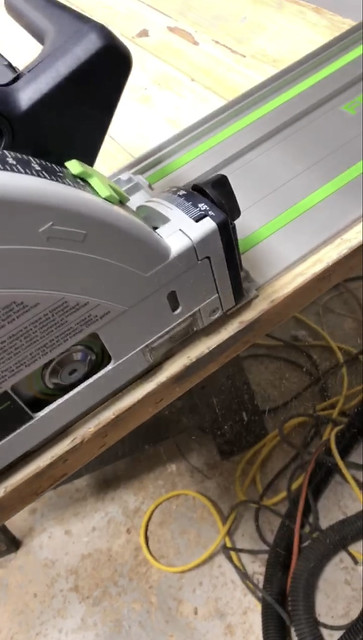
<p>To do this I marked the cut line, dropped the track on the door, and zipped the bottom off with the track saw. A track saw makes ridiculously short work of trimming a door. I can't stress enough how great a track saw is for this purpose, and if you don't have one, you should definitely consider adding it to your tool collection. Otherwise I'd be clamping straight edges based on offset measurements, then taping to prevent splintering and using our circular saw. While the Festool is an expensive model, <a target="_blank" href="https://www.amazon.com/gp/product/B01IVTAO8Y/ref=as_li_tl?ie=UTF8&amp;camp=1789&amp;creative=9325&amp;creativeASIN=B01IVTAO8Y&amp;linkCode=as2&amp;tag=oltoho-20&amp;linkId=be62347b8a42c77b5031229eac46b2ed">Makita</a><img alt="" src="//ir-na.amazon-adsystem.com/e/ir?t=oltoho-20&amp;l=am2&amp;o=1&amp;a=B01IVTAO8Y" width="1" height="1" style="border: none !important; margin: 0px !important;" /> and <a target="_blank" href="https://www.amazon.com/gp/product/B072K4W58Z/ref=as_li_tl?ie=UTF8&amp;camp=1789&amp;creative=9325&amp;creativeASIN=B072K4W58Z&amp;linkCode=as2&amp;tag=oltoho-20&amp;linkId=1a93979dddcbc93ebd1b63b06af2e07b">DeWalt</a><img alt="" src="//ir-na.amazon-adsystem.com/e/ir?t=oltoho-20&amp;l=am2&amp;o=1&amp;a=B072K4W58Z" width="1" height="1" style="border: none !important; margin: 0px !important;" /> both have cordless track saws that are far less expensive and work just as well. Best of all, these saws all work universally on the various other brand tracks with minor adjustments. So you can mix and match based on best deal.</p>
<p>
</p>
<div class="MediaContainer PhotoContainer"><a href="https://farm5.staticflickr.com/4556/37887801745_19949511b3_z.jpg" rel="PhotoPopup" popupheight="640" popupwidth="363"><img alt="" src="https://farm5.staticflickr.com/4556/37887801745_19949511b3.jpg" width="283" height="500" style="border-width: 0px; border-style: solid;" /></a></div>
<p>After cutting the top and bottom I move onto trimming<strong>&nbsp;the hinge side of the door.</strong> It's important to determine the total amount you need to take off of the door's width, and then trim from each side accordingly to make sure the trimmed door is balanced with equal sized stiles on either side. Assuming a square door opening, I make sure the amount I'm trimming from the hinges side of the door is square to the cut on the top and bottom of the door. Again, I measure everything, make my marks, and then drop the track on the door and cut.</p>
<p>
</p>
<div class="MediaContainer PhotoContainer"><a href="https://farm5.staticflickr.com/4492/37611644200_5291af39e7_z.jpg" rel="PhotoPopup" popupheight="480" popupwidth="640"><img alt="" src="https://farm5.staticflickr.com/4492/37611644200_5291af39e7.jpg" width="500" height="375" style="border-width: 0px; border-style: solid;" /></a></div>
<p>Next, I double and triple check my measurements, and maybe even take the door to the opening to test fit and make sure I'm on the right track with things. Then I do the same on the knob side of the door and trim off only enough material to make the door just fit in the opening. This is important, just keep thinking "measure 800 times, cut a bunch but only what you need to cut."</p>
<p>
</p>
<div class="MediaContainer PhotoContainer"><a href="https://farm5.staticflickr.com/4571/38660217961_4952f2a638_z.jpg" rel="PhotoPopup" popupheight="640" popupwidth="480"><img alt="" src="https://farm5.staticflickr.com/4571/38660217961_4952f2a638.jpg" width="375" height="500" style="border-width: 0px; border-style: solid;" /></a></div>
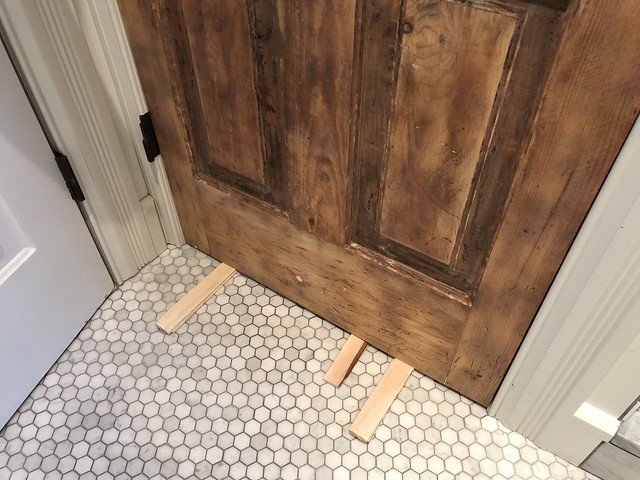
<p>Once the final side is cut I take the door to the opening and prop it in place checking for a good snug fit (that is ultimately way too tight of a fit for it to actually work once hinges are on).</p>
<h2>Step 3 - Hinge Mortising</h2>
<p>With the door theoretically cut to the correct rough size it needs to be, we're ready for the next step of marking the hinge locations and mortising the hinges on the side of the door.&nbsp;</p>
<p>When it comes to doors, it's always better to have more space at the bottom of the door than the top. A minor gap at the bottom won't be noticed, but at the top it will always stand out since it's much closer to eye level. So before marking the hinge locations I like to slide several shims under the door when it's propped in the opening to force it to the top of the doorway.&nbsp;</p>
<p>
</p>
<div class="MediaContainer PhotoContainer"><a href="https://farm5.staticflickr.com/4583/38628721512_87eb925baa_z.jpg" rel="PhotoPopup" popupheight="480" popupwidth="640"><img alt="" src="https://farm5.staticflickr.com/4583/38628721512_87eb925baa.jpg" width="500" height="375" style="border-width: 0px; border-style: solid;" /></a></div>
<p>Once the door is forced to the top of the opening, then you can use a pencil to mark the locations of the hinge mortises based on where you cut them in the first step of the install. Make clear and simple lines at the top and bottom of each hinge, then transfer those marks onto the side of the door with a carpenter's/rafter square.</p>
<p>Next up, grab your router and the same hinge template you used in step 1. Hopefully you have the same depth settings on the router and you can just tack the hinge template onto the side of the door and route out your mortises for your hinges.&nbsp;</p>
<p>
</p>
<div class="MediaContainer PhotoContainer"><a href="https://farm5.staticflickr.com/4568/26901707829_e113c1b191_z.jpg" rel="PhotoPopup" popupheight="480" popupwidth="640"><img alt="" src="https://farm5.staticflickr.com/4568/26901707829_e113c1b191.jpg" width="500" height="375" style="border-width: 0px; border-style: solid;" /></a></div>
<p>In our case the mortise template made a mortise that was just a hair too small for our hinges, so I needed to widen it ever so slightly with our chisels. Since the door we're using is a little thinner than many old doors, the hinge mortising went straight through front to back, so there were no rounded corners to carve out. But just like in step 1, if you need to you can just use a good sharp chisel.</p>
<p>
</p>
<div class="MediaContainer PhotoContainer"><a href="https://farm5.staticflickr.com/4572/37887803585_cf3e29266e_z.jpg" rel="PhotoPopup" popupheight="640" popupwidth="403"><img alt="" src="https://farm5.staticflickr.com/4572/37887803585_cf3e29266e.jpg" width="315" height="500" style="border-width: 0px; border-style: solid;" /></a></div>
<p>With the hinge mortises cut on the door, I mount the hinges in their opening. In our scenario I can mount the hinges as far forward or backward as needed to get the right look in the door opening. In our case I mounted them slightly overhanging the rear of the door. Ideally we would have had 3-1/2" x 3" hinges so there's be no overlap, but finding exact salvaged hardware can be difficult, and I knew this would still work well. The only consider I'll need to worry about later is possibly placing a few smaller stop blocks on the jamb to ensure the thinner door doesn't try to over close when shut.</p>
<p>
</p>
<div class="MediaContainer PhotoContainer"><a href="https://farm5.staticflickr.com/4559/38835671231_ff068d98f3_z.jpg" rel="PhotoPopup" popupheight="640" popupwidth="480"><img alt="" src="https://farm5.staticflickr.com/4559/38835671231_ff068d98f3.jpg" width="375" height="500" style="border-width: 0px; border-style: solid;" /></a></div>
<p>After mounting the hinges I took the door to the opening for the first real fit. Dropping the hinges on their posts and the door was looking good. However, it was slightly "wider" now than when we initially fit it in the opening since the hinges added about 1/8" on the left of the door. Since we have the door hung we can close it as far as it will need to close and then mark the new cut line on the top and bottom of the door based on where the edge of the jamb sits. This is also a great way to account for a minor out of square situation with your jamb.</p>
<p>With the new location marked we make one final trim with the track saw, then pop the door back on the hinges and see how we're doing.&nbsp;</p>
<p>
</p>
<div class="MediaContainer PhotoContainer"><a href="https://farm5.staticflickr.com/4525/38690599391_96bb7e9fbc_z.jpg" rel="PhotoPopup" popupheight="640" popupwidth="480"><img alt="" src="https://farm5.staticflickr.com/4525/38690599391_96bb7e9fbc.jpg" width="375" height="500" style="border-width: 0px; border-style: solid;" /></a></div>
<p>And with that, we have a very old door hanging in a new opening using salvaged antique hardware.&nbsp;</p>
<p>
</p>
<div class="MediaContainer PhotoContainer"><a href="https://farm5.staticflickr.com/4581/38784395932_49d5279cbb_z.jpg" rel="PhotoPopup" popupheight="640" popupwidth="512"><img alt="" src="https://farm5.staticflickr.com/4581/38784395932_49d5279cbb.jpg" width="400" height="500" style="border-width: 0px; border-style: solid;" /></a></div>
<p>We still have lock/knob hardware to mount and install, but that will vary pretty drastically based on what kind of hardware you're using. In our case we're using a rim lock, which is one of the most forgiving to mount since it's all on the surface and requires no mortising. We'll still also need to do a final sanding of the door since the track saw leaves very sharp and clean lines that tend to look out of place on old doors. Then, when we're all done with hardware, we'll still need to paint the door.&nbsp;</p>
<p>
</p>
<div class="MediaContainer PhotoContainer"><a href="https://farm5.staticflickr.com/4526/24870324338_f335342cc8_z.jpg" rel="PhotoPopup" popupheight="640" popupwidth="480"><img alt="" src="https://farm5.staticflickr.com/4526/24870324338_f335342cc8.jpg" width="375" height="500" style="border-width: 0px; border-style: solid;" /></a></div>
<p>In a nutshell, hanging a salvaged door is far from an impossible task, and is actually quite reasonable when you take it one step at a time. It can feel daunting initially, but remembering the golden rule, measure twice, cut once, will take you far.&nbsp;</p>
<p>Do you have any experience hanging salvaged doors? If so, any tips or tricks you'd like to share that might help? And if you've never done it before but have wanted to, does this seem like something you'd be willing to try given what we've outlined? Would love to hear some of your experiences.</p>
<p>&nbsp;&nbsp;&nbsp;</p><p><a href="https://www.oldtownhome.com/2017/12/4/How-To-Install-a-Salvaged-Door-with-Antique-Hinges/">Read Full Post</a></p>]]></content>
    <category term="Header Image" />
    <category term="How To" />
    <category term="Projects:Salvage" />
    <category term="Salvage" />
    <category term="Salvaged Doors" />
    <category term="Woodworking" />
    <PostImage>https://c1.staticflickr.com/5/4690/39061856102_5ed9a95763_c.jpg</PostImage>
    <media:thumbnail url="https://c1.staticflickr.com/5/4690/39061856102_5ed9a95763_t.jpg" />
    <ExtensionElements>
      <Item>PostImage</Item>
      <Item>media:thumbnail</Item>
    </ExtensionElements>
  </entry>
  <entry>
    <guid>d38ca211-4f9a-4862-b5ab-2214c64df6a4</guid>
    <id>https://www.oldtownhome.com/2017/10/20/Building-a-Spouse-Unapproved-Kayak-Rack-from-Driftwood/</id>
    <title>Building a Spouse Unapproved Kayak Rack from Driftwood</title>
    <summary type="html"><![CDATA[<p>A few weeks ago I built a thing...and Wendy sort of hates it. </p><p>You see, when it comes to aesthetics, Wendy has an innate ability to determine what is appealing, and it's an ability that greatly exceeds my own in the same arena. I like a nicely finished project and will go to great lengths to ensure I&rsquo;m doing the absolute best job I can. But at times I tend to focus more on function over form, sometimes leaving something to be desired when viewing the finished product. Some would call me practical, but Wendy begs to differ. After all, there&rsquo;s often a better way that&rsquo;s also pleasing to the eye. </p><p>Need an example? Just look back on the <a href="https://www.oldtownhome.com/2016/9/8/When-a-5-in-1-Weather-Station-Simply-Cant-Stay-Put/" target="_blank">weather station debacle</a> where I mounted it initially in an &ldquo;unapproved&rdquo; location. It had to be remedied lest we risk the wrath of the weather station police. </p><p>
</p><div class="MediaContainer PhotoContainer"><a href="https://farm9.staticflickr.com/8538/29245207960_6fe5163b71_z.jpg" rel="PhotoPopup" popupheight="640" popupwidth="640"><img alt="" src="https://farm9.staticflickr.com/8538/29245207960_6fe5163b71.jpg" width="500" height="500" style="border-width: 0px; border-style: solid;"></a></div><p>Well, we recently had a somewhat similar situation, but I think the outcome of this form over function aesthetic debate might just end up swinging my way. </p><p>We have two plastic kayaks (yes, the same ones used to change the weather station to a more acceptable location) at our Foursquare house. We can launch them right into the water next to our dock, they&rsquo;re a ton of fun for us, visitors, and Lulu, and we very well may be adding to them by getting a tandem kayak next year. </p> <a href="https://www.oldtownhome.com/2017/10/20/Building-a-Spouse-Unapproved-Kayak-Rack-from-Driftwood/">more</a>]]></summary>
    <published>2017-10-20T10:45:00.000-04:00</published>
    <updated>2017-10-20T10:45:00.000-04:00</updated>
    <link rel="alternate" href="https://www.oldtownhome.com/2017/10/20/Building-a-Spouse-Unapproved-Kayak-Rack-from-Driftwood/" />
    <author>
      <name>Alex</name>
    </author>
    <content type="html"><![CDATA[<p>A few weeks ago I built a thing...and Wendy sort of hates it. </p>
<p>You see, when it comes to aesthetics, Wendy has an innate ability to determine what is appealing, and it's an ability that greatly exceeds my own in the same arena. I like a nicely finished project and will go to great lengths to ensure I&rsquo;m doing the absolute best job I can. But at times I tend to focus more on function over form, sometimes leaving something to be desired when viewing the finished product. Some would call me practical, but Wendy begs to differ. After all, there&rsquo;s often a better way that&rsquo;s also pleasing to the eye. </p>
<p>Need an example? Just look back on the <a href="https://www.oldtownhome.com/2016/9/8/When-a-5-in-1-Weather-Station-Simply-Cant-Stay-Put/" target="_blank">weather station debacle</a> where I mounted it initially in an &ldquo;unapproved&rdquo; location. It had to be remedied lest we risk the wrath of the weather station police. </p>
<p>
</p>
<div class="MediaContainer PhotoContainer"><a href="https://farm9.staticflickr.com/8538/29245207960_6fe5163b71_z.jpg" rel="PhotoPopup" popupheight="640" popupwidth="640"><img alt="" src="https://farm9.staticflickr.com/8538/29245207960_6fe5163b71.jpg" width="500" height="500" style="border-width: 0px; border-style: solid;" /></a></div>
<p>Well, we recently had a somewhat similar situation, but I think the outcome of this form over function aesthetic debate might just end up swinging my way. </p>
<p>We have two plastic kayaks (yes, the same ones used to change the weather station to a more acceptable location) at our Foursquare house. We can launch them right into the water next to our dock, they&rsquo;re a ton of fun for us, visitors, and Lulu, and we very well may be adding to them by getting a tandem kayak next year. </p>
<p>
</p>
<div class="MediaContainer PhotoContainer"><a href="https://farm8.staticflickr.com/7144/27661566553_67cd57dab7_z.jpg" rel="PhotoPopup" popupheight="480" popupwidth="640"><img alt="" src="https://farm8.staticflickr.com/7144/27661566553_67cd57dab7.jpg" width="500" height="375" style="border-width: 0px; border-style: solid;" /></a></div>
<p>The problem with these kayaks is that they don&rsquo;t have a home. When they aren&rsquo;t in use (which is most of the time) they sit in the way.  They sat on our porch all last year. </p>
<p>
</p>
<div class="MediaContainer PhotoContainer"><a href="https://farm8.staticflickr.com/7313/27590978545_7c52aa576e_z.jpg" rel="PhotoPopup" popupheight="640" popupwidth="480"><img alt="" src="https://farm8.staticflickr.com/7313/27590978545_7c52aa576e.jpg" width="375" height="500" style="border-width: 0px; border-style: solid;" /></a></div>
<p>Once we painted our porch they sat in our yard most of this year. </p>
<p>
</p>
<div class="MediaContainer PhotoContainer"><a href="https://farm5.staticflickr.com/4399/36370713096_9a105ebe3d_z.jpg" rel="PhotoPopup" popupheight="480" popupwidth="640"><img alt="" src="https://farm5.staticflickr.com/4399/36370713096_9a105ebe3d.jpg" width="500" height="375" style="border-width: 0px; border-style: solid;" /></a></div>
<p>And in the winter last year we left one on the porch and put the other in a room inside, which is weird and cumbersome to deal with. Unfortunately, they are just too big for our shed.</p>
<p>
</p>
<div class="MediaContainer PhotoContainer"><a href="https://farm8.staticflickr.com/7690/17908942936_5e6259c68d_z.jpg" rel="PhotoPopup" popupheight="640" popupwidth="640"><img alt="" src="https://farm8.staticflickr.com/7690/17908942936_5e6259c68d.jpg" width="500" height="500" style="border-width: 0px; border-style: solid;" /></a></div>
<p>So...what to do?</p>
<p>Well, over the last few years I&rsquo;ve been collecting wood that has washed up in our yard during high tide periods. I always had this grand hoarder-esque thought process of &ldquo;I should probably keep all of this because I&rsquo;m totally going to use it one day.&rdquo; While this was my justification, the voice in my head worried I was just being delusional and had taken the first steps on the very slippery path of filling our house with garbage bags full of Beanie Babies, mountains of <a href="https://www.oldtownhome.com/2014/5/30/10-Alternate-Uses-for-the-17-Pound-Restoration-Hardware-Catalog/" target="_blank">Restoration Hardware catalogs</a>, and limited edition Happy Meal toys. </p>
<p>
</p>
<div class="MediaContainer PhotoContainer"><a href="https://farm5.staticflickr.com/4444/23584324418_192fecfafd_z.jpg" rel="PhotoPopup" popupheight="640" popupwidth="480"><img alt="" src="https://farm5.staticflickr.com/4444/23584324418_192fecfafd.jpg" width="375" height="500" style="border-width: 0px; border-style: solid;" /></a></div>
<p>I wanted to resist the urge to devolve into a reality TV &ldquo;most disgusting&rdquo; clips show where you'd find me debating some host about whether they could throw out an 8" length of grey 2x4, and instead use some leftover wood I had and the driftwood I'd collected to build us something useful. Like a shining beacon of trash, the opportunity had presented itself. Yep, you guessed it, a kayak holder, or a yak rack. </p>
<p>This project was meant to be a quick and dirty, very simple, rustic, and quick build. Did I mention it needed to be quick? I had an afternoon to put it together, and I really wanted to get the kayaks off the ground before all of the leaves began to fall. </p>
<p>My approach to the project was very improvised. I had two 8&rsquo; 4x4 pressure treated posts, a spare length of pressure treated 2x12 leftover from rebuilding some porch steps, and a hodge-podge of hoarder driftwood. I also had a bevy if Pinterest images swimming in my head that articulated the basic needs of a yak rack. Essentially that you needed arms to sit the kayaks on, and you have to make sure it won&rsquo;t tip over. </p>
<p>When it came to tools for the build I wanted to keep it simple. A circular saw, rafter square, drill, nail puller (to remove nails in the old wood so they didn&rsquo;t destroy my saw blade), level, pencil, and tape measure. </p>
<p>After measuring out the width the posts would need to sit apart from each other at about 7', I tied them together with the 2x12 and several 8&rdquo; exterior lag screws. This gave me a substantial base that would support the whole thing. I also left the length of the 4x4 posts at 8&rsquo;, which is what would later drive Wendy to label this a &ldquo;monstrosity skyscraper that is now the only thing I can see.&rdquo;</p>
<p>
</p>
<div class="MediaContainer PhotoContainer"><a href="https://farm5.staticflickr.com/4429/37436183121_a0a3ee5cf6_z.jpg" rel="PhotoPopup" popupheight="480" popupwidth="640"><img alt="" src="https://farm5.staticflickr.com/4429/37436183121_a0a3ee5cf6.jpg" width="500" height="375" style="border-width: 0px; border-style: solid;" /></a></div>
<p>Once I had the basic structure of the frame in place, I turned my attention to the driftwood for the remainder of the build. </p>
<p>I used one of the ragged lengths of 2x6 to attach the two posts at the top of the rack, making a large rectangle that I could stand up on my own to attach the lower support. The key here was my ability to stand this up on my own, without calling Wendy for help. It was an unintentional avoidance of what would have been an imminent veto of the project, but I figured I was being a good spouse by not bothering my lovely wife with trivial details.</p>
<p class="MediaContainer PhotoContainer"><a href="https://farm5.staticflickr.com/4467/37133792793_0e81023747_z.jpg" rel="PhotoPopup" popupheight="640" popupwidth="360"><img alt="" src="https://farm5.staticflickr.com/4467/37133792793_0e81023747.jpg" width="281" height="500" style="border-width: 0px; border-style: solid;" /></a></p>
<p class="MediaContainer PhotoContainer"><em>I left the top right "rustic," but that detail was removed due to request.</em></p>
<p>After cutting a few more lengths of 2x6 driftwood for the leg supports, I stood the large rectangle up and secured the supports with about 3' extending in front of the rack, and 2' extending behind. Since the kayaks will front load the rack we don't need quite as much support toward the rear of the stand. </p>
<p>
</p>
<div class="MediaContainer PhotoContainer"><a href="https://farm5.staticflickr.com/4350/37436182241_0d83a841a5_z.jpg" rel="PhotoPopup" popupheight="640" popupwidth="480"><img alt="" src="https://farm5.staticflickr.com/4350/37436182241_0d83a841a5.jpg" width="375" height="500" style="border-width: 0px; border-style: solid;" /></a></div>
<p>Next I had to begin assembling the arms where the kayaks will ultimately rest. Using more 2x6 driftwood (I'm pretty sure we get a lot of 2x6 because it's material used for dock decking) I began cutting arms that would extend forward from the posts by about 24". </p>
<p>
</p>
<div class="MediaContainer PhotoContainer"><a href="https://farm5.staticflickr.com/4365/36765873613_729a1838fc_z.jpg" rel="PhotoPopup" popupheight="640" popupwidth="480"><img alt="" src="https://farm5.staticflickr.com/4365/36765873613_729a1838fc.jpg" width="375" height="500" style="border-width: 0px; border-style: solid;" /></a></div>
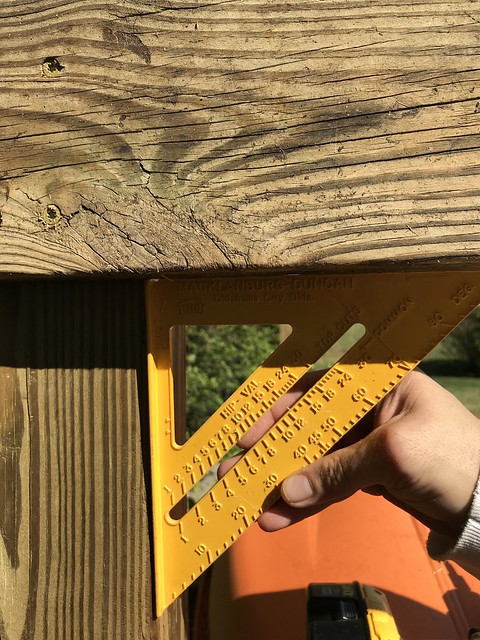
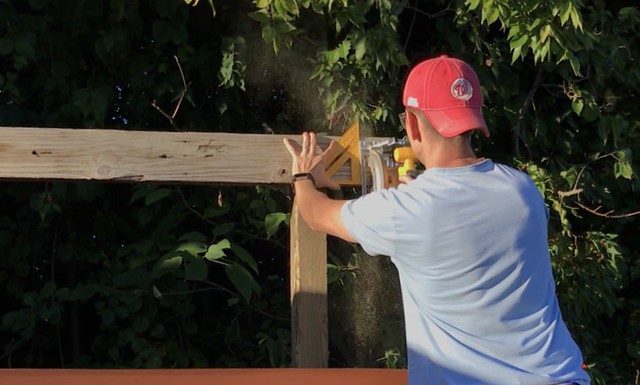
<p>In each case I made sure the arms were square to the posts by using my cheapo plastic rafter square. I really need to get myself one of the much nicer metal and <a href="http://amzn.to/2zo7kvt" target="_blank">laser etched Empire rafter squares</a>.</p>
<p>
</p>
<div class="MediaContainer PhotoContainer"><a href="https://farm5.staticflickr.com/4353/36765871823_e8d0d19aa7_z.jpg" rel="PhotoPopup" popupheight="640" popupwidth="480"><img alt="" src="https://farm5.staticflickr.com/4353/36765871823_e8d0d19aa7.jpg" width="375" height="500" style="border-width: 0px; border-style: solid;" /></a></div>
<p>While these arms and the four screws I used to secure each one would have likely been sufficient to support the kayaks, I didn't want a situation where they began to sag over time. To brace these arms I used some 2x4 driftwood cut at a 45 degree angle at the top and bottom and screwed them to the arms and the posts.</p>
<p>
</p>
<div class="MediaContainer PhotoContainer"><a href="https://farm5.staticflickr.com/4491/37772279872_f249aa6a90_z.jpg" rel="PhotoPopup" popupheight="640" popupwidth="360"><img alt="" src="https://farm5.staticflickr.com/4491/37772279872_f249aa6a90.jpg" width="281" height="500" style="border-width: 0px; border-style: solid;" /></a></div>
<p>Finally, to ensure the now very top heavy kayak rack wouldn't decide to tip forward, I cut two more 2x6 driftwood pieces and attached them at 45 degree angles to the posts toward the rear legs. I ended up attaching them only on the back and not on the front to allow for future expansion by way of an additional kayak placement near the bottom of the rack.</p>
<p class="MediaContainer PhotoContainer"><a href="https://farm5.staticflickr.com/4387/37182927920_477db472d5_z.jpg" rel="PhotoPopup" popupheight="640" popupwidth="480"><img alt="" src="https://farm5.staticflickr.com/4387/37182927920_477db472d5.jpg" width="375" height="500" style="border-width: 0px; border-style: solid;" /></a></p>
<p class="MediaContainer PhotoContainer"><em>Weird camera angle, it's not propped up off the ground in the back.</em></p>
<p>I finished up the project, proudly marched inside and exclaimed to Wendy, "Come look! I finished up what I've been working on all afternoon!"</p>
<p>
</p>
<div class="MediaContainer PhotoContainer"><a href="https://farm5.staticflickr.com/4485/37182928360_4ee49a2b0b_z.jpg" rel="PhotoPopup" popupheight="640" popupwidth="480"><img alt="" src="https://farm5.staticflickr.com/4485/37182928360_4ee49a2b0b.jpg" width="375" height="500" style="border-width: 0px; border-style: solid;" /></a></div>
<p>Wendy wasn't sure what I had been doing and walked over to the window. I proudly presented my finished rack, and my lovely wife simply said, "It's just so...tall?" I took that as a stamp of approval for a job well done.</p>
<p>The one thing that Wendy did ask was that I remove the jagged rustic detail I had originally left on the top right driftwood support. She felt it made it look too "janky." I felt it gave the whole thing a little character. I conceded and took my circular saw to the ruggedness and squared it off. Wendy was right.</p>
<p>
</p>
<div class="MediaContainer PhotoContainer"><a href="https://farm5.staticflickr.com/4501/23951335698_ba9bb0abe9_z.jpg" rel="PhotoPopup" popupheight="385" popupwidth="640"><img alt="" src="https://farm5.staticflickr.com/4501/23951335698_ba9bb0abe9.jpg" width="500" height="301" style="border-width: 0px; border-style: solid;" /></a></div>
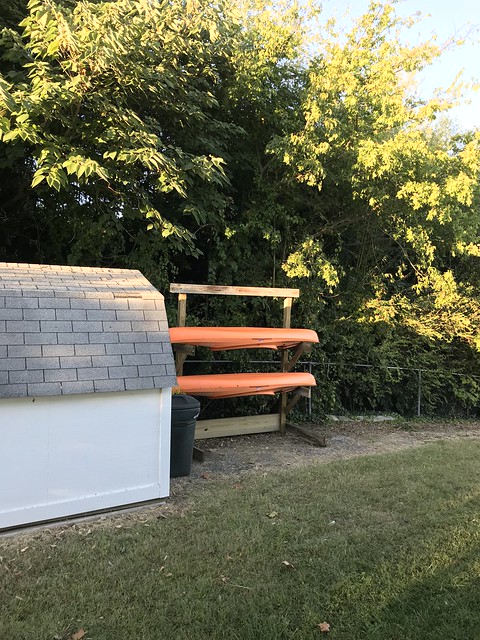
<p>Ultimately Wendy does appreciate that the kayaks are no longer on the ground, but she wishes I'd maybe made the whole rack a little shorter. I wanted to leave room for a possible 4th kayak, or maybe a small shed roof. The jury is out on whether I'll be cutting this down a foot or two to shrink it a bit, or if I'll make some other modifications. But I know one thing for sure, that giant rack is a damn thing of beauty (and honestly, it's not <em>that</em> big).</p>
<p>
</p>
<div class="MediaContainer PhotoContainer"><a href="https://farm5.staticflickr.com/4378/37409130562_46f7cda8e2_z.jpg" rel="PhotoPopup" popupheight="640" popupwidth="480"><img alt="" src="https://farm5.staticflickr.com/4378/37409130562_46f7cda8e2.jpg" width="375" height="500" style="border-width: 0px; border-style: solid;" /></a></div>
<p>In the end we have exactly what I set out to build, a kayak rack to store our two kayaks off the ground. Bonus points for having a little room for expansion. Should I be ashamed of my form over function aesthetic that resulted in building an unapproved structure in the sightline of my loving spouse? Should I shy away from my tendency to collect driftwood for future projects for fear of being labelled a hoarder by friends and family? Or should I throw caution to the wind, keep doing what I'm doing, and building the things that my soul wants to build (including giant and debatably ugly but adequately functional assemblies)? </p><p><a href="https://www.oldtownhome.com/2017/10/20/Building-a-Spouse-Unapproved-Kayak-Rack-from-Driftwood/">Read Full Post</a></p>]]></content>
    <category term="Header Image" />
    <category term="Kayak Storage" />
    <category term="Marriage" />
    <category term="Trash to Treasure" />
    <category term="Water House" />
    <category term="Woodworking" />
    <PostImage>https://c1.staticflickr.com/5/4474/37554465200_4ee4f9c3ae_c.jpg</PostImage>
    <media:thumbnail url="https://c1.staticflickr.com/5/4474/37554465200_4ee4f9c3ae_t.jpg" />
    <ExtensionElements>
      <Item>PostImage</Item>
      <Item>media:thumbnail</Item>
    </ExtensionElements>
  </entry>
  <entry>
    <guid>c8cc49f3-88f0-4ba6-82bd-6aa8f4431e3d</guid>
    <id>https://www.oldtownhome.com/2017/5/3/Our-Custom-Bathroom-Cabinets-are-Finally-Complete/</id>
    <title>Our Custom Bathroom Cabinets are Finally Complete!</title>
    <summary type="html"><![CDATA[<p>It's been a long time coming, but a major sub-project in the never ending project that is our Master Bathroom is essentially complete!</p><p>Yes, it's true, and I can hardly believe we're reporting this major milestone to you! Our master bathroom in our Old Town row house has been an ongoing project since...well, the early days of our blog. And if you're counting, our blog just turned six years old a few weeks ago!! In Internet years, that's like 82 I think.</p><p>We may not have had any hoopla surrounding our blogging birthday, but there's really no better way to celebrate than with a completed project!</p><p>Since there's a pretty good chance you don't have any clue what I'm talking about when it comes to our cabinet project, let me quickly refresh your memory. </p><p>It all started with a drawing on a happy hour napkin that outlined Wendy's vision for our bathroom vanity wall. We completed the vanity several years back by converting an antique buffet into a marble topped double sink, but the two cabinets that were planned to flank the vanity were both just figments of our imagination.
</p><div class="MediaContainer PhotoContainer"><a href="https://farm8.staticflickr.com/7086/7026619729_c2f764aef9_z.jpg" rel="PhotoPopup" popupheight="480" popupwidth="640"><img alt="" src="https://farm8.staticflickr.com/7086/7026619729_c2f764aef9.jpg" width="500" height="375" style="border-width: 0px; border-style: solid;"></a></div><p>After we finished up the first steps on the napkin vision, following a very very VERY lengthy process of more steps than I care to mention to get to the point where our bathroom had things like walls, a floor, flushing toilet, and other things you commonly associated with a modern bathroom, we had ourselves a very lonely looking vanity.</p> <a href="https://www.oldtownhome.com/2017/5/3/Our-Custom-Bathroom-Cabinets-are-Finally-Complete/">more</a>]]></summary>
    <published>2017-05-03T08:39:00.000-04:00</published>
    <updated>2017-05-03T08:39:00.000-04:00</updated>
    <link rel="alternate" href="https://www.oldtownhome.com/2017/5/3/Our-Custom-Bathroom-Cabinets-are-Finally-Complete/" />
    <author>
      <name>Alex</name>
    </author>
    <content type="html"><![CDATA[<p>It's been a long time coming, but a major sub-project in the never ending project that is our Master Bathroom is essentially complete!</p>
<p>Yes, it's true, and I can hardly believe we're reporting this major milestone to you! Our master bathroom in our Old Town row house has been an ongoing project since...well, the early days of our blog. And if you're counting, our blog just turned six years old a few weeks ago!! In Internet years, that's like 82 I think.</p>
<p>We may not have had any hoopla surrounding our blogging birthday, but there's really no better way to celebrate than with a completed project!</p>
<p>Since there's a pretty good chance you don't have any clue what I'm talking about when it comes to our cabinet project, let me quickly refresh your memory. </p>
<p>It all started with a drawing on a happy hour napkin that outlined Wendy's vision for our bathroom vanity wall. We completed the vanity several years back by converting an antique buffet into a marble topped double sink, but the two cabinets that were planned to flank the vanity were both just figments of our imagination.
</p>
<div class="MediaContainer PhotoContainer"><a href="https://farm8.staticflickr.com/7086/7026619729_c2f764aef9_z.jpg" rel="PhotoPopup" popupheight="480" popupwidth="640"><img alt="" src="https://farm8.staticflickr.com/7086/7026619729_c2f764aef9.jpg" width="500" height="375" style="border-width: 0px; border-style: solid;" /></a></div>
<p>After we finished up the first steps on the napkin vision, following a very very VERY lengthy process of more steps than I care to mention to get to the point where our bathroom had things like walls, a floor, flushing toilet, and other things you commonly associated with a modern bathroom, we had ourselves a very lonely looking vanity.</p>
<p>
</p>
<div class="MediaContainer PhotoContainer"><a href="https://farm8.staticflickr.com/7677/16901932430_1688b58442_z.jpg" rel="PhotoPopup" popupheight="640" popupwidth="480"><img alt="" src="https://farm8.staticflickr.com/7677/16901932430_1688b58442.jpg" width="375" height="500" style="border-width: 0px; border-style: solid;" /></a></div>
<p>In anticipation of the cabinets project we picked up a cart full of pine lumber and supplies from Lowe's and figured we'd have it all finished up in a few weeks...womp womp.
</p>
<div class="MediaContainer PhotoContainer"><a href="https://farm9.staticflickr.com/8763/17900353962_af1da8b8ac_z.jpg" rel="PhotoPopup" popupheight="640" popupwidth="480"><img alt="" src="https://farm9.staticflickr.com/8763/17900353962_af1da8b8ac.jpg" width="375" height="500" style="border-width: 0px; border-style: solid;" /></a></div>
<p>The build started with gusto as we built the cabinet bottoms, but quickly crawled to a near halt as other projects took precedence. The problem we faced was the classic DIY conundrum. The bathroom was functional but cosmetically not complete, but the cosmetics could wait.</p>
<p>
</p>
<div class="MediaContainer PhotoContainer"><a href="https://farm8.staticflickr.com/7771/17705105354_89da23061d_z.jpg" rel="PhotoPopup" popupheight="480" popupwidth="640"><img alt="" src="https://farm8.staticflickr.com/7771/17705105354_89da23061d.jpg" width="500" height="375" style="border-width: 0px; border-style: solid;" /></a></div>
<p>After a lengthy hiatus we picked the work back up and began construction of the upper sections of the cabinets.</p>
<p>
</p>
<div class="MediaContainer PhotoContainer"><a href="https://farm9.staticflickr.com/8139/29369225196_3581fa50d6_z.jpg" rel="PhotoPopup" popupheight="480" popupwidth="640"><img alt="" src="https://farm9.staticflickr.com/8139/29369225196_3581fa50d6.jpg" width="500" height="375" style="border-width: 0px; border-style: solid;" /></a></div>
<p>This even included custom cabinet crown to mimic our bathroom's crown. </p>
<p>
</p>
<div class="MediaContainer PhotoContainer"><a href="https://farm6.staticflickr.com/5728/30257947012_a5c0e5d488_z.jpg" rel="PhotoPopup" popupheight="480" popupwidth="640"><img alt="" src="https://farm6.staticflickr.com/5728/30257947012_a5c0e5d488.jpg" width="500" height="375" style="border-width: 0px; border-style: solid;" /></a></div>
<p>Even after getting this second wind, there they sat. Nearly complete but still far to go. These cabinets needed lower "doors" to front the pull out laundry baskets, and a whole lot of paint before they could be called done.</p>
<p>Well, our third wind blew into town and today I'm here to report that Phase One of "Make Matching Cabinets From this Napkin Sketch and Wood" has crossed the finish line. And even better, we love the results!</p>
<p>When it came to painting we first had to prep with a lot of sanding. I felt like I sanded everything smooth for days. After sanding everything to 180 grit we painted the uppers and lowers of the cabinets with one coat primer and two coats of paint.
</p>
<div class="MediaContainer PhotoContainer"><a href="https://farm6.staticflickr.com/5558/31472879155_8ce9600d74_z.jpg" rel="PhotoPopup" popupheight="640" popupwidth="480"><img alt="" src="https://farm6.staticflickr.com/5558/31472879155_8ce9600d74.jpg" width="375" height="500" style="border-width: 0px; border-style: solid;" /></a></div>
<p>To apply the paint we decided to go the brush painted route rather than spraying. We did this for a few reasons, but primarily because we want these cabinets to look like they've possibly always been a part of the house. Though spraying is fast and looks great, the smooth and brush mark free finish just looks a little too new for the look we're going for. I even built the uppers in a way that's typical for older furniture, using multiple pieces of wood for the backing rather than large sheets of plywood. If all turns out as we hope, this will look like furniture that's been moved from room to room until finally ending up in our bathroom.</p>
<p>
</p>
<div class="MediaContainer PhotoContainer"><a href="https://farm6.staticflickr.com/5599/30447436603_0c88a2caf6_z.jpg" rel="PhotoPopup" popupheight="640" popupwidth="480"><img alt="" src="https://farm6.staticflickr.com/5599/30447436603_0c88a2caf6.jpg" width="375" height="500" style="border-width: 0px; border-style: solid;" /></a></div>
<p>While we were trying to make the exterior of the cabinets look polished with clean lines and no joints, but still handmade, we made the interior of the upper cabinets a little rougher. This is typical of older antiques where boards not typically visible on the backing aren't quite even or have small gaps. So we used this approach rather than plywood, which also allowed us to work around the wainscoting and rail moulding of the room in a more effective manner. This way, if someone in the future doesn't want these cabinets in the room, taking them out won't leave a large gap in the room's moulding. </p>
<p>Finally, after painting and reassembly in place, the two components of the build were screwed together, the lower and upper cabinets were secured to the wall to prevent the possibility of tipping. </p>
<p>
</p>
<div class="MediaContainer PhotoContainer"><a href="https://farm6.staticflickr.com/5637/31111418222_7fbc724faf_z.jpg" rel="PhotoPopup" popupheight="480" popupwidth="640"><img alt="" src="https://farm6.staticflickr.com/5637/31111418222_7fbc724faf.jpg" width="500" height="375" style="border-width: 0px; border-style: solid;" /></a></div>
<p>We could practically see the finish line! At this point all that was left was to finish the lower laundry pull out drawers. This included adding a bunch of venting holes, sealing the interior of the wood boxes, and building  the cabinet "doors" that will face these drawers. </p>
<p>
</p>
<div class="MediaContainer PhotoContainer"><a href="https://farm6.staticflickr.com/5642/31102465600_341e64b3ae_z.jpg" rel="PhotoPopup" popupheight="640" popupwidth="480"><img alt="" src="https://farm6.staticflickr.com/5642/31102465600_341e64b3ae.jpg" width="375" height="500" style="border-width: 0px; border-style: solid;" /></a></div>
<p>The venting holes were the first step. I ended up using a 1" hole cutting saw drill bit and measured out consistent spacing on all four drawers. Ten holes on the back and five on each side. So 20 holes in each drawer and 80 holes total. It's our hope that these holes will allow the dirty clothes in these boxes to breathe and avoid getting stinky. We know we won't be throwing wet clothes or towels in there but the holes are another precaution. </p>
<p>
</p>
<div class="MediaContainer PhotoContainer"><a href="https://farm6.staticflickr.com/5494/31436341066_8c14f2e37d_z.jpg" rel="PhotoPopup" popupheight="640" popupwidth="480"><img alt="" src="https://farm6.staticflickr.com/5494/31436341066_8c14f2e37d.jpg" width="375" height="500" style="border-width: 0px; border-style: solid;" /></a></div>
<p>With the holes all finished we sanded the boxes completely, inside and out, up to 180 grit paper. Then we used the same floor finishing sealer and finish we used on our floors in our Foursquare, Pal X325 and Pal X95. This floor finish is the final line of protection against clothing stink issue. It's washable and seals the wood, making it less likely to absorb the smells or water if anything wet sneaks in.</p>
<p>
</p>
<div class="MediaContainer PhotoContainer"><a href="https://farm3.staticflickr.com/2863/33488491294_0d058dd686_z.jpg" rel="PhotoPopup" popupheight="640" popupwidth="480"><img alt="" src="https://farm3.staticflickr.com/2863/33488491294_0d058dd686.jpg" width="375" height="500" style="border-width: 0px; border-style: solid;" /></a></div>
<p>In the process of working on these cabinets, especially because it was taking so very long, we got the drawers painted and even started loading some stuff into the upper shelves. I know we'll eventually place more practical items on these shelves, like extra hand towels nicely folded, but for now a few sentimental items work nicely.</p>
<p>
</p>
<div class="MediaContainer PhotoContainer"><a href="https://farm1.staticflickr.com/19/31198550890_03eca37435_z.jpg" rel="PhotoPopup" popupheight="640" popupwidth="480"><img alt="" src="https://farm1.staticflickr.com/19/31198550890_03eca37435.jpg" width="375" height="500" style="border-width: 0px; border-style: solid;" /></a></div>
<p>The final step of the project was to build and apply the drawer fronts that look like doors. To build this out I used a router bit set I had for rail and stile doors that matched very closely to the profile the antique buffet vanity has on its doors. </p>
<p>
</p>
<div class="MediaContainer PhotoContainer"><a href="https://farm1.staticflickr.com/638/31635745361_4b1f51ca6b_z.jpg" rel="PhotoPopup" popupheight="480" popupwidth="640"><img alt="" src="https://farm1.staticflickr.com/638/31635745361_4b1f51ca6b.jpg" width="500" height="375" style="border-width: 0px; border-style: solid;" /></a></div>
<p>I had to modify the finished boards just a little by taking a small edge detail off with the table saw, which made the assembly a little more difficult. That's what those little shim pieces are in the photo. Those pieces fill in the gap left by cutting off the little bit of extra wood left by the router. Then I used MDF panels in the doors to protect against expansion or contraction of the panel since MDF is so stable. </p>
<p>We finished the door fronts, test fit them in the opening, and there the cabinets sat again..for several more months. Ugh, we were so close!! </p>
<p>
</p>
<div class="MediaContainer PhotoContainer"><a href="https://farm1.staticflickr.com/532/31379349710_b2cd3ed45b_z.jpg" rel="PhotoPopup" popupheight="640" popupwidth="480"><img alt="" src="https://farm1.staticflickr.com/532/31379349710_b2cd3ed45b.jpg" width="375" height="500" style="border-width: 0px; border-style: solid;" /></a></div>
<p>Not only did we have other projects to handle, like the <a href="https://www.oldtownhome.com/2017/3/31/Living-Room-Complete-with-a-Grand-Reveal/">living room project at our foursquare</a>, I had hit a mental block. Our other projects were keeping us busy and I wasn't sure how I wanted to attach the door fronts to the large drawers, so I became paralyzed by the decision. This happens to me so often on projects. I typically need a little inspiration from Wendy to jump start the work again, and in this case she was effective in her strategy. She asked for these cabinets to be complete as her birthday gift.</p>
<p>When I finally came around to the decision of how to attach them, it was like a weight had been lifted from my shoulders. I was going to screw from the inside of the drawers into the back of the doors. But that had its own difficulties. It took a ton of measurements and patience because I couldn't mount them with the drawers closed.</p>
<p>
</p>
<div class="MediaContainer PhotoContainer"><a href="https://farm5.staticflickr.com/4174/33488491864_5e78fe1cdb_z.jpg" rel="PhotoPopup" popupheight="640" popupwidth="480"><img alt="" src="https://farm5.staticflickr.com/4174/33488491864_5e78fe1cdb.jpg" width="375" height="500" style="border-width: 0px; border-style: solid;" /></a></div>
<p>After about an hour of work on each drawer, I finally had everything attached and ready to be sanded and painted.</p>
<p>
</p>
<div class="MediaContainer PhotoContainer"><a href="https://farm3.staticflickr.com/2819/33488491944_fea74a646d_z.jpg" rel="PhotoPopup" popupheight="480" popupwidth="640"><img alt="" src="https://farm3.staticflickr.com/2819/33488491944_fea74a646d.jpg" width="500" height="375" style="border-width: 0px; border-style: solid;" /></a></div>
<p>Sanding was straight forward, but was critical to smooth the irregularities left between the joints.&nbsp;</p>
<p>
</p>
<div class="MediaContainer PhotoContainer"><a href="https://farm3.staticflickr.com/2885/34172136262_db51da3b05_z.jpg" rel="PhotoPopup" popupheight="640" popupwidth="480"><img alt="" src="https://farm3.staticflickr.com/2885/34172136262_db51da3b05.jpg" width="375" height="500" style="border-width: 0px; border-style: solid;" /></a></div>
<p>Again, sanded down to 180 grit and we had ourselves some drawers ready for a coat of primer and two coats of paint.</p>
<p>
</p>
<div class="MediaContainer PhotoContainer"><a href="https://farm3.staticflickr.com/2949/34199417231_90684986bf_z.jpg" rel="PhotoPopup" popupheight="640" popupwidth="480"><img alt="" src="https://farm3.staticflickr.com/2949/34199417231_90684986bf.jpg" width="375" height="500" style="border-width: 0px; border-style: solid;" /></a></div>
<p>Finally, after nearly two years of on and off effort, we could look at the two large cabinets flanking our vanity and say "they're done!" Well, almost.</p>
<p>
</p>
<div class="MediaContainer PhotoContainer"><a href="https://farm5.staticflickr.com/4156/33609268313_c50c2610db_z.jpg" rel="PhotoPopup" popupheight="640" popupwidth="424"><img alt="" src="https://farm5.staticflickr.com/4156/33609268313_c50c2610db.jpg" width="331" height="500" style="border-width: 0px; border-style: solid;" /></a></div>
<p>Eventually I want to build three pane glass doors for the uppers, but for now my attention needs to turn to more important projects.</p>
<p>
</p>
<div class="MediaContainer PhotoContainer"><a href="https://farm5.staticflickr.com/4173/33609245553_c5816e66e1_z.jpg" rel="PhotoPopup" popupheight="424" popupwidth="640"><img alt="" src="https://farm5.staticflickr.com/4173/33609245553_c5816e66e1.jpg" width="500" height="331" style="border-width: 0px; border-style: solid;" /></a></div>
<p>We really tried to plan for everything with these cabinets, including making sure the drawers would nearly perfectly accommodate extra rolls of TP, hidden away but easily within reach.</p>
<p>
</p>
<div class="MediaContainer PhotoContainer"><a href="https://farm5.staticflickr.com/4165/33583515904_74b20d11e1_z.jpg" rel="PhotoPopup" popupheight="640" popupwidth="480"><img alt="" src="https://farm5.staticflickr.com/4165/33583515904_74b20d11e1.jpg" width="375" height="500" style="border-width: 0px; border-style: solid;" /></a></div>
<p>The finished product, inspired by a restaurant napkin sketch many years before, looks just as we always wanted. It feels balanced and offers great extra storage in the bathroom. And best of all, we no longer have a laundry basket sitting behind the door of our bedroom.&nbsp;</p>
<p>
</p>
<div class="MediaContainer PhotoContainer"><a href="https://farm5.staticflickr.com/4189/34034376720_e2bb835f75_z.jpg" rel="PhotoPopup" popupheight="640" popupwidth="424"><img alt="" src="https://farm5.staticflickr.com/4189/34034376720_e2bb835f75.jpg" width="331" height="500" style="border-width: 0px; border-style: solid;" /></a></div>
<p>As far as the bathroom goes, we have a few very minor moulding details to finish up then we'll call this bathroom project complete for the time being. Of course, we still have other items we'll need to tackle in this room, and most projects are never truly complete, but for us, this long lasting project has almost everything in the "done" box checked.</p>
<p><em>Interested in how we got to where we are? Check out some of our other posts about the cabinet build.</em></p>
<ul>
    <li><a href="https://www.oldtownhome.com/2015/6/4/Building-the-Base-on-Custom-Bathroom-Cabinets/" target="_blank"><em>Building the Base on Custom Bathroom Cabinets</em></a></li>
    <li><a href="https://www.oldtownhome.com/2015/7/7/Cheating-My-Way-to-an-Integrated-Cabinet-Bead/" target="_blank"><em>Cheating My Way to an Integrated Cabinet Bead</em></a></li>
    <li><a href="https://www.oldtownhome.com/2015/8/14/The-Beginnings-of-a-Custom-Pre-Sorted-Laundry-Hamper/" target="_blank"><em>The Beginnings of a Custom Pre-Sorted Laundry Hamper</em></a></li>
    <li><a href="https://oldtownhome.com/2016/4/15/Reviving-Work-on-our-Custom-Master-Bathroom-Cabinets/" target="_blank"><em>Reviving Work on our Custom Master Bathroom Cabinets</em></a></li>
    <li><a href="https://www.oldtownhome.com/2016/11/22/Custom-Master-Bathroom-Cabinets-Taking-Shape/" target="_blank"><em>Custom Master Bathroom Cabinets Taking Shape</em></a></li>
</ul><p><a href="https://www.oldtownhome.com/2017/5/3/Our-Custom-Bathroom-Cabinets-are-Finally-Complete/">Read Full Post</a></p>]]></content>
    <category term="Header Image" />
    <category term="Master Bathroom" />
    <category term="Master Bathroom Cabinets" />
    <category term="Woodworking" />
    <PostImage>https://c1.staticflickr.com/5/4190/34387772696_363d2fb334.jpg</PostImage>
    <media:thumbnail url="https://c1.staticflickr.com/5/4190/34387772696_363d2fb334_t.jpg" />
    <ExtensionElements>
      <Item>PostImage</Item>
      <Item>media:thumbnail</Item>
    </ExtensionElements>
  </entry>
  <entry>
    <guid>ecfa54ce-c12e-45aa-8df5-8ac820831c43</guid>
    <id>https://www.oldtownhome.com/2017/3/23/A-Custom-DIY-Fireplace-Mantel-Beneath-Our-Shiplap/</id>
    <title>A Custom DIY Fireplace Mantel Beneath Our Shiplap</title>
    <summary type="html"><![CDATA[<p>Over a year and a half ago, way back on <a href="https://www.oldtownhome.com/2015/9/1/Will-You-Help-Us-With-Fireplace-Mantel-Design-Decisions/">September 1, 2015, we asked a question in a blog post</a>. We had a mantel we'd need to build any day, and we needed to make a determination on just how that mantel in our living room should look. </p><p>Well, we've been slowly working on this living room project and have finally reached a point where that day has arrived. </p><p>Before we get into details, let's recap (in case you don't remember our blog post from a year and a half ago). The original mantel in the room was a poorly made pre-fab mantel from the early 90s. Too small for the room and fireplace, and just not all that attractive. It had an odd style, rounded corners, and just didn't fit with the style and age of the house.</p><p>
</p><div class="MediaContainer PhotoContainer"><a href="https://farm4.staticflickr.com/3932/15426420278_46602c1c36_z.jpg" rel="PhotoPopup" popupheight="640" popupwidth="480"><img alt="" src="https://farm4.staticflickr.com/3932/15426420278_46602c1c36.jpg" width="375" height="500" style="border-width: 0px; border-style: solid;"></a></div><p>While it looked just fine at first glance, that old mantel essentially fell off the wall because I looked at it sideways. In other words, it really wasn't installed very well, which made it rather easy to remove.</p><p>
</p> <a href="https://www.oldtownhome.com/2017/3/23/A-Custom-DIY-Fireplace-Mantel-Beneath-Our-Shiplap/">more</a>]]></summary>
    <published>2017-03-23T09:56:00.000-04:00</published>
    <updated>2017-03-23T09:56:00.000-04:00</updated>
    <link rel="alternate" href="https://www.oldtownhome.com/2017/3/23/A-Custom-DIY-Fireplace-Mantel-Beneath-Our-Shiplap/" />
    <author>
      <name>Alex</name>
    </author>
    <content type="html"><![CDATA[<p>Over a year and a half ago, way back on <a href="https://www.oldtownhome.com/2015/9/1/Will-You-Help-Us-With-Fireplace-Mantel-Design-Decisions/">September 1, 2015, we asked a question in a blog post</a>. We had a mantel we'd need to build any day, and we needed to make a determination on just how that mantel in our living room should look. </p>
<p>Well, we've been slowly working on this living room project and have finally reached a point where that day has arrived. </p>
<p>Before we get into details, let's recap (in case you don't remember our blog post from a year and a half ago). The original mantel in the room was a poorly made pre-fab mantel from the early 90s. Too small for the room and fireplace, and just not all that attractive. It had an odd style, rounded corners, and just didn't fit with the style and age of the house.</p>
<p>
</p>
<div class="MediaContainer PhotoContainer"><a href="https://farm4.staticflickr.com/3932/15426420278_46602c1c36_z.jpg" rel="PhotoPopup" popupheight="640" popupwidth="480"><img alt="" src="https://farm4.staticflickr.com/3932/15426420278_46602c1c36.jpg" width="375" height="500" style="border-width: 0px; border-style: solid;" /></a></div>
<p>While it looked just fine at first glance, that old mantel essentially fell off the wall because I looked at it sideways. In other words, it really wasn't installed very well, which made it rather easy to remove.</p>
<p>
</p>
<div class="MediaContainer PhotoContainer"><a href="https://farm8.staticflickr.com/7544/15696264098_5734024ab8_z.jpg" rel="PhotoPopup" popupheight="640" popupwidth="480"><img alt="" src="https://farm8.staticflickr.com/7544/15696264098_5734024ab8.jpg" width="375" height="500" style="border-width: 0px; border-style: solid;" /></a></div>
<p>During our renovation of the room we opted to build out the area above the fireplace with a shiplap treatment to balance the same detail across the room, where the shiplap is disguising some structural supports.  </p>
<p>
</p>
<div class="MediaContainer PhotoContainer"><a href="https://farm2.staticflickr.com/1624/25932008853_52847cdda0_z.jpg" rel="PhotoPopup" popupheight="480" popupwidth="640"><img alt="" src="https://farm2.staticflickr.com/1624/25932008853_52847cdda0.jpg" width="500" height="375" style="border-width: 0px; border-style: solid;" /></a></div>
<p>When it came to a plan for the new mantel, the consensus in the comments section in our old post, in our discussions, and from consultation with friends was that simple would be better. While the house's moulding does feel very late Victorian, the age and exterior style as an early American Foursquare suggests the mantel should be simplified and should borrow details from the room. </p>
<p>As we continued researching styles and examples (we had a while to research, after all) we kept coming back to three primary examples. </p>
<p>The first is from a renovated Foursquare that was <a href="http://www.oldhousedreams.com/2014/02/05/1910-craftsman-portland-or-2/" target="_blank">featured some time ago on Old House Dreams</a>. It had a very similar look to our living room, but a fare more traditional Craftsman Foursquare feel throughout the house when compared with our home.</p>
<p>
</p>
<div class="MediaContainer PhotoContainer"><a href="https://farm6.staticflickr.com/5640/21040328982_dc3b074a4c_z.jpg" rel="PhotoPopup" popupheight="426" popupwidth="640"><img alt="" src="https://farm6.staticflickr.com/5640/21040328982_dc3b074a4c.jpg" width="500" height="333" style="border-width: 0px; border-style: solid;" /></a></div>
<p>The next photo was one we repeatedly found on Pinterest when searching for shiplap fireplaces. A little more digging and we found the <a href="http://www.caitlincreer.com/2011/09/spring-lane-family-room.html">interior designers's&nbsp;blog post</a> from where the photo originated.</p>
<p>
</p>
<div class="MediaContainer PhotoContainer"><a href="https://farm3.staticflickr.com/2867/33468808661_6f957f6c09_z.jpg" rel="PhotoPopup" popupheight="640" popupwidth="426"><img alt="" src="https://farm3.staticflickr.com/2867/33468808661_6f957f6c09.jpg" width="333" height="500" style="border-width: 0px; border-style: solid;" /></a></div>
<p>And finally, the last photo we kept referring to for inspiration (or essentially idea theft) was from the pages of the <a href="http://www.rejuvenation.com/" target="_blank">Rejuvenation</a> catalog.&nbsp;</p>
<p>
</p>
<div class="MediaContainer PhotoContainer"><a href="https://farm4.staticflickr.com/3946/32755060854_bf07935127_z.jpg" rel="PhotoPopup" popupheight="640" popupwidth="605"><img alt="" src="https://farm4.staticflickr.com/3946/32755060854_bf07935127.jpg" width="473" height="500" style="border-width: 0px; border-style: solid;" /></a></div>
<p>Our minds were loaded with ideas and a rough plan, so we worked and worked to get to the point where we were ready to build our mantel. </p>
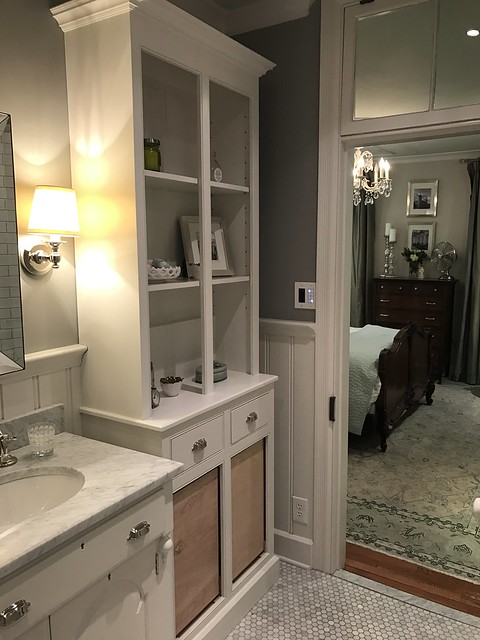
<p>Our mantel started life as a pile of pine lumber from a big box store. We bought an assortment of "one by" material to build the mantel surround, and some 5/4 stock (about an inch and a quarter thick) for the mantel shelf. In order to get a sense of the planned scale of our mantel, we started the process by holding boards in place and trying to imagine how it might look.</p>
<p>
</p>
<div class="MediaContainer PhotoContainer"><a href="https://farm4.staticflickr.com/3708/32995876302_8b56965da4_z.jpg" rel="PhotoPopup" popupheight="480" popupwidth="640"><img alt="" src="https://farm4.staticflickr.com/3708/32995876302_8b56965da4.jpg" width="500" height="375" style="border-width: 0px; border-style: solid;" /></a></div>
<p>At this phase of most projects, just before we start the assembly or build, I get a little worried that we're going to make a mistake. Well, It's less worry and more paralysis. Without fail the crazy thought that I really can't make a mistake if I don't make any progress starts to crawl into my head. But Wendy likes to step in to right the ship and give me that little nudge necessary to get moving. In this case, it was the suggestion that we should go ahead and hang the television above the fireplace so that we'd be able to get a better idea of how it would look with the mantel in place. (I know, I know, the long debate about hanging TVs above the fireplace is real, and not something that either of us like all that much. But we don't have many options in this house, so we're going with it.)</p>
<p>
</p>
<div class="MediaContainer PhotoContainer"><a href="https://farm4.staticflickr.com/3776/32298280584_1bffb92726_z.jpg" rel="PhotoPopup" popupheight="640" popupwidth="480"><img alt="" src="https://farm4.staticflickr.com/3776/32298280584_1bffb92726.jpg" width="375" height="500" style="border-width: 0px; border-style: solid;" /></a></div>
<p>Once we had the tv in place, we could better estimate where the mantel shelf should fall on the shiplap. This was exactly the nudge I needed to start rolling with the project. For our mantel we started by assembling the sides of the frame. The structure of the shiplap above defined the boundaries of the mantel width, and we knew we needed the edge of the mantel to be at least eight inches from the fire box. Given where the mortar lines all fall, we could assemble the sides without much issue.</p>
<div class="MediaContainer PhotoContainer"><a href="https://farm1.staticflickr.com/664/32328361333_fdcbd6a6c8_z.jpg" rel="PhotoPopup" popupheight="640" popupwidth="480"><img alt="" src="https://farm1.staticflickr.com/664/32328361333_fdcbd6a6c8.jpg" width="375" height="500" style="border-width: 0px; border-style: solid;" /></a></div>
<p>Since the base of the mantel will be on both the floor and the brick of the hearth, we had to scribe and notch the base on either side.&nbsp;</p>
<p>
</p>
<div class="MediaContainer PhotoContainer"><a href="https://farm4.staticflickr.com/3882/33025069131_bdf8ec6103_z.jpg" rel="PhotoPopup" popupheight="480" popupwidth="640"><img alt="" src="https://farm4.staticflickr.com/3882/33025069131_bdf8ec6103.jpg" width="500" height="375" style="border-width: 0px; border-style: solid;" /></a></div>
<p>As part of the process we built the sides and top to sit in front of the brick surround by about an inch to thicken the surround up a bit. Then we placed the top cross piece of the mantel surround to really get a sense of scale.</p>
<p>
</p>
<div class="MediaContainer PhotoContainer"><a href="https://farm1.staticflickr.com/385/32995852922_0429a07300_z.jpg" rel="PhotoPopup" popupheight="480" popupwidth="640"><img alt="" src="https://farm1.staticflickr.com/385/32995852922_0429a07300.jpg" width="500" height="375" style="border-width: 0px; border-style: solid;" /></a></div>
<p>Then came our need to make a major decision on something we'd not yet come to a consensus on, the depth of the mantel shelf.&nbsp;</p>
<p>
</p>
<div class="MediaContainer PhotoContainer"><a href="https://farm4.staticflickr.com/3677/33110724086_4af79e4cde_z.jpg" rel="PhotoPopup" popupheight="480" popupwidth="640"><img alt="" src="https://farm4.staticflickr.com/3677/33110724086_4af79e4cde.jpg" width="500" height="375" style="border-width: 0px; border-style: solid;" /></a></div>
<p>Looking at our test fit we could immediately tell the shelf depth was way too shallow. But the width of the boards we had meant we wouldn't be able to just pop a board in place. In order to make the mantel shelf deep enough, we needed to biscuit join two 5/4 x 8" boards together and then rip them to size.</p>
<p>
</p>
<div class="MediaContainer PhotoContainer"><a href="https://farm4.staticflickr.com/3846/33109991971_f24b3a59e1_z.jpg" rel="PhotoPopup" popupheight="480" popupwidth="640"><img alt="" src="https://farm4.staticflickr.com/3846/33109991971_f24b3a59e1.jpg" width="500" height="375" style="border-width: 0px; border-style: solid;" /></a></div>
<p>With the shelf depth set we continued on the surround build by nailing then wood filling everything that could be attached.</p>
<p>
</p>
<div class="MediaContainer PhotoContainer"><a href="https://farm4.staticflickr.com/3849/33543063835_dd4c93059f_z.jpg" rel="PhotoPopup" popupheight="640" popupwidth="480"><img alt="" src="https://farm4.staticflickr.com/3849/33543063835_dd4c93059f.jpg" width="375" height="500" style="border-width: 0px; border-style: solid;" /></a></div>
<p>The way we built the surround, up to this point in the process it remained almost completely independent of the fireplace, which meant we could remove it and take it outside when it came time to sand. This certainly helped us cut down on the typical mess associated with sanding.&nbsp;</p>
<p>
</p>
<div class="MediaContainer PhotoContainer"><a href="https://farm1.staticflickr.com/754/33545695235_1cd00bc517_z.jpg" rel="PhotoPopup" popupheight="480" popupwidth="640"><img alt="" src="https://farm1.staticflickr.com/754/33545695235_1cd00bc517.jpg" width="500" height="375" style="border-width: 0px; border-style: solid;" /></a></div>
<p>And once sanding was complete we turned our attention to affixing the surround in place and installing the mantel shelf. Since it was all very sturdy, we just needed to tack the mantel surround in place with about four nails.</p>
<p>
</p>
<div class="MediaContainer PhotoContainer"><a href="https://farm1.staticflickr.com/717/33504570026_6320c18f30_z.jpg" rel="PhotoPopup" popupheight="640" popupwidth="480"><img alt="" src="https://farm1.staticflickr.com/717/33504570026_6320c18f30.jpg" width="375" height="500" style="border-width: 0px; border-style: solid;" /></a></div>
<p>So, have you noticed the little "mouse house" door at the base of the mantel on the right side? If you noticed it, are you wondering why it's there? No, it's not where Jerry will hide when he's running from Tom. It's an access location with a cord tied in place that will allow us to run additional wiring up to the TV without needing to remove the mantel. Essentially, trying to future proof things a little. And don't worry, it will be hidden by the base cap of the mantel.</p>
<p>The next step in the build was the start of the various embellishments to add a little visual interest to the mantel and relate it to the rest of the room. This started with a bead trim piece under the shelf.</p>
<p>
</p>
<div class="MediaContainer PhotoContainer"><a href="https://farm4.staticflickr.com/3669/33500788726_4bef6cca91_z.jpg" rel="PhotoPopup" popupheight="480" popupwidth="640"><img alt="" src="https://farm4.staticflickr.com/3669/33500788726_4bef6cca91.jpg" width="500" height="375" style="border-width: 0px; border-style: solid;" /></a></div>
<p>And that was following by a cove trim piece. The idea here is that the bead and cove borrows a detail from the <a href="https://origin.oldtownhome.com/2017/2/10/Two-Part-Crown-Molding-to-Test-Our-Patience-and-Our-Marriage/" target="_blank">two part crown we installed throughout this room</a>.</p>
<p>
</p>
<div class="MediaContainer PhotoContainer"><a href="https://farm1.staticflickr.com/612/33158173140_54b213d390_z.jpg" rel="PhotoPopup" popupheight="480" popupwidth="640"><img alt="" src="https://farm1.staticflickr.com/612/33158173140_54b213d390.jpg" width="500" height="375" style="border-width: 0px; border-style: solid;" /></a></div>
<p>Next we started to work on the "baseboard" area of the mantel. Here we were trying to determine the best height for the base and base cap.</p>
<p>
</p>
<div class="MediaContainer PhotoContainer"><a href="https://farm1.staticflickr.com/662/32698222394_060616d3ba_z.jpg" rel="PhotoPopup" popupheight="640" popupwidth="480"><img alt="" src="https://farm1.staticflickr.com/662/32698222394_060616d3ba.jpg" width="375" height="500" style="border-width: 0px; border-style: solid;" /></a></div>
<p>The shorter certainly looked far better once we saw it all in place. We spent a good amount of time scribing the bottom of these sections to make it nice and tight to the floor and hearth. And as you can see, this element was borrowing the detail of the room's baseboards.</p>
<p>
</p>
<div class="MediaContainer PhotoContainer"><a href="https://farm4.staticflickr.com/3696/33500957866_6f723c8eb6_z.jpg" rel="PhotoPopup" popupheight="640" popupwidth="480"><img alt="" src="https://farm4.staticflickr.com/3696/33500957866_6f723c8eb6.jpg" width="375" height="500" style="border-width: 0px; border-style: solid;" /></a></div>
<p>Finally we applied a flat band detail at the transition above the firebox. This detail was meant as a nod to the shiplap we have above the fireplace and on the opposite side of the room. So yes, there is certainly a method to our plans, though likely not very obvious if we're not completely spelling it all out.</p>
<p>
</p>
<div class="MediaContainer PhotoContainer"><a href="https://farm4.staticflickr.com/3782/32727164383_a93f0b34d3_z.jpg" rel="PhotoPopup" popupheight="640" popupwidth="480"><img alt="" src="https://farm4.staticflickr.com/3782/32727164383_a93f0b34d3.jpg" width="375" height="500" style="border-width: 0px; border-style: solid;" /></a></div>
<p>With the whole mantel built we were able to turn our attention to painting. Since this is against brick, and brick doesn't handle paint mistakes very well, we decided to invest some significant time and effort in masking and taping. This proved invaluable as drips and mistakes kept appearing on the plastic and paper.</p>
<p>
</p>
<div class="MediaContainer PhotoContainer"><a href="https://farm1.staticflickr.com/686/32698120254_3d5f48b978_z.jpg" rel="PhotoPopup" popupheight="640" popupwidth="480"><img alt="" src="https://farm1.staticflickr.com/686/32698120254_3d5f48b978.jpg" width="375" height="500" style="border-width: 0px; border-style: solid;" /></a></div>
<p>Both priming and painting when quickly. Each coat took about 40 minutes.</p>
<p>
</p>
<div class="MediaContainer PhotoContainer"><a href="https://farm1.staticflickr.com/656/32753950144_f74614aa03_z.jpg" rel="PhotoPopup" popupheight="480" popupwidth="640"><img alt="" src="https://farm1.staticflickr.com/656/32753950144_f74614aa03.jpg" width="500" height="375" style="border-width: 0px; border-style: solid;" /></a></div>
<p>And as we painted, we saw it transforming before our very eyes. The thing we'd been dreaming about, and worry about, for quite some time was becoming exactly what we'd hoped it would become.</p>
<p>
</p>
<div class="MediaContainer PhotoContainer"><a href="https://farm4.staticflickr.com/3672/33158195360_07e8a6671c_z.jpg" rel="PhotoPopup" popupheight="640" popupwidth="480"><img alt="" src="https://farm4.staticflickr.com/3672/33158195360_07e8a6671c.jpg" width="375" height="500" style="border-width: 0px; border-style: solid;" /></a></div>
<p>As the paint cured we couldn't wait to remove the paper and plastic and light our first fire with a finished fireplace. It was everything we'd hoped!</p>
<p>
</p>
<div class="MediaContainer PhotoContainer"><a href="https://farm4.staticflickr.com/3856/33158187020_ca0d9ba0a1_z.jpg" rel="PhotoPopup" popupheight="640" popupwidth="480"><img alt="" src="https://farm4.staticflickr.com/3856/33158187020_ca0d9ba0a1.jpg" width="375" height="500" style="border-width: 0px; border-style: solid;" /></a></div>
<p>We seem to finish most projects in the evening, so when we wake up the next morning and see it in the daylight, it's like we're getting our very own reveal all over again. We both really love how this turned out. The scale seems great for the room, it frames the brick nicely, and the depth of the shelf should work wonderfully for Wendy to decorate the mantel to her heart's content.&nbsp;</p>
<p>
</p>
<div class="MediaContainer PhotoContainer"><a href="https://farm3.staticflickr.com/2854/32727154023_6eaa1b92fd_z.jpg" rel="PhotoPopup" popupheight="640" popupwidth="480"><img alt="" src="https://farm3.staticflickr.com/2854/32727154023_6eaa1b92fd.jpg" width="375" height="500" style="border-width: 0px; border-style: solid;" /></a></div>
<p>In fact, she really couldn't wait and went right out to the yard to clip some flowers to freshen and soften up the mantel.&nbsp;</p>
<p>
</p>
<div class="MediaContainer PhotoContainer"><a href="https://farm3.staticflickr.com/2901/33543071775_51dd910b56_z.jpg" rel="PhotoPopup" popupheight="640" popupwidth="427"><img alt="" src="https://farm3.staticflickr.com/2901/33543071775_51dd910b56.jpg" width="333" height="500" style="border-width: 0px; border-style: solid;" /></a></div>
<p>The end result is pretty much exactly what we imagined, wanted, and hoped for. We both feel like we pretty much nailed our inspiration images and have now adorned this wonderful room with the mantel it was always supposed to have.&nbsp;</p>
<p>Now that the mantel is in place, room decor is underway and we can't wait to share the 100% finished product with you! It's been a long road to get to this point, and if you've been following along since the start, or just started reading today, we hope you're having fun following along with us. If there's one thing you can possibly gather about our personality based on this project, though something may take us longer than expected, when we set our minds to something we're going to get it done, and we're going to get it done right!</p>
<p><em>Interested in a recap of the work we've done to make over the living room to get to this point? Check out our posts on:</em></p>
<p><em>
</em></p>
<ul><em>
    <li><a href="https://www.oldtownhome.com/2015/2/12/A-Bear-of-a-Task-Removing-the-Load-Bearing-Wall/">Removing a Load Bearing Wall to Create the Room of Our Dreams</a></li>
    <li><a href="https://www.oldtownhome.com/2015/2/18/When-Plaster-Lurks-Below-the-Surface/">Ripping Off Drywall in Favor of Original Plaster</a></li>
    <li><a href="https://www.oldtownhome.com/2015/8/21/DIY-Shiplap-Walls-Because-We-All-Love-Joanna-and-Chip/">Installing Shiplap Walls for Interest and to Disguise Unsightly Structural Support</a></li>
    <li><a href="https://www.oldtownhome.com/2015/9/1/Will-You-Help-Us-With-Fireplace-Mantel-Design-Decisions/">Mantel Madness: Choosing a New Design</a></li>
    <li><a href="https://www.oldtownhome.com/2017/3/16/Creating-Our-Living-Room-Design-Plan/Plaster%20Restoration%20Next%20Steps%20Part%201:%20Base%20Coat%20with%20Structo-Lite">Plaster Restoration Next Steps Part 1: Base Coat with Structo-Lite</a></li>
    <li><a href="http://www.oldtownhome.com/2016/6/2/Plaster-Restoration-Next-Steps-Part-2-Master-of-Plasters-Beautiful-Lime-Base-Coat/">Plaster Restoration Next Steps Part 2: Master of Plaster's Beautiful Lime Base Coat</a></li>
    <li><a href="http://www.oldtownhome.com/2016/6/24/Plaster-Restoration-Part-3-Master-of-Plaster-Finish-Coat-with-No-Sanding/">Plaster Restoration Part 3: Master of Plaster Finish Coat with No Sanding!</a></li>
    <li><a href="https://www.oldtownhome.com/2016/9/30/Coping-as-a-DIY-Double-Entendre/">The Art of Coping: Installing Reproduction Molding to Match the Original</a></li>
    <li><a href="https://www.oldtownhome.com/2017/2/10/Two-Part-Crown-Molding-to-Test-Our-Patience-and-Our-Marriage/">How Installing Two-Part Crown Molding Nearly Ended in Divorce</a></li>
    <li><a href="https://www.oldtownhome.com/2017/3/10/Agreeable-Gray-Making-Us-Feel-Like-Kids-Again/">Paint: How It's Never as Quick and Easy as the Television Shows Lead You to Believe</a>&nbsp;</li>
    <li><a href="https://www.oldtownhome.com/2017/3/17/Creating-Our-Living-Room-Design-Plan/">Our Living Room Design Plan</a></li>
    </em></ul>
    <em>
    </em><p><a href="https://www.oldtownhome.com/2017/3/23/A-Custom-DIY-Fireplace-Mantel-Beneath-Our-Shiplap/">Read Full Post</a></p>]]></content>
    <category term="2nd House Living Room" />
    <category term="Header Image" />
    <category term="Mantel" />
    <category term="Projects:Woodworking" />
    <category term="Water House" />
    <category term="Woodworking" />
    <PostImage>https://c1.staticflickr.com/3/2917/32782724203_c0ee065cb5.jpg</PostImage>
    <media:thumbnail url="https://c1.staticflickr.com/3/2917/32782724203_c0ee065cb5_t.jpg" />
    <ExtensionElements>
      <Item>PostImage</Item>
      <Item>media:thumbnail</Item>
    </ExtensionElements>
  </entry>
</feed>