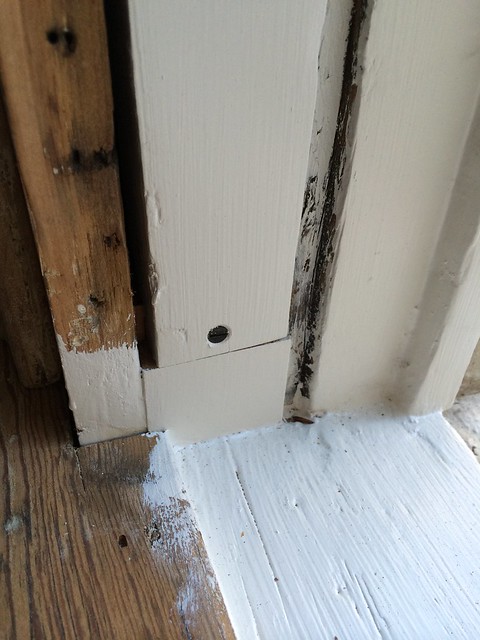
<?xml version="1.0" encoding="utf-8"?>
<feed xmlns="http://www.w3.org/2005/Atom" xmlns:media="http://search.yahoo.com/mrss/">
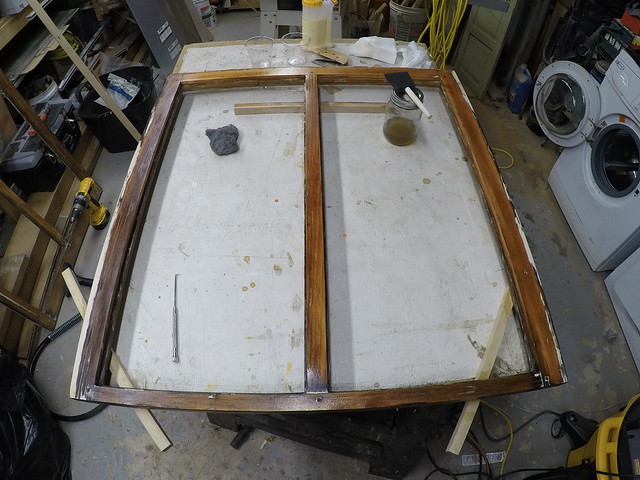
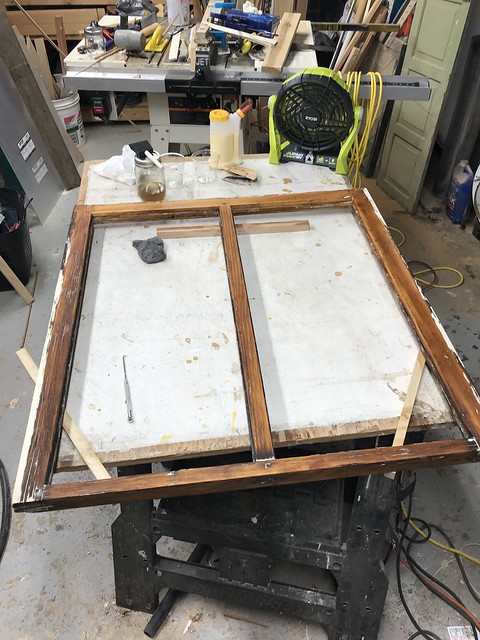
  <title>Old Town Home Category: 'Windows'</title>
  <updated>2018-06-29T10:09:23.237-04:00</updated>
  <id>http://www.oldtownhome.com/windows/index.atom</id>
  <link rel="alternate" href="http://www.oldtownhome.com/windows/index.atom" />
  <author>
    <name>Alex and Wendy</name>
    <uri>http://www.oldtownhome.com/</uri>
    <email>wendy@oldtownhome.com</email>
  </author>
  <entry>
    <guid>aa376f7b-a0c9-4d20-b4c0-2028f8751929</guid>
    <id>https://www.oldtownhome.com/2018/6/29/Window-Sash-Restoration-Part-6---Keeping-Dual-Glaze-and-Type-M-Putty-Fresh/</id>
    <title>Window Sash Restoration Part 6 - Keeping Dual Glaze and Type M Putty Fresh</title>
    <summary type="html"><![CDATA[<p>It's been a hot minute since our last <a href="https://www.oldtownhome.com/window-restoration-series/" target="_blank">window restoration update</a>, but we're rounding the last corner and are on the home stretch to a fully restored and functional antique window sash!</p><p><em>All of the prior posts are summarized and linked at the bottom of this post, so if you need to get caught up (because in true Old Town Home fashion, this is a super ridiculous long running thing) you're all set.</em></p><p>Our last post on this subject covered the various options we had, and the one we chose, to <a href="https://www.oldtownhome.com/2018/6/1/Window-Sash-Restoration-Part-5-Sourcing-and-Cutting-New-or-Salvaged-Wavy-Glass/" target="_blank">source and cut some antique wavy glass as replacement for our broken panes</a>. With our glass selected and sized for fit, we were just about ready to start glazing!</p><p>Now I don't know if you've ever done any window work, or if you generally get excited at the prospect of applying glazing putty...but you should, you most definitely should! Applying glazing putty is a wonderfully soothing and fulfilling prospect that provides an immediate sense of gratification and discernible progress. As a DIYer, there are few things that make my heart grow three sizes like that of a sense of gratification and progress.</p><p>
</p><div class="MediaContainer PhotoContainer"><a href="https://farm1.staticflickr.com/931/27726032088_46dfe232cc_z.jpg" rel="PhotoPopup" popupheight="640" popupwidth="480"><img alt="" src="https://farm1.staticflickr.com/931/27726032088_46dfe232cc.jpg" width="375" height="500" style="border-width: 0px; border-style: solid;"></a></div><p>But before we could begin our glazing process, there's a little glazing product selection and prep that we're going to cover today (the actual glazing post will be up next).</p> <a href="https://www.oldtownhome.com/2018/6/29/Window-Sash-Restoration-Part-6---Keeping-Dual-Glaze-and-Type-M-Putty-Fresh/">more</a>]]></summary>
    <published>2018-06-29T10:09:23.237-04:00</published>
    <updated>2018-06-29T10:09:23.237-04:00</updated>
    <link rel="alternate" href="https://www.oldtownhome.com/2018/6/29/Window-Sash-Restoration-Part-6---Keeping-Dual-Glaze-and-Type-M-Putty-Fresh/" />
    <author>
      <name>Alex</name>
    </author>
    <content type="html"><![CDATA[<p>It's been a hot minute since our last <a href="https://www.oldtownhome.com/window-restoration-series/" target="_blank">window restoration update</a>, but we're rounding the last corner and are on the home stretch to a fully restored and functional antique window sash!</p>
<p><em>All of the prior posts are summarized and linked at the bottom of this post, so if you need to get caught up (because in true Old Town Home fashion, this is a super ridiculous long running thing) you're all set.</em></p>
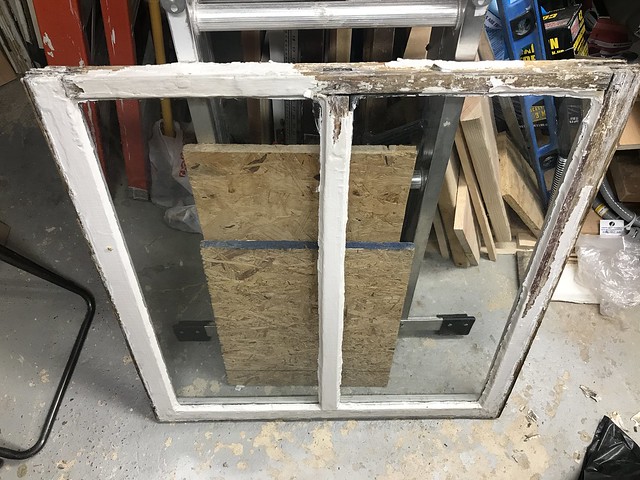
<p>Our last post on this subject covered the various options we had, and the one we chose, to <a href="https://www.oldtownhome.com/2018/6/1/Window-Sash-Restoration-Part-5-Sourcing-and-Cutting-New-or-Salvaged-Wavy-Glass/" target="_blank">source and cut some antique wavy glass as replacement for our broken panes</a>. With our glass selected and sized for fit, we were just about ready to start glazing!</p>
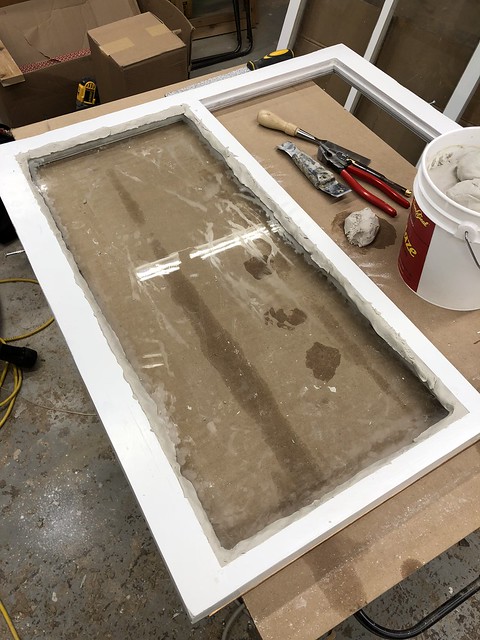
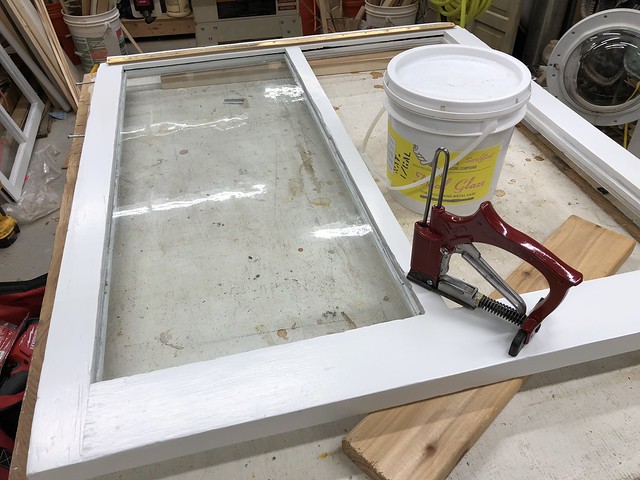
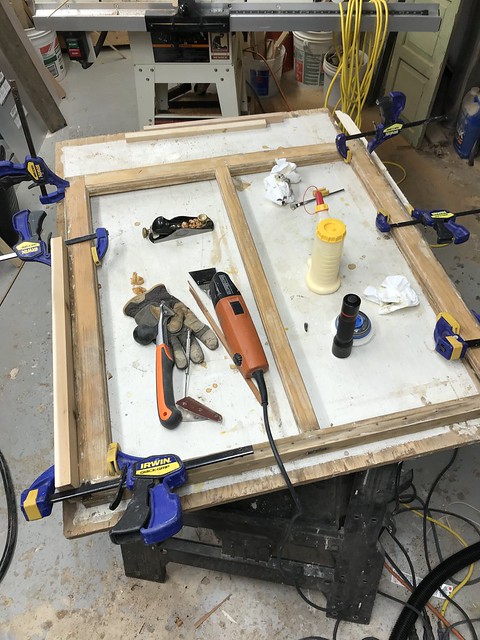
<p>Now I don't know if you've ever done any window work, or if you generally get excited at the prospect of applying glazing putty...but you should, you most definitely should! Applying glazing putty is a wonderfully soothing and fulfilling prospect that provides an immediate sense of gratification and discernible progress. As a DIYer, there are few things that make my heart grow three sizes like that of a sense of gratification and progress.</p>
<p>
</p>
<div class="MediaContainer PhotoContainer"><a href="https://farm1.staticflickr.com/931/27726032088_46dfe232cc_z.jpg" rel="PhotoPopup" popupheight="640" popupwidth="480"><img alt="" src="https://farm1.staticflickr.com/931/27726032088_46dfe232cc.jpg" width="375" height="500" style="border-width: 0px; border-style: solid;" /></a></div>
<p>But before we could begin our glazing process, there's a little glazing product selection and prep that we're going to cover today (the actual glazing post will be up next).</p>
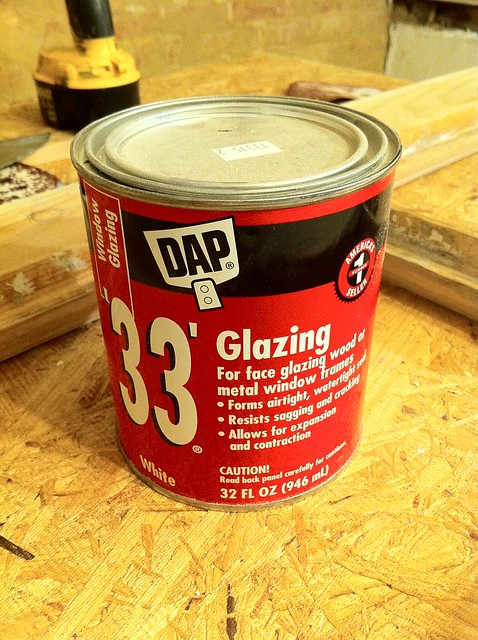
<p>You have a ton of options when selecting glazing putty. From DAP '33' to "Glazing in a caulk tube," there are a lot of products out there that you'll want to stay away from. (Here's a hint, don't use glazing in a caulk tube...no matter what the person who swears by it says.) Many of these products are difficult to work with, prone to failure, or generally don't work the way old windows need them to work.</p>
<p>
</p>
<div class="MediaContainer PhotoContainer"><a href="https://farm7.staticflickr.com/6163/6172026913_c163ccaeb9_z.jpg" rel="PhotoPopup" popupheight="640" popupwidth="478"><img alt="" src="https://farm7.staticflickr.com/6163/6172026913_c163ccaeb9.jpg" width="374" height="500" style="border-width: 0px; border-style: solid;" /></a></div>

<p>When I'm glazing I like to use one of the products from Sarco Sash glazing putty. There are two types to choose from, either the "Dual Glaze" or the "Type M" putties.</p>
<div class="MediaContainer">
<iframe style="width: 120px; height: 240px;" marginwidth="0" marginheight="0" scrolling="no" frameborder="0" src="//ws-na.amazon-adsystem.com/widgets/q?ServiceVersion=20070822&amp;OneJS=1&amp;Operation=GetAdHtml&amp;MarketPlace=US&amp;source=ac&amp;ref=qf_sp_asin_til&amp;ad_type=product_link&amp;tracking_id=oltoho-20&amp;marketplace=amazon&amp;region=US&amp;placement=B01GVUZIA4&amp;asins=B01GVUZIA4&amp;linkId=10c1f6264503bbc2268d97c4be5914d1&amp;show_border=false&amp;link_opens_in_new_window=true&amp;price_color=333333&amp;title_color=0066c0&amp;bg_color=fafaf8">
</iframe>
<iframe style="width: 120px; height: 240px;" marginwidth="0" marginheight="0" scrolling="no" frameborder="0" src="//ws-na.amazon-adsystem.com/widgets/q?ServiceVersion=20070822&amp;OneJS=1&amp;Operation=GetAdHtml&amp;MarketPlace=US&amp;source=ac&amp;ref=qf_sp_asin_til&amp;ad_type=product_link&amp;tracking_id=oltoho-20&amp;marketplace=amazon&amp;region=US&amp;placement=B01GU35V2W&amp;asins=B01GU35V2W&amp;linkId=b25f8fe91811fb47ea1046a6b511c2cf&amp;show_border=false&amp;link_opens_in_new_window=true&amp;price_color=333333&amp;title_color=0066c0&amp;bg_color=fafaf8">
</iframe>
</div>
<p>Both putties are soybean and linseed oil based elastic putties that improve on the difficult to use calcium carbonate putties of the olden days. You can still find these old linseed based calcium carbonate putties on the market, but they don't offer the elasticity that works much better in the expansion/contraction process of wood windows.</p>
<p>The Dual Glaze type is a slower setting glazing putty that can be used in wood or metal sash, and can also be applied to sash that remains in it's opening. Think of it as more of an all weather glazing putty for when you need to fix a broken pane in place. Duel Glaze can take weeks to skin before painting. It's a very user friendly putty, but you certainly have to be patient with the cure.</p>
<p>
</p>
<div class="MediaContainer PhotoContainer"><a href="https://farm1.staticflickr.com/828/40047616000_f3a83538c4_z.jpg" rel="PhotoPopup" popupheight="640" popupwidth="480"><img alt="" src="https://farm1.staticflickr.com/828/40047616000_f3a83538c4.jpg" width="375" height="500" style="border-width: 0px; border-style: solid;" /></a></div>
<p>The Type M product is a faster setting and far less oily version of the putty. It's meant for glazing in the shop/workspace where you can let your sash set up and skin before painting and reinstall. It's pretty easy to work with and I really don't notice a difference in user friendliness between the Dual Glaze and Type M. The real advantage is that the sash are ready for paint just three days after applying the putty.&nbsp;</p>
<p>For our first window I used the Dual Glaze on the lower sash and the Type M on the upper sash. This way I'll be able to compare over time once it's reinstalled. But for all future sash, I'm definitely going to be using the Type M.</p>
<h2>Keeping Glazing Putty Fresh</h2>
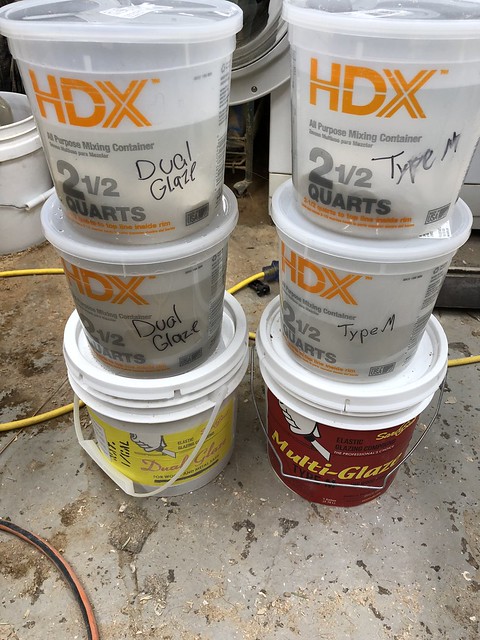
<p>Okay! With the glazing putty of choice selected, there's something I like to do to keep my putties fresh. Since glazing putty isn't cheap, and there will be lulls between when we use them, there's a little trick to make your putty live a much longer life in its bucket. These Sarco glazing putties will live indefinitely in their bucket as long as you keep air away from them. Air will allow them to skin and cure, so even if you have them in a bucket with the lid on, the small bit of air in contact with them will eventually ruin your bucket. I've had it happen, and you don't realize your putty is ruined until you go to use it...which is sure to ruin your day.</p>
<p>
</p>
<div class="MediaContainer PhotoContainer"><a href="https://farm1.staticflickr.com/919/29221098578_b6b553396c_z.jpg" rel="PhotoPopup" popupheight="640" popupwidth="373"><img alt="" src="https://farm1.staticflickr.com/919/29221098578_b6b553396c.jpg" width="292" height="500" style="border-width: 0px; border-style: solid;" /></a><br />
<em>My old bucket skinned over and was ruined.</em></div>
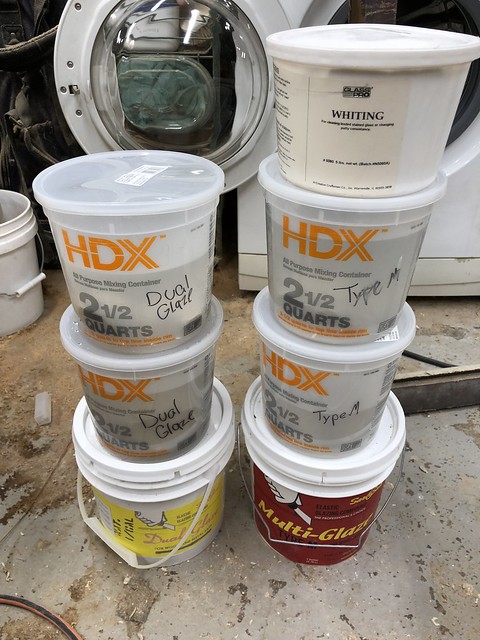
<p>To solve this problem I protect it all with water and I create three buckets. These buckets are for use "Now," "Later," and "WAY Later."</p>
<p>
</p>
<div class="MediaContainer PhotoContainer"><a href="https://farm1.staticflickr.com/962/40955768345_0e509e612d_z.jpg" rel="PhotoPopup" popupheight="640" popupwidth="480"><img alt="" src="https://farm1.staticflickr.com/962/40955768345_0e509e612d.jpg" width="375" height="500" style="border-width: 0px; border-style: solid;" /></a></div>
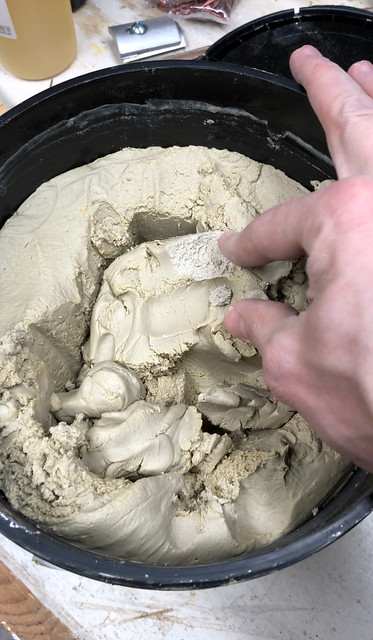
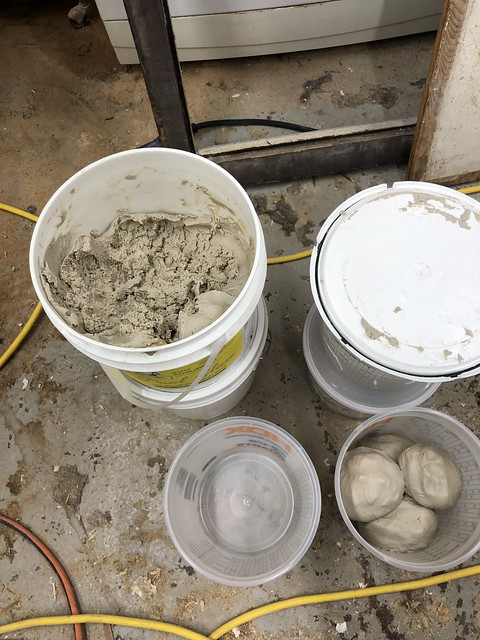
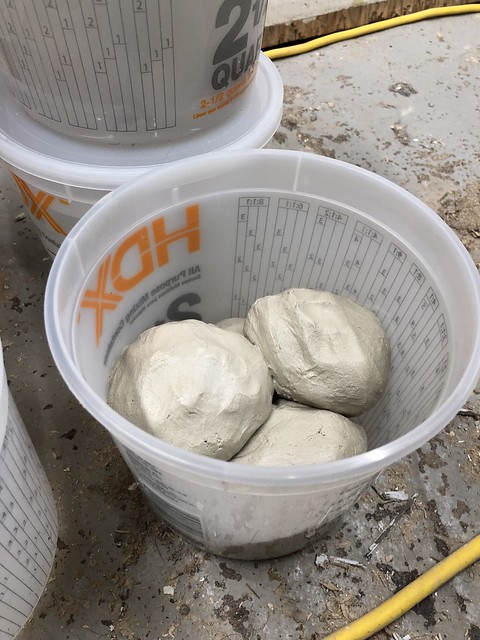
<p>To do this I grab a few additional smaller container buckets with lids, then grab several handfuls of putty and form them into both small and large balls. The idea here is separate out the putty among these several containers. From a 1 gallon bucket of putty I'll split about 1/3 to 1/2 out into balls in these other buckets. The balls should be somewhere between the size of eggs and baseballs.&nbsp;</p>
<p>
</p>
<div class="MediaContainer PhotoContainer"><a href="https://farm1.staticflickr.com/826/40955768185_ea80dc3e8d_z.jpg" rel="PhotoPopup" popupheight="640" popupwidth="480"><img alt="" src="https://farm1.staticflickr.com/826/40955768185_ea80dc3e8d.jpg" width="375" height="500" style="border-width: 0px; border-style: solid;" /></a></div>
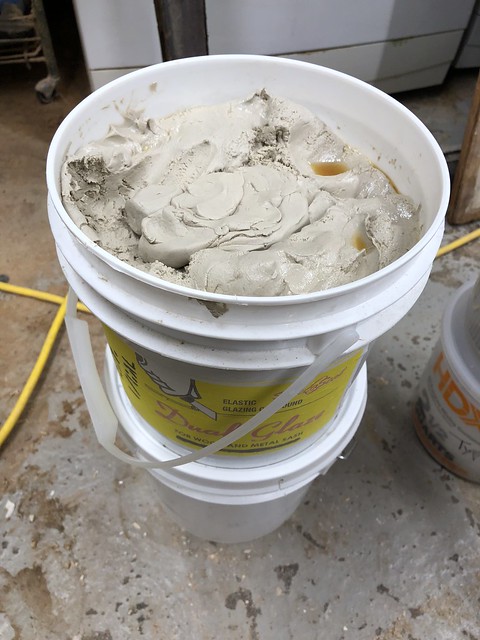
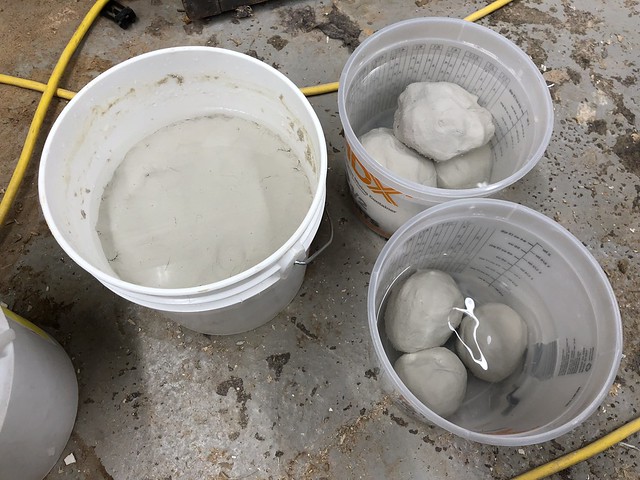
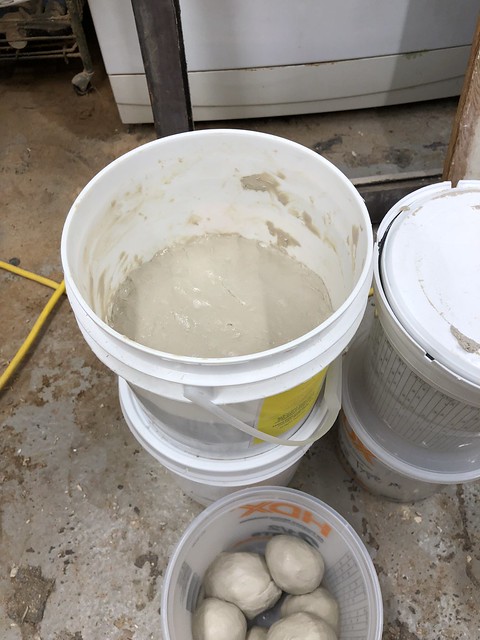
<p>Once the balls are all split into the buckets I flatten out the main gallon container by pushing the putty down. This gives a good surface on the top that is devoid os major cracks and crevices. Next I add enough water to the bucket to give me about 1" of water sitting on top of the glazing putty. This water barrier will keep the air away from the putty and will keep the putty fresh in the bucket until the next time I need to use it.&nbsp;</p>
<p>
</p>
<div class="MediaContainer PhotoContainer"><a href="https://farm1.staticflickr.com/907/41137503364_02073cfa72_z.jpg" rel="PhotoPopup" popupheight="480" popupwidth="640"><img alt="" src="https://farm1.staticflickr.com/907/41137503364_02073cfa72.jpg" width="500" height="375" style="border-width: 0px; border-style: solid;" /></a></div>
<p>I can put the lid back on the bucket and then put it on my shelf and leave it undisturbed until I need it again. When that time comes all I need to do is open the bucket and pour the water off of the surface, then grab my next handful.</p>
<p>
</p>
<div class="MediaContainer PhotoContainer"><a href="https://farm1.staticflickr.com/965/40047615930_6e91b6c3e6_z.jpg" rel="PhotoPopup" popupheight="640" popupwidth="480"><img alt="" src="https://farm1.staticflickr.com/965/40047615930_6e91b6c3e6.jpg" width="375" height="500" style="border-width: 0px; border-style: solid;" /></a></div>
<p>For the smaller buckets with the balls of putty I can do pretty much the same. I just fill the buckets with water until all of the balls are completely covered. With these buckets of smaller balls of material the advantage is that I can just grab individual balls of putty as I need to use them. All you need to do it blot them dry with a paper towel and you're ready to glaze.</p>
<p>
</p>
<div class="MediaContainer PhotoContainer"><a href="https://farm1.staticflickr.com/905/41811618422_21c3b6d955_z.jpg" rel="PhotoPopup" popupheight="640" popupwidth="480"><img alt="" src="https://farm1.staticflickr.com/905/41811618422_21c3b6d955.jpg" width="375" height="500" style="border-width: 0px; border-style: solid;" /></a></div>
<p>Since I have both Dual Glaze and Type M putty, I made sure to clearly label my buckets with marker. This will surely make it easier when I need to go grab my bucket off of the shelf.&nbsp;</p>
<p>This is the most effective way that I've found to keep our glazing putty fresh and ready for the next sash. Since the putty is oil based the water doesn't hurt it in storage and simply keeps the air away from the surface, keeping it fresh and pliable.&nbsp;</p>
<p>
</p>
<div class="MediaContainer PhotoContainer"><a href="https://farm1.staticflickr.com/982/40049110900_a658761009_z.jpg" rel="PhotoPopup" popupheight="640" popupwidth="480"><img alt="" src="https://farm1.staticflickr.com/982/40049110900_a658761009.jpg" width="375" height="500" style="border-width: 0px; border-style: solid;" /></a></div>
<p>As I mentioned, we'll give more detail on the actual glazing process in our next post. I'll be sure to cover the tools and techniques that have worked well for us. Most importantly, it should be right around the corner, not weeks away. Getting the glazing putty figured out is just the first major step in doing glazing the right way.</p>
<p>
</p>
<div class="MediaContainer PhotoContainer"><a href="https://farm1.staticflickr.com/869/41555240632_6931f63e4d_z.jpg" rel="PhotoPopup" popupheight="480" popupwidth="640"><img alt="" src="https://farm1.staticflickr.com/869/41555240632_6931f63e4d.jpg" width="500" height="375" style="border-width: 0px; border-style: solid;" /></a></div>
<p>Have any horror stories of your own working with glazing in a caulk tube or something similar? Would love to hear.</p>
<p>If you'd like to go back through our window restoration series, here's our complete list of posts.</p>
<ol>
    <li><a href="https://www.oldtownhome.com/2017/11/7/Real-Progress-on-Our-Window-Restoration-Project-Part-1/">Window Sash Restoration Part 1 - Real Progress on Our Window Restoration Project</a></li>
    <li><a href="https://www.oldtownhome.com/2018/3/2/Window-Sash-Restoration-Part-2---Protecting-the-Sash-with-BLOPentine/">Window Sash Restoration Part 2 - Protecting the Sash with BLOPentine</a></li>
    <li><a href="https://www.oldtownhome.com/2018/3/9/Keep-Cast-Iron-Rust-Free-With-a-Linseed-Oil-Bath---Window-Restoration-Part-3/">Window Sash Restoration Part 3 - Keep Cast Iron Rust Free With a Linseed Oil Bath</a></li>
    <li><a href="https://www.oldtownhome.com/2018/5/25/Window-Sash-Restoration-Part-4---Bronze-Meeting-Rail-Weather-Stripping/" target="_blank">Window Sash Restoration Part 4 - Bronze Meeting Rail Weather Stripping</a></li>
    <li><a href="https://www.oldtownhome.com/2018/6/1/Window-Sash-Restoration-Part-5-Sourcing-and-Cutting-New-or-Salvaged-Wavy-Glass/">Window Sash Restoration Part 5 - Sourcing and Cutting New or Salvaged Wavy Glass</a></li>
</ol><p><a href="https://www.oldtownhome.com/2018/6/29/Window-Sash-Restoration-Part-6---Keeping-Dual-Glaze-and-Type-M-Putty-Fresh/">Read Full Post</a></p>]]></content>
    <category term="Glazing Putty" />
    <category term="Header Image" />
    <category term="Window Restoration" />
    <category term="Window Restoration Series" />
    <category term="Windows" />
    <PostImage>https://c2.staticflickr.com/2/1824/42375651274_f24ebcc892_b.jpg</PostImage>
    <media:thumbnail url="https://c2.staticflickr.com/2/1824/42375651274_f24ebcc892_t.jpg" />
    <ExtensionElements>
      <Item>PostImage</Item>
      <Item>media:thumbnail</Item>
    </ExtensionElements>
  </entry>
  <entry>
    <guid>aa920fd7-b94c-4360-973d-495f9879fc62</guid>
    <id>https://www.oldtownhome.com/2018/3/2/Window-Sash-Restoration-Part-2---Protecting-the-Sash-with-BLOPentine/</id>
    <title>Window Sash Restoration Part 2 - Protecting the Sash with BLOPentine</title>
    <summary type="html"><![CDATA[<p>Back in November we shared or progress on our <a href="https://www.oldtownhome.com/2017/11/7/Real-Progress-on-Our-Window-Restoration-Project-Part-1/" target="_blank">Window Restoration project</a>, and then we got distracted by other projects.</p><p>This is the way of our home blogging and DIYing since the beginning. We start projects and then other projects take priority, so we stop projects. And sometimes we stop them for a long time. A really long time. And it makes Wendy angry with me. She doesn't understand why I stop them for so long, even though she does understand, but it doesn't mean she has to like it.&nbsp;</p><p>Our entire lives as DIYers has been a series of overlapping projects and priorities. Some projects are really important, until another one is more important. In the case of our windows, I started them and then we started our dining room, and then we started <a href="https://www.oldtownhome.com/2017/12/4/How-To-Install-a-Salvaged-Door-with-Antique-Hinges/">stripping a bathroom closet door</a>, and then I started cleaning the basement, and then we started our <a href="https://www.oldtownhome.com/2018/2/1/Our-Dining-Room-Electrical-and-Plaster-Restoration-is-in-Full-Swing/" target="_blank">foursquare's dining room</a>, and then I started working on some clocks. SO MANY PROJECTS!&nbsp;</p><p>
</p><div class="MediaContainer PhotoContainer"><a href="https://farm5.staticflickr.com/4623/38779387455_a8f15664f0_z.jpg" rel="PhotoPopup" popupheight="640" popupwidth="480"><img alt="" src="https://farm5.staticflickr.com/4623/38779387455_a8f15664f0.jpg" width="375" height="500" style="border-width: 0px; border-style: solid;"></a></div><p>But before we get too derailed, let's circle back on that project that has been put off for so long that even once it's in progress, it gets put off again...the restoration of our original double hung windows. We left off in November by describing how we'd been able to successfully <a href="https://www.oldtownhome.com/2017/11/7/Real-Progress-on-Our-Window-Restoration-Project-Part-1/" target="_blank">deglaze, strip, reinforce, and repair</a> the first of five sash.&nbsp;</p><p>
</p> <a href="https://www.oldtownhome.com/2018/3/2/Window-Sash-Restoration-Part-2---Protecting-the-Sash-with-BLOPentine/">more</a>]]></summary>
    <published>2018-03-02T12:39:30.433-05:00</published>
    <updated>2018-03-02T12:39:30.433-05:00</updated>
    <link rel="alternate" href="https://www.oldtownhome.com/2018/3/2/Window-Sash-Restoration-Part-2---Protecting-the-Sash-with-BLOPentine/" />
    <author>
      <name>Alex</name>
    </author>
    <content type="html"><![CDATA[<p>Back in November we shared or progress on our <a href="https://www.oldtownhome.com/2017/11/7/Real-Progress-on-Our-Window-Restoration-Project-Part-1/" target="_blank">Window Restoration project</a>, and then we got distracted by other projects.</p>
<p>This is the way of our home blogging and DIYing since the beginning. We start projects and then other projects take priority, so we stop projects. And sometimes we stop them for a long time. A really long time. And it makes Wendy angry with me. She doesn't understand why I stop them for so long, even though she does understand, but it doesn't mean she has to like it.&nbsp;</p>
<p>Our entire lives as DIYers has been a series of overlapping projects and priorities. Some projects are really important, until another one is more important. In the case of our windows, I started them and then we started our dining room, and then we started <a href="https://www.oldtownhome.com/2017/12/4/How-To-Install-a-Salvaged-Door-with-Antique-Hinges/">stripping a bathroom closet door</a>, and then I started cleaning the basement, and then we started our <a href="https://www.oldtownhome.com/2018/2/1/Our-Dining-Room-Electrical-and-Plaster-Restoration-is-in-Full-Swing/" target="_blank">foursquare's dining room</a>, and then I started working on some clocks. SO MANY PROJECTS!&nbsp;</p>
<p>
</p>
<div class="MediaContainer PhotoContainer"><a href="https://farm5.staticflickr.com/4623/38779387455_a8f15664f0_z.jpg" rel="PhotoPopup" popupheight="640" popupwidth="480"><img alt="" src="https://farm5.staticflickr.com/4623/38779387455_a8f15664f0.jpg" width="375" height="500" style="border-width: 0px; border-style: solid;" /></a></div>

<p>But before we get too derailed, let's circle back on that project that has been put off for so long that even once it's in progress, it gets put off again...the restoration of our original double hung windows. We left off in November by describing how we'd been able to successfully <a href="https://www.oldtownhome.com/2017/11/7/Real-Progress-on-Our-Window-Restoration-Project-Part-1/" target="_blank">deglaze, strip, reinforce, and repair</a> the first of five sash.&nbsp;</p>
<p>
</p>
<div class="MediaContainer PhotoContainer"><a href="https://farm5.staticflickr.com/4430/36971498045_5a49a13e0d_z.jpg" rel="PhotoPopup" popupheight="480" popupwidth="640"><img alt="" src="https://farm5.staticflickr.com/4430/36971498045_5a49a13e0d.jpg" width="500" height="375" style="border-width: 0px; border-style: solid;" /></a></div>

<p>The window that had been close to "toast," as they like to say on This Old House, had a new lease on life. That's the term they lovingly give to the things they could probably save and preserve, but it's not in the interest of their time or budget to try. Our "hobby" time is a large portion of our budget, so in our case, bringing it back from toast is what we love to do. After a good amount of work, the joints were once again solid, pegs reinforced and re-glued, and old growth lumber was used to patch in missing portions of the structure.&nbsp;</p>
<p>
</p>
<div class="MediaContainer PhotoContainer"><a href="https://farm5.staticflickr.com/4504/37591242081_bba5a63b31_z.jpg" rel="PhotoPopup" popupheight="640" popupwidth="480"><img alt="" src="https://farm5.staticflickr.com/4504/37591242081_bba5a63b31.jpg" width="375" height="500" style="border-width: 0px; border-style: solid;" /></a></div>
<p>But now that the sash was back to being respectable, what should be done to protect it and make sure it can last another 100 or more years (with proper maintenance)? The answer, a little thing I learned about on the Internets years ago called "<strong>Blopentine</strong>."</p>
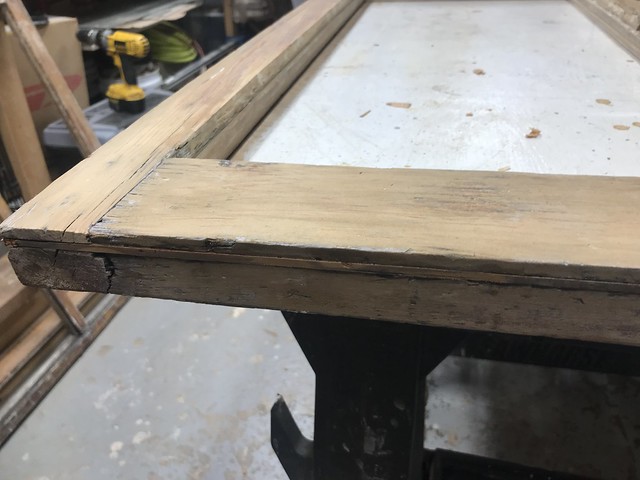
<p>If you've noticed in the photos we've shared of the sash so far, the wood is somewhat to very weathered and grey. After the paint began the fail, the sun continued to bake the windows and the water from rain and snow penetrated all of the way to the wood. This left the wood dehydrated, and dehydrated wood is wood that's ready for rot and complete failure.&nbsp;</p>
<p>
</p>
<div class="MediaContainer PhotoContainer"><a href="https://farm5.staticflickr.com/4486/36673387924_8616622917_z.jpg" rel="PhotoPopup" popupheight="480" popupwidth="640"><img alt="" src="https://farm5.staticflickr.com/4486/36673387924_8616622917.jpg" width="500" height="375" style="border-width: 0px; border-style: solid;" /></a></div>
<p>The next step in our restoration is a relatively simple but extremely important one. The old growth, tight grain pine lumber used to build these sash is amazingly resilient. Much like many of our neglected DIY projects, they can bounce back from ages of disregard, resulting in something wonderful if given the proper attention and care. But the key to this ability to properly bounce back and provide years more functional satisfaction is to properly hydrate and protect the wood against its most natural enemy, water. The best way to accomplish this is to hydrate and seal with wood with something that repels water...which is, naturally, oil.</p>
<p>
</p>
<div class="MediaContainer PhotoContainer"><a href="https://farm5.staticflickr.com/4418/23530498488_0b81797722_z.jpg" rel="PhotoPopup" popupheight="640" popupwidth="480"><img alt="" src="https://farm5.staticflickr.com/4418/23530498488_0b81797722.jpg" width="375" height="500" style="border-width: 0px; border-style: solid;" /></a></div>
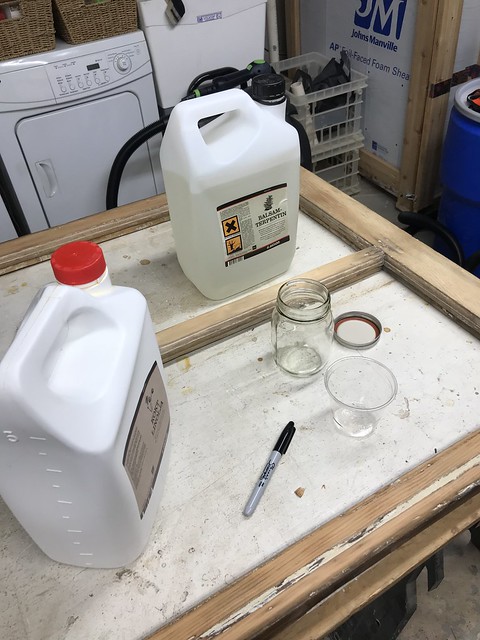
<p><strong>BLO-Pentine</strong>, a word which I will use incessantly, is a made up concatenation of an acronym and partial word that I first heard from a window restoration specialist, "Jade," on the Old House Web restoration forums probably a dozen or so years ago. The word represents a 50/50 mixture of <strong>Boiled Linseed Oil</strong>&nbsp;(or <strong>BLO</strong>) and <strong>Turpentine</strong>. At some point it was even shortened to <strong>BLOP</strong>, I guess because of <strong>B</strong>oiled <strong>L</strong>inseed <strong>O</strong>il + tur<strong>P</strong>entine?</p>
<p>
</p>
<div class="MediaContainer PhotoContainer"><a href="https://farm5.staticflickr.com/4493/37335130566_6111192615_z.jpg" rel="PhotoPopup" popupheight="480" popupwidth="640"><img alt="" src="https://farm5.staticflickr.com/4493/37335130566_6111192615.jpg" width="500" height="375" style="border-width: 0px; border-style: solid;" /></a></div>
<p>The idea here is simple. The boiled linseed oil, which is a favorite of woodworkers and restorationists for its protective power (and somewhat pleasant acquired smell) when it comes to protecting unfinished wood. But when dealing with dry wood, applying the linseed oil alone will often leave the oil simply sitting on the surface of the wood, never actually penetrating into the thirsty wood fibers.&nbsp;</p>
<p>
</p>
<div class="MediaContainer PhotoContainer"><a href="https://farm5.staticflickr.com/4346/36673513534_2a0d22f576_z.jpg" rel="PhotoPopup" popupheight="640" popupwidth="480"><img alt="" src="https://farm5.staticflickr.com/4346/36673513534_2a0d22f576.jpg" width="375" height="500" style="border-width: 0px; border-style: solid;" /></a></div>
<p>By combing the linseed oil with the turpentine as a 50/50 mixture causes the turpentine to act as a delivery mechanism for the oil into the wood fibers. The thirsty wood will essentially drink in the mixture, rehydrating the weathered wood. Then, as the turpentine begins to evaporate as the mixture dries, it leaves behind the linseed oil, both on the surface and impregnated in the wood. The linseed oil then slowly cures, leaving behind quenched wood that now has natural protection against the elements.&nbsp;</p>
<p>
</p>
<div class="MediaContainer PhotoContainer"><a href="https://farm5.staticflickr.com/4407/36712590703_d7ec86c5b2_z.jpg" rel="PhotoPopup" popupheight="480" popupwidth="640"><img alt="" src="https://farm5.staticflickr.com/4407/36712590703_d7ec86c5b2.jpg" width="500" height="375" style="border-width: 0px; border-style: solid;" /></a></div>
<p>Sounds easy enough, right? But it's very important to use extremely high quality products with this process. The turpentine you're probably most familiar with is a dirty, cloudy, and awful smelling product. If you're looking to create yourself some Blopentine, it's best to source yourself some linseed oil and turpentine that's essentially top of the line.&nbsp;</p>
<p>We bought our linseed oil and turpentine from <a href="http://www.tarsmell.com/" target="_blank">American Rope &amp; Tar</a>. (TarSmell.com, what an amazing domain name.) Both are imported from Sweden and the turpentine is crystal clear and actually has a scent that I find pretty pleasant (but Wendy dislikes). It truly smells like it's straight from the tree.&nbsp;&nbsp;</p>
<p>
</p>
<div class="MediaContainer PhotoContainer"><a href="https://farm5.staticflickr.com/4405/23536363738_530b0ba59e_z.jpg" rel="PhotoPopup" popupheight="480" popupwidth="640"><img alt="" src="https://farm5.staticflickr.com/4405/23536363738_530b0ba59e.jpg" width="500" height="375" style="border-width: 0px; border-style: solid;" /></a></div>
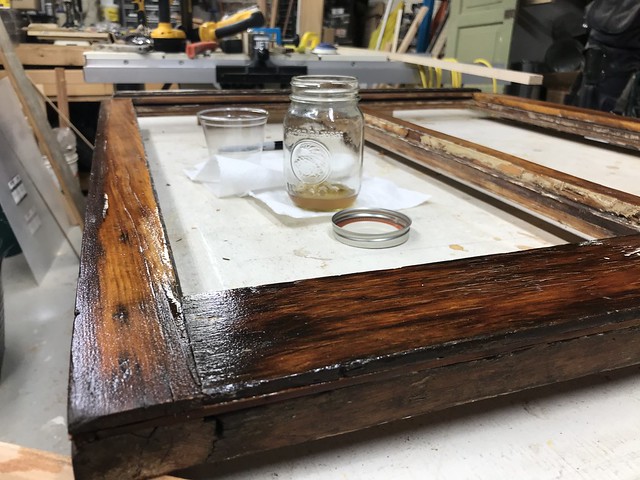
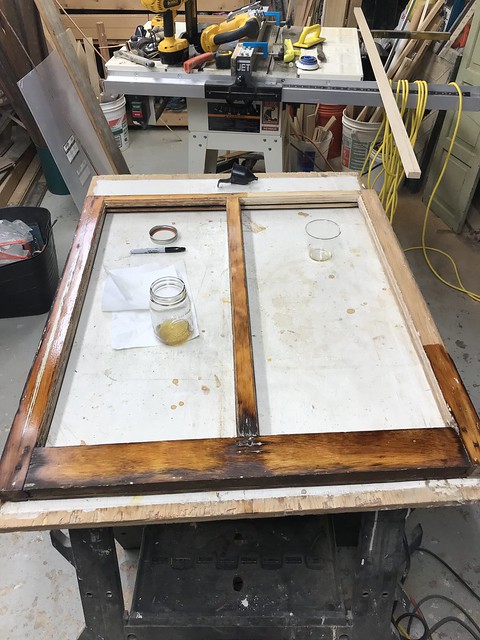
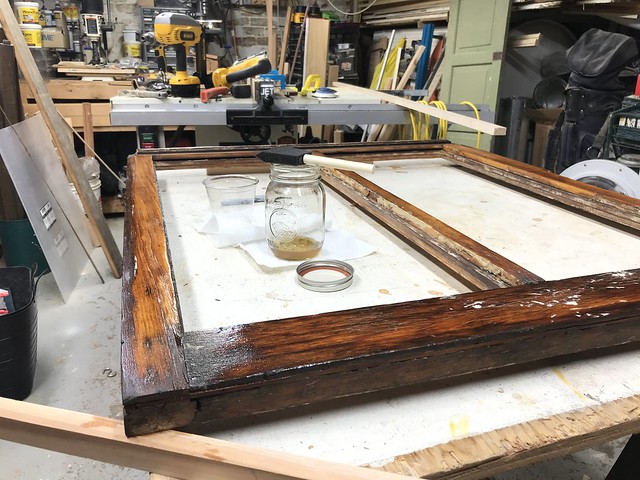
<p>When I mix up my Blopentine I like to mix a little at a time. I prefer the use of clear plastic cups to eyeball the amount, and then mix it by stirring and gentle shake/swirling in a mason jar. That way if I don't use it all, I can set aside what's left for later use as it does have some decent shelf life when stored.&nbsp;</p>
<p>
</p>
<div class="MediaContainer PhotoContainer"><a href="https://farm5.staticflickr.com/4345/36718490883_f1769b0dab_z.jpg" rel="PhotoPopup" popupheight="480" popupwidth="640"><img alt="" src="https://farm5.staticflickr.com/4345/36718490883_f1769b0dab.jpg" width="500" height="375" style="border-width: 0px; border-style: solid;" /></a></div>
<p>You can apply the Blopentine in many ways, but I like using a foam brush. This lets me load the brush up with a good amount of liquid, then I can apply liberally.</p>
<p>
</p>
<div class="MediaContainer PhotoContainer"><a href="https://farm5.staticflickr.com/4468/37379063391_9bb2eff0c8_z.jpg" rel="PhotoPopup" popupheight="480" popupwidth="640"><img alt="" src="https://farm5.staticflickr.com/4468/37379063391_9bb2eff0c8.jpg" width="500" height="375" style="border-width: 0px; border-style: solid;" /></a></div>
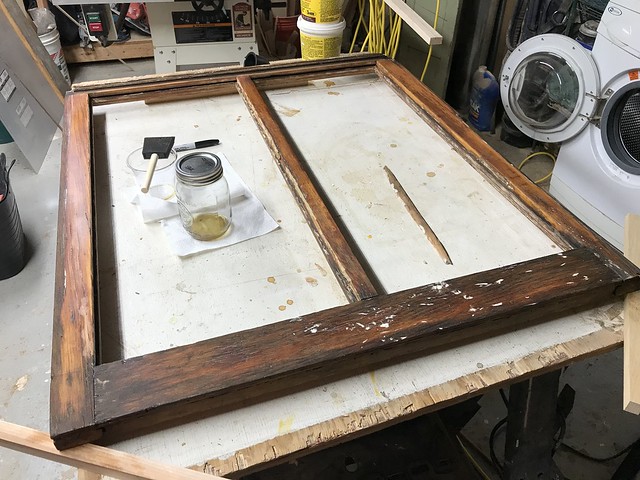
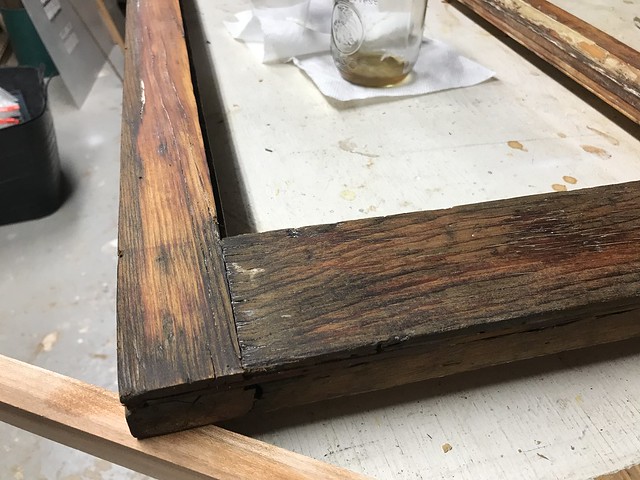
<p>When the mixture is applied to thirsty and weathered wood, you will see it quickly absorbing the Blopentine and just drinking it in almost as quickly as you can apply it.</p>
<p>
</p>
<div class="MediaContainer PhotoContainer"><a href="https://farm5.staticflickr.com/4483/36913531134_fe501a7119_z.jpg" rel="PhotoPopup" popupheight="640" popupwidth="480"><img alt="" src="https://farm5.staticflickr.com/4483/36913531134_fe501a7119.jpg" width="375" height="500" style="border-width: 0px; border-style: solid;" /></a></div>
<p>In our case I ended up doing three coats of Blopentine, allowing it to dry thoroughly between coats. My first coat was heavy and I kept applying more while I could see the wood easily slurping it up. But once I noticed it was sitting on the surface more than being absorbed, I gave it a break to begin drying. This meant leaving the sash to dry for a good 12 hours between coats.&nbsp;</p>
<p>
</p>
<div class="MediaContainer PhotoContainer"><a href="https://farm5.staticflickr.com/4498/37755897166_3ffdd5ee66_z.jpg" rel="PhotoPopup" popupheight="480" popupwidth="640"><img alt="" src="https://farm5.staticflickr.com/4498/37755897166_3ffdd5ee66.jpg" width="500" height="375" style="border-width: 0px; border-style: solid;" /></a></div>
<p>I left the sash slightly elevated and put a fan on it to keep the air moving around the sash. I know it's oil, and it will cure on its own time, but keeping the air moving will help the process just enough.</p>
<p>
</p>
<div class="MediaContainer PhotoContainer"><a href="https://farm5.staticflickr.com/4462/37624226111_4ce8a30784_z.jpg" rel="PhotoPopup" popupheight="640" popupwidth="480"><img alt="" src="https://farm5.staticflickr.com/4462/37624226111_4ce8a30784.jpg" width="375" height="500" style="border-width: 0px; border-style: solid;" /></a></div>
<p>Once the mixture was fully cured, which can take a week or so, by hand I lightly went over the whole sash with a 400 grit piece of sandpaper.</p>
<p>
</p>
<div class="MediaContainer PhotoContainer"><a href="https://farm5.staticflickr.com/4489/23847972188_fd08114ca6_z.jpg" rel="PhotoPopup" popupheight="480" popupwidth="640"><img alt="" src="https://farm5.staticflickr.com/4489/23847972188_fd08114ca6.jpg" width="500" height="375" style="border-width: 0px; border-style: solid;" /></a></div>
<p>At this point our sash was fully hydrated and ready for our next steps in restoration. We'll share more about the next steps in the coming weeks, but I really wanted to dedicate a whole post to Blopentine, the boiled linseed oil and turpentine mixture. It's such a critical and important part of this whole weathered wood restoration process and it what I hope will result in a wonderful end product once the windows are done.&nbsp;</p>
<p>
</p>
<div class="MediaContainer PhotoContainer"><a href="https://farm5.staticflickr.com/4455/36990863884_2cf341c2c8_z.jpg" rel="PhotoPopup" popupheight="480" popupwidth="640"><img alt="" src="https://farm5.staticflickr.com/4455/36990863884_2cf341c2c8.jpg" width="500" height="375" style="border-width: 0px; border-style: solid;" /></a></div>
<p>Are you sick of reading "Blopentine" yet? Have you ever used boiled linseed oil to restore or finish antique wood? And do you have strong feelings about turpentine, its smell, or the quality of turpentine that you've used? It's not too likely I guess, because I tend to be sort of a nut about things like this. I hope this post is informative and useful for you in your window (or general wood) restoration endeavors.</p>
<div><br />
</div><p><a href="https://www.oldtownhome.com/2018/3/2/Window-Sash-Restoration-Part-2---Protecting-the-Sash-with-BLOPentine/">Read Full Post</a></p>]]></content>
    <category term="Blopentine" />
    <category term="Header Image" />
    <category term="Restoration" />
    <category term="Window Restoration" />
    <category term="Window Restoration Series" />
    <category term="Windows" />
    <PostImage>https://c1.staticflickr.com/5/4784/38775886460_19c0494da1_c.jpg</PostImage>
    <media:thumbnail url="https://c1.staticflickr.com/5/4784/38775886460_19c0494da1_t.jpg" />
    <ExtensionElements>
      <Item>PostImage</Item>
      <Item>media:thumbnail</Item>
    </ExtensionElements>
  </entry>
  <entry>
    <guid>87afba76-af59-4c16-8c5a-96b93fb392f0</guid>
    <id>https://www.oldtownhome.com/2017/10/2/DIY-Stripping-Steam-Box-for-Antique-Window-Glazing-Removal-and-Restoration/</id>
    <title>DIY Stripping Steam Box for Antique Window Glazing Removal and Restoration</title>
    <summary type="html"><![CDATA[<p>What's the best way to remove 130 year old glazing and paint from wavy glass antique window sash?</p><p>While it may not be something you ask every day, it's a good question if you've ever wanted to restore an old window or salvage old glass. And quite possibly the right answer to that question is...<strong>STEAM</strong>! More on that in just a minute.</p><p>
</p><div class="MediaContainer PhotoContainer"><a href="https://farm5.staticflickr.com/4430/36971498045_5a49a13e0d_z.jpg" rel="PhotoPopup" popupheight="480" popupwidth="640"><img alt="" src="https://farm5.staticflickr.com/4430/36971498045_5a49a13e0d.jpg" width="500" height="375" style="border-width: 0px; border-style: solid;"></a></div><p>When I was 18 years old I worked in a shop in The Flats of Cleveland, right along the banks of the mighty Cuyahoga River. It was the mid 90s, the Cleveland Indians were an MLB juggernaut, and I spent a long a summer of hard labor stripping glazing from 800 windows that were in what is now The Tudor Arms Hotel, which was built in 1933. </p><p>

</p><p class="MediaContainer PhotoContainer"><a href="https://farm5.staticflickr.com/4386/23558079168_ea9d1c5efc_z.jpg" rel="PhotoPopup" popupheight="427" popupwidth="640"><img alt="" src="https://farm5.staticflickr.com/4386/23558079168_ea9d1c5efc.jpg" width="500" height="333" style="border-width: 0px; border-style: solid;"></a></p> <a href="https://www.oldtownhome.com/2017/10/2/DIY-Stripping-Steam-Box-for-Antique-Window-Glazing-Removal-and-Restoration/">more</a>]]></summary>
    <published>2017-10-02T10:23:00.000-04:00</published>
    <updated>2017-10-02T10:23:00.000-04:00</updated>
    <link rel="alternate" href="https://www.oldtownhome.com/2017/10/2/DIY-Stripping-Steam-Box-for-Antique-Window-Glazing-Removal-and-Restoration/" />
    <author>
      <name>Alex</name>
    </author>
    <content type="html"><![CDATA[<p>What's the best way to remove 130 year old glazing and paint from wavy glass antique window sash?</p>
<p>While it may not be something you ask every day, it's a good question if you've ever wanted to restore an old window or salvage old glass. And quite possibly the right answer to that question is...<strong>STEAM</strong>! More on that in just a minute.</p>
<p>
</p>
<div class="MediaContainer PhotoContainer"><a href="https://farm5.staticflickr.com/4430/36971498045_5a49a13e0d_z.jpg" rel="PhotoPopup" popupheight="480" popupwidth="640"><img alt="" src="https://farm5.staticflickr.com/4430/36971498045_5a49a13e0d.jpg" width="500" height="375" style="border-width: 0px; border-style: solid;" /></a></div>
<p>When I was 18 years old I worked in a shop in The Flats of Cleveland, right along the banks of the mighty Cuyahoga River. It was the mid 90s, the Cleveland Indians were an MLB juggernaut, and I spent a long a summer of hard labor stripping glazing from 800 windows that were in what is now The Tudor Arms Hotel, which was built in 1933. </p>
<p>
</p>
<p class="MediaContainer PhotoContainer"><a href="https://farm5.staticflickr.com/4386/23558079168_ea9d1c5efc_z.jpg" rel="PhotoPopup" popupheight="427" popupwidth="640"><img alt="" src="https://farm5.staticflickr.com/4386/23558079168_ea9d1c5efc.jpg" width="500" height="333" style="border-width: 0px; border-style: solid;" /></a></p>
<p class="MediaContainer PhotoContainer"><em>I likely touched almost every window in that building.</em></p>
<p>Now 21 years later, the Cleveland Indians are vying for the best record in baseball, and I'm once again trying to remove glazing from antique window sash, but hopefully this time, working on my own windows, it will be less hard labor and a little more enjoyable. I know one thing for sure, it will certainly be for far fewer windows!</p>
<p>
</p>
<div class="MediaContainer PhotoContainer"><a href="https://farm5.staticflickr.com/4439/36135909884_a8ba2b8e5b_z.jpg" rel="PhotoPopup" popupheight="640" popupwidth="512"><img alt="" src="https://farm5.staticflickr.com/4439/36135909884_a8ba2b8e5b.jpg" width="400" height="500" style="border-width: 0px; border-style: solid;" /></a></div>
<p>When I was laboring away as a teenager the windows were first dipped in paint stripper for hours, which would soften up the glazing, and then the sash would end up on my work bench and I'd try to chip it out as best as possible. Sometimes the glazing would come right out, sometimes it would stick. Sometimes the glass would break, sometimes it wouldn't. Sometimes the stripper would do so much damage to the wood that it would warp and nearly ruin the sash. If any glazing was left I would warm it with a heat gun and then chip it out. It was less than ideal, expensive, sometimes time consuming, but somewhat necessary given the number of sash we were working with and the deadline of the project.</p>
<p>Today I'm working on restoring my own original windows, and I've been planning this project for going on 12 years. One of the most critical aspects of this project is saving as many of the original panes of 130 year old glass as possible. Can I be completely honest and tell you that I've been absolutely dreading/obsessing about this project for much longer than is reasonable? </p>
<p>
</p>
<div class="MediaContainer PhotoContainer"><a href="https://farm5.staticflickr.com/4386/36827440821_1054fef8c5_z.jpg" rel="PhotoPopup" popupheight="480" popupwidth="640"><img alt="" src="https://farm5.staticflickr.com/4386/36827440821_1054fef8c5.jpg" width="500" height="375" style="border-width: 0px; border-style: solid;" /></a></div>
<p>Can I also tell you that several years ago while watching an episode of This Old House I saw a segment on restoring windows where the pros in a window shop used a large steam chamber to soften the paint and glazing on their window sash? And after I saw that segment the wheels in my head started turning. I wanted to figure out how I could replicate that steam enclosure on a much smaller and much more affordable scale for my own project.</p>
<p>Fast forward many years, lots of research on others that created a steam chamber of their own, finally getting the courage to finish our window restoration, and we're building a steam box of our own to facilitate our window project.  </p>
<p>Today I want to share the process we used to build our own basement steam chamber for softening up glazing and paint, in the event you want to build one of your own. </p>
<p>
</p>
<p class="MediaContainer PhotoContainer"><a href="https://farm5.staticflickr.com/4428/36783065846_9d091a3885_z.jpg" rel="PhotoPopup" popupheight="360" popupwidth="640"><img alt="" src="https://farm5.staticflickr.com/4428/36783065846_9d091a3885.jpg" width="500" height="281" style="border-width: 0px; border-style: solid;" /></a></p>
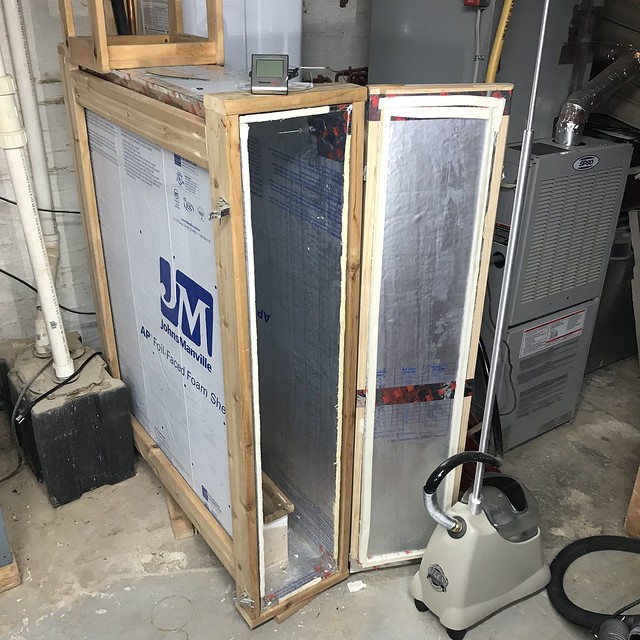
<p class="MediaContainer PhotoContainer"><em>Our Vertical Steam Chamber</em></p>
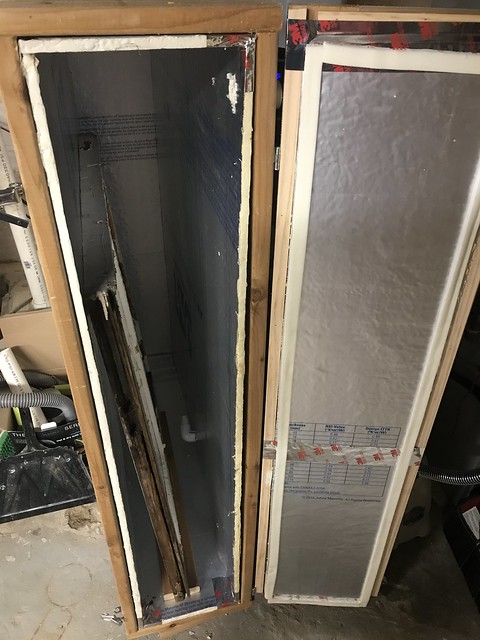
<p>The concept of the steam chamber is simple. You place your window sash into a tightly closed area, pump a bunch of hot steam into the box, let your sash "cook" in the steam for about 30-40 minutes (times will vary, but it's what's working for our windows), carefully but quickly remove the sash (the steam is very hot), then scrape out the softened putty and remove any softened paint. Easy enough?</p>
<p>Luckily, the build for the steam chamber is also pretty straight forward and relatively easy!</p>
<h3>Shopping List</h3>
<p>As far as supplies, you only need a handful of items.</p>
<p>
</p>
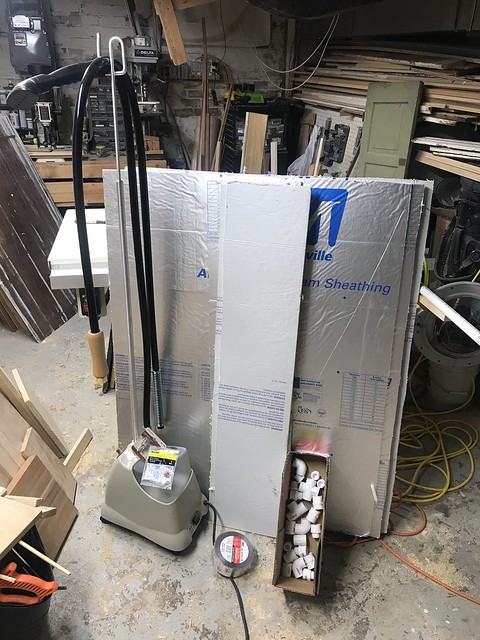
<div class="MediaContainer PhotoContainer"><a href="https://farm5.staticflickr.com/4261/35198548200_f2ea472072_z.jpg" rel="PhotoPopup" popupheight="640" popupwidth="480"><img alt="" src="https://farm5.staticflickr.com/4261/35198548200_f2ea472072.jpg" width="375" height="500" style="border-width: 0px; border-style: solid;" /></a></div>
<ul>
    <li><a target="_blank" href="https://www.amazon.com/gp/product/B0000665TD/ref=as_li_tl?ie=UTF8&amp;camp=1789&amp;creative=9325&amp;creativeASIN=B0000665TD&amp;linkCode=as2&amp;tag=oltoho-20&amp;linkId=71d803650b78958267aceb3f85f53445">Decent Powered Garment Steamer</a><img alt="" src="//ir-na.amazon-adsystem.com/e/ir?t=oltoho-20&amp;l=am2&amp;o=1&amp;a=B0000665TD" width="1" height="1" style="border: none !important; margin: 0px !important;" /></li>
    <li><a target="_blank" href="https://www.amazon.com/gp/product/B008UX5C7A/ref=as_li_tl?ie=UTF8&amp;camp=1789&amp;creative=9325&amp;creativeASIN=B008UX5C7A&amp;linkCode=as2&amp;tag=oltoho-20&amp;linkId=31935ea77206deee9af37e65d16a4d9e">Steamer Hose with 3/4" threaded attachment</a><img alt="" src="//ir-na.amazon-adsystem.com/e/ir?t=oltoho-20&amp;l=am2&amp;o=1&amp;a=B008UX5C7A" width="1" height="1" style="border: none !important; margin: 0px !important;" /> (we bought it separately but they come with some steamers)&nbsp;</li>
    <li><a target="_blank" href="https://www.amazon.com/gp/product/B017613C3C/ref=as_li_tl?ie=UTF8&amp;camp=1789&amp;creative=9325&amp;creativeASIN=B017613C3C&amp;linkCode=as2&amp;tag=oltoho-20&amp;linkId=12555dac8046123dcfb92f3950fa3647">Digital Thermometer</a><img alt="" src="//ir-na.amazon-adsystem.com/e/ir?t=oltoho-20&amp;l=am2&amp;o=1&amp;a=B017613C3C" width="1" height="1" style="border: none !important; margin: 0px !important;" /></li>
    <li>Rigid Foam Insulation</li>
    <li>Misc PVC parts (depends on your setup)</li>
    <li>Wood for the frame (we used about 48' of 1"x4")</li>
    <li><a target="_blank" href="https://www.amazon.com/gp/product/B001DD7YXE/ref=as_li_tl?ie=UTF8&amp;camp=1789&amp;creative=9325&amp;creativeASIN=B001DD7YXE&amp;linkCode=as2&amp;tag=oltoho-20&amp;linkId=abd6f82601750eb720454d538b007a4e">PVC Cement</a><img alt="" src="//ir-na.amazon-adsystem.com/e/ir?t=oltoho-20&amp;l=am2&amp;o=1&amp;a=B001DD7YXE" width="1" height="1" style="border: none !important; margin: 0px !important;" /></li>
    <li><a target="_blank" href="https://www.amazon.com/gp/product/B01FROBUXE/ref=as_li_tl?ie=UTF8&amp;camp=1789&amp;creative=9325&amp;creativeASIN=B01FROBUXE&amp;linkCode=as2&amp;tag=oltoho-20&amp;linkId=bab08e38ef1440adadf2acb2d147e67f">Foil Tape</a><img alt="" src="//ir-na.amazon-adsystem.com/e/ir?t=oltoho-20&amp;l=am2&amp;o=1&amp;a=B01FROBUXE" width="1" height="1" style="border: none !important; margin: 0px !important;" /></li>
    <li><a target="_blank" href="https://www.amazon.com/gp/product/B001E8M2AI/ref=as_li_tl?ie=UTF8&amp;camp=1789&amp;creative=9325&amp;creativeASIN=B001E8M2AI&amp;linkCode=as2&amp;tag=oltoho-20&amp;linkId=de112a0c9b6f59e2796f80772dc6b6a7">Hinges</a><img alt="" src="//ir-na.amazon-adsystem.com/e/ir?t=oltoho-20&amp;l=am2&amp;o=1&amp;a=B001E8M2AI" width="1" height="1" style="border: none !important; margin: 0px !important;" /></li>
    <li><a target="_blank" href="https://www.amazon.com/gp/product/B00OK3UYMW/ref=as_li_tl?ie=UTF8&amp;camp=1789&amp;creative=9325&amp;creativeASIN=B00OK3UYMW&amp;linkCode=as2&amp;tag=oltoho-20&amp;linkId=186a32243d10a50221d905f63838de66">2 Toggle Latches</a><img alt="" src="//ir-na.amazon-adsystem.com/e/ir?t=oltoho-20&amp;l=am2&amp;o=1&amp;a=B00OK3UYMW" width="1" height="1" style="border: none !important; margin: 0px !important;" /></li>
</ul>
<p>The steam itself will need to be supplied by a unit that's substantial enough to fill the box and keep it hot. There are a few models of wallpaper/garment steamers that will work, but no matter what you choose you'll want something a little more substantial and powerful than a more traditional low powered wallpaper steamer. We are using a Jiffy J-2000 model with 3/4 gallon tank, but the J-4000 would work even better (though it is more expensive).</p>
<div class="MediaContainer"><iframe style="width: 120px; height: 240px;" marginwidth="0" marginheight="0" scrolling="no" frameborder="0" src="//ws-na.amazon-adsystem.com/widgets/q?ServiceVersion=20070822&amp;OneJS=1&amp;Operation=GetAdHtml&amp;MarketPlace=US&amp;source=ac&amp;ref=qf_sp_asin_til&amp;ad_type=product_link&amp;tracking_id=oltoho-20&amp;marketplace=amazon&amp;region=US&amp;placement=B0000665TD&amp;asins=B0000665TD&amp;linkId=2bc6171614f04215a99ee41a1961e8bc&amp;show_border=false&amp;link_opens_in_new_window=true&amp;price_color=333333&amp;title_color=0066c0&amp;bg_color=fafaf8">
</iframe>
<iframe style="width: 120px; height: 240px;" marginwidth="0" marginheight="0" scrolling="no" frameborder="0" src="//ws-na.amazon-adsystem.com/widgets/q?ServiceVersion=20070822&amp;OneJS=1&amp;Operation=GetAdHtml&amp;MarketPlace=US&amp;source=ac&amp;ref=qf_sp_asin_til&amp;ad_type=product_link&amp;tracking_id=oltoho-20&amp;marketplace=amazon&amp;region=US&amp;placement=B0000665TE&amp;asins=B0000665TE&amp;linkId=89d3dfe55450e26113860916086ecfb6&amp;show_border=false&amp;link_opens_in_new_window=true&amp;price_color=333333&amp;title_color=0066c0&amp;bg_color=fafaf8">
</iframe>
</div>
<p>If you're on the fence about buying a steamer just remember that these are <a href="https://www.oldtownhome.com/2015/3/30/Steaming-Our-Way-Through-the-First-Steps-to-Plaster-Restoration/" target="_blank">pretty amazing when it comes to removing wallpaper</a>, and it can also be used to take wrinkles out of drapes, table clothes, or clothing. It's a very versatile tool.</p>
<p>Once you have the steamer you'll just need supplies to build the box, and optionally add a temperature sensor.</p>
<p>
</p>
<div class="MediaContainer PhotoContainer"><a href="https://farm5.staticflickr.com/4286/35052343155_e12a5f4860_z.jpg" rel="PhotoPopup" popupheight="640" popupwidth="480"><img alt="" src="https://farm5.staticflickr.com/4286/35052343155_e12a5f4860.jpg" width="375" height="500" style="border-width: 0px; border-style: solid;" /></a></div>
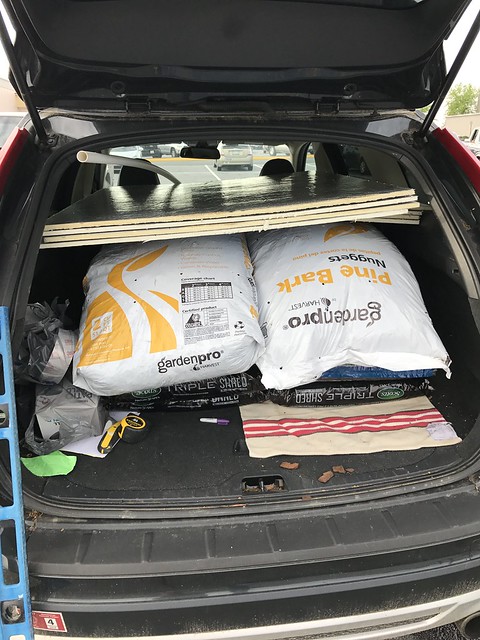
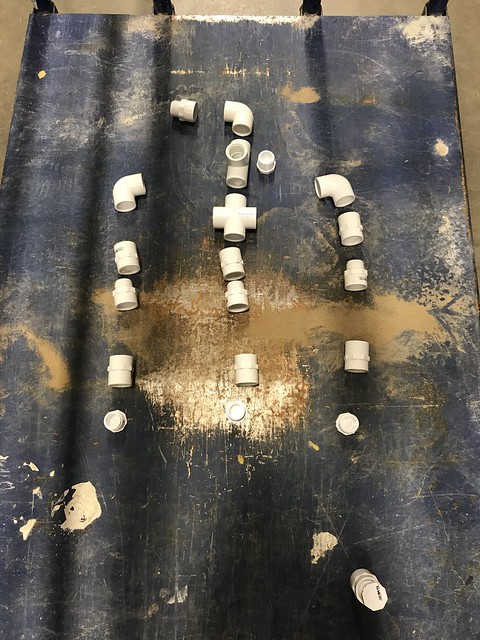
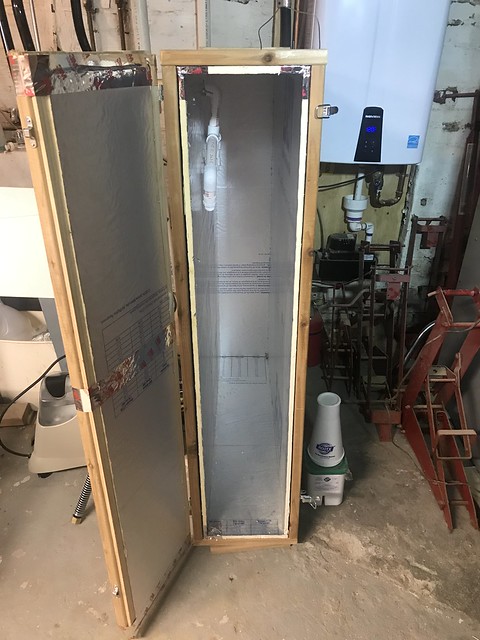
<p>For the box I wanted to create an insulated inner chamber with an outer wood skeleton. So I went to Lowe's and picked up two sheets of foil faced 4' x 8', 5/8" thick rigid foam insulation. That's polyisocyanurate to you insulation nerds out there. I also grabbed a bunch of PVC fittings (<em>but that was a bit of a fail that I'll fill you in on later</em>). The only fittings you'll really need are a threaded 3/4" male to slip fitting, about 1' of 3/4" schedule 40 PVC, and a 90 degree elbow. You'll also want to grab some heavy duty PVC cement and foil tape that can stand up to heat if you don't have any on hand.</p>
<h3>The Build</h3>
<p>Once we had all of our supplies I planned out the dimensions of the box. I measured the largest window sash we'd be placing in the steam chamber and then added 8" to get the minimum height and width of the interior of the chamber.   </p>
<p>The insulation cuts easily with a utility knife, so I was able to mark all of my panels with a Sharpie, and then score and cut each piece quickly. I actually made a lot of my cuts in the parking lot of Lowe's so that the sheets could fit nicely in our car with all of our other stuff. Yeah, I was that guy.</p>
<p>
</p>
<div class="MediaContainer PhotoContainer"><a href="https://farm5.staticflickr.com/4220/34920701631_315bea4714_z.jpg" rel="PhotoPopup" popupheight="640" popupwidth="480"><img alt="" src="https://farm5.staticflickr.com/4220/34920701631_315bea4714.jpg" width="375" height="500" style="border-width: 0px; border-style: solid;" /></a></div>
<p>All assembled, the rigid foam insulation makes a good and light weight box, but it's fragile. I'd like to keep this and use it long term, and I know the insulation alone will get battered and bruised if that was all it was. While you could likely use it as foam alone, I wanted to create a wooden structure surrounding the insulation box to protect it.&nbsp;</p>
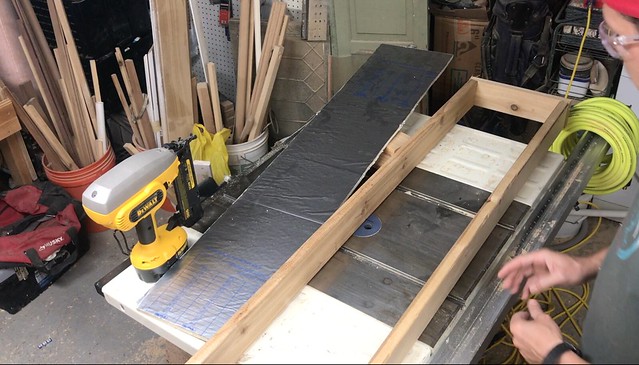
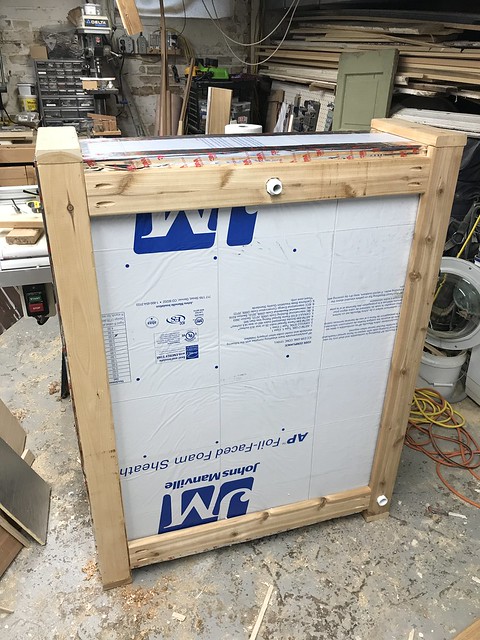
<p>To do this I made a simple frame out of 1" x 4" cedar material I already had on hand. I figured out the ultimate dimensions of the foam box's outer measurements and then nailed up two rectangles that wrap the front and back of the box.</p>
<p>
</p>
<div class="MediaContainer PhotoContainer"><a href="https://farm5.staticflickr.com/4495/36743186333_18994bb8aa_z.jpg" rel="PhotoPopup" popupheight="365" popupwidth="640"><img alt="" src="https://farm5.staticflickr.com/4495/36743186333_18994bb8aa.jpg" width="500" height="285" style="border-width: 0px; border-style: solid;" /></a></div>
<p>After assembling the two rectangles I turned my attention to assembling the box. I'm not exactly sure why I chose this order, but it worked well for me.</p>
<p>The way I assembled the frame with an open front and back allows me to just slide the box right into place. This way if the box ever gets badly damaged in the future, I could always just build a new one and slide the old one out. This also lets me make some minor adjustments to the placement of the box in the frame, forward or back, in order to make a good and air tight seal with the door. To be sure everything was going well I test fit each square frame on the foam box as I was building it.</p>
<p>
</p>
<div class="MediaContainer PhotoContainer"><a href="https://farm5.staticflickr.com/4211/35747924506_4b7740007f_z.jpg" rel="PhotoPopup" popupheight="640" popupwidth="480"><img alt="" src="https://farm5.staticflickr.com/4211/35747924506_4b7740007f.jpg" width="375" height="500" style="border-width: 0px; border-style: solid;" /></a></div>
<p>For the layout of the chamber I cut two large pieces for the sides of the box and then four smaller pieces for the top, bottom, front, and back. I marked each piece based on their purpose, and then set aside the front door piece for use later.</p>
<p>There's nothing particularly fancy about building this box. I simply propped up the sides and top and used the foil tape to keep the pieces loosely together.</p>
<p>
</p>
<div class="MediaContainer PhotoContainer"><a href="https://farm5.staticflickr.com/4073/34978685213_d87119fa81_z.jpg" rel="PhotoPopup" popupheight="640" popupwidth="480"><img alt="" src="https://farm5.staticflickr.com/4073/34978685213_d87119fa81.jpg" width="375" height="500" style="border-width: 0px; border-style: solid;" /></a></div>
<p>Once the top and bottom were on I placed the back on the box and then sealed up the all of the corners with tape. I wanted to make sure no steam will leak out of the box from poorly secured corners. While I didn't double up by taping the interior corners, that's probably a good idea and something that I'll do later.</p>
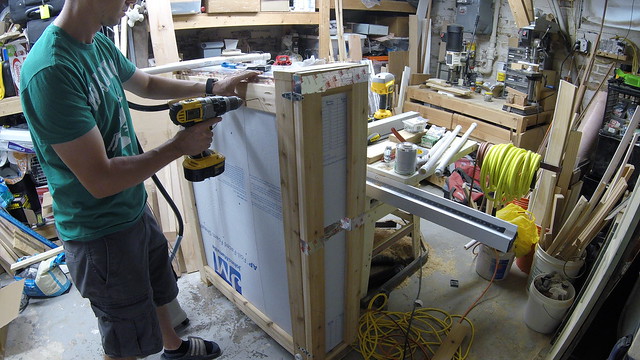
<p>After the foam box was assembled I fit the two rectangles over the front and back, then pocket screwed four pieces (an upper and lower on each side) on the sides between the two rectangles. I shy away from using pocket screws in anything that needs to look nice if the pockets would possibly be visible, but this is the perfect quick and dirty scenario. I just cared that the box was strong and the pocket screws create a very secure joint for being only 2 screws.</p>
<p>
</p>
<div class="MediaContainer PhotoContainer"><a href="https://farm5.staticflickr.com/4430/36743262913_99a3305654_z.jpg" rel="PhotoPopup" popupheight="418" popupwidth="640"><img alt="" src="https://farm5.staticflickr.com/4430/36743262913_99a3305654.jpg" width="500" height="327" style="border-width: 0px; border-style: solid;" /></a></div>
<p>The box and frame itself went together nice and easy, so I turned my attention to the steam distribution piping.&nbsp;</p>
<p>
</p>
<div class="MediaContainer PhotoContainer"><a href="https://farm5.staticflickr.com/4338/36967563455_c0618416fd_z.jpg" rel="PhotoPopup" popupheight="480" popupwidth="640"><img alt="" src="https://farm5.staticflickr.com/4338/36967563455_c0618416fd.jpg" width="500" height="375" style="border-width: 0px; border-style: solid;" /></a></div>
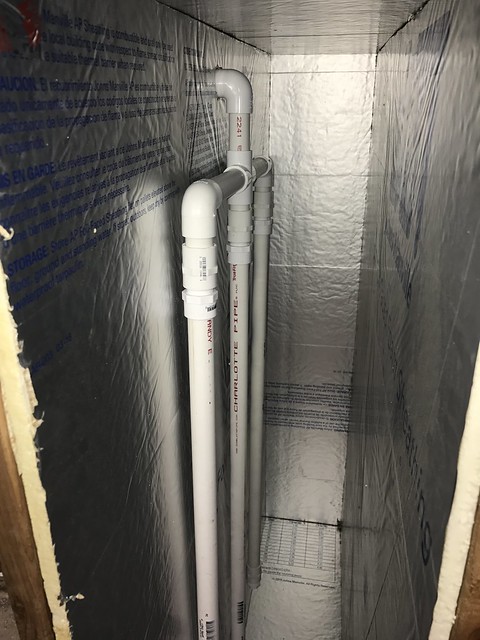
<p>Before we get too in-depth, let me first tell you that <strong>I did it all wrong</strong> and basically ended up scrapping the whole PVC piping thing. I bought all of these PVC parts with the idea of trying to feed the steam into the box and evenly distribute it across the sash. I even carefully laid out my whole plan of fittings on the cart at the store.</p>
<p>
</p>
<div class="MediaContainer PhotoContainer"><a href="https://farm5.staticflickr.com/4244/35052345925_d296fc5937_z.jpg" rel="PhotoPopup" popupheight="640" popupwidth="480"><img alt="" src="https://farm5.staticflickr.com/4244/35052345925_d296fc5937.jpg" width="375" height="500" style="border-width: 0px; border-style: solid;" /></a></div>
<p>I came up with a 3 arm system that I thought would be super cool and work oh so well. I cut and drilled the PVC pieces and got it all hooked up. It was a novel idea, to be sure.</p>
<p>
</p>
<div class="MediaContainer PhotoContainer"><a href="https://farm5.staticflickr.com/4024/34947828464_0b0c2c6a5a_z.jpg" rel="PhotoPopup" popupheight="640" popupwidth="480"><img alt="" src="https://farm5.staticflickr.com/4024/34947828464_0b0c2c6a5a.jpg" width="375" height="500" style="border-width: 0px; border-style: solid;" /></a></div>
<p>But I quickly realized something after running it the first time. Well, I guess I saw the problem more than I realized it. Schedule 40 PVC filled with super hot steam becomes pliable and will sag, droop, deform, and essentially melt and fall apart. So my whole plan was foiled by physics. Damn you physics.&nbsp;</p>
<p>
</p>
<div class="MediaContainer PhotoContainer"><a href="https://farm5.staticflickr.com/4403/36796399202_ff4cf30c61_z.jpg" rel="PhotoPopup" popupheight="640" popupwidth="480"><img alt="" src="https://farm5.staticflickr.com/4403/36796399202_ff4cf30c61.jpg" width="375" height="500" style="border-width: 0px; border-style: solid;" /></a></div>
<p>That droop started about 30 seconds after it came to temperature, so this 3 arm system, while functional in concept but a failure in execution, gave way to a simplified single connection to 90 degree elbow to feed the steam into the box. The inlet still softens considerably, so its best you don't bump it while in use, bit it's been fine for me so far.</p>
<p>I did make the steam enter through a hole I put in the wood frame, which definitely provides more support than the insulation alone would, so at least I get points for that.</p>
<p>
</p>
<div class="MediaContainer PhotoContainer"><a href="https://farm5.staticflickr.com/4362/36574675580_0e3f27c0f1_z.jpg" rel="PhotoPopup" popupheight="480" popupwidth="640"><img alt="" src="https://farm5.staticflickr.com/4362/36574675580_0e3f27c0f1.jpg" width="500" height="375" style="border-width: 0px; border-style: solid;" /></a></div>
<p>But I also placed a steam outlet hole in box which I thought would help things, which was another fail because it just let the steam come out of the box and didn't let it heat up as efficiently. So I guess I lose the points I won for that one. I ended up caping off this outlet and just sealing it up with tape.</p>
<p>
</p>
<div class="MediaContainer PhotoContainer"><a href="https://farm5.staticflickr.com/4119/34978056933_d422ffb463_z.jpg" rel="PhotoPopup" popupheight="640" popupwidth="480"><img alt="" src="https://farm5.staticflickr.com/4119/34978056933_d422ffb463.jpg" width="375" height="500" style="border-width: 0px; border-style: solid;" /></a></div>
<p>The box, frame, and steam hookup were all built, and the only thing left was the door for the front of the box to seal everything up while it was in use.&nbsp;</p>
<p>
</p>
<div class="MediaContainer PhotoContainer"><a href="https://farm5.staticflickr.com/4254/35656109381_a7b2bc2528_z.jpg" rel="PhotoPopup" popupheight="640" popupwidth="480"><img alt="" src="https://farm5.staticflickr.com/4254/35656109381_a7b2bc2528.jpg" width="375" height="500" style="border-width: 0px; border-style: solid;" /></a></div>
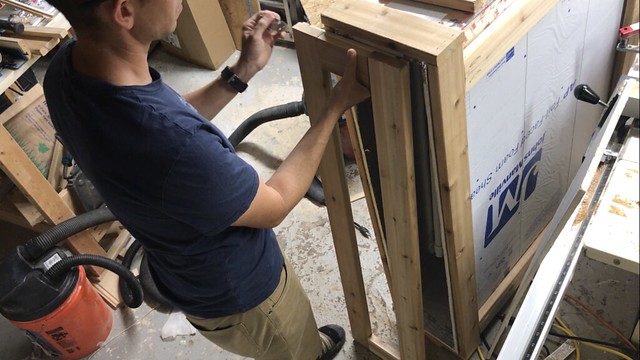
<p>I debated just how I wanted to handle this and eventually came to a solution I'm rally happy with. I cut a door frame from the cedar just a little larger than the insulation panel.</p>
<p>
</p>
<div class="MediaContainer PhotoContainer"><a href="https://farm5.staticflickr.com/4496/37164386470_e80d628f1a_z.jpg" rel="PhotoPopup" popupheight="360" popupwidth="640"><img alt="" src="https://farm5.staticflickr.com/4496/37164386470_e80d628f1a.jpg" width="500" height="281" style="border-width: 0px; border-style: solid;" /></a></div>
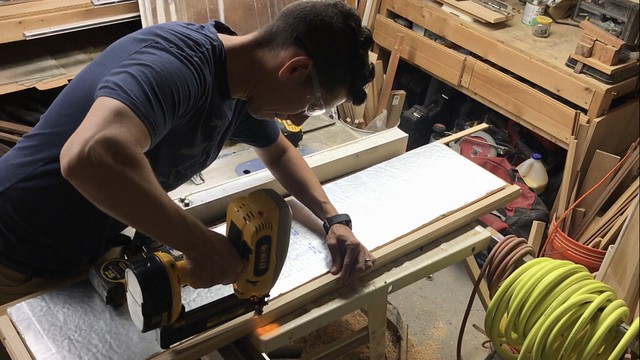
<p>Then I cut a few smaller pieces of wood in 1/2" thickness to act as an outer bounds for the insulation panel.&nbsp;</p>
<p>
</p>
<div class="MediaContainer PhotoContainer"><a href="https://farm5.staticflickr.com/4391/37164490480_5b2903641e_z.jpg" rel="PhotoPopup" popupheight="360" popupwidth="640"><img alt="" src="https://farm5.staticflickr.com/4391/37164490480_5b2903641e.jpg" width="500" height="281" style="border-width: 0px; border-style: solid;" /></a></div>
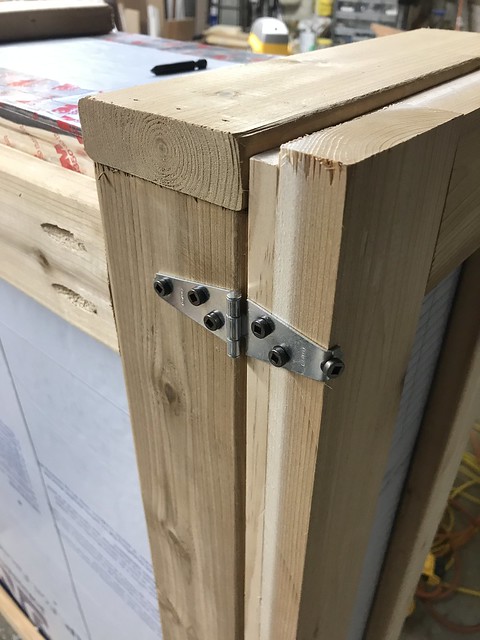
<p>Once I had the frame set I just popped the panel into the door and then applied some foil tape to the top, middle, and bottom to secure the whole thing and installed the hinges. In retrospect I should have bought H style hinges, but these small strap hinges worked well enough. I added them to the side of the cabinet and then bent the hinge to wrap around the front of the door since it was a little long.&nbsp;</p>
<p>
</p>
<div class="MediaContainer PhotoContainer"><a href="https://farm5.staticflickr.com/4399/36574676420_5b94ab509a_z.jpg" rel="PhotoPopup" popupheight="640" popupwidth="480"><img alt="" src="https://farm5.staticflickr.com/4399/36574676420_5b94ab509a.jpg" width="375" height="500" style="border-width: 0px; border-style: solid;" /></a></div>
<p>After adding a thumb latch at the top and bottom of the opposite side I quickly had myself a nearly fully sealed door.&nbsp;</p>
<p>
</p>
<div class="MediaContainer PhotoContainer"><a href="https://farm5.staticflickr.com/4430/36574676770_fb10d36e8e_z.jpg" rel="PhotoPopup" popupheight="640" popupwidth="480"><img alt="" src="https://farm5.staticflickr.com/4430/36574676770_fb10d36e8e.jpg" width="375" height="500" style="border-width: 0px; border-style: solid;" /></a></div>
<p>We were certainly getting close.</p>
<p>
</p>
<div class="MediaContainer PhotoContainer"><a href="https://farm5.staticflickr.com/4389/36796275932_555659a73d_z.jpg" rel="PhotoPopup" popupheight="640" popupwidth="480"><img alt="" src="https://farm5.staticflickr.com/4389/36796275932_555659a73d.jpg" width="375" height="500" style="border-width: 0px; border-style: solid;" /></a></div>
<p>There were a few medium sized gaps here and there letting steam out, so I applied a little flexible adhesive foam weather stripping around the interior of the door and made sure it all compresses down when the latches are enabled. Right away the seal was perfect.</p>
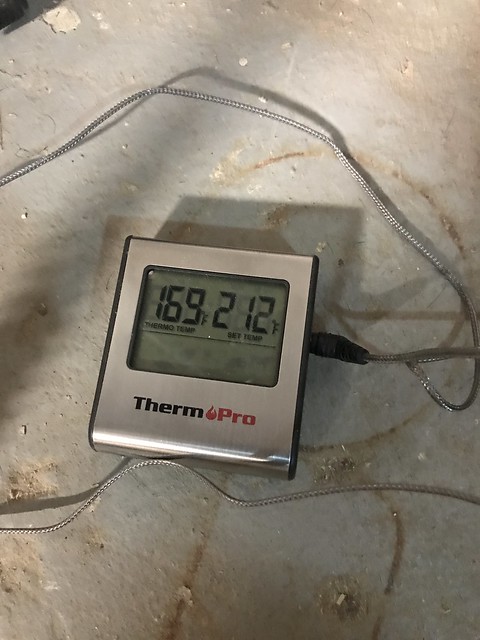
<p>The final step was to drill a hole in the side of the wood and insulation that was just big enough to stick the lead on the thermostat through. This way I would be able to keep an eye on the actual temperature of the box using the digital thermometer, which is primarily to give an indication that it's heating up the way I want it to.</p>
<p>
</p>
<div class="MediaContainer PhotoContainer"><a href="https://farm5.staticflickr.com/4402/36970964645_233af47849_z.jpg" rel="PhotoPopup" popupheight="360" popupwidth="640"><img alt="" src="https://farm5.staticflickr.com/4402/36970964645_233af47849.jpg" width="500" height="281" style="border-width: 0px; border-style: solid;" /></a></div>
<p>Firing up the steamer it seemed to be working well as the top of the box was almost 200 degrees Fahrenheit, but the bottom (through a second thermometer hole) was only getting up around 160s.</p>
<p>
</p>
<div class="MediaContainer PhotoContainer"><a href="https://farm5.staticflickr.com/4401/36779767696_fd6ac9f696_z.jpg" rel="PhotoPopup" popupheight="640" popupwidth="480"><img alt="" src="https://farm5.staticflickr.com/4401/36779767696_fd6ac9f696.jpg" width="375" height="500" style="border-width: 0px; border-style: solid;" /></a><span style="text-align: left;">&nbsp;</span></div>
<p>Again, thanks to the fact that the inlet of the box being positioned near the top of the box, my adjusted steam delivery approach (no longer 3 arm), and physics (heat rises), it just wasn't heating up evenly. The original thought of the outlet port was to allow the box to fill with steam from the top, pushing the cold air out of the bottom through the outlet port, and ultimately reaching top temperature. But in reality, and maybe because our steamer isn't powerful enough, the steam was just hanging around in the top and failed to fill the whole box.&nbsp;</p>
<p>To solve this problem I did what seemed to be the easiest and most straight forward thing I could think of...I flipped the whole thing over so steam would enter in at the bottom.</p>
<p>
</p>
<div class="MediaContainer PhotoContainer"><a href="https://farm5.staticflickr.com/4396/23559400208_7e79f449b7_z.jpg" rel="PhotoPopup" popupheight="429" popupwidth="640"><img alt="" src="https://farm5.staticflickr.com/4396/23559400208_7e79f449b7.jpg" width="500" height="335" style="border-width: 0px; border-style: solid;" /></a></div>
<p>Since the outlet port was now at the top of the box, it would just allow the steam to escape, which is why it was best to just seal it up and cap it off.&nbsp;</p>
<p>After all of my trial and error I finally had a steam box that would come up to temperature and stay heated while the steamer was on.&nbsp;</p>
<h3>Steaming The Sash</h3>
<p>I decided to build our steam chamber as a vertical chamber rather than a more traditional horizontal chamber. The main difference between the two is simply where the steam inlet port is located, and really, you could make any vertical a horizontal and vice versa if you wanted. But my reasoning was simple.&nbsp;</p>
<p>First of all, I wanted to take up less space in the basement. I had a good spot where it could live and my preference was to place the chamber in its home and then use and store it in that same spot. Second, the steam chamber makes a tremendous amount of condensation, and I felt like it would be better to steam the window sash sitting on their end and leaning against the wall of the vertical chamber rather than sitting flat on the bottom and allowing water to pool on the window glass and sash. I just feel like it will be more efficient situated vertically.</p>
<p>
</p>
<div class="MediaContainer PhotoContainer"><a href="https://farm5.staticflickr.com/4351/36162448683_dd9ebf0d8d_z.jpg" rel="PhotoPopup" popupheight="640" popupwidth="480"><img alt="" src="https://farm5.staticflickr.com/4351/36162448683_dd9ebf0d8d.jpg" width="375" height="500" style="border-width: 0px; border-style: solid;" /></a></div>
<p>After my first few test runs I realized just how much water collects in the bottom of the chamber as the steam turns to liquid. As a result I made sure to tilt the chamber forward just a little and the water is able to escape out the front and towards the drain in our basement. If you're doing this in a place that doesn't have a drain or you don't want your floor to get wet, it might be good to place the whole thing in a plastic pan or provide some outlet where the water can drain into a small bucket or tray.</p>
<p>The final thing I realized was that it is helpful to keep the sash up as close to the top of the box as possible, since it will always be hotter up there. When the sash are smaller than the box I placed a wood stand in the box for the sash to sit on, boosting them up and keeping them out of the water. No matter what I'll at least put a board in the bottom on which to sit things so it doesn't just sit in the water while being steamed.</p>
<p>
</p>
<div class="MediaContainer PhotoContainer"><a href="https://farm5.staticflickr.com/4336/36409940644_855a8c780f_z.jpg" rel="PhotoPopup" popupheight="480" popupwidth="640"><img alt="" src="https://farm5.staticflickr.com/4336/36409940644_855a8c780f.jpg" width="500" height="375" style="border-width: 0px; border-style: solid;" /></a></div>
<p>The whole steaming process takes about 45 minutes for us on our sash. This includes the time it takes to come up to temperature, then cook. During this time you'll likely see a little steam escaping and you can keep an eye on the temperature with the digital thermometer.</p>
<p><em><strong>USE CAUTION WHEN OPENING THE STEAMER!!!</strong></em></p>
<p>Steam is very hot (again, physics), so I always wear protective gloves when operating the steamer. You should too! The sash in the steamer is hot, but the steam that escapes from the box right when you open it is even hotter.</p>
<p>After 45 minutes I turn off the steamer, then I unlatch and crack the door of the box to allow the first wave of steam to escape. If you just open the door right away you'll get a giant face full of steam, and that will hurt.</p>
<p><strong><em>THIS IS VERY IMPORTANT TOO!!</em></strong> Keep in mind that if you have a smoke/fire/heat detector nearby, and the steam escapes from the box too quickly when you open it, the detector will go off. Trust me, we learned this first hand, and Lulu, who hates alarms, was not happy with this fact.&nbsp;</p>
<p>When you open the box immediately grab your sash and lay it down on your work surface. You'll only have a few minutes to quickly work around the windows and remove any softened glazing or paint before it begins to harden again.&nbsp;</p>
<p>
</p>
<div class="MediaContainer PhotoContainer"><a href="https://farm5.staticflickr.com/4394/36162437943_0c72ab97e4_z.jpg" rel="PhotoPopup" popupheight="640" popupwidth="480"><img alt="" src="https://farm5.staticflickr.com/4394/36162437943_0c72ab97e4.jpg" width="375" height="500" style="border-width: 0px; border-style: solid;" /></a></div>
<p>I'll provide a more detailed description of the process for removing all of the glazing and paint in an upcoming post, including the tools that have worked best for me. But this steam box certainly makes short work of what was previously a difficult and tedious process. In the past I've used a heat gun to soften the putty, which often resulted in broken panes of glass. It's also very easy to damage the sash with really hard old glazing, so softening it with steam certainly goes a long way to helping preserve your window's antique wood.&nbsp;</p>
<p>
</p>
<div class="MediaContainer PhotoContainer"><a href="https://farm5.staticflickr.com/4421/36743185033_db6b1db3eb_z.jpg" rel="PhotoPopup" popupheight="358" popupwidth="640"><img alt="" src="https://farm5.staticflickr.com/4421/36743185033_db6b1db3eb.jpg" width="500" height="279" style="border-width: 0px; border-style: solid;" /></a></div>
<p>One other thing of note, when you're done using the steam box leave the door open while it all dries. If you close the door and walk away you'll come back days later and still have condensation sitting inside the box. And if you have wood in there, that wood will be covered in mold.&nbsp;</p>
<p>While we don't have a ton of windows to strip and reglaze, we have enough that it made sense to build my own steam box. Including the steamer the whole thing costs about $250 and took me about 4 hours total time to build. That includes all of the time I spent building the dumb PVC piping that I ended up scraping in the long run.&nbsp;</p>
<p>The main lessons I learned if I were building another is simply to keep it simple, put the steam inlet on the bottom, don't worry about an outlet or steam distribution system, possibly build the whole thing up a little higher off the ground in order to make water collection easier, and tape the the interior seams as well, especially on the bottom.</p>
<p>
<div class="MediaContainer PhotoContainer"><a href="https://farm5.staticflickr.com/4455/37422235182_093b54fa10_z.jpg" rel="PhotoPopup" popupheight="640" popupwidth="640"><img alt="" src="https://farm5.staticflickr.com/4455/37422235182_093b54fa10.jpg" width="500" height="500" style="border-width: 0px; border-style: solid;" /></a></div>
</p>
<p>Does this project seem like something you're going to take on? I would love to hear how it turns out if you give a steam box build of your own a try.&nbsp;</p><p><a href="https://www.oldtownhome.com/2017/10/2/DIY-Stripping-Steam-Box-for-Antique-Window-Glazing-Removal-and-Restoration/">Read Full Post</a></p>]]></content>
    <category term="Header Image" />
    <category term="Steam Chamber" />
    <category term="Window Restoration" />
    <category term="Window Restoration Series" />
    <category term="Windows" />
    <PostImage>https://c1.staticflickr.com/5/4455/37422235182_093b54fa10_z.jpg</PostImage>
    <media:thumbnail url="https://c1.staticflickr.com/5/4455/37422235182_093b54fa10_t.jpg" />
    <ExtensionElements>
      <Item>PostImage</Item>
      <Item>media:thumbnail</Item>
    </ExtensionElements>
  </entry>
  <entry>
    <guid>44c4dc3b-aa06-48a3-9c0f-07ba64c01f53</guid>
    <id>https://www.oldtownhome.com/2014/1/15/Installing-Spring-Bronze-Weather-Stripping-for-Antique-Windows/</id>
    <title>Installing Spring Bronze Weather Stripping for Antique Windows</title>
    <summary type="html"><![CDATA[<p>If there's one thing that makes me think "I really need to finish the storm windows," it's the bone chilling 4 degree cold we had a week ago (that was the lowest in 20 years) combined with the associated high winds and billowing drapes that accompany it. </p><p>Did I just say "billowing drapes?" Well, that doesn't make much sense if the windows are closed. Exactly!</p><p>You see, our windows are what you call "leaky." No, I'm not talking about little air leaks you find in almost any window, I'm talking about giant gaps large enough for you to stick your fingers through. When the wind really picks up, it actually whistles through our windows and you can see our heavy window treatments move. But these gaps can't be blamed on an "old window thing." Nope, the age of the window has little to do with it, they're really a "caused by me" thing. Our crazy leaky windows are largely due to the fact I can't seem to finish a project before starting a new one, and I'm midway through the restoration of our windows and haven't yet added back our parting beads, sash stops, weather stripping, or (long overdue) storm windows. I've caused this, I'm at fault, and I accept that. Now it's time to start doing something about it. </p><p>To begin remedying our situation I'm going to focus on the next phase of our window restoration process, the installation of spring bronze weather stripping around the window frame's jambs. Ultimately, this is only one aspect of weather stripping our windows, but it's one of the most critical. </p><p>At this point in our project, we've removed the sash stops, parting beads, and sash from the windows, stripped the paint from the frames, and made any necessary repairs to the frames.</p><p>Before applying the weather stripping, we needed to sand and apply a few coats of paint to the frames. I'm not going to cover the painting process too thoroughly, as it's very straight forward. I like to use a coat of oil/alkyd based primer and follow that up with two coats of our desired trim color. The only caveat, the exterior trim color goes on the upper sash channel, while the interior trim color goes on the lower sash channel. If that sounds confusing, just think of the colors and locations, and when you're likely to see each color (either from inside or outside) when the windows are closed.</p> <a href="https://www.oldtownhome.com/2014/1/15/Installing-Spring-Bronze-Weather-Stripping-for-Antique-Windows/">more</a>]]></summary>
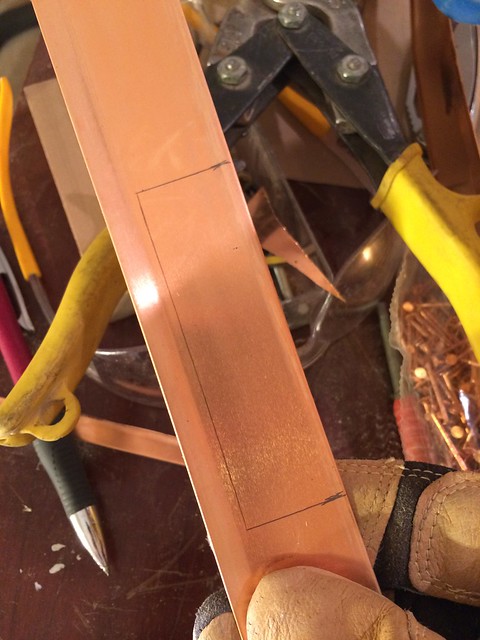
    <published>2014-01-15T11:17:00.000-05:00</published>
    <updated>2014-01-15T11:17:00.000-05:00</updated>
    <link rel="alternate" href="https://www.oldtownhome.com/2014/1/15/Installing-Spring-Bronze-Weather-Stripping-for-Antique-Windows/" />
    <author>
      <name>Alex</name>
    </author>
    <content type="html"><![CDATA[<p>If there's one thing that makes me think "I really need to finish the storm windows," it's the bone chilling 4 degree cold we had a week ago (that was the lowest in 20 years) combined with the associated high winds and billowing drapes that accompany it. </p>
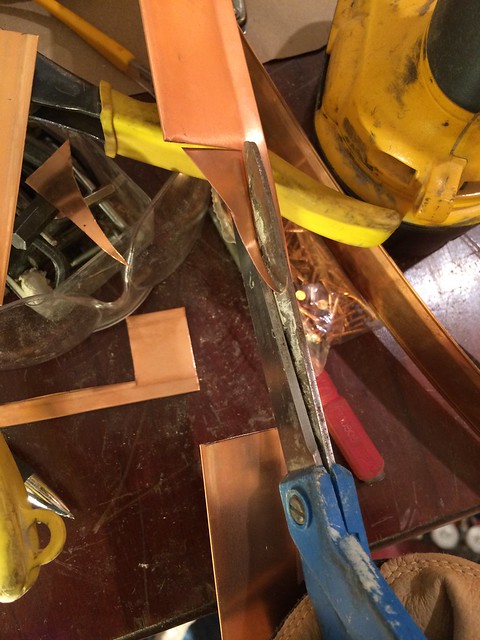
<p>Did I just say "billowing drapes?" Well, that doesn't make much sense if the windows are closed. Exactly!</p>
<p>You see, our windows are what you call "leaky." No, I'm not talking about little air leaks you find in almost any window, I'm talking about giant gaps large enough for you to stick your fingers through. When the wind really picks up, it actually whistles through our windows and you can see our heavy window treatments move. But these gaps can't be blamed on an "old window thing." Nope, the age of the window has little to do with it, they're really a "caused by me" thing. Our crazy leaky windows are largely due to the fact I can't seem to finish a project before starting a new one, and I'm midway through the restoration of our windows and haven't yet added back our parting beads, sash stops, weather stripping, or (long overdue) storm windows. I've caused this, I'm at fault, and I accept that. Now it's time to start doing something about it. </p>
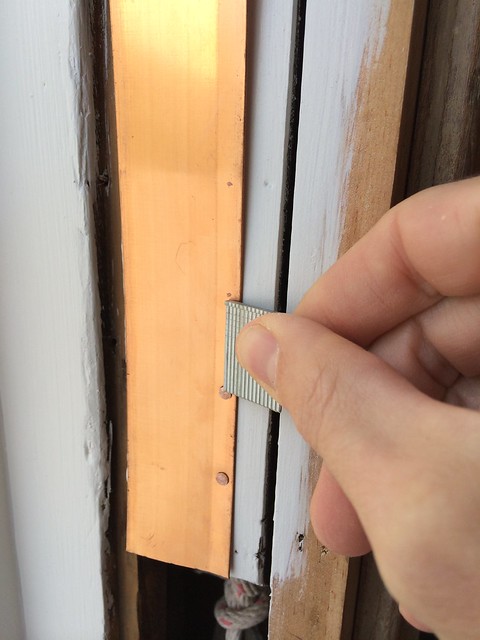
<p>To begin remedying our situation I'm going to focus on the next phase of our window restoration process, the installation of spring bronze weather stripping around the window frame's jambs. Ultimately, this is only one aspect of weather stripping our windows, but it's one of the most critical. </p>
<p>At this point in our project, we've removed the sash stops, parting beads, and sash from the windows, stripped the paint from the frames, and made any necessary repairs to the frames.</p>
<ol>
    <li><a href="http://www.oldtownhome.com/2013/12/16/Window-Restoration-is-More-Doable-than-Most-Think/index.aspx"><span style="text-decoration: line-through;">Disassembly</span></a></li>
    <li><a href="http://www.oldtownhome.com/2013/12/16/Window-Restoration-is-More-Doable-than-Most-Think/index.aspx"><span style="text-decoration: line-through;">Frame Paint Removal</span></a></li>
    <li><a href="http://www.oldtownhome.com/2014/1/9/Historic-Windows-Sometimes-Need-a-Little-Preservation-Alteration/index.aspx"><span style="text-decoration: line-through;">Frame/Component Repair</span></a></li>
    <li><strong>Weather Stripping</strong></li>
    <li>Restring Sash Cord</li>
    <li>Storm Window Installation</li>
    <li>Sash Removal and Repair (this is a multi-step one on its own)</li>
</ol>
<p>Before applying the weather stripping, we needed to sand and apply a few coats of paint to the frames. I'm not going to cover the painting process too thoroughly, as it's very straight forward. I like to use a coat of oil/alkyd based primer and follow that up with two coats of our desired trim color. The only caveat, the exterior trim color goes on the upper sash channel, while the interior trim color goes on the lower sash channel. If that sounds confusing, just think of the colors and locations, and when you're likely to see each color (either from inside or outside) when the windows are closed.</p>
<p>
</p>
<div class="MediaContainer PhotoContainer"><a href="http://farm3.staticflickr.com/2830/10673229093_147782c154_z.jpg" rel="PhotoPopup" popupheight="640" popupwidth="480"><img alt="" src="https://farm3.staticflickr.com/2830/10673229093_147782c154.jpg" width="375" height="500" style="border-width: 0px; border-style: solid;"></a></div>
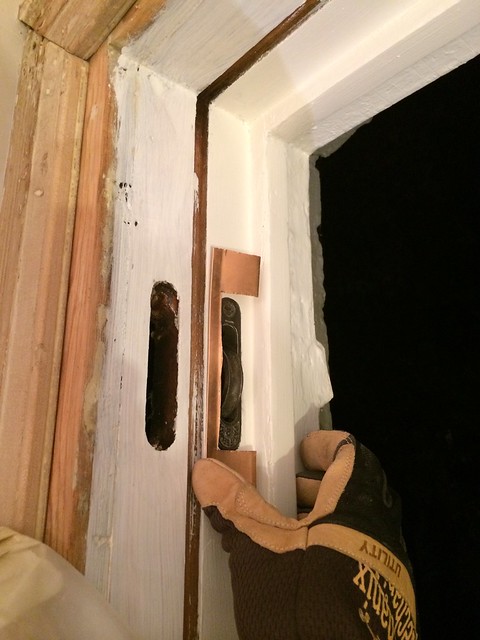
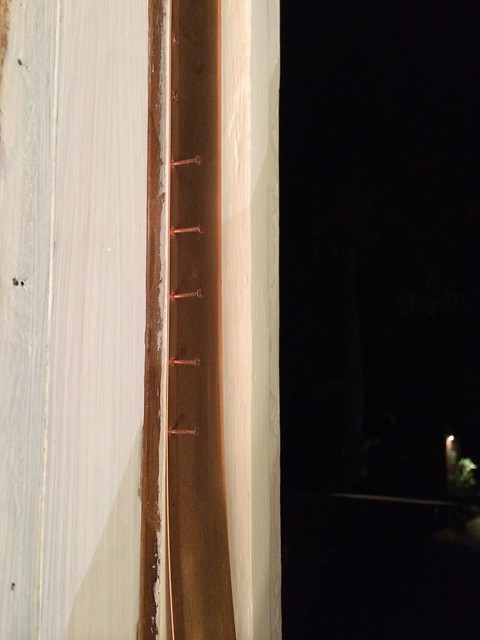
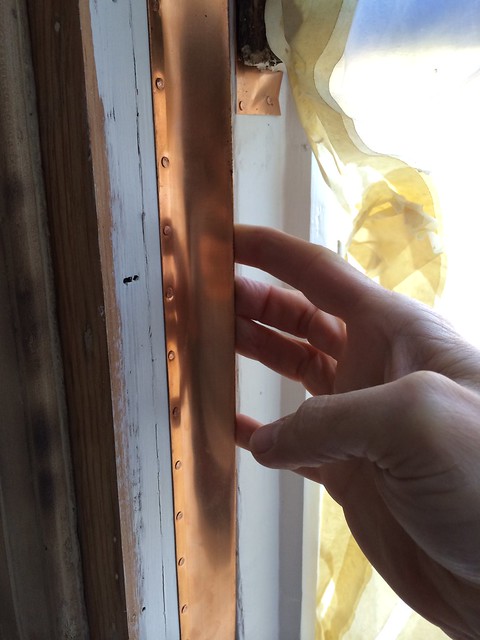
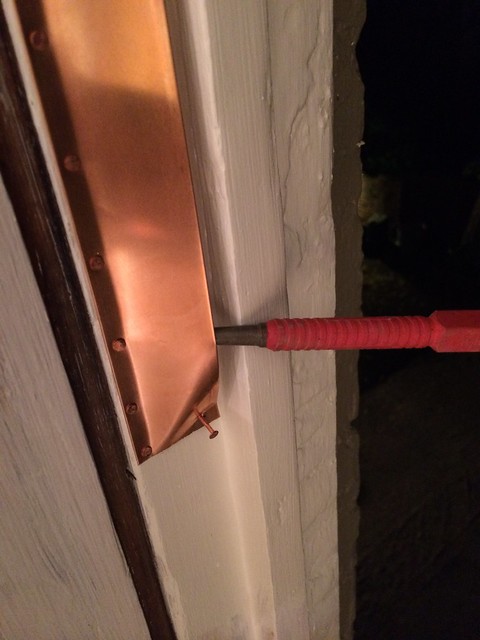
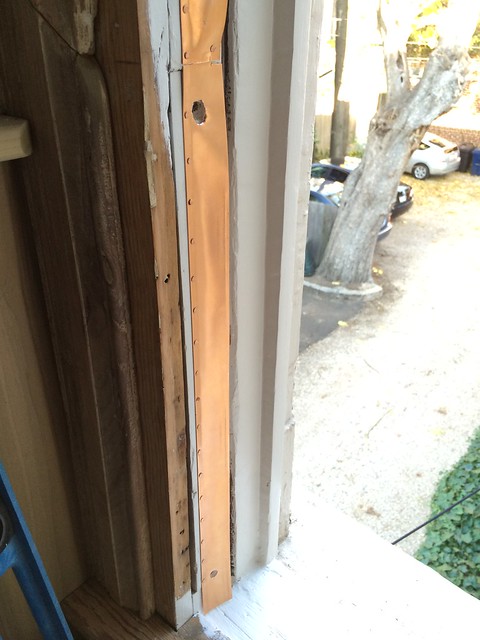
<p>Okay, on with the weather stripping!</p>
<p>In order for windows to open and close properly, the window sash has to be slightly smaller than the window frame. If it were too large, it would just get stuck and never move. But this size difference means that older windows, by design, have gaps around the sash that also allow a significant amount of weather infiltration (hot, cold, wind, rain, snow, bugs, ghosts, woodland creatures, you name it). </p>
<p>I've seen lots of crazy ideas that attempt to address this issue of cold getting in around the window sash's sides, from the extreme of caulking or painting a window completely shut, to the impractical idea of shoving fiberglass insulation into the gaps so the window begins to look like it's growing pink fur. While these are ideas...they aren't ones that work or meet our needs. </p>
<p>Rather than trying to come up with a crazy scheme to beat the cold, why not use an idea that's been around for as long as these old windows have sat in our home's walls? Why not use some spring bronze weather stripping to do the trick? </p>
<p>There are several different types and styles of metal weather stripping that will stand the test of time. The style that was on the windows before is an interlocking style that required a groove in the window sash. Personally, I really don't like this style, as it has several limitations and room for problems down the road. As a result, I'm swapping out the old zinc weather stripping on all of our windows in exchange for spring bronze.</p>
<p>
</p>
<div class="MediaContainer PhotoContainer"><a href="http://farm8.staticflickr.com/7353/10735798803_7aea930bb7_z.jpg" rel="PhotoPopup" popupheight="640" popupwidth="480"><img alt="" src="https://farm8.staticflickr.com/7353/10735798803_7aea930bb7.jpg" width="375" height="500" style="border-width: 0px; border-style: solid;"></a></div>

<p>I ordered a large 100 foot roll of spring bronze years ago, as I knew I'd be using a lot of it as I worked on our doors and windows. I bought mine from <a href="http://www.kilianhardware.com/index.html" target="_blank">Kilian Hardware</a>, but you may have a local supplier who can offer it as well. However, if you're searching for a good supplier for spring bronze or zinc, they've been very reliable over the years.</p>
<p>
</p>
<div class="MediaContainer PhotoContainer"><a href="http://farm4.staticflickr.com/3784/10735803443_be99cd397a_z.jpg" rel="PhotoPopup" popupheight="640" popupwidth="480"><img alt="" src="https://farm4.staticflickr.com/3784/10735803443_be99cd397a.jpg" width="375" height="500" style="border-width: 0px; border-style: solid;"></a></div>

<p>I've spoken about spring bronze before, back when we were <a href="http://www.oldtownhome.com/2011/8/25/Old-Door-Weatherstripping-Dress-it-up-with-Spring-Bronze/">weather stripping our salvaged front door</a>, but installation of spring bronze on doors and double hung windows is a slightly different animal. Both animals are easily tamed, you just need to know how to approach them. </p>
<p>When it comes to window spring bronze installation, it's important to think about what we're trying to accomplish. The issue with windows, as I mentioned above, is with air sneaking in around the sides of the sash, rather than the top or bottom of the sash. For this reason we're going to put the weather stripping only on the window jamb's sides, not along the top or bottom, with the ultimate goal of tightening up the sides of the windows, keeping the sash snug against the jambs. </p>
<p>If you put weather stripping along the top of the window it will likely push the upper sash down and make it hard to lock or get a good seal. If we put it on the bottom it will cause the same issue by pushing the lower sash up, and it can also trap water and debris. I've made the mistake of putting weather stripping on the top of other windows, and now it's my duty to pay it forward so you aren't faced with the same issues. </p>
<p>I start the project by working with the upper sash's weather stripping. When you measure for your first cut, measure from the top of the window jamb down to the point where the bottom of the upper sash sits when fully closed. Add 2.5 inches to this measurement, as you want the weather stripping to extend below your sash a bit. One quick measurement later and you have your first cut. </p>
<p>When I cut spring bronze, I prefer to use a pair of standard craft scissors. (Note: If you're borrowing your partner's good craft scissors, you may want to ask permission first. Lesson learned.) These seem to work much better than tin snips or a utility knife, and they offer better overall control. </p>
<p>When working with the upper sash, if you have sash pulleys to deal with, you'll need to work around your pulleys when installing the spring bronze. I like to first cut a template piece out of a small length of spring bronze that accommodates the pulley without impeding the ropes. Nothing fancy, just a square notch. </p>
<p>Starting with a single blank piece, hold it up to the pulley to mark the top and bottom on the template.</p>
<p>
</p>
<div class="MediaContainer PhotoContainer"><a href="http://farm3.staticflickr.com/2857/10735585456_6981817e56_z.jpg" rel="PhotoPopup" popupheight="640" popupwidth="480"><img alt="" src="https://farm3.staticflickr.com/2857/10735585456_6981817e56.jpg" width="375" height="500" style="border-width: 0px; border-style: solid;"></a></div>

<p>Follow that up by determining the proper depth to clear the wheel section of the pulley and cut your square. The thick part of the spring bronze goes towards the inside of the house.</p>
<p>
</p>
<div class="MediaContainer PhotoContainer"><a href="http://farm8.staticflickr.com/7349/10735586984_2a89a6de04_z.jpg" rel="PhotoPopup" popupheight="640" popupwidth="480"><img alt="" src="https://farm8.staticflickr.com/7349/10735586984_2a89a6de04.jpg" width="375" height="500" style="border-width: 0px; border-style: solid;"></a></div>

<p>Once the template is cut and I'm happy with the location of the cutout, I mark the boundaries of the cut on the jamb, then transfer them to the cut length of spring bronze from the earlier step. I then use the template to trace out the cut I'll need to make on the full length.</p>
<p>
</p>
<div class="MediaContainer PhotoContainer"><a href="http://farm4.staticflickr.com/3684/10735483635_8178e9abdb_z.jpg" rel="PhotoPopup" popupheight="640" popupwidth="480"><img alt="" src="https://farm4.staticflickr.com/3684/10735483635_8178e9abdb.jpg" width="375" height="500" style="border-width: 0px; border-style: solid;"></a></div>

<p>Using the same scissors from the first cut, I cut out the notch. This takes a little patience to be sure I don't make an errant cut along the way, but it's a pretty simple cut. The key is taking your time and not bending the spring bronze.</p>
<p>
</p>
<div class="MediaContainer PhotoContainer"><a href="http://farm4.staticflickr.com/3763/10735486285_d7a855afbd_z.jpg" rel="PhotoPopup" popupheight="640" popupwidth="480"><img alt="" src="https://farm4.staticflickr.com/3763/10735486285_d7a855afbd.jpg" width="375" height="500" style="border-width: 0px; border-style: solid;"></a></div>

<p>I repeat this same process on the opposite side of the widow, taking care not to damage the painted jamb or weather stripping during the measurement or cut. </p>
<p>When it comes time to apply the weather stripping, I begin nailing at the top with a single copper nail, but I only sink it half way. It's extremely important to make sure the vertical and horizontal location is correct with the first nail, but I can still make slight rotation adjustments before placing the second nail. </p>
<p>If I make a mistake when placing the first nail, it's a mistake easily corrected since I only sunk it half way. It's best to take out that first nail and start a new nail in a different location altogether, rather than trying to nail through the same hole. </p>
<p>Once happy with the first nail, Placing the second nail about 1" down from the first anchors the weather stripping so it isn't able to adjust at all. In my opinion, the second nail is pretty much the most critical aspect of each piece of spring bronze, so I'm always saying to myself "okay, don't screw this up!"</p>
<p>When the second nail is half way in, hold the weather stripping down to the jamb to check and make sure it all lines up and doesn't interfere with anything else, like the parting beads or sash stops. If all looks good, you're ready to move on, but if there anything wrong, now is the time to correct it. </p>
<p>From this point the project becomes a little tedious and monotonous. (Wendy tells me it's a bit like this blog post.) I like to set a nail about every inch. To speed this process I use a pencil to mark each nail location spaced evenly down the spring bronze. The easiest way I've come up with to do this is to use a few 1" brads as a guide and just keep moving and marking every inch. </p>
<p>
</p>
<div class="MediaContainer PhotoContainer"><a href="http://farm4.staticflickr.com/3816/10779194993_6903f43bcc_z.jpg" rel="PhotoPopup" popupheight="640" popupwidth="480"><img alt="" src="https://farm4.staticflickr.com/3816/10779194993_6903f43bcc.jpg" width="375" height="500" style="border-width: 0px; border-style: solid;"></a></div>

<p>When all of my marks are in place, I begin nailing, top to bottom, sinking each nail about half depth. </p>
<p>
</p>
<div class="MediaContainer PhotoContainer"><a href="http://farm3.staticflickr.com/2817/10735578546_26bd081380_z.jpg" rel="PhotoPopup" popupheight="640" popupwidth="480"><img alt="" src="https://farm3.staticflickr.com/2817/10735578546_26bd081380.jpg" width="375" height="500" style="border-width: 0px; border-style: solid;"></a></div>

<p>Again, half depth gets the weather stripping fixed in place, but the nails are easily removed if I encounter an issue. </p>
<p>Once all nails are in place, save for the very last two or three, I go ahead and sink them all the rest of the way, trying to get them all as flush as possible. </p>
<p>
</p>
<div class="MediaContainer PhotoContainer"><a href="http://farm6.staticflickr.com/5503/10735575834_5a71462bab_z.jpg" rel="PhotoPopup" popupheight="640" popupwidth="480"><img alt="" src="https://farm6.staticflickr.com/5503/10735575834_5a71462bab.jpg" width="375" height="500" style="border-width: 0px; border-style: solid;"></a></div>

<p>If any end up in a tight or difficult situation where the hammer can't easily reach (like near corners or around the pulleys), I like to use a large nail set to drive it the rest of the way. </p>
<p>Before moving on I like to pull on the secured length of weather stripping to sort of bend it away from the surface. I work from the top to the bottom and I don't apply a ton of pressure, just enough to get it to permanently stay in the position where I want it to be. I feel like this helps ensure a better seal once everything is back in place.&nbsp;</p>
<p>
</p>
<div class="MediaContainer PhotoContainer"><a href="http://farm3.staticflickr.com/2837/10779574866_70442e2c7f_z.jpg" rel="PhotoPopup" popupheight="640" popupwidth="480"><img alt="" src="https://farm3.staticflickr.com/2837/10779574866_70442e2c7f.jpg" width="375" height="500" style="border-width: 0px; border-style: solid;"></a></div>

<p>The final nails at the bottom of the pieces, where they extend from the bottom of the sash, are actually rather critical. Since the sash are moving up and down, leaving the end of the spring bronze unsecured allows for the possibility that the sash may snag the weatherstripping, ultimately damaging both. Rather than leave it hanging there and waiting to chew up your hard work, I like to tack the end down, securing it to the jamb. But I feel like just tacking it down makes it all too flat and doesn't promote a tight weather seal. </p>
<p>Instead, I insert something (in this case, one of the nail sets) to keep the weather stripping away from the jamb, then wrap the bottom around a bit to nail the flap, making a permanent bulge. </p>
<p>
</p>
<div class="MediaContainer PhotoContainer"><a href="http://farm4.staticflickr.com/3704/10735479395_148d598334_z.jpg" rel="PhotoPopup" popupheight="640" popupwidth="480"><img alt="" src="https://farm4.staticflickr.com/3704/10735479395_148d598334.jpg" width="375" height="500" style="border-width: 0px; border-style: solid;"></a></div>

<p>This bulge sets the tone for the tension on the whole length of spring bronze and makes sure the sash maintains a good seal with the jamb. </p>
<p>It is important not to overdo it and make the bulge too large, otherwise your sash won't move smoothly, but a little tension is good. </p>
<p>
</p>
<div class="MediaContainer PhotoContainer"><a href="http://farm4.staticflickr.com/3795/10735561896_4bef007252_z.jpg" rel="PhotoPopup" popupheight="640" popupwidth="480"><img alt="" src="https://farm4.staticflickr.com/3795/10735561896_4bef007252.jpg" width="375" height="500" style="border-width: 0px; border-style: solid;"></a></div>

<p>I use this same technique up around the pulley as well. It's important to tack these loose pieces in place, or it may snag on your sash over time, causing damage to the weather stripping. It does hurt the efficiency a bit, but it's better than the alternative.</p>
<p>
</p>
<div class="MediaContainer PhotoContainer"><a href="http://farm6.staticflickr.com/5491/10735480855_4c656e3179_z.jpg" rel="PhotoPopup" popupheight="640" popupwidth="480"><img alt="" src="https://farm6.staticflickr.com/5491/10735480855_4c656e3179.jpg" width="375" height="500" style="border-width: 0px; border-style: solid;"></a></div>

<p>While the spring bronze on the upper sash is pretty straight forward, the lower sash has several options, introduced by the jamb's weight pockets. </p>
<p>On one hand, you can just put up the spring bronze and cover the pockets, hopeful you'll never have an issue with you ropes that requires access. Personally, I never like the idea of "no access," especially since I just went to such great lengths to fix the issues with the jambs. And though I'm covering the sash restring as the next step, it's actually a step I was doing along with the weather stripping, so nailing the jamb pockets closed at this point would have made the sash restring much harder. Rather than make my life and future maintenance more difficult, I sacrifice some level of weather tightness for a compromise approach. </p>
<p>For our setup, I prefer to install two lengths of spring bronze on either side of lower sash jamb, one on the top portion of fixed jamb, and one on the removable portion of jamb weight pocket door. </p>
<p>The first length at the top is pretty straight forward. I cut a length of weather stripping and install it as I did for the upper sash. It extends above the lower sash a few inches, but it terminates just above the top of the jamb pockets. </p>
<p>The second length then installs right onto the jamb pockets, so it can still operate as an independent piece of the window, rather than nailed right in place. However, with this break mid sash, especially on the sash that is opened and closed most frequently, we really need to worry about snagging and bending the weather stripping.</p>
<p>The key to this second piece is how the two join together. I like to fully secure the upper piece in place and to cut a bit of a rounded tab at the top of the second piece that can fit under the upper piece, forcing it to lay flat and out of the way of the sliding sash. </p>
<p>
</p>
<div class="MediaContainer PhotoContainer"><a href="http://farm3.staticflickr.com/2852/10780440864_2ed6dc8609_z.jpg" rel="PhotoPopup" popupheight="640" popupwidth="480"><img alt="" src="https://farm3.staticflickr.com/2852/10780440864_2ed6dc8609.jpg" width="375" height="500" style="border-width: 0px; border-style: solid;"></a></div>

<p>This approach does mean there's less of a good seal around the window at this point, but it's not a terrible sacrifice for keeping the window in a maintenance accessible way. When the tab is slid under the other piece, it's a smooth and snag free existence.</p>
<p>
</p>
<div class="MediaContainer PhotoContainer"><a href="http://farm8.staticflickr.com/7295/10780546555_4bed9b18d3_z.jpg" rel="PhotoPopup" popupheight="640" popupwidth="480"><img alt="" src="https://farm8.staticflickr.com/7295/10780546555_4bed9b18d3.jpg" width="375" height="500" style="border-width: 0px; border-style: solid;"></a></div>

<p>After applying these lengths of spring bronze to the jamb pocket doors, a few holes need to be drilled in the spring bronze to accommodate the set screws that hold the jamb pocket doors in place. I find it's easiest to drill the spring bronze when flat on wood, or better yet, when sandwiched between two pieces of wood. This gives you the cleanest hole without chewing up the spring bronze in the drill bit. </p>
<p>
</p>
<div class="MediaContainer PhotoContainer"><a href="http://farm8.staticflickr.com/7295/10788447624_df1937d8a4_z.jpg" rel="PhotoPopup" popupheight="480" popupwidth="640"><img alt="" src="https://farm8.staticflickr.com/7295/10788447624_df1937d8a4.jpg" width="500" height="375" style="border-width: 0px; border-style: solid;"></a></div>

<p>It's also worth noting that this second piece extends beyond the bottom of the jamb pocket door to the base of the window frame, but isn't nailed in place. </p>
<p>
</p>
<div class="MediaContainer PhotoContainer"><a href="http://farm4.staticflickr.com/3752/10788353546_39b14ab578_z.jpg" rel="PhotoPopup" popupheight="640" popupwidth="480"><img alt="" src="https://farm4.staticflickr.com/3752/10788353546_39b14ab578.jpg" width="375" height="500" style="border-width: 0px; border-style: solid;"></a></div>

<p>At each step it's good to test out the fit of the sash by putting it in place and ensuring it still moves smoothly and as anticipated. As I keep saying, it's much easier to fix problems midway through the step than it is once all of the nails are fully set. </p>
<p>
</p>
<div class="MediaContainer PhotoContainer"><a href="http://farm6.staticflickr.com/5477/10785199903_127640ba57_z.jpg" rel="PhotoPopup" popupheight="640" popupwidth="480"><img alt="" src="https://farm6.staticflickr.com/5477/10785199903_127640ba57.jpg" width="375" height="500" style="border-width: 0px; border-style: solid;"></a></div>

<p>When combining the spring bronze, installed as I've outlined, with storm windows and additional weather stripping along the meeting rail (I'll cover that when I'm talking about the sash work), your windows of any age will be nearly as efficient as the most expensive models on the market today. But the best news, your old windows will outlast just about any new windows without question.</p>
<p>Our next post on this subject will cover the critical process of re-roping your window sash and weighted pulleys. As I mentioned, I was doing that aspect of the project as I was installing the spring bronze, but it's generally easier to cover them as separate topics, so please excuse the chronology. There are definitely a few tricks to the process that can make the whole thing much easier to handle. </p>
<p>
</p>
<div class="MediaContainer PhotoContainer"><a href="http://farm3.staticflickr.com/2814/10788501446_0f7c279bec_z.jpg" rel="PhotoPopup" popupheight="640" popupwidth="480"><img alt="" src="https://farm3.staticflickr.com/2814/10788501446_0f7c279bec.jpg" width="375" height="500" style="border-width: 0px; border-style: solid;"></a></div>

<p>It's my hope that you'll find this topic at least somewhat useful, especially if you're installing your own spring bronze weather stripping. And I hope the tips and tricks I've picked up along the way are useful in helping you in your install. I can tell you one thing about this weather stripping, even without restored sash, and without parting beads, this window is still tighter than it ever was when we had the old, damaged, and improperly installed weather stripping.</p>
<p>Now I'm off to work on a DIY install of a home security system, have a bathroom to renovate, and storm windows to build. Uh oh. I guess I really am guilty of starting new projects before finishing my existing ones.</p><p><a href="https://www.oldtownhome.com/2014/1/15/Installing-Spring-Bronze-Weather-Stripping-for-Antique-Windows/">Read Full Post</a></p>]]></content>
    <category term="Header Image" />
    <category term="Projects:Home Improvement" />
    <category term="Weather Stripping" />
    <category term="Window Restoration Series" />
    <category term="Windows" />
    <PostImage>http://farm4.staticflickr.com/3742/11965636834_b2ebacc927_z.jpg</PostImage>
    <media:thumbnail url="https://farm4.staticflickr.com/3742/11965636834_b2ebacc927_t.jpg" />
    <ExtensionElements>
      <Item>PostImage</Item>
      <Item>media:thumbnail</Item>
    </ExtensionElements>
  </entry>
  <entry>
    <guid>4c8d94ba-3b4d-4f5d-9eba-b5b20fb4e460</guid>
    <id>https://www.oldtownhome.com/2014/1/9/Historic-Windows-Sometimes-Need-a-Little-Preservation-Alteration/</id>
    <title>Historic Windows Sometimes Need a Little Preservation Alteration</title>
    <summary type="html"><![CDATA[<p>In the summer after my senior year of high school, when I scored a veritable windfall job that paid a king's salary of $9 an hour, I gave almost no thought to the way this job might shape me and my interests as a person. I was an 18 year old kid and the only thing I cared about was the fact I wouldn't be working at The Finish Line in the mall making $4.50 an hour while being forced to touch people's feet and tell them how "tight their new kicks look," as I had done for the prior two years. I had enough of being called Al Bundy by my friends and dealing with the general public.</p><p>As it turned out, the summer I spent sweating away the days on the floor of a window restoration shop along the banks of the twisting Cuyahoga River in "The Flats" of downtown Cleveland helped me learn several valuable lessons. First, $9.00 per hour felt like a lot more when I eagerly accepted the job than it did when I was sweltering in an unconditioned wood shop standing on my feet for eight hours a day and working on salvaged window sash. Second, old things from buildings are absolutely worth saving, no matter what kind of shape they're in. And third, sometimes even old things could use a little improvement or two to correct some of the problems those old things might have always had.</p><p>Which brings me to present day, and how the first major phase of our recent window restoration approach allowed us to establish a paint free and prepared surface where we can begin our true restoration/rehabilitation work. The sash weights had been removed, previous ineffective weather stripping discarded, sash pulleys taken out and cleaned up, and the sash were laying by the side of the opening. It's one of those renovation moments where you look at the giant hole in the side of your house and think, "What have I done?!?"</p><p>
</p><div class="MediaContainer PhotoContainer"><a href="http://farm4.staticflickr.com/3775/10673006696_ab6bfde5e2_z.jpg" rel="PhotoPopup" popupheight="640" popupwidth="480"><img alt="" src="https://farm4.staticflickr.com/3775/10673006696_ab6bfde5e2.jpg" width="375" height="500" style="border-width: 0px; border-style: solid;"></a></div><p>Fear not. Though a large and unprotected hole in the side of one's house can be worrisome (especially when it begins to rain), we (and possibly you if you're using this as reference) are on our way to a beautiful and functional window. We just need to follow a few more very important steps. Remember our list?</p><p>As I've mentioned previously, there is a somewhat significant design flaw in our windows. The weight pocket doors extend all of the way down the side of the unit and into the sill of the window. While this was easier to construct at the mill, it allows water that blows beneath the lower sash, or snow that accumulates and begins to melt, to creep into the weight pocket, seep into the wall, and ultimately bring destruction. The end result of this unwanted guest is typically damage or complete failure of the plaster. Water is, after all, public enemy #1 of old homes.</p> <a href="https://www.oldtownhome.com/2014/1/9/Historic-Windows-Sometimes-Need-a-Little-Preservation-Alteration/">more</a>]]></summary>
    <published>2014-01-09T10:00:00.000-05:00</published>
    <updated>2014-01-09T10:00:00.000-05:00</updated>
    <link rel="alternate" href="https://www.oldtownhome.com/2014/1/9/Historic-Windows-Sometimes-Need-a-Little-Preservation-Alteration/" />
    <author>
      <name>Alex</name>
    </author>
    <content type="html"><![CDATA[<p>In the summer after my senior year of high school, when I scored a veritable windfall job that paid a king's salary of $9 an hour, I gave almost no thought to the way this job might shape me and my interests as a person. I was an 18 year old kid and the only thing I cared about was the fact I wouldn't be working at The Finish Line in the mall making $4.50 an hour while being forced to touch people's feet and tell them how "tight their new kicks look," as I had done for the prior two years. I had enough of being called Al Bundy by my friends and dealing with the general public.</p>
<p>As it turned out, the summer I spent sweating away the days on the floor of a window restoration shop along the banks of the twisting Cuyahoga River in "The Flats" of downtown Cleveland helped me learn several valuable lessons. First, $9.00 per hour felt like a lot more when I eagerly accepted the job than it did when I was sweltering in an unconditioned wood shop standing on my feet for eight hours a day and working on salvaged window sash. Second, old things from buildings are absolutely worth saving, no matter what kind of shape they're in. And third, sometimes even old things could use a little improvement or two to correct some of the problems those old things might have always had.</p>
<p>Which brings me to present day, and how the first major phase of our recent window restoration approach allowed us to establish a paint free and prepared surface where we can begin our true restoration/rehabilitation work. The sash weights had been removed, previous ineffective weather stripping discarded, sash pulleys taken out and cleaned up, and the sash were laying by the side of the opening. It's one of those renovation moments where you look at the giant hole in the side of your house and think, "What have I done?!?"</p>
<p>
</p>
<div class="MediaContainer PhotoContainer"><a href="http://farm4.staticflickr.com/3775/10673006696_ab6bfde5e2_z.jpg" rel="PhotoPopup" popupheight="640" popupwidth="480"><img alt="" src="https://farm4.staticflickr.com/3775/10673006696_ab6bfde5e2.jpg" width="375" height="500" style="border-width: 0px; border-style: solid;"></a></div>
<p>Fear not. Though a large and unprotected hole in the side of one's house can be worrisome (especially when it begins to rain), we (and possibly you if you're using this as reference) are on our way to a beautiful and functional window. We just need to follow a few more very important steps. Remember our list?</p>
<ol>
    <li><a href="http://www.oldtownhome.com/2013/12/16/Window-Restoration-is-More-Doable-than-Most-Think/index.aspx"><span style="text-decoration: line-through;">Disassembly</span></a></li>
    <li><a href="http://www.oldtownhome.com/2013/12/16/Window-Restoration-is-More-Doable-than-Most-Think/index.aspx"><span style="text-decoration: line-through;">Frame Paint Removal</span></a></li>
    <li><strong>Frame/Component Repair</strong></li>
    <li>Weather Stripping</li>
    <li>Restring Sash Cord</li>
    <li>Storm Window Installation</li>
    <li>Sash Removal and Repair (this is a multi-step one on its own)</li>
</ol>
<p>As I've mentioned previously, there is a somewhat significant design flaw in our windows. The weight pocket doors extend all of the way down the side of the unit and into the sill of the window. While this was easier to construct at the mill, it allows water that blows beneath the lower sash, or snow that accumulates and begins to melt, to creep into the weight pocket, seep into the wall, and ultimately bring destruction. The end result of this unwanted guest is typically damage or complete failure of the plaster. Water is, after all, public enemy #1 of old homes.</p>
<p>Since water damage on beautiful and smooth walls is not a fun thing to deal with, I decided to retrofit a few pieces to resolve this issue in our windows. I've already done this in our bedroom windows and it's worked quite well since I installed them. </p>
<p>I started with some old growth and tight grain 2x4 salvaged lumber. This stuff is 125 or more years since being cut down in the forest, and who knows how long it lived in the forest before it was felled by some 19th century axman, maybe 100-200 years? The fact is, we want to stop the infiltration of water, and using new wood might work at first, but that soft pine you can find at the lumber yard will only end up rotting away before you know it. Using this old, aged, tight grained, and hard wood will give our fix a good chance of lasting much, much longer.</p>
<p>Using our piece of salvaged 2x4, I ripped down the rough sawn edges to get to the beautiful and usable wood. I did my best on the table saw but it's moments like these where I see the void in my life that can only be filled by a bench jointer. Maybe some day I'll join the ranks of the real woodworkers that own this beautiful tool. I just need more room in the basement to make it a reality.</p>
<p>If you ever work with old lumber like this, be sure to smell it when you cut it. I'm serious, take some good sniffs. Don't worry, it's only weird to most people, but not everyone, I won't think less of you. You'll notice it has a completely unique and almost sweet smell to it. It's not the type of thing you normally get when you smell fresh cut lumber. </p>
<p>Once I had the pieces cut to a usable size that fits perfectly in the slot for the weight pockets, I began taking the necessary notches and grooves out of the piece to get it to fit properly in the opening and with the jamb doors. My first step was to make the jamb door and new blocking fit perfectly.</p>
<p>
</p>
<div class="MediaContainer PhotoContainer"><a href="http://farm8.staticflickr.com/7438/10735433886_091bfb66a4_z.jpg" rel="PhotoPopup" popupheight="480" popupwidth="640"><img alt="" src="https://farm8.staticflickr.com/7438/10735433886_091bfb66a4.jpg" width="500" height="375" style="border-width: 0px; border-style: solid;"></a></div>
<p>As you can see, I already rabetted the block, so I needed to cut a corresponding groove in the jamb door.</p>
<p>
</p>
<div class="MediaContainer PhotoContainer"><a href="http://farm8.staticflickr.com/7438/10735436714_6c01d4a364_z.jpg" rel="PhotoPopup" popupheight="480" popupwidth="640"><img alt="" src="https://farm8.staticflickr.com/7438/10735436714_6c01d4a364.jpg" width="500" height="375" style="border-width: 0px; border-style: solid;"></a></div>
<p>Once happy with the fit, I began taking the necessary notches and groovers to accommodate the parting bead groove, a ledge for the pocket "door", and a groove on the back to let it sit in its opening. Lots of little cuts on the dado blade to get this little piece of wood into the correct shape for a nice fit. </p>
<p>
</p>
<div class="MediaContainer PhotoContainer"><a href="http://farm3.staticflickr.com/2807/10735313085_1dcfda8c51_z.jpg" rel="PhotoPopup" popupheight="640" popupwidth="640"><img alt="" src="https://farm3.staticflickr.com/2807/10735313085_1dcfda8c51.jpg" width="500" height="500" style="border-width: 0px; border-style: solid;"></a></div>
<p>After countless cuts and checks for size, I finally had myself two little blocks that would ultimately act as our window's flood dam. </p>
<p>Installation of these two blocks must also promote a water tight seal, otherwise we'll be right back at square one. If I were doing this when the window were being built, I would probably make a strong joint using glue and possibly a tight dovetail. But since we're doing this as a retrofit, I'm going to cheat a bit and use a mixture of waterproof wood glue for the base, and <a href="http://oldtownhome.com/2011/6/14/Toolbox-Tuesday-Do-Your-Best-Then-Caulk-the-Rest/">my favorite Big Stretch caulk</a> for the water tight joint.</p>
<p>
</p>
<div class="MediaContainer PhotoContainer"><a href="http://farm4.staticflickr.com/3723/10735323515_2e729f0275_z.jpg" rel="PhotoPopup" popupheight="640" popupwidth="480"><img alt="" src="https://farm4.staticflickr.com/3723/10735323515_2e729f0275.jpg" width="375" height="500" style="border-width: 0px; border-style: solid;"></a></div>
<p>One the caulk is in place and the piece of wood is securely where I want it to be, I use the nail gun to fix the wood securely in its place by nailing through from the interior side of the window. The primary purpose for the nails are simply to hold the blocks in place until the glue and caulk has a chance to cure.</p>
<p>
</p>
<div class="MediaContainer PhotoContainer"><a href="http://farm6.staticflickr.com/5489/10735625993_12eacdd382_z.jpg" rel="PhotoPopup" popupheight="640" popupwidth="480"><img alt="" src="https://farm6.staticflickr.com/5489/10735625993_12eacdd382.jpg" width="375" height="500" style="border-width: 0px; border-style: solid;"></a></div>
<p>With the block's glue and caulk setting up, my attention then turns to the deteriorated jamb doors. I've previously compared the tops of these doors to remnants of a beaver's snack, but this can be resolved at this point. The blocked I've installed add a few inches of height to the base, which means the jamb doors can be trimmed a bit.</p>
<p>
</p>
<div class="MediaContainer PhotoContainer"><a href="http://farm6.staticflickr.com/5511/10673004285_5546122fb2_z.jpg" rel="PhotoPopup" popupheight="640" popupwidth="480"><img alt="" src="https://farm6.staticflickr.com/5511/10673004285_5546122fb2.jpg" width="375" height="500" style="border-width: 0px; border-style: solid;"></a></div>
<p>Rather than cutting the bottoms off and calling it good, I take a little off the top by mimicking the original angle to make the chipped and splintered original tops into something a little more appropriate for a refurbished window.</p>
<p>
</p>
<div class="MediaContainer PhotoContainer"><a href="http://farm3.staticflickr.com/2882/10735318115_71bf7e3962_z.jpg" rel="PhotoPopup" popupheight="480" popupwidth="640"><img alt="" src="https://farm3.staticflickr.com/2882/10735318115_71bf7e3962.jpg" width="500" height="375" style="border-width: 0px; border-style: solid;"></a></div>
<p>Between the new cut at the top, and the rabbet at the bottom of the jamb door, it's now a perfect fit to it can sit against the new blocking without pushing right on into the weight pockets.</p>
<p>
</p>
<div class="MediaContainer PhotoContainer"><a href="http://farm6.staticflickr.com/5514/10735403726_f6cc694ea6_z.jpg" rel="PhotoPopup" popupheight="640" popupwidth="480"><img alt="" src="https://farm6.staticflickr.com/5514/10735403726_f6cc694ea6.jpg" width="375" height="500" style="border-width: 0px; border-style: solid;"></a></div>
<p>Finally, I drill a few pilot holes for the screws...&nbsp;</p>
<p>
</p>
<div class="MediaContainer PhotoContainer"><a href="http://farm3.staticflickr.com/2879/10735316535_ba4963ef37_z.jpg" rel="PhotoPopup" popupheight="640" popupwidth="480"><img alt="" src="https://farm3.staticflickr.com/2879/10735316535_ba4963ef37.jpg" width="375" height="500" style="border-width: 0px; border-style: solid;"></a></div>
<p>...so we can properly affix these "new" jamb doors into their openings at both the top and the bottom of the jamb doors.&nbsp;</p>
<p>
</p>
<div class="MediaContainer PhotoContainer"><a href="http://farm4.staticflickr.com/3736/10735406396_a5276d1935_z.jpg" rel="PhotoPopup" popupheight="640" popupwidth="480"><img alt="" src="https://farm4.staticflickr.com/3736/10735406396_a5276d1935.jpg" width="375" height="500" style="border-width: 0px; border-style: solid;"></a></div>
<p>The lower screw is just a much smaller screw that secures everything in place.</p>
<p>
</p>
<div class="MediaContainer PhotoContainer"><a href="http://farm3.staticflickr.com/2829/10784608006_d63e77c80a_z.jpg" rel="PhotoPopup" popupheight="640" popupwidth="480"><img alt="" src="https://farm3.staticflickr.com/2829/10784608006_d63e77c80a.jpg" width="375" height="500" style="border-width: 0px; border-style: solid;"></a></div>
<p>As you can see, during this whole process I was also progressively priming and painting the various elements of the window frame. I'll cover this in more detail in our next post, bit I always try to make my process more difficult by unnecessarily combining multiple difficult steps. It's how I roll.&nbsp;</p>
<p>This is one of those little things that take a rather large amount of time but set up a good shot at long term success for our project. It's my hope that this small alteration will help our home's original windows last for a few hundred more years before anyone even thinks about replacing them. Who knows, maybe by then we'll have some sort of force shield storm window that can invisibly go up and protect these original windows permanently. Hey, I need to patent this idea -- invisible force shield storm windows. That's our ticket to endless wealth. Now how do I go about actually implementing this idea...?</p><p><a href="https://www.oldtownhome.com/2014/1/9/Historic-Windows-Sometimes-Need-a-Little-Preservation-Alteration/">Read Full Post</a></p>]]></content>
    <category term="Header Image" />
    <category term="Window Restoration" />
    <category term="Window Restoration Series" />
    <category term="Windows" />
    <PostImage>http://farm3.staticflickr.com/2807/10735313085_1dcfda8c51.jpg</PostImage>
    <media:thumbnail url="https://farm3.staticflickr.com/2807/10735313085_1dcfda8c51_t.jpg" />
    <ExtensionElements>
      <Item>PostImage</Item>
      <Item>media:thumbnail</Item>
    </ExtensionElements>
  </entry>
</feed>