<?xml version="1.0" encoding="utf-8"?>
<feed xmlns="http://www.w3.org/2005/Atom" xmlns:media="http://search.yahoo.com/mrss/">
  <title>Old Town Home Category: 'Wavy Glass'</title>
  <updated>2018-06-01T09:43:00.000-04:00</updated>
  <id>http://www.oldtownhome.com/wavy-glass/index.atom</id>
  <link rel="alternate" href="http://www.oldtownhome.com/wavy-glass/index.atom" />
  <author>
    <name>Alex and Wendy</name>
    <uri>http://www.oldtownhome.com/</uri>
    <email>wendy@oldtownhome.com</email>
  </author>
  <entry>
    <guid>fca5e21a-0889-4ef6-ad64-708f6a53a561</guid>
    <id>https://www.oldtownhome.com/2018/6/1/Window-Sash-Restoration-Part-5-Sourcing-and-Cutting-New-or-Salvaged-Wavy-Glass/</id>
    <title>Window Sash Restoration Part 5: Sourcing and Cutting New or Salvaged Wavy Glass</title>
    <summary type="html"><![CDATA[<p>Old windows are glorious things of beauty, and the wavy glass they possess are no small part of their classic winning looks.</p><p>If you've ever had a chance to see the undulations of light cast by a ray of sun through imperfect included glass, or enjoyed the subtle dance of fractured and warped reflections caused by true divided light windows with subtly bubbled and wrinkled glass, you know exactly what I'm talking about.</p><p>
</p><div class="MediaContainer PhotoContainer"><a href="https://farm9.staticflickr.com/8092/8504435309_5c8418126b_z.jpg" rel="PhotoPopup" popupheight="427" popupwidth="640"><img alt="" src="https://farm9.staticflickr.com/8092/8504435309_5c8418126b.jpg" width="500" height="333" style="border-width: 0px; border-style: solid;"></a></div><p>In our window restoration we've gone to great lengths to <a href="https://www.oldtownhome.com/2017/10/2/DIY-Stripping-Steam-Box-for-Antique-Window-Glazing-Removal-and-Restoration/" target="_blank">build a steam box</a> in order to r<a href="https://www.oldtownhome.com/2017/11/7/Real-Progress-on-Our-Window-Restoration-Project-Part-1/" target="_blank">emove and protect the unbroken original glass</a> from our window sash. We consider ourselves extremely fortunate to have many panes of our original 130 plus year old glass. Even though many of the pieces are scratched from years of use, we will certainly protect, restore, and reinstall these original panes whenever possible. However, some of the panes of glass are cracked or have been replaced with modern glass over the years.&nbsp;&nbsp;</p><p>Of the four panes of glass I had removed from the first set of two over two window sash we're restoring, one was a more modern replacement, one was broken in the corner, and two were still usable and in good shape.</p><p>We planned to replace the broken and modern pieces of glass, so the hunt for the replacement began. I set the two that I was going to use off to the side to glaze them, and set out to find my replacement glass for the other two pieces.&nbsp;</p> <a href="https://www.oldtownhome.com/2018/6/1/Window-Sash-Restoration-Part-5-Sourcing-and-Cutting-New-or-Salvaged-Wavy-Glass/">more</a>]]></summary>
    <published>2018-06-01T09:43:00.000-04:00</published>
    <updated>2018-06-01T09:43:00.000-04:00</updated>
    <link rel="alternate" href="https://www.oldtownhome.com/2018/6/1/Window-Sash-Restoration-Part-5-Sourcing-and-Cutting-New-or-Salvaged-Wavy-Glass/" />
    <author>
      <name>Alex</name>
    </author>
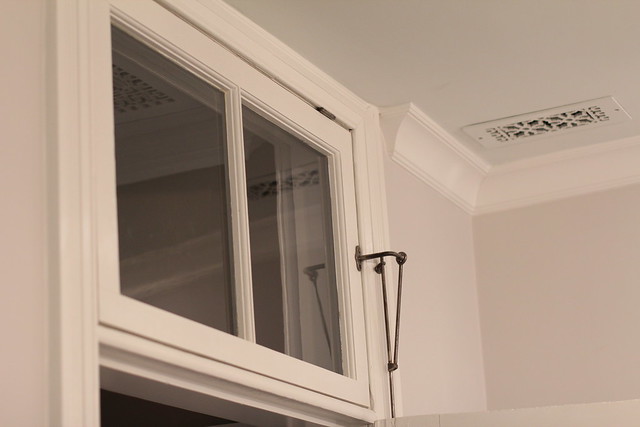
    <content type="html"><![CDATA[<p>Old windows are glorious things of beauty, and the wavy glass they possess are no small part of their classic winning looks.</p>
<p>If you've ever had a chance to see the undulations of light cast by a ray of sun through imperfect included glass, or enjoyed the subtle dance of fractured and warped reflections caused by true divided light windows with subtly bubbled and wrinkled glass, you know exactly what I'm talking about.</p>
<p>
</p>
<div class="MediaContainer PhotoContainer"><a href="https://farm9.staticflickr.com/8092/8504435309_5c8418126b_z.jpg" rel="PhotoPopup" popupheight="427" popupwidth="640"><img alt="" src="https://farm9.staticflickr.com/8092/8504435309_5c8418126b.jpg" width="500" height="333" style="border-width: 0px; border-style: solid;" /></a></div>

<p>In our window restoration we've gone to great lengths to <a href="https://www.oldtownhome.com/2017/10/2/DIY-Stripping-Steam-Box-for-Antique-Window-Glazing-Removal-and-Restoration/" target="_blank">build a steam box</a> in order to r<a href="https://www.oldtownhome.com/2017/11/7/Real-Progress-on-Our-Window-Restoration-Project-Part-1/" target="_blank">emove and protect the unbroken original glass</a> from our window sash. We consider ourselves extremely fortunate to have many panes of our original 130 plus year old glass. Even though many of the pieces are scratched from years of use, we will certainly protect, restore, and reinstall these original panes whenever possible. However, some of the panes of glass are cracked or have been replaced with modern glass over the years.&nbsp;&nbsp;</p>
<p>Of the four panes of glass I had removed from the first set of two over two window sash we're restoring, one was a more modern replacement, one was broken in the corner, and two were still usable and in good shape.</p>
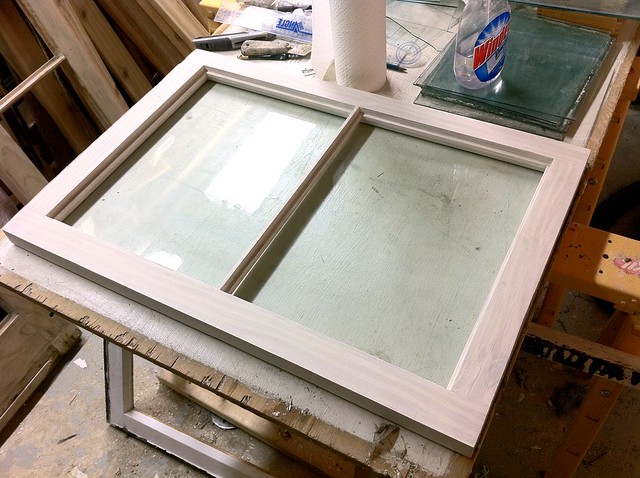
<p>We planned to replace the broken and modern pieces of glass, so the hunt for the replacement began. I set the two that I was going to use off to the side to glaze them, and set out to find my replacement glass for the other two pieces.&nbsp;</p>
<h2>Where Do You Find Wavy Glass?</h2>
<p>For replacement wavy glass we really have three options.</p>
<p><strong>1. Buy New Wavy Glass </strong>- We can source the glass from a vendor the reproduces "handmade" glass using modern techniques to create the historic look. There are a few popular places that sell new old style wavy glass, <a href="https://www.agwglass.com/" target="_blank">Artisan Glass Works (AGW)</a>, <a href="http://www.restorationwindowglass.com/" target="_blank">Hollander Historic Glass</a>,&nbsp;and <a href="https://www.bendheimcabinetglass.com/productCatalog.cfm/Type/Hand-Made-Cabinet-Glass" target="_blank">Bendheim Glass</a>. Of these two, Bendheim tends to be pretty expensive, and their glass is intended for cabinets. AGW produces wavy safety and energy efficient glass, and they are actually less than an hour from us, so that may be a good option for us in the future.</p>
<p><strong>2. Order Old Wavy Glass</strong> - We can order salvaged wavy glass from a variety of locations, such as salvage yards. There used to be a guy that would advertise in Old House Journal, and he was located in Frederick, Maryland, so we ordered some old wavy glass from him about 14 years ago. In these cases we specify the exact size and style (level of imperfections) we're looking for, and the service will find glass that meets our needs and cut to our specifications. This certainly takes a fair amount of the guess work out of getting old glass, and the glass you're getting is truly antique, not a reproduction. However, the service comes at a premium and you'll likely pay double or more than what you'll pay if you do it yourself.</p>
<p><strong>3. Salvage Wavy Glass Yourself</strong> - We can go to the salvage yard and find ourselves an old sash that has glass with the look and size we need, buy the whole sash, and then take it home to pull the glass and cut to size ourselves. This certainly takes the most time, and is also the most risk as you can run into issues whenever you're cutting old glass, but you get to pick exactly what you want. This is often a very important aspect of selecting the glass that's right for you. Iron levels in old glass impact how green they tend to look, and if you're trying to match the glass you select to some existing glass, getting the right tint can be critical.</p>
<p>Can you guess which approach we decided to go with? Don't worry, we won't keep you in any suspense.</p>
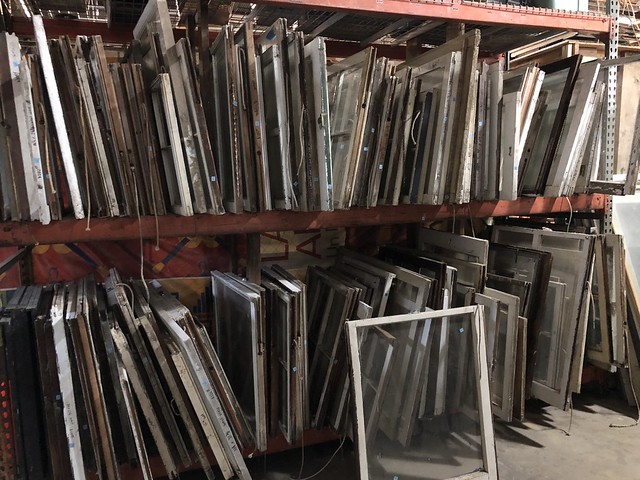
<p><strong>We decided on option #3, "Salvage Wavy Glass Yourself." </strong>Our search took me to one or our favorite local salvage and re-use yards, <a href="http://communityforklift.org/" target="_blank">Community Forklift</a>.</p>
<p>
</p>
<div class="MediaContainer PhotoContainer"><a href="https://farm1.staticflickr.com/815/40699169735_9ef60cf9f6_z.jpg" rel="PhotoPopup" popupheight="480" popupwidth="640"><img alt="" src="https://farm1.staticflickr.com/815/40699169735_9ef60cf9f6.jpg" width="500" height="375" style="border-width: 0px; border-style: solid;" /></a></div>
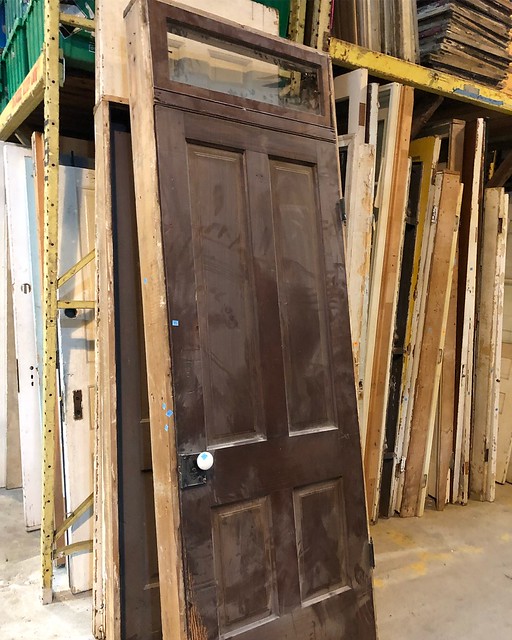
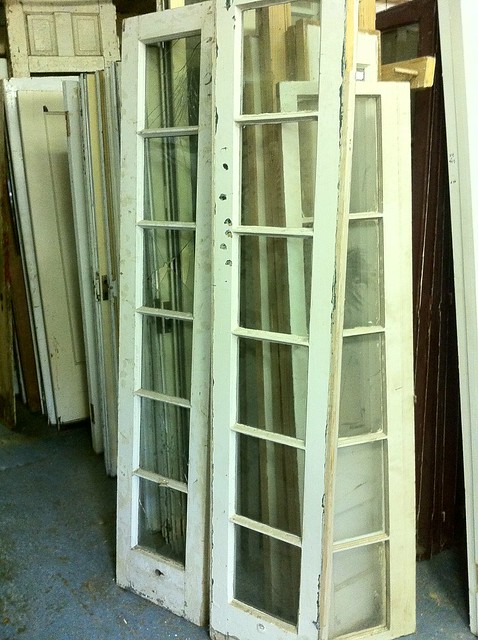
<p>Aside from finding a whole ton of amazing stuff that I really wanted to take home, including this whole door in jamb assembly with intact transom, rim lock, knobs, rosettes, escutcheon, and hinges for just $90!!!!...</p>
<p>
</p>
<div class="MediaContainer PhotoContainer"><a href="https://farm1.staticflickr.com/893/39782927690_65d2136922_z.jpg" rel="PhotoPopup" popupheight="640" popupwidth="512"><img alt="" src="https://farm1.staticflickr.com/893/39782927690_65d2136922.jpg" width="400" height="500" style="border-width: 0px; border-style: solid;" /></a></div>
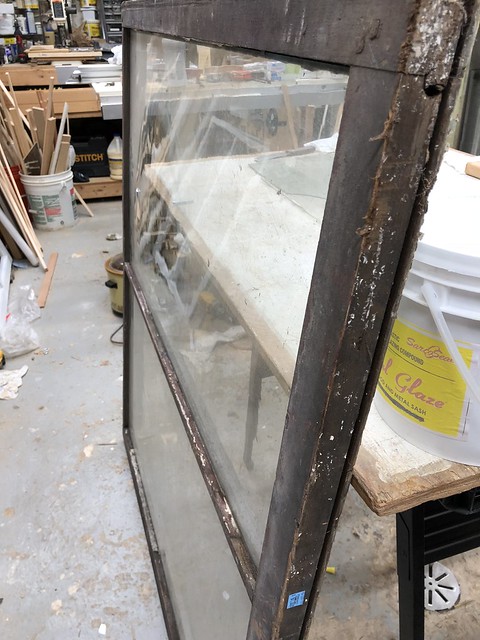
<p>I also found a great window for our purpose. The trick here is finding sash that has large enough pieces of wavy glass that it will be easy to trim it to the the correct size after freeing it from its existing sash.</p>
<p>
</p>
<div class="MediaContainer PhotoContainer"><a href="https://farm1.staticflickr.com/858/41550714982_ca46c209d5_z.jpg" rel="PhotoPopup" popupheight="640" popupwidth="480"><img alt="" src="https://farm1.staticflickr.com/858/41550714982_ca46c209d5.jpg" width="375" height="500" style="border-width: 0px; border-style: solid;" /></a></div>
<p>If the glass is only a little larger than what we need, it will be near impossible to cut it to the correct size due to the limited leverage we can establish for the cut. If you've ever cut glass, you know what I'm talking about. I always look for glass that is either exactly the right size or at least 4" or more larger than what we need.</p>
<p>The sash I found was fairly large, and had two really nice pieces of wavy glass in it. Total cost was $86, and I decided to live dangerously, tempting fate by only purchasing this single sash with just enough glass. This meant the window restoration gods had to look kindly upon me and not allow me to screw up the cuts.</p>
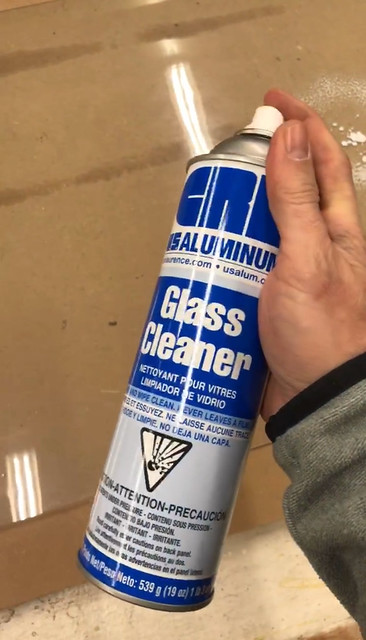
<p><strong><em>Wavy Glass Shopping Pro Tip - Bring Glass Cleaner and Paper Towels to the Salvage Yard!</em></strong></p>
<p><strong><em>
</em></strong></p>
<div class="MediaContainer PhotoContainer"><strong><em><a href="https://farm1.staticflickr.com/912/39782875360_5c5b6fe0a7_z.jpg" rel="PhotoPopup" popupheight="640" popupwidth="480"><img alt="" src="https://farm1.staticflickr.com/912/39782875360_5c5b6fe0a7.jpg" width="375" height="500" style="border-width: 0px; border-style: solid;" /></a></em></strong></div>
<strong><em>
</em></strong>
<p>When shopping for salvaged glass it's important to remember that these old sash are usually very dirty! When the glass is extremely dirty, it's very hard to see whether the glass you're getting is actually wavy to the degree you need it to be or not. So if you have some cleaner on hand you can give it a quick rinse to check the adequacy of the imperfections.&nbsp;</p>
<p>
</p>
<div class="MediaContainer PhotoContainer"><a href="https://farm1.staticflickr.com/917/39782875210_35215c7e2f_z.jpg" rel="PhotoPopup" popupheight="480" popupwidth="640"><img alt="" src="https://farm1.staticflickr.com/917/39782875210_35215c7e2f.jpg" width="500" height="375" style="border-width: 0px; border-style: solid;" /></a></div>
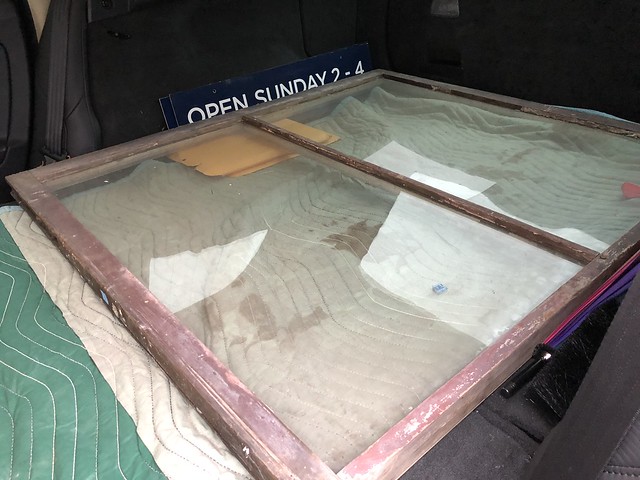
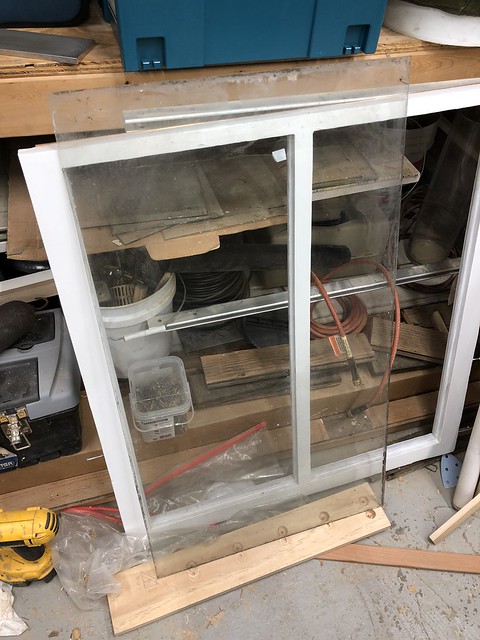
<p>After a tenuous trip home over what I swear are some of the roughest and most pothole filled roads in the DC metro area, I successfully transferred the sash into our basement without breaking any glass! A minor miracle, I assure you.</p>
<p>
</p>
<div class="MediaContainer PhotoContainer"><a href="https://farm1.staticflickr.com/868/39782847490_964d6f9a10_z.jpg" rel="PhotoPopup" popupheight="640" popupwidth="480"><img alt="" src="https://farm1.staticflickr.com/868/39782847490_964d6f9a10.jpg" width="375" height="500" style="border-width: 0px; border-style: solid;" /></a></div>
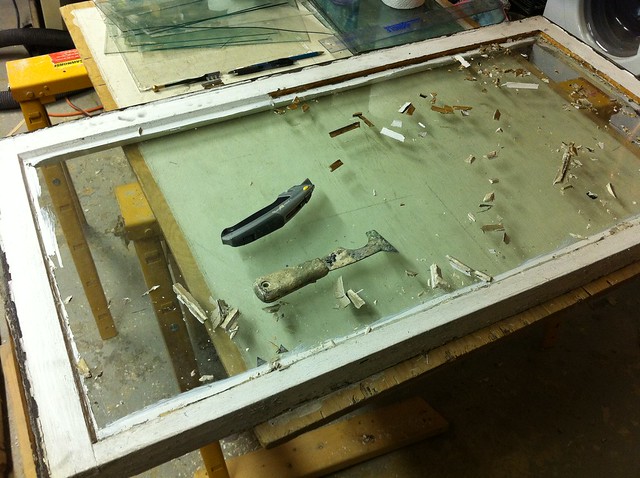
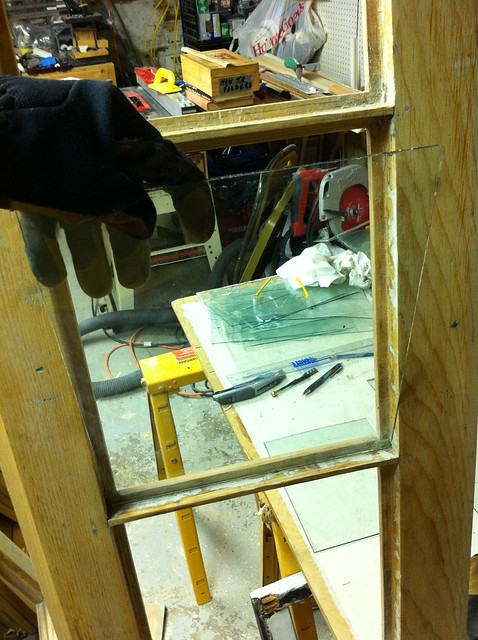
<p>Beyond the size of the glass, one of the best parts about this sash is the fact that the glazing putty had been so poorly maintained that it almost fell out without effort. It simultaneously made me feel sad for the house it came from, and happy I had to do a little less work. Freeing the glass from the sash was only a matter of removing a few glazing point triangles and loving when a plan comes together.</p>
<p>
</p>
<div class="MediaContainer PhotoContainer"><a href="https://farm1.staticflickr.com/895/39782851150_7490033c0b_z.jpg" rel="PhotoPopup" popupheight="640" popupwidth="480"><img alt="" src="https://farm1.staticflickr.com/895/39782851150_7490033c0b.jpg" width="375" height="500" style="border-width: 0px; border-style: solid;" /></a></div>
<p>With the glass free from the sash I could see just how much larger the pieces were than the sash it was destined to go into.</p>
<p>
</p>
<div class="MediaContainer PhotoContainer"><a href="https://farm1.staticflickr.com/820/40880034814_228144d0f6_z.jpg" rel="PhotoPopup" popupheight="640" popupwidth="480"><img alt="" src="https://farm1.staticflickr.com/820/40880034814_228144d0f6.jpg" width="375" height="500" style="border-width: 0px; border-style: solid;" /></a></div>
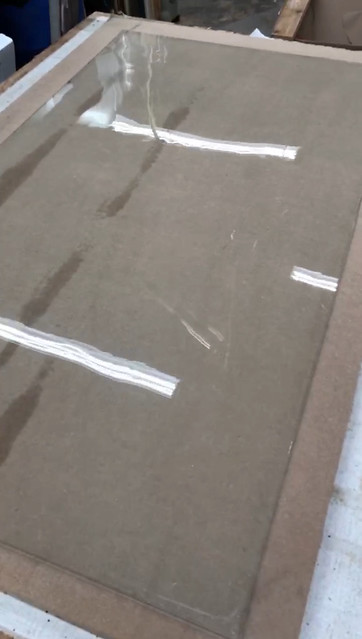
<p>I gave both pieces a thorough cleaning with a foaming glass cleaner and a razor to get any residual gunk off. This is an important step to as it allows you to see any glaring imperfections you may want to avoid when cutting to size.</p>
<p>
</p>
<div class="MediaContainer PhotoContainer"><a href="https://farm2.staticflickr.com/1729/41584795365_0241cd43fc_z.jpg" rel="PhotoPopup" popupheight="640" popupwidth="366"><img alt="" src="https://farm2.staticflickr.com/1729/41584795365_0241cd43fc.jpg" width="286" height="500" style="border-width: 0px; border-style: solid;" /></a></div>
<p>Things like scratches or scoring lines that could end in an easier fracture can often be eliminated from the final piece of glass with a little bit of careful planning.</p>
<p>
</p>
<div class="MediaContainer PhotoContainer"><a href="https://farm2.staticflickr.com/1751/27616797607_9fff15455a_z.jpg" rel="PhotoPopup" popupheight="640" popupwidth="363"><img alt="" src="https://farm2.staticflickr.com/1751/27616797607_9fff15455a.jpg" width="283" height="500" style="border-width: 0px; border-style: solid;" /></a></div>
<h2>Tools You Need For Cutting Wavy Glass</h2>
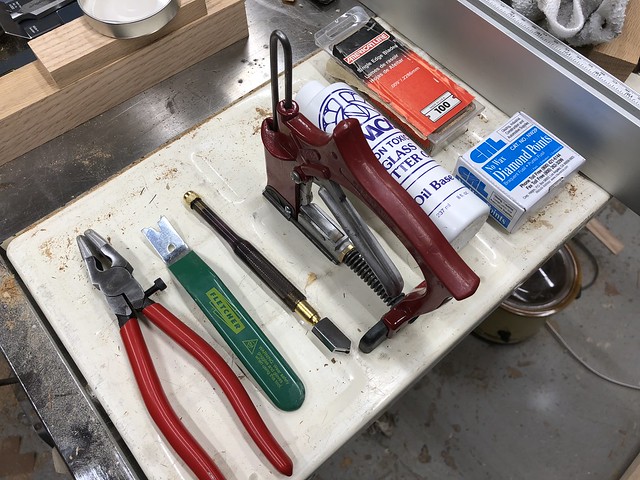
<p>When it comes to cutting wavy glass, it's often an intimidating project that, in reality and execution, is actually very easy. First of all, it's extremely important that you have a handful of inexpensive tools and supplies.</p>
<p class="MediaContainer PhotoContainer"><a href="https://farm1.staticflickr.com/911/41137310834_ce065bea82_z.jpg" rel="PhotoPopup" popupheight="480" popupwidth="640"><img alt="" src="https://farm1.staticflickr.com/911/41137310834_ce065bea82.jpg" width="500" height="375" style="border-width: 0px; border-style: solid;" /></a></p>
<p class="MediaContainer PhotoContainer"><em>Glass Cutting Tools (and a few glazing tools)</em></p>
<p>The following are the invaluable tools and supplies you'll want to pick up if you're looking to do a little glass cutting.</p>
<ol>
    <li>Sharpie</li>
    <li>Straight Edge</li>
    <li><a href="https://amzn.to/2szJH1o" target="_blank">Oil Fed Glass Cutter</a></li>
    <li><a href="https://amzn.to/2LNKJzm" target="_blank">Cutting Oil</a></li>
    <li><a href="https://amzn.to/2LeIJzk" target="_blank">Glass Running Pliers</a></li>
    <li><a href="https://amzn.to/2JovPS4" target="_blank">Cut Resistent Gloves</a></li>
</ol>
<p>Cutting glass is methodic and not particularly difficult endeavor, but certainly has a process. The key is to measure carefully, really carefully, and then just cut once. When I cut I measure the opening size of the glass needed and deduct 1/8" from the measurement. This will allow for a little wiggle room for movement and contraction that could occur, as well as a possibly imperfect opening where you're placing the glass.</p>
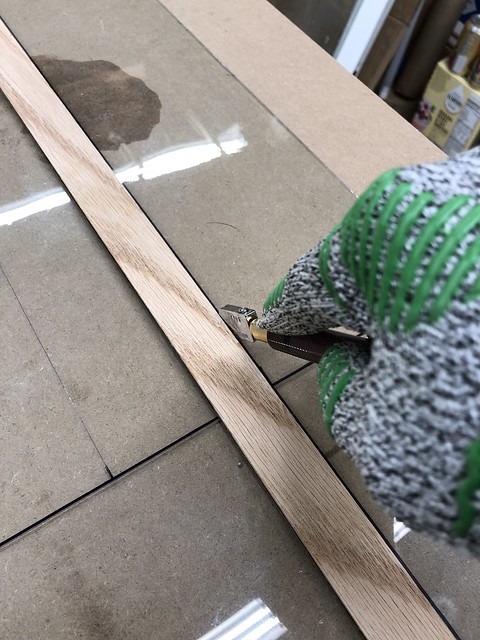
<p>I like to measure and mark the glass using a sharpie so I know right where I'm going to be cutting. The sharpie line is simply a point of reference than anything I'm really trying to follow on straight cuts, and it washes off easily after I'm all done. After marking with the sharpie I gently clamp the straight edge just off of the line so that my glass cutter can ride the straight edge the whole length of the cut.&nbsp;</p>
<p>
</p>
<div class="MediaContainer PhotoContainer"><a href="https://farm1.staticflickr.com/837/41555566732_c65b030395_z.jpg" rel="PhotoPopup" popupheight="480" popupwidth="640"><img alt="" src="https://farm1.staticflickr.com/837/41555566732_c65b030395.jpg" width="500" height="375" style="border-width: 0px; border-style: solid;" /></a></div>
<p>If you're doing a curved cut you'll probably need to free hand things a little, but straight cuts almost always go easier if you're using a straight edge.</p>
<p>
</p>
<div class="MediaContainer PhotoContainer"><a href="https://farm1.staticflickr.com/793/26727572787_d870a2de8d_z.jpg" rel="PhotoPopup" popupheight="640" popupwidth="480"><img alt="" src="https://farm1.staticflickr.com/793/26727572787_d870a2de8d.jpg" width="375" height="500" style="border-width: 0px; border-style: solid;" /></a></div>
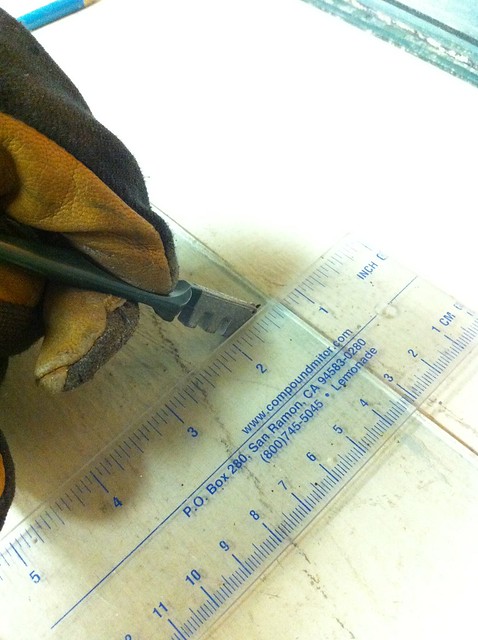
<p>After the glass has been marked it's time to score using the glass cutter. A sharp cutting wheel is paramount to a successful cut. It's debatable whether cutting oil is useful or not, but I've always had better luck with cutters that incorporate auto fed oil as part of the cutting process.&nbsp;</p>
<p>Actually, calling this tool a "glass cutter" is a bit misleading. This is really a glass scorer. It's job is simply to score the glass on a line that will give the glass a predictable line where it wants to cut. The slight relief the score makes in the surface of the glass should be just enough encouragement the glass needs to break along the line you want it to break on. When scoring the glass the single most important tip is to make a single slow pass with even and not too hard of downward pressure on the scoring wheel. Remember, you're not trying to cut the glass with the wheel, you're just trying to score it enough to encourage it to break on that line.</p>
<p>
</p>
<div class="MediaContainer PhotoContainer"><a href="https://farm1.staticflickr.com/810/41595563561_0088e06384_z.jpg" rel="PhotoPopup" popupheight="640" popupwidth="480"><img alt="" src="https://farm1.staticflickr.com/810/41595563561_0088e06384.jpg" width="375" height="500" style="border-width: 0px; border-style: solid;" /></a></div>
<p><em>Notice that I'm wearing the cut resistant gloves? This isn't just to protect me in the event I accidentally shatter the glass, it's also because freshly cut class is often very very sharp. It can slice your skin before you know it and it's a nasty type of cut that's painful and takes a long time to heal. So at the risk of sounding like a "The more you know" campaign, be sure to wear your safety gloves when cutting wavy glass.</em></p>
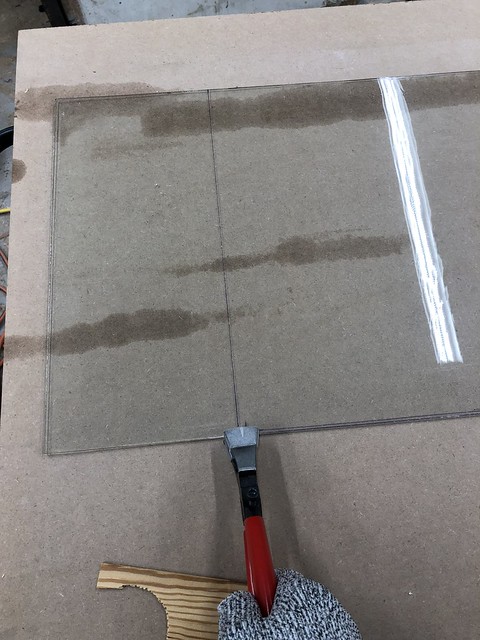
<p>Once you have your glass scored on its first line, grab your pair of running pliers. These pliers are mostly flat but have a very slight flair on either side of the center line. The pliers are also usually covered at the end with a rubber sleeve that will protect the glass. When you line the pliers up with your score line you apply subtle pressure that's just enough to start the glass breaking along the score line. When it works well you can see the glass snap and start to crack along the line.&nbsp;</p>
<p>
</p>
<div class="MediaContainer PhotoContainer"><a href="https://farm1.staticflickr.com/788/39784862280_f05d687c50_z.jpg" rel="PhotoPopup" popupheight="640" popupwidth="480"><img alt="" src="https://farm1.staticflickr.com/788/39784862280_f05d687c50.jpg" width="375" height="500" style="border-width: 0px; border-style: solid;" /></a></div>
<p>After you start the break on one side of the glass move over and repeat it on the other side. Then use the back of your glass cutter tool to tap along the line to encourage the crack to continue. When all goes well, you can apply a little downward pressure on the glass and the piece will cleanly break off for you. Sometime, when that's not working, it works well to hang the glass over the side of your work surface, supporting it on either side with both hands. Then, with the line sitting right at the edge of your surface, let gravity do its thing and put a little pressure on the glass. It should crack right along the line.</p>
<p>Now, don't expect every single cut to be flawless. In fact, plan for it to not be particularly flawless! In my case the glass pieces were large enough that they allowed me to situate my cut lines to accommodate a little mistake. Lucky for me I was thinking ahead, because a mistake was certainly made.</p>
<p>
</p>
<div class="MediaContainer PhotoContainer"><a href="https://farm1.staticflickr.com/912/41595564011_5882b9eef1_z.jpg" rel="PhotoPopup" popupheight="640" popupwidth="480"><img alt="" src="https://farm1.staticflickr.com/912/41595564011_5882b9eef1.jpg" width="375" height="500" style="border-width: 0px; border-style: solid;" /></a></div>
<p>As you can see from the photo, even though the entire rest of the cut was perfect, the last 8" or so of the cut unexpectedly skewed off to the side by about 1/2". Luckily the break didn't suddenly jump across the glass (which happens). I was able to setup my straight edge and score it over 3" to the left, which broke exactly where I wanted it to break. I breathed a sigh of relief after the last cut and thanked the wavy glass gods for their support.</p>
<p>
</p>
<div class="MediaContainer PhotoContainer"><a href="https://farm1.staticflickr.com/861/26727573667_f3fb929c78_z.jpg" rel="PhotoPopup" popupheight="640" popupwidth="480"><img alt="" src="https://farm1.staticflickr.com/861/26727573667_f3fb929c78.jpg" width="375" height="500" style="border-width: 0px; border-style: solid;" /></a></div>
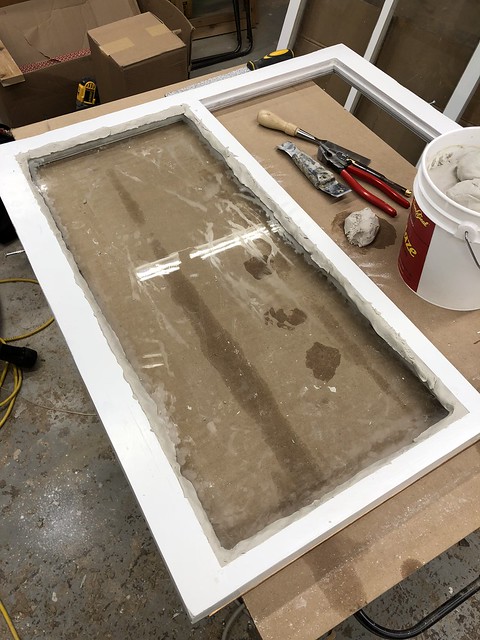
<p>At this point we had ourselves four pieces of wavy glass waiting for reinstall among the two repaired, prepared, and ready to be restored original window sash.</p>
<p>Next time I'll fill you all in on the tedious, sometimes frustrating, but often fulfilling process of glazing old window sash. When you have the right tools, materials, and a little experience, applying glazing putty can be an oddly relaxing process.</p>
<p>
</p>
<div class="MediaContainer PhotoContainer"><a href="https://farm1.staticflickr.com/931/27726032088_46dfe232cc_z.jpg" rel="PhotoPopup" popupheight="640" popupwidth="480"><img alt="" src="https://farm1.staticflickr.com/931/27726032088_46dfe232cc.jpg" width="375" height="500" style="border-width: 0px; border-style: solid;" /></a></div>
<p>Do you have any experience cutting or sourcing wavy glass? Do you find cutting glass to be a soothing or intimidating proposition? Also, I think I'm going to be headed back to Community Forklift this month to pick up a bunch more glass that I'll need. I just saw on their website that all of their window sash are 40% off for the month of June! I love a good wavy glass bargain!</p><p><a href="https://www.oldtownhome.com/2018/6/1/Window-Sash-Restoration-Part-5-Sourcing-and-Cutting-New-or-Salvaged-Wavy-Glass/">Read Full Post</a></p>]]></content>
    <category term="Header Image" />
    <category term="Projects:Salvage" />
    <category term="Salvage" />
    <category term="Wavy Glass" />
    <category term="Window Restoration" />
    <category term="Window Restoration Series" />
    <PostImage>https://c2.staticflickr.com/2/1741/42494651851_6d464e98f4_c.jpg</PostImage>
    <media:thumbnail url="https://c2.staticflickr.com/2/1741/42494651851_6d464e98f4_t.jpg" />
    <ExtensionElements>
      <Item>PostImage</Item>
      <Item>media:thumbnail</Item>
    </ExtensionElements>
  </entry>
  <entry>
    <guid>84afa63a-8955-484f-ba65-79322c5b389e</guid>
    <id>https://www.oldtownhome.com/2018/5/25/Window-Sash-Restoration-Part-4---Bronze-Meeting-Rail-Weather-Stripping/</id>
    <title>Window Sash Restoration Part 4 - Bronze Meeting Rail Weather Stripping</title>
    <summary type="html"><![CDATA[<p>Our first window restoration is entering the home stretch!</p><p>In our last few posts about this project we covered <a href="https://www.oldtownhome.com/2017/10/2/DIY-Stripping-Steam-Box-for-Antique-Window-Glazing-Removal-and-Restoration/">old putty removal in a DIY steam box</a>, paint stripping, <a href="https://www.oldtownhome.com/2017/11/7/Real-Progress-on-Our-Window-Restoration-Project-Part-1/">repairing the broken sections</a>, and applying <a href="https://www.oldtownhome.com/2018/3/2/Window-Sash-Restoration-Part-2---Protecting-the-Sash-with-BLOPentine/">Blopentine (Boiled Linseed Oil + Tupentine)</a> to the stripped antique window sash to rehydrate and protect the sash. We also detailed how we used a <a href="https://www.oldtownhome.com/2018/3/9/Keep-Cast-Iron-Rust-Free-With-a-Linseed-Oil-Bath---Window-Restoration-Part-3/">bath of water and linseed oil soap</a> to protect raw cast iron hardware. That linseed oil is a little bit of liquid magic y'all!</p><p>
</p><div class="MediaContainer PhotoContainer"><a href="https://farm5.staticflickr.com/4346/36673513534_2a0d22f576_z.jpg" rel="PhotoPopup" popupheight="640" popupwidth="480"><img alt="" src="https://farm5.staticflickr.com/4346/36673513534_2a0d22f576.jpg" width="375" height="500" style="border-width: 0px; border-style: solid;"></a></div><p>The next steps in our restoration of the 130+ year old original window sash for our home are critical. With everything repaired and stabilized, beyond putting glass back in, from here on out the whole process is all about steps to turn these sash into a window, and to keep water and weather from infiltrating the window and the house. </p><p>Allowing plenty of time for the blopentine to dry and fully cure, I applied a coat of oil based primer over the entire sash. I like to start priming at this stage of the game, before placing the glass, for several reasons. First of all, it&rsquo;s far easier to prime without concern of getting it on the glass. Second, I worry that the sash wood will suck the moisture/oil out of the glazing putty before it skins and cures, causing it to wrinkle and crack.&nbsp; Ultimately, priming it first gives another protective barrier that will let the putty set up as it should.&nbsp;Third, it allows us to ensure paint covers the sections of the sash that will ultimately be covered by other things, like weather stripping and sash lifts.</p><p>
</p> <a href="https://www.oldtownhome.com/2018/5/25/Window-Sash-Restoration-Part-4---Bronze-Meeting-Rail-Weather-Stripping/">more</a>]]></summary>
    <published>2018-05-25T10:00:00.000-04:00</published>
    <updated>2018-05-25T10:00:00.000-04:00</updated>
    <link rel="alternate" href="https://www.oldtownhome.com/2018/5/25/Window-Sash-Restoration-Part-4---Bronze-Meeting-Rail-Weather-Stripping/" />
    <author>
      <name>Alex</name>
    </author>
    <content type="html"><![CDATA[<p>Our first window restoration is entering the home stretch!</p>
<p>In our last few posts about this project we covered <a href="https://www.oldtownhome.com/2017/10/2/DIY-Stripping-Steam-Box-for-Antique-Window-Glazing-Removal-and-Restoration/">old putty removal in a DIY steam box</a>, paint stripping, <a href="https://www.oldtownhome.com/2017/11/7/Real-Progress-on-Our-Window-Restoration-Project-Part-1/">repairing the broken sections</a>, and applying <a href="https://www.oldtownhome.com/2018/3/2/Window-Sash-Restoration-Part-2---Protecting-the-Sash-with-BLOPentine/">Blopentine (Boiled Linseed Oil + Tupentine)</a> to the stripped antique window sash to rehydrate and protect the sash. We also detailed how we used a <a href="https://www.oldtownhome.com/2018/3/9/Keep-Cast-Iron-Rust-Free-With-a-Linseed-Oil-Bath---Window-Restoration-Part-3/">bath of water and linseed oil soap</a> to protect raw cast iron hardware. That linseed oil is a little bit of liquid magic y'all!</p>
<p>
</p>
<div class="MediaContainer PhotoContainer"><a href="https://farm5.staticflickr.com/4346/36673513534_2a0d22f576_z.jpg" rel="PhotoPopup" popupheight="640" popupwidth="480"><img alt="" src="https://farm5.staticflickr.com/4346/36673513534_2a0d22f576.jpg" width="375" height="500" style="border-width: 0px; border-style: solid;" /></a></div>
<p>The next steps in our restoration of the 130+ year old original window sash for our home are critical. With everything repaired and stabilized, beyond putting glass back in, from here on out the whole process is all about steps to turn these sash into a window, and to keep water and weather from infiltrating the window and the house. </p>
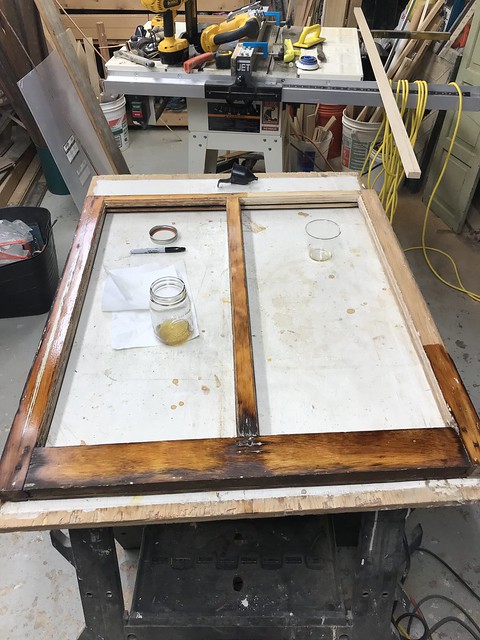
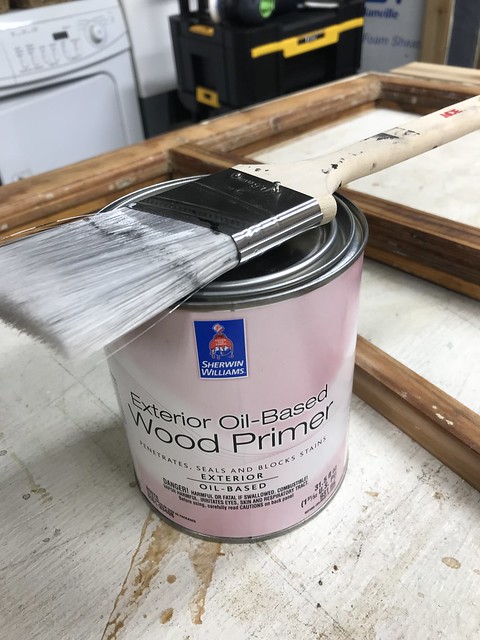
<p>Allowing plenty of time for the blopentine to dry and fully cure, I applied a coat of oil based primer over the entire sash. I like to start priming at this stage of the game, before placing the glass, for several reasons. First of all, it&rsquo;s far easier to prime without concern of getting it on the glass. Second, I worry that the sash wood will suck the moisture/oil out of the glazing putty before it skins and cures, causing it to wrinkle and crack.&nbsp; Ultimately, priming it first gives another protective barrier that will let the putty set up as it should.&nbsp;Third, it allows us to ensure paint covers the sections of the sash that will ultimately be covered by other things, like weather stripping and sash lifts.</p>
<p>
</p>
<div class="MediaContainer PhotoContainer"><a href="https://farm5.staticflickr.com/4559/23884113787_0c76a19471_z.jpg" rel="PhotoPopup" popupheight="640" popupwidth="480"><img alt="" src="https://farm5.staticflickr.com/4559/23884113787_0c76a19471.jpg" width="375" height="500" style="border-width: 0px; border-style: solid;" /></a></div>
<p>The oil based primer we use is from Sherwin Williams. It&rsquo;s a traditional stinky slow drying oil primer, and it might not be the best for us. But I&rsquo;m going to justify things by saying I&rsquo;m saving the environment by restoring the windows and riding my bike to work every day. That works, right?</p>
<p>
</p>
<div class="MediaContainer PhotoContainer"><a href="https://farm5.staticflickr.com/4485/37695759001_a033bbbc0c_z.jpg" rel="PhotoPopup" popupheight="640" popupwidth="480"><img alt="" src="https://farm5.staticflickr.com/4485/37695759001_a033bbbc0c.jpg" width="375" height="500" style="border-width: 0px; border-style: solid;" /></a></div>
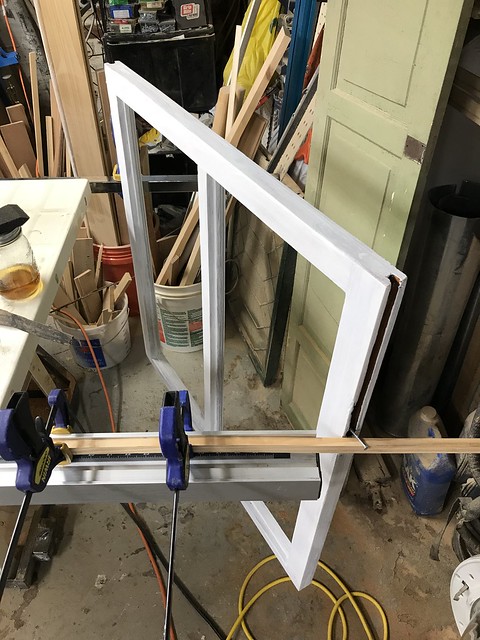
<p>After applying a coat of primer over the entire sash and allowing it to cure, it was time to weather strip.&nbsp;</p>
<p><em>One thing to note in the photo below is that I primed the sides of the sash. There's a debate as to whether this is preferred or not. Old windows are supposed to "breathe," and some pros prefer to leave the protected sides exposed to the air. Other pros I've talked with say to prime the sides but leave them unpainted to allow for smoother operation. I may leave the sides exposed on future windows, but this one is primed.&nbsp;</em></p>
<p>
</p>
<div class="MediaContainer PhotoContainer"><a href="https://farm5.staticflickr.com/4476/37443547060_6c4d7791f5_z.jpg" rel="PhotoPopup" popupheight="640" popupwidth="480"><img alt="" src="https://farm5.staticflickr.com/4476/37443547060_6c4d7791f5.jpg" width="375" height="500" style="border-width: 0px; border-style: solid;" /></a></div>
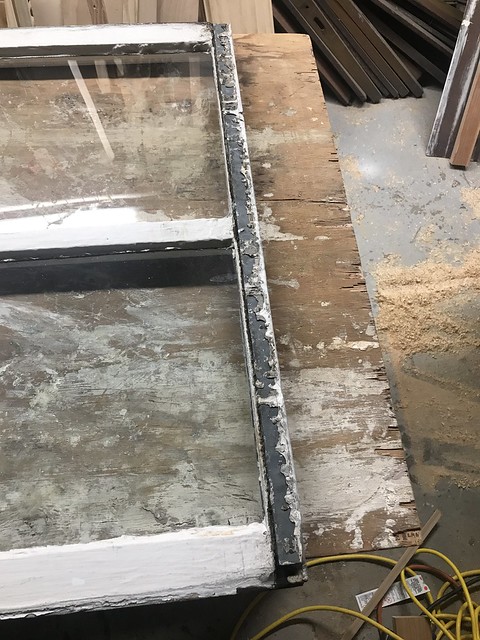
<p>While most of the weather stripping for old windows goes in the jamb, there&rsquo;s one piece, well, make that two pieces of weather stripping that gets applied directly to the sash&rsquo;s meeting rails. Looking back at the sash before stripping you can see one half of the original interlocking zinc weather stripping still in place. </p>
<p>
</p>
<div class="MediaContainer PhotoContainer"><a href="https://farm5.staticflickr.com/4362/36827446661_0917d9fc08_z.jpg" rel="PhotoPopup" popupheight="640" popupwidth="480"><img alt="" src="https://farm5.staticflickr.com/4362/36827446661_0917d9fc08.jpg" width="375" height="500" style="border-width: 0px; border-style: solid;" /></a></div>
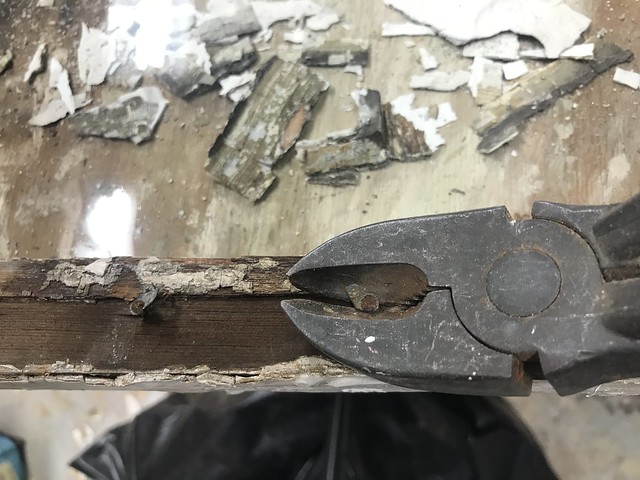
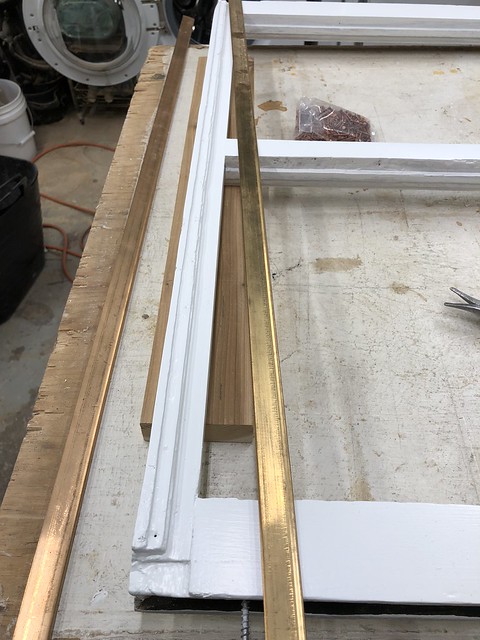
<p>This meeting rail interlocking two piece weather stripping is meant to keep air infiltration from sneaking between the upper and lower sash when the window is closed. However, this old weather stripping was so caked with paint, beat up, and damaged that it was more a barrier to good window operation than it was to promoting a weather seal. I carefully removed it and all of its nails from the sash.</p>
<p>I can tell you first hand that a failed meeting rail weather stripping not only allows hot or cold right through the separation in the sash, but when the wind really gets going outside you'll even get a good high pitched whistle going. Needless to say, we're really looking forward to weather stripping that will truly work.</p>
<p>
</p>
<div class="MediaContainer PhotoContainer"><a href="https://farm5.staticflickr.com/4337/36783633336_1fc69e2737_z.jpg" rel="PhotoPopup" popupheight="480" popupwidth="640"><img alt="" src="https://farm5.staticflickr.com/4337/36783633336_1fc69e2737.jpg" width="500" height="375" style="border-width: 0px; border-style: solid;" /></a></div>
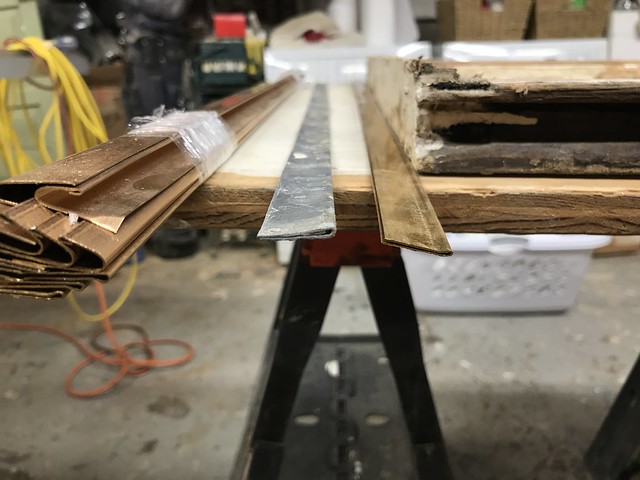
<p>I ordered several lengths of the M4B and Hemmed Hook Meeting Rail Bronze two part weather stripping from <a href="http://kilianhardware.com/meetrailweat.html" target="_blank">Killian Hardware</a>. Well packaged, it arrived bubbled wrapped and bundled in a rigid cardboard tube to be sure it wasn&rsquo;t damaged in shipping. Not by coincidence, it&rsquo;s the same bronze material as the <a href="https://www.oldtownhome.com/2014/1/15/Installing-Spring-Bronze-Weather-Stripping-for-Antique-Windows/">spring bronze we already installed in the jambs</a>. </p>
<p>
</p>
<div class="MediaContainer PhotoContainer"><a href="https://farm3.staticflickr.com/2837/10779574866_70442e2c7f_z.jpg" rel="PhotoPopup" popupheight="640" popupwidth="480"><img alt="" src="https://farm3.staticflickr.com/2837/10779574866_70442e2c7f.jpg" width="375" height="500" style="border-width: 0px; border-style: solid;" /></a></div>
<p>Luckily, this product is nearly the exact same dimensions as the original weather stripping, so all I had to do was to cut it to length and nail it in place.&nbsp;</p>
<p>
</p>
<div class="MediaContainer PhotoContainer"><a href="https://farm5.staticflickr.com/4430/37247059245_e36f8ae292_z.jpg" rel="PhotoPopup" popupheight="480" popupwidth="640"><img alt="" src="https://farm5.staticflickr.com/4430/37247059245_e36f8ae292.jpg" width="500" height="375" style="border-width: 0px; border-style: solid;" /></a></div>
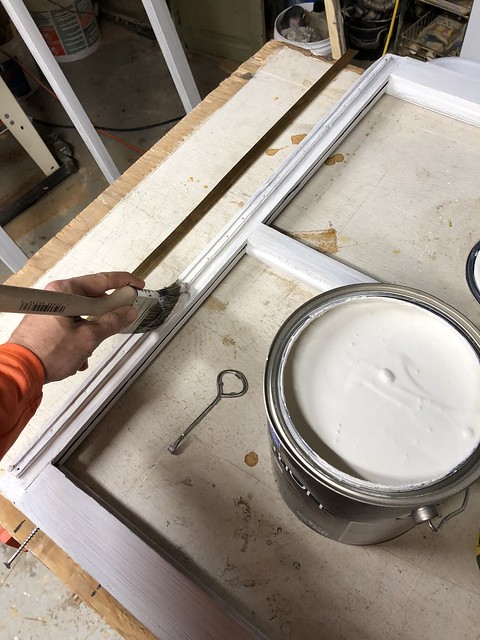
<p>Before I got into placing the weatherstripping I went ahead and pre-painted the parts of the sash that the bronze will cover. This way we get good protection behind the bronze, and we don't have to deal with trying to paint around it later. We used our normal custom trim color on the upper sash piece since it will face into the house, and our new exterior trim color, Sherwin William Pure White, on the lower sash.</p>
<p>
</p>
<div class="MediaContainer PhotoContainer"><a href="https://farm5.staticflickr.com/4780/25882974847_575994dd10_z.jpg" rel="PhotoPopup" popupheight="640" popupwidth="480"><img alt="" src="https://farm5.staticflickr.com/4780/25882974847_575994dd10.jpg" width="375" height="500" style="border-width: 0px; border-style: solid;" /></a></div>
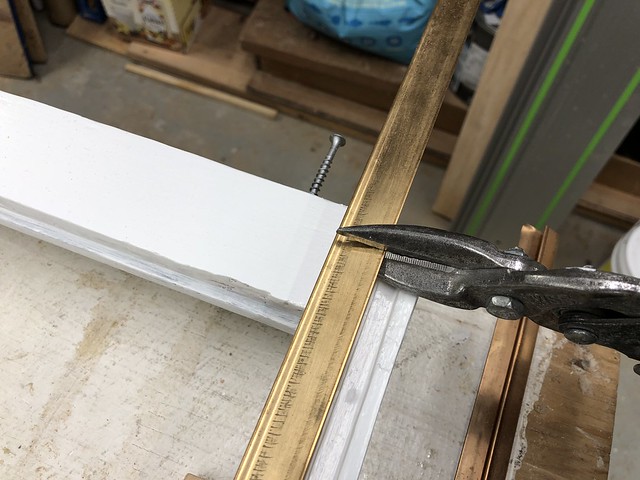
<p>Next up I cut the metal using a simple pair of straight tin snips, being careful to cut without bending or pinching the metal to deform it.</p>
<p>
</p>
<div class="MediaContainer PhotoContainer"><a href="https://farm5.staticflickr.com/4791/26883082298_aac3e5bd26_z.jpg" rel="PhotoPopup" popupheight="480" popupwidth="640"><img alt="" src="https://farm5.staticflickr.com/4791/26883082298_aac3e5bd26.jpg" width="500" height="375" style="border-width: 0px; border-style: solid;" /></a></div>
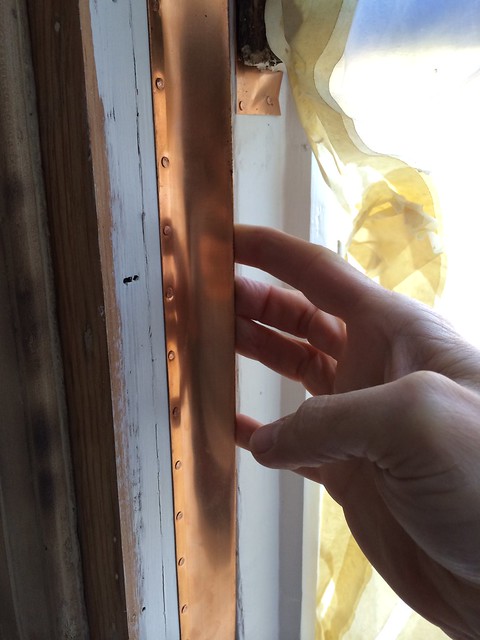
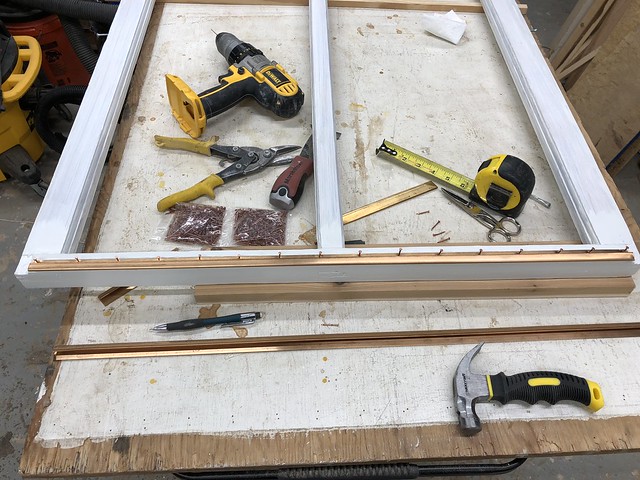
<p>Once cut to length it was just a matter of nailing it in place. I decided to place nails every 2&rdquo;, which is a little closer than what was there before, but works a little better for the window width and consistency. You can see the old nail locations for reference below.&nbsp;</p>
<p>
</p>
<div class="MediaContainer PhotoContainer"><a href="https://farm5.staticflickr.com/4785/40058426544_190fe5c8c1_z.jpg" rel="PhotoPopup" popupheight="480" popupwidth="640"><img alt="" src="https://farm5.staticflickr.com/4785/40058426544_190fe5c8c1.jpg" width="500" height="375" style="border-width: 0px; border-style: solid;" /></a></div>
<p>I marked the weather stripping at 2" intervals using a pencil, dimpled each mark using a nail and one swift hammer strike, then pre drilled holes to facilitate a much easier process for placing the small 1" copper nails.</p>
<p>
</p>
<div class="MediaContainer PhotoContainer"><a href="https://farm5.staticflickr.com/4797/40044366554_a2fcb23cc6_z.jpg" rel="PhotoPopup" popupheight="480" popupwidth="640"><img alt="" src="https://farm5.staticflickr.com/4797/40044366554_a2fcb23cc6.jpg" width="500" height="375" style="border-width: 0px; border-style: solid;" /></a></div>
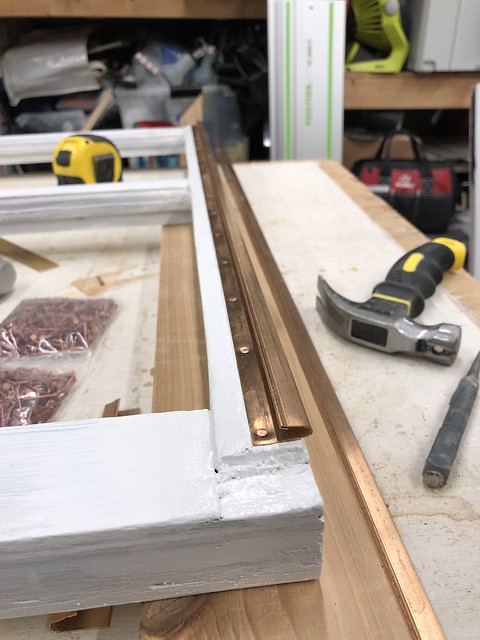
<p>When the holes are drilled they do tend to push through to the back of the bronze leaving some high spots. To prevent these high spots from interfering in the application, I just flip it over and tap the crown out with a small hammer.</p>
<p>
</p>
<div class="MediaContainer PhotoContainer"><a href="https://farm5.staticflickr.com/4799/39859668325_684f391632_z.jpg" rel="PhotoPopup" popupheight="480" popupwidth="640"><img alt="" src="https://farm5.staticflickr.com/4799/39859668325_684f391632.jpg" width="500" height="375" style="border-width: 0px; border-style: solid;" /></a></div>
<p>Just like applying the weather stripping in the jamb, it's best to work from one end of the piece to the other to ensure there are no ridges, kinks, or bends. I like to start the nails over the whole sash before coming back through and setting them all flush once I'm sure everything looks good. A tiny hammer and nail set help ensure you don't do any damage to the bronze while nailing.</p>
<p>
</p>
<div class="MediaContainer PhotoContainer"><a href="https://farm5.staticflickr.com/4782/40058463924_6a80c16f5c_z.jpg" rel="PhotoPopup" popupheight="480" popupwidth="640"><img alt="" src="https://farm5.staticflickr.com/4782/40058463924_6a80c16f5c.jpg" width="500" height="375" style="border-width: 0px; border-style: solid;" /></a></div>
<p>Apply the weather stripping before placing the glass is a little bit of peace of mind for the paranoid. There's a lot of rattling when nailing these tiny nails in place, and I wouldn't want something to slip or flex enough to break the old glass, regardless of how unlikely it may be.</p>
<p>
</p>
<div class="MediaContainer PhotoContainer"><a href="https://farm5.staticflickr.com/4793/25897496867_010bbd1005_z.jpg" rel="PhotoPopup" popupheight="640" popupwidth="480"><img alt="" src="https://farm5.staticflickr.com/4793/25897496867_010bbd1005.jpg" width="375" height="500" style="border-width: 0px; border-style: solid;" /></a></div>
<p>With the weather stripping in place the sash are ready to truly turn into windows again with the placement of glass. In our case we have some original and need some replacement. Next time I'll fill you all in on the tedious, sometimes frustrating, but often fulfilling process of sourcing wavy glass, cutting wavy glass, and glazing old window sash. When you have the right tools, materials, and a little experience, applying glazing putty can be an almost therapeutic process.</p>
<p>What do you think so far? We may be taking far longer than originally planned, but the window is really starting to take shape. I've banked a ton of tips and tricks for the next window and expect it to not only go much faster, but to also turn out way better. I guess this is why we're starting with one of our second floor windows. </p><p><a href="https://www.oldtownhome.com/2018/5/25/Window-Sash-Restoration-Part-4---Bronze-Meeting-Rail-Weather-Stripping/">Read Full Post</a></p>]]></content>
    <category term="Header Image" />
    <category term="Restoration" />
    <category term="Wavy Glass" />
    <category term="Window Restoration" />
    <category term="Window Restoration Series" />
    <PostImage>https://c2.staticflickr.com/2/1745/42344459871_67d6030225_c.jpg</PostImage>
    <media:thumbnail url="https://c2.staticflickr.com/2/1745/42344459871_67d6030225_t.jpg" />
    <ExtensionElements>
      <Item>PostImage</Item>
      <Item>media:thumbnail</Item>
    </ExtensionElements>
  </entry>
  <entry>
    <guid>23981a79-7141-4226-9805-8da36373ce54</guid>
    <id>https://www.oldtownhome.com/2011/7/26/Toolbox-Tuesday-Precision-Glass-Cutting-Without-Breakage/</id>
    <title>Toolbox Tuesday: Precision Glass Cutting Without Breakage</title>
    <summary type="html"><![CDATA[<p>For this week's Toolbox Tuesday post I want to cover a tool that took a previously intimidating job and turned it into something that anyone can handle. The tool in question, the Fletcher Terry Glass Cutter with carbide wheel, isn't terribly expensive, but does the job that any high end glass cutting system can do.</p>
<div class="ToolItem">
<iframe src="http://rcm-na.amazon-adsystem.com/e/cm?t=oltoho-20&amp;o=1&amp;p=8&amp;l=as1&amp;asins=B000KWTUZ4&amp;ref=qf_sp_asin_til&amp;fc1=3A3128&amp;IS2=1&amp;lt1=_blank&amp;m=amazon&amp;lc1=61838A&amp;bc1=FAFAF8&amp;bg1=FAFAF8&amp;f=ifr" style="width: 120px; height: 240px;" scrolling="no" marginwidth="0" marginheight="0" frameborder="0"></iframe>
</div>
<p>I've been doing a lot of glass cutting over the last week while getting the new front <a href="http://www.oldtownhome.com/2011/7/13/Toiling-Away-on-the-New-Divided-Lite-Double-Doors/index.aspx">french doors ready</a>. It's a lot of measuring and patience, but I'm no longer intimidated by the process, thanks to this high quality glass cutter. </p>
<p>Old and wavy glass is a fragile and expensive thing to make mistakes with. Our previous glass cutters had steel wheels that dulled quickly and were difficult to keep a reliable line when scoring the glass. After making mistake after mistake, I got to the point where I was almost afraid to cut glass, expecting it to shatter or produce a piece too small for what I was working on.</p>
<p>That all changed when I bought this Fletcher Terry Glass Cutter with a Carbide Wheel. The wheel is sharp and lasts up to 10 times longer than a steel wheel, the weight of the tool is balanced and heavy with a ball tip that you can use to encourage breaking with slight taps, and the ergonomic finger position makes it easy to get a reliable grip, which is very important when trying to maintain a line against a straight edge. Now I actually quite enjoy the glass cutting process. </p>
<p>Now it's as easy as: measure, mark, score, snap! And you're left with a cleanly cut piece of glass that is ready for your project.</p>
<p></p> <a href="https://www.oldtownhome.com/2011/7/26/Toolbox-Tuesday-Precision-Glass-Cutting-Without-Breakage/">more</a>]]></summary>
    <published>2011-07-26T09:30:00.000-04:00</published>
    <updated>2011-07-26T09:30:00.000-04:00</updated>
    <link rel="alternate" href="https://www.oldtownhome.com/2011/7/26/Toolbox-Tuesday-Precision-Glass-Cutting-Without-Breakage/" />
    <author>
      <name>Alex</name>
    </author>
    <content type="html"><![CDATA[<p>For this week's Toolbox Tuesday post I want to cover a tool that took a previously intimidating job and turned it into something that anyone can handle. The tool in question, the Fletcher Terry Glass Cutter with carbide wheel, isn't terribly expensive, but does the job that any high end glass cutting system can do.</p>
<div class="ToolItem">
<iframe src="http://rcm-na.amazon-adsystem.com/e/cm?t=oltoho-20&amp;o=1&amp;p=8&amp;l=as1&amp;asins=B000KWTUZ4&amp;ref=qf_sp_asin_til&amp;fc1=3A3128&amp;IS2=1&amp;lt1=_blank&amp;m=amazon&amp;lc1=61838A&amp;bc1=FAFAF8&amp;bg1=FAFAF8&amp;f=ifr" style="width: 120px; height: 240px;" scrolling="no" marginwidth="0" marginheight="0" frameborder="0"></iframe>
</div>
<p>I've been doing a lot of glass cutting over the last week while getting the new front <a href="http://www.oldtownhome.com/2011/7/13/Toiling-Away-on-the-New-Divided-Lite-Double-Doors/index.aspx">french doors ready</a>. It's a lot of measuring and patience, but I'm no longer intimidated by the process, thanks to this high quality glass cutter. </p>
<p>Old and wavy glass is a fragile and expensive thing to make mistakes with. Our previous glass cutters had steel wheels that dulled quickly and were difficult to keep a reliable line when scoring the glass. After making mistake after mistake, I got to the point where I was almost afraid to cut glass, expecting it to shatter or produce a piece too small for what I was working on.</p>
<p>That all changed when I bought this Fletcher Terry Glass Cutter with a Carbide Wheel. The wheel is sharp and lasts up to 10 times longer than a steel wheel, the weight of the tool is balanced and heavy with a ball tip that you can use to encourage breaking with slight taps, and the ergonomic finger position makes it easy to get a reliable grip, which is very important when trying to maintain a line against a straight edge. Now I actually quite enjoy the glass cutting process. </p>
<p>Now it's as easy as: measure, mark, score, snap! And you're left with a cleanly cut piece of glass that is ready for your project.</p>
<p></p>
<p>We had a bunch of broken and extra pieces of old and wavy glass in the basement that I've been cutting up while working on the doors. I actually got into the groove of the project and started to cut pieces for other things that have needed it, like the new transom window I built a little while ago that will eventually go above our bathroom door.</p>
<p>
</p>
<div class="MediaContainer PhotoContainer"><a href="http://farm7.static.flickr.com/6029/5977967698_f6dbb639b1_z.jpg" rel="PhotoPopup" popupheight="478" popupwidth="640"><img alt="" src="https://farm7.static.flickr.com/6029/5977967698_f6dbb639b1.jpg" width="500" height="374" style="border-width: 0px; border-style: solid;"></a></div>
<p>As I said, I no longer fear the process, and I have this tool to thank for it. I'll just keep my eye on the cutting wheel and will be sure to replace it before it gets the slightest bit dull. That's the real secret to success. </p>
<p>
</p>
<div class="MediaContainer PhotoContainer"><a href="http://farm7.static.flickr.com/6137/5963834069_d9264698ef_z.jpg" rel="PhotoPopup" popupheight="640" popupwidth="640"><img alt="" src="https://farm7.static.flickr.com/6137/5963834069_d9264698ef.jpg" width="500" height="500" style="border-width: 0px; border-style: solid;"></a></div>
<p>Do you do any glass work? What are your tools of choice? Would it help me to add some cutting oil to my process?&nbsp;</p>
<p>Also, I'm thinking of picking up a Fletcher Terry Glazing Point driver for all of the glass lites I need to install in the doors, rather than using the points with the ears that you push in with a putty knife. Any opinions?</p><p><a href="https://www.oldtownhome.com/2011/7/26/Toolbox-Tuesday-Precision-Glass-Cutting-Without-Breakage/">Read Full Post</a></p>]]></content>
    <category term="Projects:Essential Tools" />
    <category term="Projects:Home Improvement" />
    <category term="Toolbox Tuesday" />
    <category term="Wavy Glass" />
    <PostImage>http://farm7.static.flickr.com/6135/5977962896_21ba67d6f2.jpg</PostImage>
    <media:thumbnail url="https://farm7.static.flickr.com/6135/5977962896_21ba67d6f2_t.jpg" />
    <ExtensionElements>
      <Item>PostImage</Item>
      <Item>media:thumbnail</Item>
    </ExtensionElements>
  </entry>
  <entry>
    <guid>99ea5fe9-c4cb-4c85-940e-4546bd5d9a8a</guid>
    <id>https://www.oldtownhome.com/2011/7/22/The-Beauty-of-Wavy-Salvaged-Glass/</id>
    <title>The Beauty of Wavy Salvaged Glass</title>
    <summary type="html"><![CDATA[<p>As we power on through the extremely time consuming and ridiculously intricate project that is The Front Vestibule, we occasionally run into situations where a little bit of time and patience go a long way towards making the project much better. Sometimes the need to work slower and more deliberately is difficult when all you want to do is finish the friggen project. For me, the little angel on my shoulder saying "take your time and restore this the right way!" usually beats out the devil that says, "just hurry up and finish the damn thing already!" Such is the case with the work we've been doing on the new front doors. Wait, was that the little devil on my shoulder saying that or was it Wendy standing behind me?</p>
<p>When we purchased the french doors, which were actually old sidelites, many of the panes of glass were either broken, or had been replaced with newer glass that didn't seem correct.</p>
<p>
</p>
<div class="MediaContainer PhotoContainer"><a href="http://farm6.static.flickr.com/5142/5657580024_7cde1d5b18_z.jpg" rel="PhotoPopup" popupheight="640" popupwidth="478"><img alt="" src="https://farm6.static.flickr.com/5142/5657580024_7cde1d5b18.jpg" width="374" height="500" style="border-width: 0px;border-style: solid;"></a></div>
<p>This week I've been spending quite a bit of time working on the salvaged french door lites (panes of glass). After I <a href="http://www.oldtownhome.com/2011/7/13/Toiling-Away-on-the-New-Divided-Lite-Double-Doors/index.aspx">finished removing all of the broken and unbroken panes of glass from the two doors, scraped out all of the glazing putty, and give it a quick sanding</a>, the doors were almost ready to receive new glass.&nbsp;</p>
<p>I won't actually install any glass until after we've added the additional wood to the doors, mortised the hinges, and made sure the doors are hung in&nbsp;their correct location. Otherwise I'm sure I would end up breaking a pane in the process. But that didn't stop me from getting the glass ready for the doors this week.</p>
<p>One of the things I absolutely love about old houses and antiques is the minor but striking detail and character that wavy glass brings. It's one of those little things that screams "I came from a simpler time, where things were still hand made,&nbsp;imperfect, and unique!" We are lucky enough to have much of the original glass in many of the windows in our house, including the transom windows inside. Whenever I've added glass elements to the house, or replaced newer glass, I've been sure to use salvaged or reproduction wavy glass in every situation. What can I say, I'm obsessed.</p>
<p></p></img> <a href="https://www.oldtownhome.com/2011/7/22/The-Beauty-of-Wavy-Salvaged-Glass/">more</a>]]></summary>
    <published>2011-07-22T11:15:00.000-04:00</published>
    <updated>2011-07-22T11:15:00.000-04:00</updated>
    <link rel="alternate" href="https://www.oldtownhome.com/2011/7/22/The-Beauty-of-Wavy-Salvaged-Glass/" />
    <author>
      <name>Alex</name>
    </author>
    <content type="html"><![CDATA[<p>As we power on through the extremely time consuming and ridiculously intricate project that is The Front Vestibule, we occasionally run into situations where a little bit of time and patience go a long way towards making the project much better. Sometimes the need to work slower and more deliberately is difficult when all you want to do is finish the friggen project. For me, the little angel on my shoulder saying "take your time and restore this the right way!" usually beats out the devil that says, "just hurry up and finish the damn thing already!" Such is the case with the work we've been doing on the new front doors. Wait, was that the little devil on my shoulder saying that or was it Wendy standing behind me?</p>
<p>When we purchased the french doors, which were actually old sidelites, many of the panes of glass were either broken, or had been replaced with newer glass that didn't seem correct.</p>
<p>
</p>
<div class="MediaContainer PhotoContainer"><a href="http://farm6.static.flickr.com/5142/5657580024_7cde1d5b18_z.jpg" rel="PhotoPopup" popupheight="640" popupwidth="478"><img alt="" src="https://farm6.static.flickr.com/5142/5657580024_7cde1d5b18.jpg" width="374" height="500" style="border-width: 0px;border-style: solid;"></a></div>
<p>This week I've been spending quite a bit of time working on the salvaged french door lites (panes of glass). After I <a href="http://www.oldtownhome.com/2011/7/13/Toiling-Away-on-the-New-Divided-Lite-Double-Doors/index.aspx">finished removing all of the broken and unbroken panes of glass from the two doors, scraped out all of the glazing putty, and give it a quick sanding</a>, the doors were almost ready to receive new glass.&nbsp;</p>
<p>I won't actually install any glass until after we've added the additional wood to the doors, mortised the hinges, and made sure the doors are hung in&nbsp;their correct location. Otherwise I'm sure I would end up breaking a pane in the process. But that didn't stop me from getting the glass ready for the doors this week.</p>
<p>One of the things I absolutely love about old houses and antiques is the minor but striking detail and character that wavy glass brings. It's one of those little things that screams "I came from a simpler time, where things were still hand made,&nbsp;imperfect, and unique!" We are lucky enough to have much of the original glass in many of the windows in our house, including the transom windows inside. Whenever I've added glass elements to the house, or replaced newer glass, I've been sure to use salvaged or reproduction wavy glass in every situation. What can I say, I'm obsessed.</p>
<p></p>
<p>Wendy's parents own an older home in Lakewood, Ohio that is a duplex rental. Recently, they replaced some of the windows in the house for more energy efficient models. They know all about my love of old wavy and imperfect glass, so they gave me the window sashes that were removed from the house the last time they visited us.</p>
<p>
</p>
<div class="MediaContainer PhotoContainer"><a href="http://farm7.static.flickr.com/6131/5963238542_a312c8de5e_z.jpg" rel="PhotoPopup" popupheight="640" popupwidth="478"><img alt="" src="https://farm7.static.flickr.com/6131/5963238542_a312c8de5e.jpg" width="374" height="500" style="border-width: 0px;border-style: solid;"></a></div>
<p>Lucky for me, the two windows were quite large and in really good shape. Best of all, the large panes of glass were wavy enough to work perfectly in our salvaged french doors. But to make them work for our project, I would need to carefully remove the glass from the window sash, clean it up a bit, then cut it to the correct size for our french doors. This is where the level of patience I mentioned would come into play. I couldn't &nbsp;make a mistake and end up breaking the glass.</p>
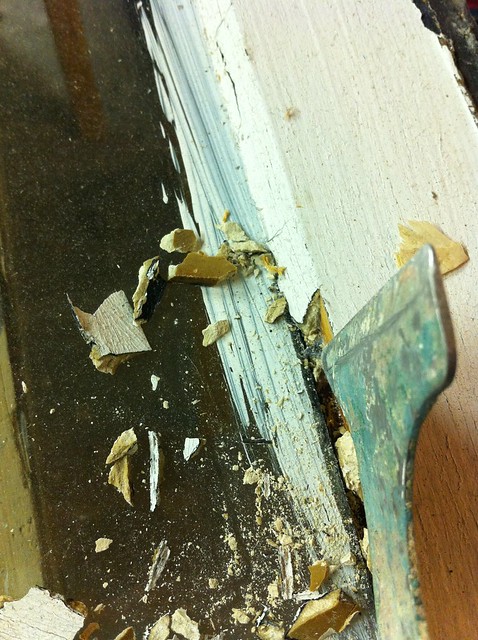
<p>The first step to this process is the most important. It involves removal of the old glazing putty and glazing points so that I could remove the glass from the sash. Old putty that has been in a window sash for a long time is often rock hard and brittle. Some suggest using a heat gun to warm the putty and make it more pliable, which allows you to scrape it away easier, but that is too risky when you care so much about the glass. The heat from the heat gun can easily fracture the glass without warning.</p>
<p>
</p>
<div class="MediaContainer PhotoContainer"><a href="http://farm7.static.flickr.com/6135/5963240018_a62278afd4_z.jpg" rel="PhotoPopup" popupheight="478" popupwidth="640"><img alt="" src="https://farm7.static.flickr.com/6135/5963240018_a62278afd4.jpg" width="500" height="374" style="border-width: 0px;border-style: solid;"></a></div>
<p>The technique I like to use for putty removal is a simple and methodical process of a utility knife and 5-in-1 tools. I use the utility knife to break the seal between the back of the putty, then I use the 5-in-1 tool to scrape it away as I can. With each tool I make sure I do not put any significant pressure on the glass, only on the putty and wood of the window sash. Here's a quick video showing my technique.&nbsp;</p>
<p>
</p>
<div class="MediaContainer VideoEmbed"><iframe width="560" height="349" src="http://www.youtube.com/embed/2SrqsiG4J_8?wmode=transparent&amp;hd=1" frameborder="0" allowfullscreen="true"></iframe></div>
<p>Though the rest of the glazing came out in larger chunks, the portion Wendy recorded the video on was far more stubborn. For this part I really had to get the knife into the wood behind the glazing to free it. This worked fine since we aren't using the sash. If we planned on using the sash, I would have simply taken more time to get between the glazing and putty.</p>
<p>Once all of the glazing was out, I inspected the entire perimeter of the glass for glazing points. Glazing points are the little metal triangles or diamonds that hold the glass in places before the putty sets up. They are tiny, but if you don't take them all out, your glass will surely break when you are trying to free it. If you look closely, you can see a tiny point in the photo below at the tip of the tool.</p>
<p>
</p>
<div class="MediaContainer PhotoContainer"><a href="http://farm7.static.flickr.com/6003/5963239006_df3fff7b1f_z.jpg" rel="PhotoPopup" popupheight="640" popupwidth="478"><img alt="" src="https://farm7.static.flickr.com/6003/5963239006_df3fff7b1f.jpg" width="374" height="500" style="border-width: 0px;border-style: solid;"></a></div>
<p>To remove the glazing points, I use the 5-in-1 tool to slightly get under the point and bend it up a little. Then I use the edge of the tool to rotate the glazing point out of it's position and away from the glass.</p>
<p>With all of the points removed, I begin working to free the glass from the sash. Glass bends a little, so you have some give to it, but if you force it too much, it will easily break. So I start in the corner and just start pushing up and down on the glass until it gives a little bit. Once it starts to give, I continue to work around the sash until the whole thing is free. If there is a point that isn't letting go, I look very closely to be sure I didn't miss a glazing point, and then I use the utility knife to cut between the glass and the wood.&nbsp;</p>
<p>
</p>
<div class="MediaContainer VideoEmbed"><iframe width="560" height="349" src="http://www.youtube.com/embed/-kwwlVm7btc?wmode=transparent&amp;hd=1" frameborder="0" allowfullscreen="true"></iframe></div>
<p>I then repeat this process all the way around the glass until the pane of glass is free from the sash. I was very patient with this pane of glass, probably because it was so large. Have I mentioned I REALLY didn't want to break it? My patience paid off and the end result was a break-free and huge piece of glass just waiting to be cut.</p>
<p>
</p>
<div class="MediaContainer PhotoContainer"><a href="http://farm7.static.flickr.com/6004/5962683895_cbf68f9a18_z.jpg" rel="PhotoPopup" popupheight="478" popupwidth="640"><img alt="" src="https://farm7.static.flickr.com/6004/5962683895_cbf68f9a18.jpg" width="500" height="374" style="border-width: 0px;border-style: solid;"></a></div>
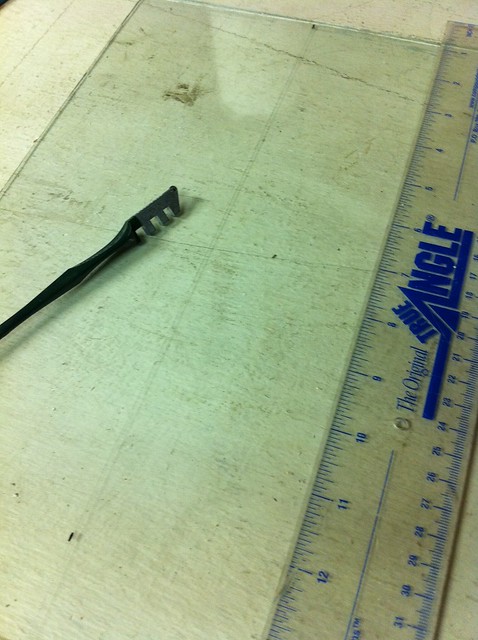
<p>The new french doors take six lites of 10-1/4" x 11-9/16" in each side. Cutting glass is actually very easy if you have the right tool for it. The key is the small glass cutter with a fresh and sharp cutting wheel and a straight edge that you can run the tool along.</p>
<p>
</p>
<div class="MediaContainer PhotoContainer"><a href="http://farm7.static.flickr.com/6148/5963237500_417cc202e4_z.jpg" rel="PhotoPopup" popupheight="640" popupwidth="478"><img alt="" src="https://farm7.static.flickr.com/6148/5963237500_417cc202e4.jpg" width="374" height="500" style="border-width: 0px;border-style: solid;"></a></div>
<p>You don't need a lot of pressure, just a straight edge and a sharp wheel will score the glass in one pass. Don't make multiple cuts, that won't help. Just run the cutting wheel along the glass in one direction one time. You should hear the glass getting scored by the cutting wheel. It sounds just like movie special effects sounds when a robber is cutting a circle in a building's glass. Once you are across, you can easily see the scored line.</p>
<p>
</p>
<div class="MediaContainer PhotoContainer"><a href="http://farm7.static.flickr.com/6121/5962680987_4ecac6a192_z.jpg" rel="PhotoPopup" popupheight="640" popupwidth="478"><img alt="" src="https://farm7.static.flickr.com/6121/5962680987_4ecac6a192.jpg" width="374" height="500" style="border-width: 0px;border-style: solid;"></a></div>
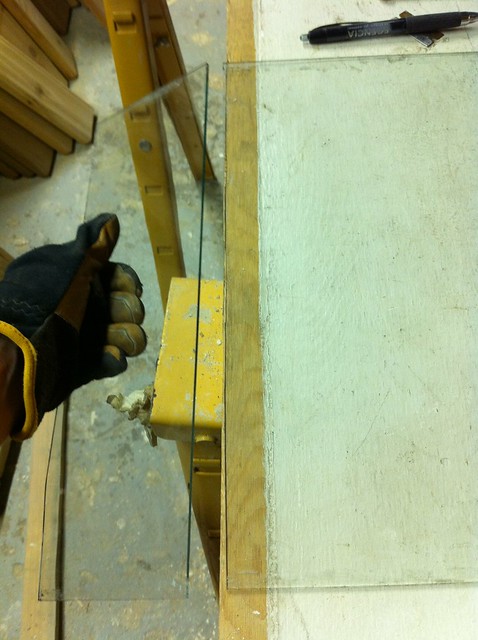
<p>With the cut mark made, I move the glass so that a portion is unsupported and the scored line area of the glass assumes much of the weight. Then I just apply even pressure on the unsupported side of the glass while holding the other side in place. If all goes well, you will get a sudden and clean snap and a very sharp piece of glass with a good straight line.</p>
<p>
</p>
<div class="MediaContainer PhotoContainer"><a href="http://farm7.static.flickr.com/6130/5962681207_81d31f89c3_z.jpg" rel="PhotoPopup" popupheight="640" popupwidth="478"><img alt="" src="https://farm7.static.flickr.com/6130/5962681207_81d31f89c3.jpg" width="374" height="500" style="border-width: 0px;border-style: solid;"></a></div>
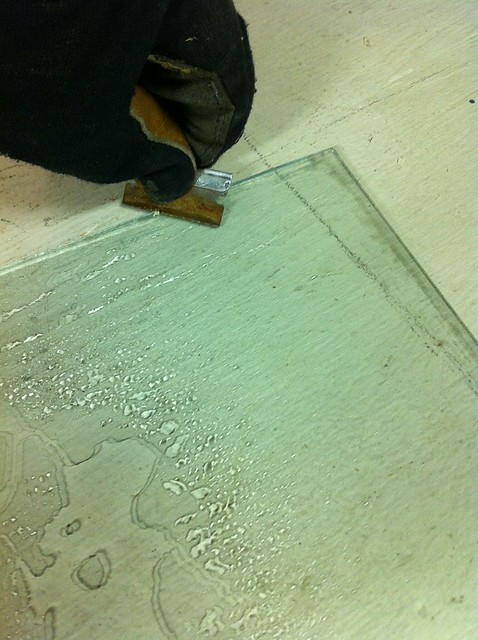
<p>Then, if you have any dirt, putty, or paint left on the glass, just use a razor blade and some Windex or a 50/50 of water and vinegar to scrape it away.</p>
<p>
</p>
<div class="MediaContainer PhotoContainer"><a href="http://farm7.static.flickr.com/6024/5963238228_2164941049_z.jpg" rel="PhotoPopup" popupheight="640" popupwidth="478"><img alt="" src="https://farm7.static.flickr.com/6024/5963238228_2164941049.jpg" width="374" height="500" style="border-width: 0px;border-style: solid;"></a></div>
<p>Once the glass was cleaned up, I did a test fit of the piece I had just cut.</p>
<p>
</p>
<div class="MediaContainer PhotoContainer"><a href="http://farm7.static.flickr.com/6005/5963241462_9424660baf_z.jpg" rel="PhotoPopup" popupheight="640" popupwidth="478"><img alt="" src="https://farm7.static.flickr.com/6005/5963241462_9424660baf.jpg" width="374" height="500" style="border-width: 0px;border-style: solid;"></a></div>
<p>I then repeated these steps over and over and over until I had all of the pieces of glass cut for the french doors. It is best to cut the glass slightly smaller than the opening it will be going in, that way it will fit easier and will allow for expansion of the wood or glass.&nbsp;</p>
<p>We have a little ways to go before I put this glass in for good and putty it, but I'm quite happy with the fact that the doors will fit nicely with the age of the house and look quite appropriate with slightly to very wavy glass in true divided lites. It should add to the character and comfort of the new doors and entry of the home in a subtle but significant way. And the real icing on the cake is that we were able to reuse salvaged glass that might have otherwise ended up in the dump.</p>
<p>I know I'll do another post about this once we actually putty the glass into place. That is seriously an art form to do it well, and I'm by no means an artist.&nbsp;</p>
<p>Have you had much experience in cutting glass? I know there are lots of different ways to cut glass, some even involve WD-40. If you have an interesting technique or practice, we'd love it if you shared it here.</p><p><a href="https://www.oldtownhome.com/2011/7/22/The-Beauty-of-Wavy-Salvaged-Glass/">Read Full Post</a></p>]]></content>
    <category term="Projects:Salvage" />
    <category term="Salvage" />
    <category term="Vestibule" />
    <category term="Wavy Glass" />
    <PostImage>http://farm7.static.flickr.com/6137/5963834069_d9264698ef.jpg</PostImage>
    <media:thumbnail url="https://farm7.static.flickr.com/6137/5963834069_d9264698ef_t.jpg" />
    <ExtensionElements>
      <Item>PostImage</Item>
      <Item>media:thumbnail</Item>
    </ExtensionElements>
  </entry>
</feed>