<?xml version="1.0" encoding="utf-8"?>
<feed xmlns="http://www.w3.org/2005/Atom" xmlns:media="http://search.yahoo.com/mrss/">
  <title>Old Town Home Category: 'Paint Removal'</title>
  <updated>2013-12-23T10:13:00.000-05:00</updated>
  <id>http://www.oldtownhome.com/paint-removal/index.atom</id>
  <link rel="alternate" href="http://www.oldtownhome.com/paint-removal/index.atom" />
  <author>
    <name>Alex and Wendy</name>
    <uri>http://www.oldtownhome.com/</uri>
    <email>wendy@oldtownhome.com</email>
  </author>
  <entry>
    <guid>810d5182-beef-4aa5-8560-efc979ea594a</guid>
    <id>https://www.oldtownhome.com/2013/12/23/Paint-Stripping-Approach-Revised---Status-Still-Hate-It/</id>
    <title>Paint Stripping Approach Revised - Status: Still Hate It</title>
    <summary type="html"><![CDATA[<p>Of the many questions we typically receive regarding our home renovation efforts, one of the most commonly asked revolves around paint stripping. From those curious about the general efforts, to the people who are interested in the nitty gritty details of the approach we take (and perceived benefits), they're a series of questions we've been fielding for years, but whose answers have changed frequently over that time as we tire of our techniques in search of something better, faster, and less painstaking.&nbsp;</p><p>Most recently, while beginning our bathroom window restoration, we undertook the stripping of the final set of original window casings in our home. This is the culmination of an 11 year journey that started with the best intentions and a completely false assumption that a little chemical stripper applied to the mouldings would literally make the paint fall from the wood, running in terror from our house never to be seen again. To my utter amazement, shocked disappointment, and crushed spirit, I was completely incorrect in my notions. Paint stripping turned out to be long, arduous, tedious, and back aching work that took time, patience, and experience to get down to a science.</p><p>This project started out with six pieces of window casings in our 4" beaded moulding variety (each side consisted of two pieces, most likely because this was a second floor rear facing window and they wanted to just use scraps). Additionally we had the window stool and three pieces of sash stop to strip while we were at it. Looking at it all laid out on the table I knew what was to come, and it was a daunting chore.</p><p>
</p><div class="MediaContainer PhotoContainer"><a href="http://farm4.staticflickr.com/3807/10363507303_93de479a1c_z.jpg" rel="PhotoPopup" popupheight="640" popupwidth="480"><img alt="" src="https://farm4.staticflickr.com/3807/10363507303_93de479a1c.jpg" width="375" height="500" style="border-width: 0px; border-style: solid;"></a></div><div class="ToolItem">
<iframe src="http://rcm-na.amazon-adsystem.com/e/cm?t=oltoho-20&amp;o=1&amp;p=8&amp;l=as1&amp;asins=B001F0KO2S&amp;IS1=1&amp;ref=qf_sp_asin_til&amp;fc1=3A3128&amp;lt1=_blank&amp;m=amazon&amp;lc1=61838A&amp;bc1=FAFAF8&amp;bg1=FAFAF8&amp;f=ifr" style="width: 120px; height: 240px;" scrolling="no" marginwidth="0" marginheight="0" frameborder="0"></iframe>
</div><p>I jumped right in using the SmartStrip product I've mentioned a few times before. Prior to recent time I was a tried and true Peel Away 1 or 7 guy. I've used the Citrus product, Soy, harsh chemicals, heat guns, infrared, a crock pot and dish soap (mostly for metal hardware), etc, but when it comes to these extremely intricate window and door casings, I like to start with SmartStrip these days.</p><p>It's not cheap, but I like that it's non-caustic, low odor, doesn't burn when you inevitably get it on your hands, and seems far less harsh on the surfaces that you're stripping. It also maintains all of the properties I tend to like about Peel Away 1 and 7.</p> <a href="https://www.oldtownhome.com/2013/12/23/Paint-Stripping-Approach-Revised---Status-Still-Hate-It/">more</a>]]></summary>
    <published>2013-12-23T10:13:00.000-05:00</published>
    <updated>2013-12-23T10:13:00.000-05:00</updated>
    <link rel="alternate" href="https://www.oldtownhome.com/2013/12/23/Paint-Stripping-Approach-Revised---Status-Still-Hate-It/" />
    <author>
      <name>Alex</name>
    </author>
    <content type="html"><![CDATA[<p>Of the many questions we typically receive regarding our home renovation efforts, one of the most commonly asked revolves around paint stripping. From those curious about the general efforts, to the people who are interested in the nitty gritty details of the approach we take (and perceived benefits), they're a series of questions we've been fielding for years, but whose answers have changed frequently over that time as we tire of our techniques in search of something better, faster, and less painstaking.&nbsp;</p>
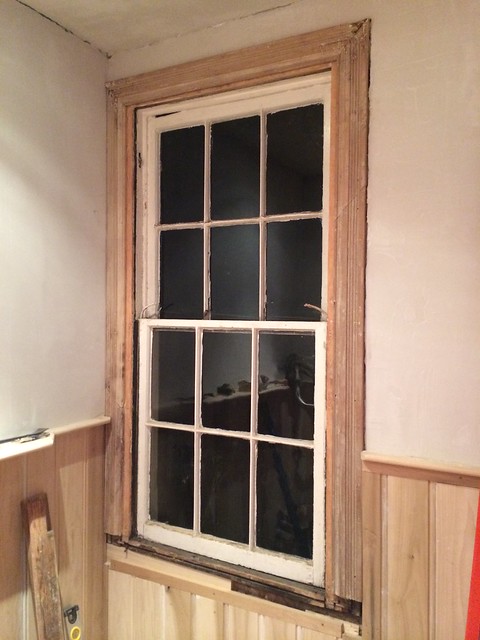
<p>Most recently, while beginning our bathroom window restoration, we undertook the stripping of the final set of original window casings in our home. This is the culmination of an 11 year journey that started with the best intentions and a completely false assumption that a little chemical stripper applied to the mouldings would literally make the paint fall from the wood, running in terror from our house never to be seen again. To my utter amazement, shocked disappointment, and crushed spirit, I was completely incorrect in my notions. Paint stripping turned out to be long, arduous, tedious, and back aching work that took time, patience, and experience to get down to a science.</p>
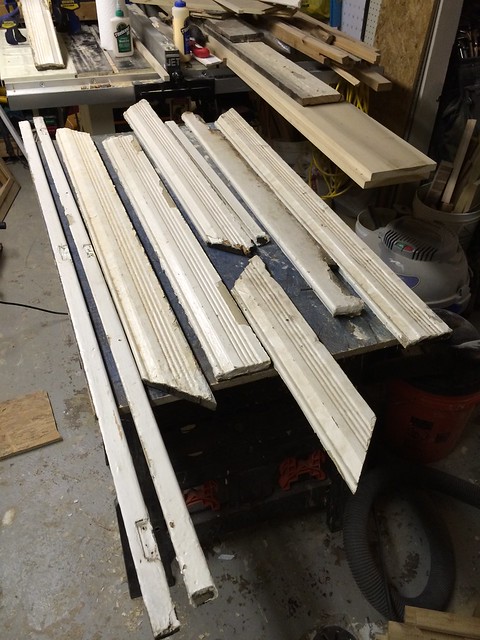
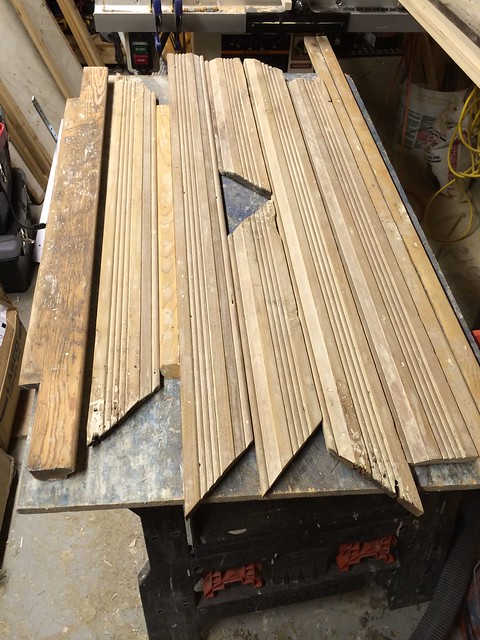
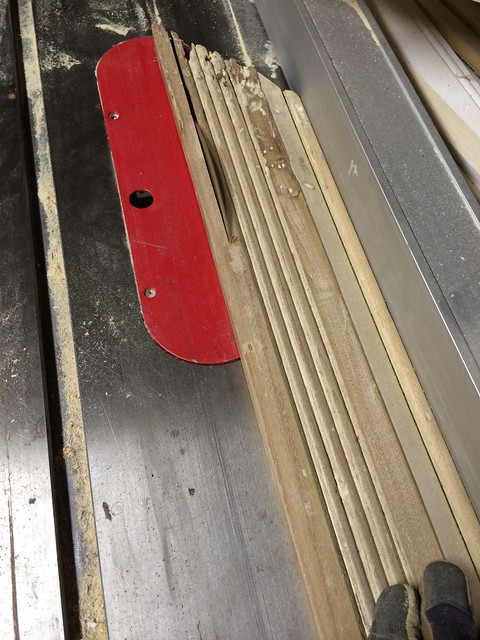
<p>This project started out with six pieces of window casings in our 4" beaded moulding variety (each side consisted of two pieces, most likely because this was a second floor rear facing window and they wanted to just use scraps). Additionally we had the window stool and three pieces of sash stop to strip while we were at it. Looking at it all laid out on the table I knew what was to come, and it was a daunting chore.</p>
<p>
</p>
<div class="MediaContainer PhotoContainer"><a href="http://farm4.staticflickr.com/3807/10363507303_93de479a1c_z.jpg" rel="PhotoPopup" popupheight="640" popupwidth="480"><img alt="" src="https://farm4.staticflickr.com/3807/10363507303_93de479a1c.jpg" width="375" height="500" style="border-width: 0px; border-style: solid;"></a></div>
<div class="ToolItem">
<iframe src="http://rcm-na.amazon-adsystem.com/e/cm?t=oltoho-20&amp;o=1&amp;p=8&amp;l=as1&amp;asins=B001F0KO2S&amp;IS1=1&amp;ref=qf_sp_asin_til&amp;fc1=3A3128&amp;lt1=_blank&amp;m=amazon&amp;lc1=61838A&amp;bc1=FAFAF8&amp;bg1=FAFAF8&amp;f=ifr" style="width: 120px; height: 240px;" scrolling="no" marginwidth="0" marginheight="0" frameborder="0"></iframe>
</div>
<p>I jumped right in using the SmartStrip product I've mentioned a few times before. Prior to recent time I was a tried and true Peel Away 1 or 7 guy. I've used the Citrus product, Soy, harsh chemicals, heat guns, infrared, a crock pot and dish soap (mostly for metal hardware), etc, but when it comes to these extremely intricate window and door casings, I like to start with SmartStrip these days.</p>
<p>It's not cheap, but I like that it's non-caustic, low odor, doesn't burn when you inevitably get it on your hands, and seems far less harsh on the surfaces that you're stripping. It also maintains all of the properties I tend to like about Peel Away 1 and 7.</p>
<p>
</p>
<div class="MediaContainer PhotoContainer"><a href="http://farm8.staticflickr.com/7380/10363911524_93702ed1f4_z.jpg" rel="PhotoPopup" popupheight="640" popupwidth="480"><img alt="" src="https://farm8.staticflickr.com/7380/10363911524_93702ed1f4.jpg" width="375" height="500" style="border-width: 0px; border-style: solid;"></a></div>
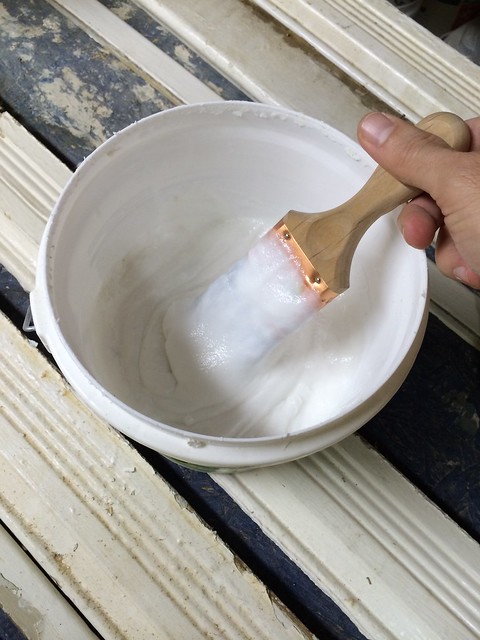
<p>It is almost like a fluffy liquid, and unlike the Peel Away 1, does not alkalize the wood and needs no neutralization once complete. I apply it with a garbage paint brush and try to apply it to the items rather liberally.</p>
<p>
</p>
<div class="MediaContainer PhotoContainer"><a href="http://farm6.staticflickr.com/5523/10363923546_f05668692f_z.jpg" rel="PhotoPopup" popupheight="640" popupwidth="480"><img alt="" src="https://farm6.staticflickr.com/5523/10363923546_f05668692f.jpg" width="375" height="500" style="border-width: 0px; border-style: solid;"></a></div>
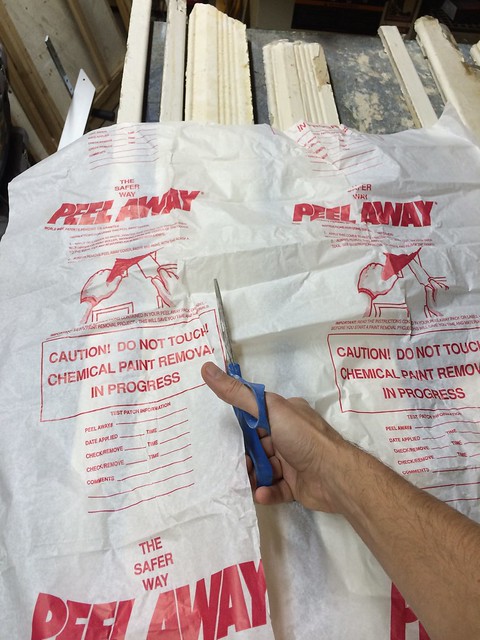
<p>Since this stripper works for as long as it stays wet, it's important to apply a covering so it doesn't dry out prematurely. While Peel Away paper is what we typically use (we have 10 leftover bundles from past projects), wax paper is equally as effective and far cheaper. SmartStrip doesn't come with paper the way Peel Away 1 did, so be sure to pick up a roll of wax paper at the grocery store if you're going to be using this stuff.</p>
<p>
</p>
<div class="MediaContainer PhotoContainer"><a href="http://farm6.staticflickr.com/5492/10364099483_ecfbb8607b_z.jpg" rel="PhotoPopup" popupheight="640" popupwidth="480"><img alt="" src="https://farm6.staticflickr.com/5492/10364099483_ecfbb8607b.jpg" width="375" height="500" style="border-width: 0px; border-style: solid;"></a></div>
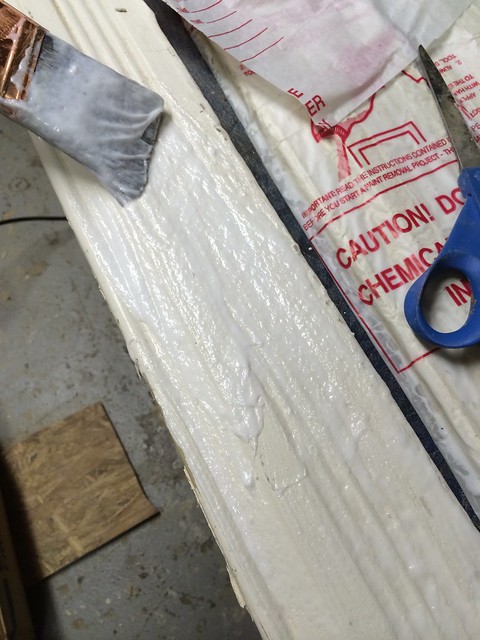
<p>I like to pre cut the paper to the size of the moulding I'm stripping so I can apply it right to the work without messing around. When I drape the paper over the wood I try to apply it from the middle out, pressing the paper into the stripper while attempting to eliminate any and all air bubbles.</p>
<p>
</p>
<div class="MediaContainer PhotoContainer"><a href="http://farm6.staticflickr.com/5544/10365412224_464bd81e8e_z.jpg" rel="PhotoPopup" popupheight="640" popupwidth="480"><img alt="" src="https://farm6.staticflickr.com/5544/10365412224_464bd81e8e.jpg" width="375" height="500" style="border-width: 0px; border-style: solid;"></a></div>
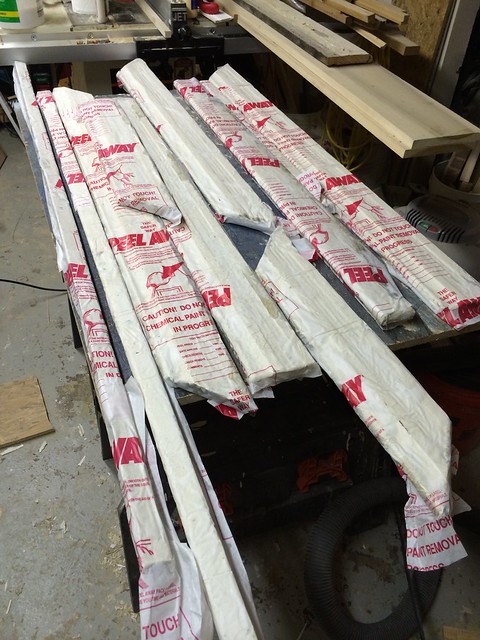
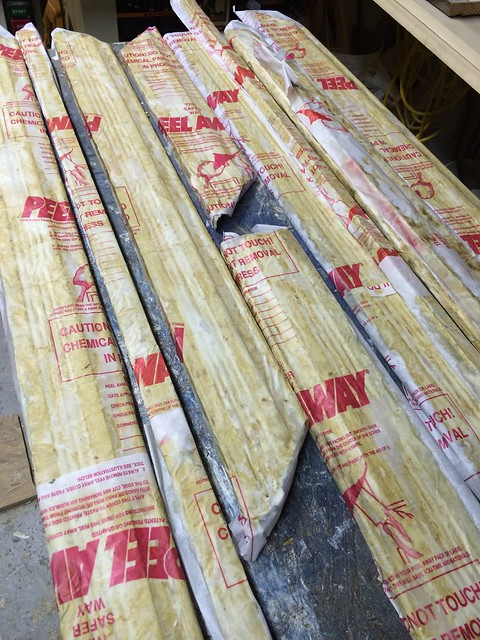
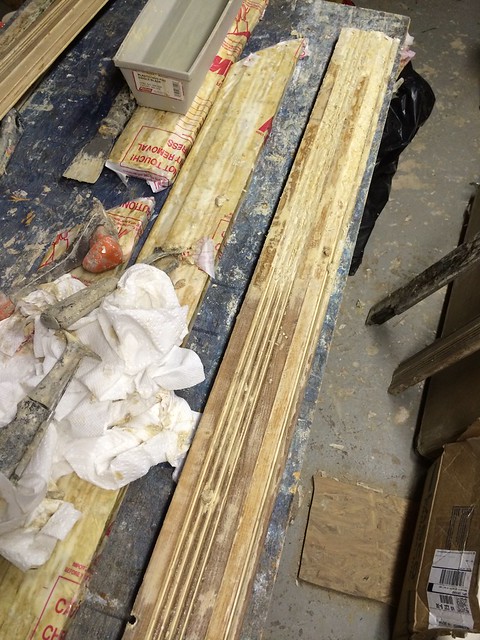
<p>Once everything is looking like a mummified set of window moulding, completely covered in stripper and paper, I'm able to take a step back and let the paint stripper work for about 18-24 hours. This obviously isn't for the project that's pressed for time, but this gap in time does tend to cut the project up a bit.</p>
<p>
</p>
<div class="MediaContainer PhotoContainer"><a href="http://farm4.staticflickr.com/3734/10365416476_27d98e5a24_z.jpg" rel="PhotoPopup" popupheight="640" popupwidth="480"><img alt="" src="https://farm4.staticflickr.com/3734/10365416476_27d98e5a24.jpg" width="375" height="500" style="border-width: 0px; border-style: solid;"></a></div>
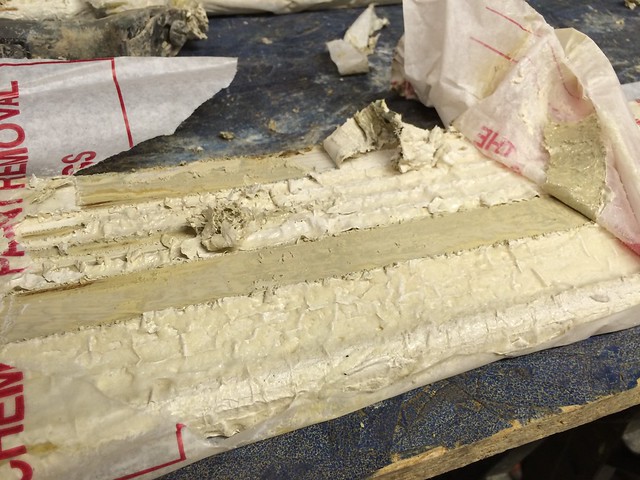
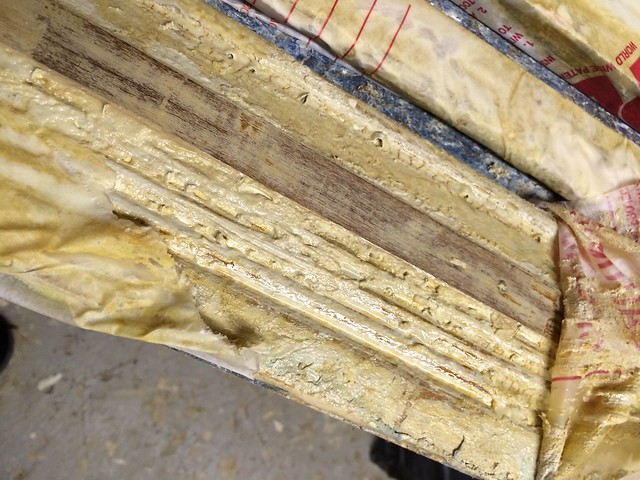
<p>In our case, we're dealing with a dozen or more layers of paint and shellac. Some is thick, some oil, some sloppy, some latex. What I find is that the first attempt at removal tends to completely strip the top several layers of paint, most likely the most recent latex layers, but leaves the older and much harder paint completely intact below.</p>
<p>
</p>
<div class="MediaContainer PhotoContainer"><a href="http://farm8.staticflickr.com/7348/10395255614_9f99d67d04_z.jpg" rel="PhotoPopup" popupheight="480" popupwidth="640"><img alt="" src="https://farm8.staticflickr.com/7348/10395255614_9f99d67d04.jpg" width="500" height="375" style="border-width: 0px; border-style: solid;"></a></div>
<p>The key here is to remove what can be removed easily, but there's no need to remove more than that.</p>
<p>
</p>
<div class="MediaContainer PhotoContainer"><a href="http://farm4.staticflickr.com/3750/10395775496_694f00c7de_z.jpg" rel="PhotoPopup" popupheight="640" popupwidth="480"><img alt="" src="https://farm4.staticflickr.com/3750/10395775496_694f00c7de.jpg" width="375" height="500" style="border-width: 0px; border-style: solid;"></a></div>
<p>Rather than try to get more off than wants to come off, I repeat the initial steps and apply a second coat of paint stripper and paper.</p>
<p>
</p>
<div class="MediaContainer PhotoContainer"><a href="http://farm6.staticflickr.com/5537/10432572963_2db6c8c586_z.jpg" rel="PhotoPopup" popupheight="640" popupwidth="480"><img alt="" src="https://farm6.staticflickr.com/5537/10432572963_2db6c8c586.jpg" width="375" height="500" style="border-width: 0px; border-style: solid;"></a></div>
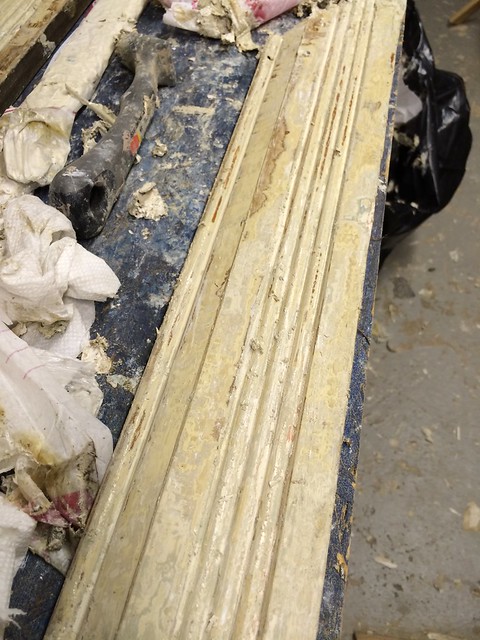
<p>After another 18-24 hours I hit the wood with the paint removal tools for a second time. Typically, this second application is the key to success, easily taking all of the flat surfaces down to bare wood.</p>
<p>
</p>
<div class="MediaContainer PhotoContainer"><a href="http://farm4.staticflickr.com/3812/10432436605_44471f2754_z.jpg" rel="PhotoPopup" popupheight="480" popupwidth="640"><img alt="" src="https://farm4.staticflickr.com/3812/10432436605_44471f2754.jpg" width="500" height="375" style="border-width: 0px; border-style: solid;"></a></div>
<p>The removed paint has turned to a brownish sludge that Wendy tends to associated with diarrhea, but I like to think of it more as triumph in sludge form (makes me less disgusted).</p>
<p>
</p>
<div class="MediaContainer PhotoContainer"><a href="http://farm4.staticflickr.com/3798/10437735174_b9ea1c1606_z.jpg" rel="PhotoPopup" popupheight="640" popupwidth="480"><img alt="" src="https://farm4.staticflickr.com/3798/10437735174_b9ea1c1606.jpg" width="375" height="500" style="border-width: 0px; border-style: solid;"></a></div>
<p>I use a tremendous amount of paper towels at this point, and a combination of water and vinegar. Wiping and re-wiping over and over I eventually get the wood to a point where the melted triumph paint sludge has been cleared from the wood, leaving only the most difficult and stubborn paint.</p>
<p>
</p>
<div class="MediaContainer PhotoContainer"><a href="http://farm4.staticflickr.com/3792/10437747576_f145101d2f_z.jpg" rel="PhotoPopup" popupheight="640" popupwidth="480"><img alt="" src="https://farm4.staticflickr.com/3792/10437747576_f145101d2f.jpg" width="375" height="500" style="border-width: 0px; border-style: solid;"></a></div>
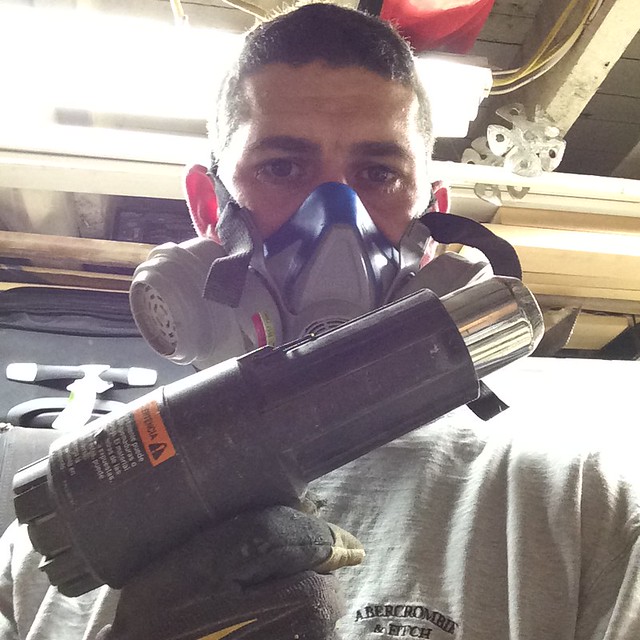
<p>At this point I grab my set of paint removal "dental tools" and the tried and true heat gun. I also don my respirator mask and ready myself for many hours in a back aching pose hovering above the remaining paint, wishing I could instead conjure a Harry Potter spell for paint removal. The spell never arrives, and instead, I end up looking super nerdy for several hours.</p>
<p>
</p>
<div class="MediaContainer PhotoContainer"><a href="http://farm8.staticflickr.com/7332/10526200614_176d807d54_z.jpg" rel="PhotoPopup" popupheight="640" popupwidth="640"><img alt="" src="https://farm8.staticflickr.com/7332/10526200614_176d807d54.jpg" width="500" height="500" style="border-width: 0px; border-style: solid;"></a></div>
<p>Using the heat gun I'm able to soften the paint in the deep grooves of the various beads in the moulding, removing it a little at a time, about one inch per minute. I'm definitely not setting any land speed paint removal records, and I'd actually venture to guess that each layer of the paint actually dried in less time than it takes to remove it, but this moulding looks good when you can see it's details again, dammit!</p>
<p>
</p>
<div class="MediaContainer PhotoContainer"><a href="http://farm3.staticflickr.com/2808/10525056966_7bbc1a10f9_z.jpg" rel="PhotoPopup" popupheight="640" popupwidth="480"><img alt="" src="https://farm3.staticflickr.com/2808/10525056966_7bbc1a10f9.jpg" width="375" height="500" style="border-width: 0px; border-style: solid;"></a></div>
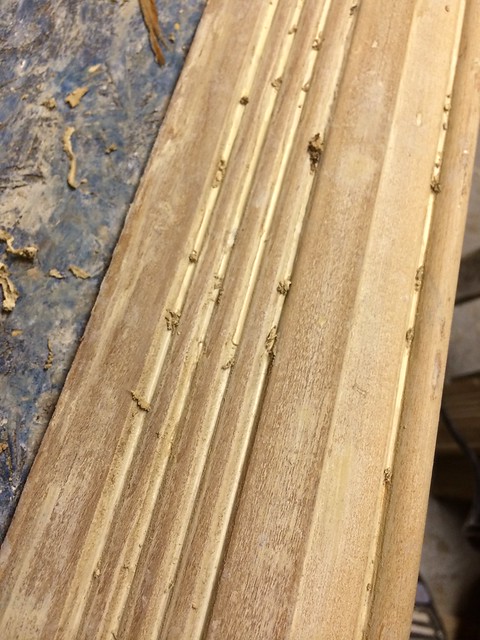
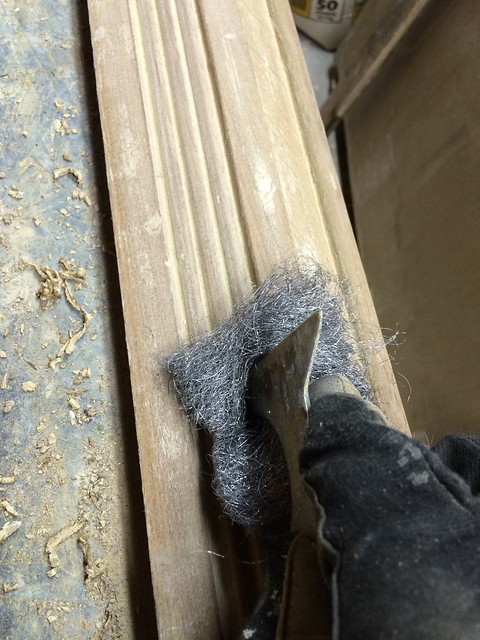
<p>After hours of efforts I grab my steel wool pads and start to hit the beads. The smoothness that comes with a little elbow grease and a whole lot of time investment is a beautiful thing.</p>
<p>
</p>
<div class="MediaContainer PhotoContainer"><a href="http://farm4.staticflickr.com/3685/10568425246_d4f0ec4bbc_z.jpg" rel="PhotoPopup" popupheight="640" popupwidth="480"><img alt="" src="https://farm4.staticflickr.com/3685/10568425246_d4f0ec4bbc.jpg" width="375" height="500" style="border-width: 0px; border-style: solid;"></a></div>
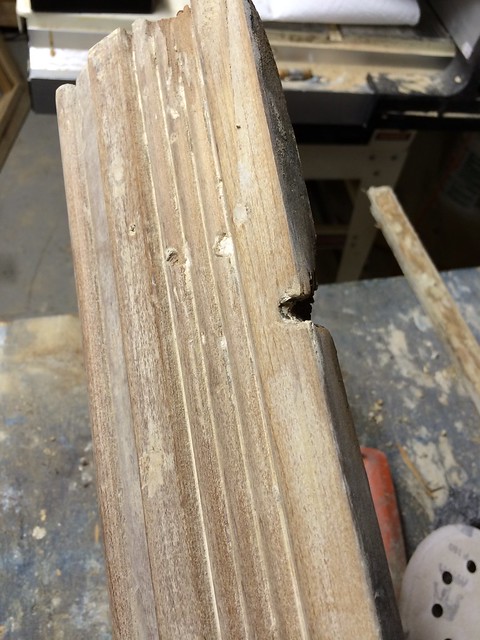
<p>I know this house will likely never see another owner like me. I'm a zealot and a hard head bordering on the moronic, but when I set my mind to something you'd better believe I'm going to see it through. Such is the case with these mouldings. Completely stripped, full of their dings, holes, cuts, and other imperfections...</p>
<p>
</p>
<div class="MediaContainer PhotoContainer"><a href="http://farm4.staticflickr.com/3668/10573091196_b7732da900_z.jpg" rel="PhotoPopup" popupheight="640" popupwidth="480"><img alt="" src="https://farm4.staticflickr.com/3668/10573091196_b7732da900.jpg" width="375" height="500" style="border-width: 0px; border-style: solid;"></a></div>
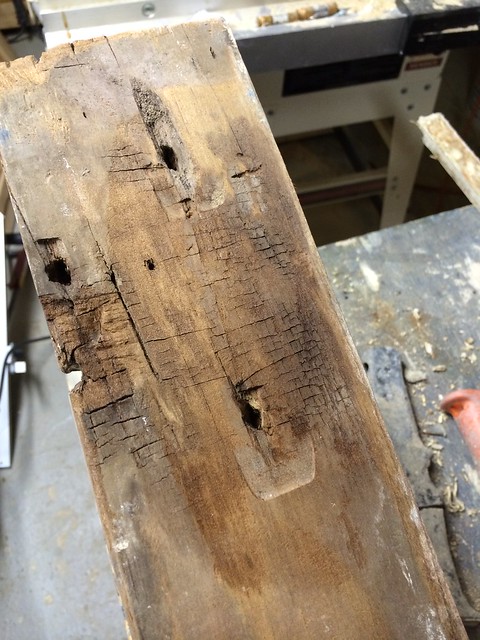
<p>They can almost tell a story. From the nail holes near corners indicating makeshift window dressings or temporary christmas lighting, to the marred backs damaged by water infiltrations over the years, this moulding has been in place for 125 years, and there's no way I'd rip it out for something new.</p>
<p>
</p>
<div class="MediaContainer PhotoContainer"><a href="http://farm6.staticflickr.com/5520/10572912085_a76a223f03_z.jpg" rel="PhotoPopup" popupheight="640" popupwidth="480"><img alt="" src="https://farm6.staticflickr.com/5520/10572912085_a76a223f03.jpg" width="375" height="500" style="border-width: 0px; border-style: solid;"></a></div>
<p>These window and door casings are the thing of beauty once re-installed. They are clean, crisp, unique, and downright gorgeous (in a "my child is the most beautiful child in the world" sort of way).</p>
<p>
</p>
<div class="MediaContainer PhotoContainer"><a href="http://farm6.staticflickr.com/5523/10579899615_1c6a6d69bc_z.jpg" rel="PhotoPopup" popupheight="640" popupwidth="480"><img alt="" src="https://farm6.staticflickr.com/5523/10579899615_1c6a6d69bc.jpg" width="375" height="500" style="border-width: 0px; border-style: solid;"></a></div>
<p>All of this time and effort is spent with the full knowledge that we'll be painting right over top of these once they're back in place, and I'm 100% okay with that. I don't particularly enjoy stripping paint, but now that I've gotten pretty decent at it, I know it will be great when it's done, and that's enough to keep me going.&nbsp;</p>
<p>I did have to modify some of it slightly to accommodate the wall depth. I have to be honest, there's nothing I like doing less than cutting into this old moulding.</p>
<p>
</p>
<div class="MediaContainer PhotoContainer"><a href="http://farm4.staticflickr.com/3781/10598933693_a9862b9933_z.jpg" rel="PhotoPopup" popupheight="640" popupwidth="480"><img alt="" src="https://farm4.staticflickr.com/3781/10598933693_a9862b9933.jpg" width="375" height="500" style="border-width: 0px; border-style: solid;"></a></div>
<p>Given the moulding is removed from a solid installation, reinstall is pretty straight forward. To install I use my brad nailer and shoot only what we need. I don't like filling it full of holes like some finish people tend to do.</p>
<p>
</p>
<div class="MediaContainer PhotoContainer"><a href="http://farm4.staticflickr.com/3714/10604459494_d96910b42c_z.jpg" rel="PhotoPopup" popupheight="640" popupwidth="480"><img alt="" src="https://farm4.staticflickr.com/3714/10604459494_d96910b42c.jpg" width="375" height="500" style="border-width: 0px; border-style: solid;"></a></div>
<p>What? You don't think it looks amazing and lovely? Just you wait, a few days, or maybe weeks, possibly months, and an outside chance of years...and I might just have a beautiful finished product to share with you. Until then, paint stripping on this window trim is done!</p>
<p>After all my years of paint stripping in this house I'll tell you one thing for sure. If we're ever looking to buy another old house and I look at the mouldings and suggest to Wendy that we should strip them, she has every right to cut my tongue right out of my mouth where I stand. I mean, I'm obviously not making any reasonable sense, so I shouldn't ever be allowed to speak again.</p>
<p>How do you feel about paint stripping? Are you intrigued by it? Perhaps, enthusiastic? Or are you more in the "over it" camp where I've now permanently setup residence?&nbsp;</p>
<p>What's that you say? I have at least one or two more doors to strip? Oh brother.</p><p><a href="https://www.oldtownhome.com/2013/12/23/Paint-Stripping-Approach-Revised---Status-Still-Hate-It/">Read Full Post</a></p>]]></content>
    <category term="Header Image" />
    <category term="Moulding" />
    <category term="Paint Removal" />
    <PostImage>http://farm4.staticflickr.com/3701/11515865033_5ac021b42d.jpg</PostImage>
    <media:thumbnail url="https://farm4.staticflickr.com/3701/11515865033_5ac021b42d_t.jpg" />
    <ExtensionElements>
      <Item>PostImage</Item>
      <Item>media:thumbnail</Item>
    </ExtensionElements>
  </entry>
  <entry>
    <guid>cb10d2db-1517-44a0-a28b-03e99a0b0fc9</guid>
    <id>https://www.oldtownhome.com/2012/4/26/Thats-a-Wrap---Whole-Home-Paint-Stripping/</id>
    <title>That's a Wrap - Whole Home Paint Stripping</title>
    <summary type="html"><![CDATA[<p>If you're a fan of This Old House like I am, you've undoubtedly seen the recent focus on the new EPA guidelines and restrictions when it comes to hazardous materials handling by contractors. From lead paint stripping to asbestos removal, the workers covered in white suits look like nuclear facility works, and the buildings or homes, covered in scaffolding and plastic, appear to be harboring ET. Though it's one thing to see it on TV, it's another to see it in person. </p><p>Living in the historic district, there's no shortage of ongoing construction projects at any given time. On our many runs or walks with Lulu, we often ooooohhhh and aaaahhhh at the new scaffolding that we see set up at various houses.</p><p>We talk about the tuck pointing taking place, or new copper roof and gutters being installed. </p><p>
</p><div class="MediaContainer PhotoContainer"><a href="http://farm8.staticflickr.com/7237/6969438406_26e235bdb8_z.jpg" rel="PhotoPopup" popupheight="640" popupwidth="480"><img alt="" src="https://farm8.staticflickr.com/7237/6969438406_26e235bdb8.jpg" width="375" height="500" style="border-width: 0px;border-style: solid;"></a></div><p>And we reminisce about the long and torturous days when we did our own siding work. </p><p>
</p> <a href="https://www.oldtownhome.com/2012/4/26/Thats-a-Wrap---Whole-Home-Paint-Stripping/">more</a>]]></summary>
    <published>2012-04-26T09:59:00.000-04:00</published>
    <updated>2012-04-26T09:59:00.000-04:00</updated>
    <link rel="alternate" href="https://www.oldtownhome.com/2012/4/26/Thats-a-Wrap---Whole-Home-Paint-Stripping/" />
    <author>
      <name>Alex</name>
    </author>
    <content type="html"><![CDATA[<p>If you're a fan of This Old House like I am, you've undoubtedly seen the recent focus on the new EPA guidelines and restrictions when it comes to hazardous materials handling by contractors. From lead paint stripping to asbestos removal, the workers covered in white suits look like nuclear facility works, and the buildings or homes, covered in scaffolding and plastic, appear to be harboring ET. Though it's one thing to see it on TV, it's another to see it in person. </p>
<p>Living in the historic district, there's no shortage of ongoing construction projects at any given time. On our many runs or walks with Lulu, we often ooooohhhh and aaaahhhh at the new scaffolding that we see set up at various houses.</p>
<p>We talk about the tuck pointing taking place, or new copper roof and gutters being installed. </p>
<p>
</p>
<div class="MediaContainer PhotoContainer"><a href="http://farm8.staticflickr.com/7237/6969438406_26e235bdb8_z.jpg" rel="PhotoPopup" popupheight="640" popupwidth="480"><img alt="" src="https://farm8.staticflickr.com/7237/6969438406_26e235bdb8.jpg" width="375" height="500" style="border-width: 0px;border-style: solid;"></a></div>
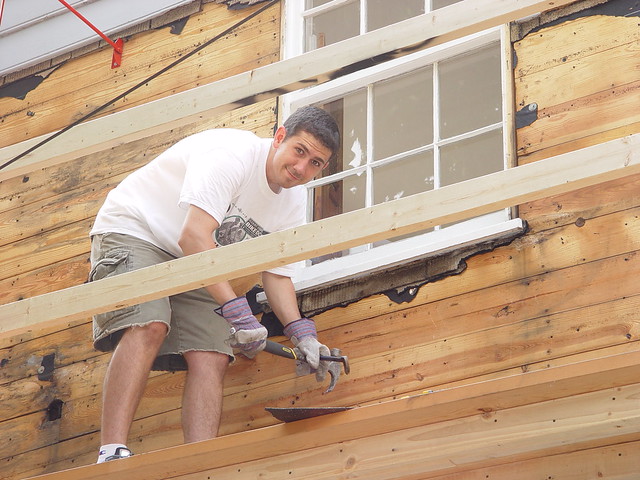
<p>And we reminisce about the long and torturous days when we did our own siding work. </p>
<p>
</p>
<div class="MediaContainer PhotoContainer"><a href="http://farm6.staticflickr.com/5065/5646171979_19a307b8a3_z.jpg" rel="PhotoPopup" popupheight="480" popupwidth="640"><img alt="" src="https://farm6.staticflickr.com/5065/5646171979_19a307b8a3.jpg" width="500" height="375" style="border-width: 0px;border-style: solid;"></a></div>
<p>But several weeks ago we had one of our first glimpses at some of the extra efforts that are necessary whe it comes to protecting neighbors and pedestrians when lead hazard is involved. </p>
<p>
</p>
<div class="MediaContainer PhotoContainer"><a href="http://farm8.staticflickr.com/7103/6969422864_6a0a23085b_z.jpg" rel="PhotoPopup" popupheight="480" popupwidth="640"><img alt="" src="https://farm8.staticflickr.com/7103/6969422864_6a0a23085b.jpg" width="500" height="375" style="border-width: 0px;border-style: solid;"></a></div>
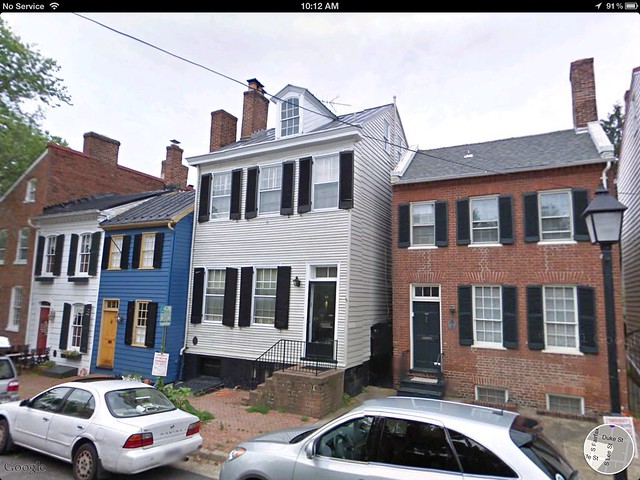
<p>A very nice wood frame house on Lee Street was having its paint stripped from the original wood siding. Here's a Google street view photo of the house prior to the commencement of the siding work. </p>
<p>
<div class="MediaContainer PhotoContainer"><a href="http://farm6.staticflickr.com/5276/6969617114_c28d799a18_z.jpg" rel="PhotoPopup" popupheight="480" popupwidth="640"><img alt="" src="https://farm6.staticflickr.com/5276/6969617114_c28d799a18.jpg" width="500" height="375" style="border-width: 0px;border-style: solid;"></a></div>
</p>
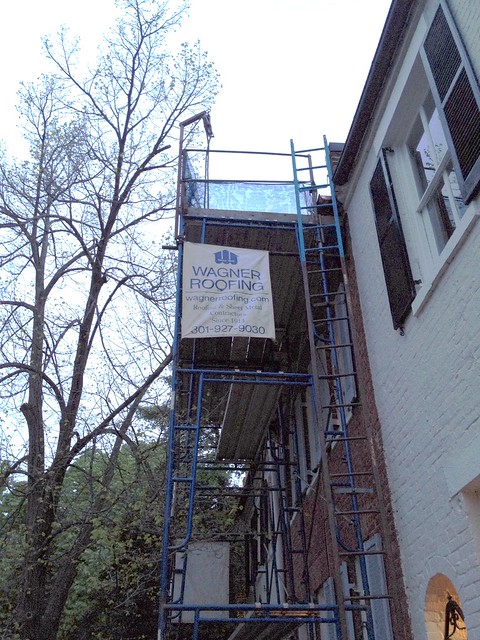
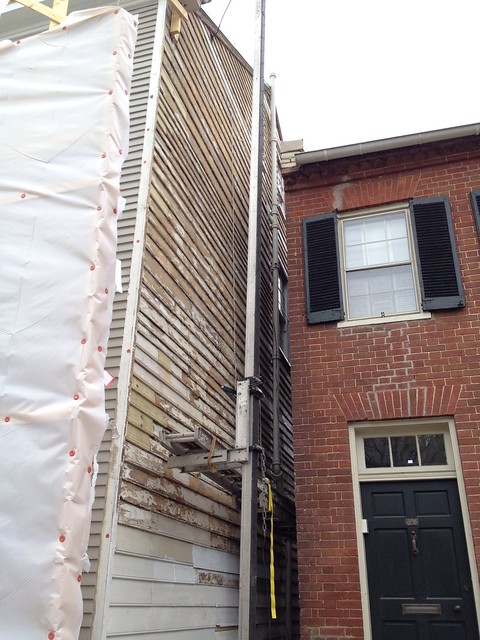
<p>By the time we saw it, the scaffolding had gone up and plastic wrap applied to the exterior of the scaffold to keep any lead dust contained. </p>
<p>
</p>
<div class="MediaContainer PhotoContainer"><a href="http://farm8.staticflickr.com/7267/7040760271_d7f5153919_z.jpg" rel="PhotoPopup" popupheight="640" popupwidth="480"><img alt="" src="https://farm8.staticflickr.com/7267/7040760271_d7f5153919.jpg" width="375" height="500" style="border-width: 0px;border-style: solid;"></a></div>
<p>When I took these photos, much of the hard work had already been complete. However, each day, at the end of the day, the workers needed to wrap up any paint that had been scraped from the house and properly dispose of it. </p>
<p>You can see from the side shot just how much had already been completed. The paint was largely removed from the side and the clapboards exposed, while the front of the house already had it's first coat of paint. </p>
<p>
</p>
<div class="MediaContainer PhotoContainer"><a href="http://farm8.staticflickr.com/7276/6969425882_bbf267cf8c_z.jpg" rel="PhotoPopup" popupheight="640" popupwidth="480"><img alt="" src="https://farm8.staticflickr.com/7276/6969425882_bbf267cf8c.jpg" width="375" height="500" style="border-width: 0px;border-style: solid;"></a></div>
<p>Some people wonder why you should strip paint rather than putting another coat over the old. The answer is simple. Sometimes it's necessary, and sometimes it's a preference. If the existing paint has failed to the point that it's beginning to peel and flake, you need to get rid of the failing paint so the next cost can properly adhere. Otherwise you're just throwing good money after bad. Often removing just the failing paint will leave such a bumpy and poor surface to paint over, that it is far more aesthetically pleasing to take all of the old off and give a nice and smooth surface to work with. And sometimes, when it's lead paint or the owner just likes the smoother look, paint removal is the only way to achieve the end goals. </p>
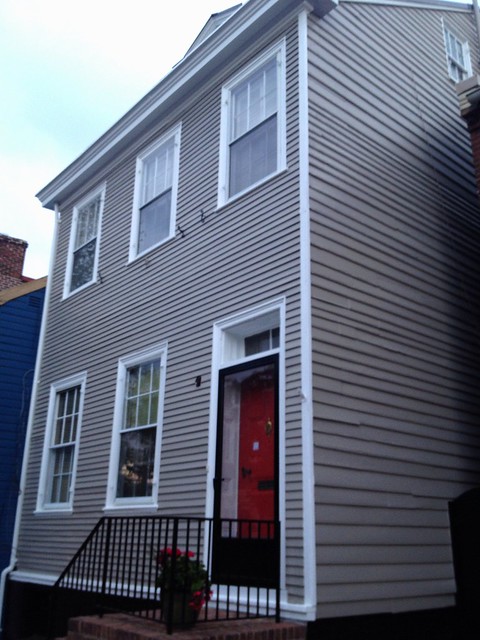
<p>A few weeks after the first photos were taken, I stopped back by the house to check out the progress. What I saw was a beautifully painted home that looks like its ready for another 200 years (with proper maintenance, of course). </p>
<p>
</p>
<div class="MediaContainer PhotoContainer"><a href="http://farm6.staticflickr.com/5311/7115510939_40197abbbc_z.jpg" rel="PhotoPopup" popupheight="640" popupwidth="480"><img alt="" src="https://farm6.staticflickr.com/5311/7115510939_40197abbbc.jpg" width="375" height="500" style="border-width: 0px;border-style: solid;"></a></div>
<p>They had done a very nice job with stripping and surface prep and seemed to have a great base to work with. The best part is that the owners chose to do both the facade of the house and the side. Many people opt to leave the side untouched in tight alleys, but that's just opening yourself for problems and inconvenience down the road. </p>
<p>Have you seen anything similar in your neighborhood? I assume this sort of thing is not normal in most places, as you'll typically only see it in historic districts with pockets of many older homes. What do you think?</p><p><a href="https://www.oldtownhome.com/2012/4/26/Thats-a-Wrap---Whole-Home-Paint-Stripping/">Read Full Post</a></p>]]></content>
    <category term="Header Image" />
    <category term="Old Town" />
    <category term="Paint Removal" />
    <PostImage>http://farm9.staticflickr.com/8004/6969443790_acbbd51281.jpg</PostImage>
    <media:thumbnail url="https://farm9.staticflickr.com/8004/6969443790_acbbd51281_t.jpg" />
    <ExtensionElements>
      <Item>PostImage</Item>
      <Item>media:thumbnail</Item>
    </ExtensionElements>
  </entry>
  <entry>
    <guid>4114f1ac-bad9-4798-bcc5-752fa037f2e9</guid>
    <id>https://www.oldtownhome.com/2012/1/27/The-Weekend-Dilemma---Tell-Me-What-To-Do/</id>
    <title>The Weekend Dilemma - Tell Me What To Do</title>
    <summary type="html"><![CDATA[<p>Here's an official welcome to any new readers who've made it over this way from <a href="http://www.brooklynlimestone.com/" target="_blank">Brooklyn Limestone</a>! And for those that don't know, Wendy and I were invited to guest blog at Brooklyn Limestone, one of our favorite blogs, for a&nbsp;Conquered Closet series. To say we're giddy with excitement is an understatement!&nbsp;</p>
<div class="MediaContainer">
<a href="http://www.brooklynlimestone.com/2012/01/conquered-closets-sneak-peek.html" target="_blank"><img alt="ConqueredClutterClosetSeriesatBrooklynLimestone" src="https://farm8.staticflickr.com/7147/6638131291_46e5712681.jpg" width="500" height="150"></a>
</div>
<p>We've been working hard behind the scenes here at Old Town Home to tackle this project, and our big conquered closet clutter reveal will be featured on February 9. We encourage you to pop on over to <a href="http://www.brooklynlimestone.com">Brooklyn Limestone</a> today as Mrs. Limestone is offering a sneak peek of all projects. Can anyone guess which one is ours?</p>
<p>In the more immediate future, we have a situation&nbsp;<em>this</em>&nbsp;weekend that needs some attention.&nbsp;Have you ever reached a point in a project where you either don't know what to do next or just can't get yourself motivated? Hopefully you said "yes" and I'm not alone (I'll just assume you did). In that case, have you ever reached a point in several projects that are going on at the same time where you just don't know what to do next, so you just sit around watching TV and wonder why you aren't actually working on something? Yeah, that's happening to me.</p>
<p>So I would like your help this weekend. I need you to tell me what to do. I know, I could just let Wendy tell me what to do, but I do that every other day of the week, so this weekend it's your chance. Don't worry, I'm sure she won't mind.&nbsp;</p>
<p>Here's a quick little poll so you can offer your two cents. Just select from one of three of our ongoing projects and the one that gets the most votes by tomorrow morning when I start working is the one that I'll work on for the rest of the weekend.</p>
<p></p></img> <a href="https://www.oldtownhome.com/2012/1/27/The-Weekend-Dilemma---Tell-Me-What-To-Do/">more</a>]]></summary>
    <published>2012-01-27T10:00:00.000-05:00</published>
    <updated>2012-01-27T10:00:00.000-05:00</updated>
    <link rel="alternate" href="https://www.oldtownhome.com/2012/1/27/The-Weekend-Dilemma---Tell-Me-What-To-Do/" />
    <author>
      <name>Alex</name>
    </author>
    <content type="html"><![CDATA[<p>Here's an official welcome to any new readers who've made it over this way from <a href="http://www.brooklynlimestone.com/" target="_blank">Brooklyn Limestone</a>! And for those that don't know, Wendy and I were invited to guest blog at Brooklyn Limestone, one of our favorite blogs, for a&nbsp;Conquered Closet series. To say we're giddy with excitement is an understatement!&nbsp;</p>
<div class="MediaContainer">
<a href="http://www.brooklynlimestone.com/2012/01/conquered-closets-sneak-peek.html" target="_blank"><img alt="ConqueredClutterClosetSeriesatBrooklynLimestone" src="https://farm8.staticflickr.com/7147/6638131291_46e5712681.jpg" width="500" height="150"></a>
</div>
<p>We've been working hard behind the scenes here at Old Town Home to tackle this project, and our big conquered closet clutter reveal will be featured on February 9. We encourage you to pop on over to <a href="http://www.brooklynlimestone.com">Brooklyn Limestone</a> today as Mrs. Limestone is offering a sneak peek of all projects. Can anyone guess which one is ours?</p>
<p>In the more immediate future, we have a situation&nbsp;<em>this</em>&nbsp;weekend that needs some attention.&nbsp;Have you ever reached a point in a project where you either don't know what to do next or just can't get yourself motivated? Hopefully you said "yes" and I'm not alone (I'll just assume you did). In that case, have you ever reached a point in several projects that are going on at the same time where you just don't know what to do next, so you just sit around watching TV and wonder why you aren't actually working on something? Yeah, that's happening to me.</p>
<p>So I would like your help this weekend. I need you to tell me what to do. I know, I could just let Wendy tell me what to do, but I do that every other day of the week, so this weekend it's your chance. Don't worry, I'm sure she won't mind.&nbsp;</p>
<p>Here's a quick little poll so you can offer your two cents. Just select from one of three of our ongoing projects and the one that gets the most votes by tomorrow morning when I start working is the one that I'll work on for the rest of the weekend.</p>
<p></p>
<div class="MediaContainer PollContainer" style="width: 30%;">
<div id="poll-78675" class="pf_poll">
<div id="pf_pollresults_78675" class="pf_pollresults">
<div class="pf_poll_title"><strong>Poll Results<br>
What Do You Think I Should Work On This Weekend?</strong></div>
<div class="pf_poll_content">
<div class="pf_pollresults_answer">Clean Basement</div>
<div class="pf_pollresults_graph">
<div class="pf_bar_wrap" rel="98">
<div class="pf_bar" style="background-color: #706b60; width: 98%; display: block;">&nbsp;</div>
<small>56%</small></div>
</div>
<div class="pf_pollresults_answer">Storm Windows</div>
<div class="pf_pollresults_graph">
<div class="pf_bar_wrap" rel="73.5">
<div class="pf_bar" style="background-color: #beced0; width: 73%; display: block;">&nbsp;</div>
<small>42%</small></div>
</div>
<div class="pf_pollresults_answer">Misc Paint Stripping</div>
<div class="pf_pollresults_graph">
<div class="pf_bar_wrap" rel="3.5">
<div class="pf_bar" style="background-color: #beced0; width: 4%; display: block;">&nbsp;</div>
<small>2%</small></div>
</div>
<div class="pf_pollresults_foot">
<strong>Total Votes:</strong> 52 <br>
</div>
</div>
</div>
</div>
</div>
<p>If you need some more information on any of these options to help you make a better decision, here's where I currently stand.</p>
<h3>Basement Cleaning</h3>
<p>If you're a regular around here, you know I have a bit of a hoarding issue when it comes to wood and tools. But if you're new to the site, you might want to check out <a href="http://www.oldtownhome.com/2012/1/5/Its-a-Virtual-Intervention-for-Alex-the-Wood-Tool-Hoarder/index.aspx">Wendy's public shaming of me and my basement mess</a>. Yep, it's that bad.</p>
<p>
</p>
<div class="MediaContainer PhotoContainer"><a href="http://farm8.staticflickr.com/7157/6638881423_b8c7e5ffb0_z.jpg" rel="PhotoPopup" popupheight="427" popupwidth="640"><img alt="" src="https://farm8.staticflickr.com/7157/6638881423_b8c7e5ffb0.jpg" width="500" height="333" style="border-width: 0px;border-style: solid;"></a></div>
<p>I've been hard at work on operation basement cleanup, but there's still quite a bit left to do. Let's put it this way, I'm no longer falling over stuff in the basement, now I'm just gently tripping on it. Anyhow, if you're interested in me working on our cleanup resolutions that we've been hammering away on, vote for "Clean Basement" in the poll.</p>
<h3>Storm Window Construction</h3>
<p>This goes back to December and my <a href="http://www.oldtownhome.com/2011/12/26/A-Storm-Window-Commitment/index.aspx">declaration to complete the DIY construction of wood storm windows</a> on five of our original windows.&nbsp;</p>
<p>
</p>
<div class="MediaContainer PhotoContainer"><a href="http://farm8.staticflickr.com/7157/6456701039_ddff7a207d_z.jpg" rel="PhotoPopup" popupheight="640" popupwidth="480"><img alt="" src="https://farm8.staticflickr.com/7157/6456701039_ddff7a207d.jpg" width="375" height="500" style="border-width: 0px;border-style: solid;"></a></div>
<p>I've been working on this project, but not as much as I should have been. It doesn't look like I'll meet the January 31 deadline I set for myself, which is bumming me out a little bit. On the other hand, we've been making strides in other areas, so I'm not feeling too guilty. So if you'd like to see me work on our storm windows this weekend, vote for "Storm Windows" in the poll.</p>
<h3>Miscellaneous Paint Stripping</h3>
<p>This is a little out of left field, but we have a bunch of window casings and sash stops that have needed the paint stripped off of them for quite a long time.&nbsp;</p>
<p>
</p>
<div class="MediaContainer PhotoContainer"><a href="http://farm8.staticflickr.com/7162/6770862331_6358127df0_z.jpg" rel="PhotoPopup" popupheight="640" popupwidth="480"><img alt="" src="https://farm8.staticflickr.com/7162/6770862331_6358127df0.jpg" width="375" height="500" style="border-width: 0px;border-style: solid;"></a></div>
<p>Once these pieces of wood are paint free I can begin the process of repainting and reinstalling them where they need to go, the first steps in restoring our old windows to their previous glory. This isn't a critical item, or a particularly exciting item, but it's an item that still needs to get accomplished. If you want me to spend the weekend with my paint stripper, dental tools, and a <a href="http://www.oldtownhome.com/2012/1/10/Toolbox-Tuesday-Breathe-In-Breathe-Out----Choosing-the-Right-Respirator/index.aspx">respirator</a>, vote for "Misc Paint Stripping."</p>
<p>Friends and readers of Old Town Home, the decision is yours. I leave the productivity fate of the weekend in your hands.&nbsp;Do me proud, and if you feel particularly passionate about any one project, leave a comment and let me know your justification for why you think I should do the thing you vote for. A sincerely compelling argument could help be a good tie breaker.</p>
<h3>The Results Are In</h3>
<p>Well, it looks like more than half of you think I should clean the basement this weekend, and I must oblige. Thanks for weighing in, I hope I can do you all proud and get to a point where we can say the basement is clean. Well, at least "clean" enough to really get some storm window work done next week. :-)</p><p><a href="https://www.oldtownhome.com/2012/1/27/The-Weekend-Dilemma---Tell-Me-What-To-Do/">Read Full Post</a></p>]]></content>
    <category term="Basement" />
    <category term="Header Image" />
    <category term="Paint Removal" />
    <category term="Poll" />
    <category term="Storm Windows" />
    <PostImage>http://farm8.staticflickr.com/7141/6770904753_2c5cf8f752.jpg</PostImage>
    <media:thumbnail url="https://farm8.staticflickr.com/7141/6770904753_2c5cf8f752_t.jpg" />
    <ExtensionElements>
      <Item>PostImage</Item>
      <Item>media:thumbnail</Item>
    </ExtensionElements>
  </entry>
  <entry>
    <guid>a6e5c359-3197-4c25-84c0-2d6f129eaf55</guid>
    <id>https://www.oldtownhome.com/2011/7/19/Toolbox-Tuesday-Got-Rust-or-Paint-Wire-Wheel-It-on-the-Bench-Grinder/</id>
    <title>Toolbox Tuesday: Got Rust or Paint? Wire Wheel It on the Bench Grinder</title>
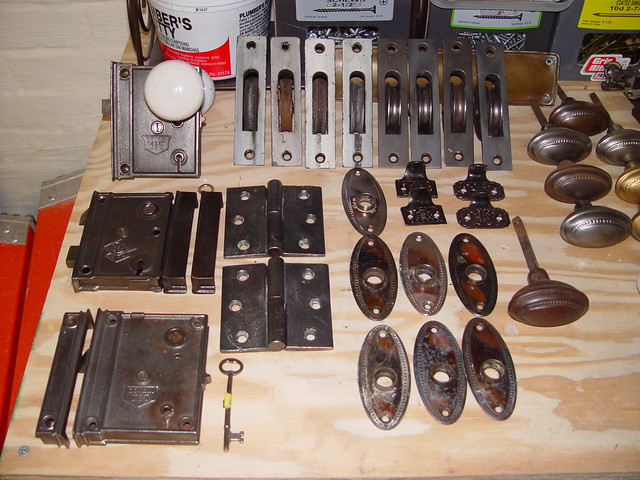
    <summary type="html"><![CDATA[<p>One of the tasks we've been faced with throughout our renovation involves the discovery and restoration of period authentic hardware. We're replacing hinges, rim locks, door knobs, and any number of iron or steel items that have removed from the house by previous owners and renters. Typically, our search for these items leads us to various salvage yards and junk shops, and when the items are found they are often covered in rust and/or paint and in need of a little TLC.&nbsp;</p>
<p>Initially I was at a bit of a loss as to how we would remove the buildup of paint and rust that covered the majority of our salvage yard finds. I knew we could strip the paint with a paint stripper soak, or even use a croc pot (it does actually work and is very safe), but once the paint is off, you are left with a residue of paint and liquid that tends to coat the surface. You could use steel wool and a lot of elbow grease, but that is tough to get into the crevices and details. I went this route for a little while, but then, one day many years ago, I was talking to a home builder that puts salvaged items into new homes to get that period look. He said, "just hit it with the wire wheel."</p>
<p>
</p>
<div class="MediaContainer PhotoContainer"><a href="http://farm7.static.flickr.com/6128/5955328342_ec49b64d4a_z.jpg" rel="PhotoPopup" popupheight="640" popupwidth="640"><img alt="" src="https://farm7.static.flickr.com/6128/5955328342_ec49b64d4a_m.jpg" width="240" height="240" style="border-width: 0px; border-style: solid;"></a></div>
<p>Those magic words have been the best possible solution time and time again. Throughout our experience, there is no better way to clean up your hardware and get it ready for the house than through the use of a wire wheel on a bench top grinder.</p>
<p></p></img> <a href="https://www.oldtownhome.com/2011/7/19/Toolbox-Tuesday-Got-Rust-or-Paint-Wire-Wheel-It-on-the-Bench-Grinder/">more</a>]]></summary>
    <published>2011-07-19T14:29:00.000-04:00</published>
    <updated>2011-07-19T14:29:00.000-04:00</updated>
    <link rel="alternate" href="https://www.oldtownhome.com/2011/7/19/Toolbox-Tuesday-Got-Rust-or-Paint-Wire-Wheel-It-on-the-Bench-Grinder/" />
    <author>
      <name>Alex</name>
    </author>
    <content type="html"><![CDATA[<p>One of the tasks we've been faced with throughout our renovation involves the discovery and restoration of period authentic hardware. We're replacing hinges, rim locks, door knobs, and any number of iron or steel items that have removed from the house by previous owners and renters. Typically, our search for these items leads us to various salvage yards and junk shops, and when the items are found they are often covered in rust and/or paint and in need of a little TLC.&nbsp;</p>
<p>Initially I was at a bit of a loss as to how we would remove the buildup of paint and rust that covered the majority of our salvage yard finds. I knew we could strip the paint with a paint stripper soak, or even use a croc pot (it does actually work and is very safe), but once the paint is off, you are left with a residue of paint and liquid that tends to coat the surface. You could use steel wool and a lot of elbow grease, but that is tough to get into the crevices and details. I went this route for a little while, but then, one day many years ago, I was talking to a home builder that puts salvaged items into new homes to get that period look. He said, "just hit it with the wire wheel."</p>
<p>
</p>
<div class="MediaContainer PhotoContainer"><a href="http://farm7.static.flickr.com/6128/5955328342_ec49b64d4a_z.jpg" rel="PhotoPopup" popupheight="640" popupwidth="640"><img alt="" src="https://farm7.static.flickr.com/6128/5955328342_ec49b64d4a_m.jpg" width="240" height="240" style="border-width: 0px; border-style: solid;"></a></div>
<p>Those magic words have been the best possible solution time and time again. Throughout our experience, there is no better way to clean up your hardware and get it ready for the house than through the use of a wire wheel on a bench top grinder.</p>
<p></p>
<p>
</p>
<div class="MediaContainer PhotoContainer"><a href="http://farm6.static.flickr.com/5309/5668360202_fd694ab17a_z.jpg" rel="PhotoPopup" popupheight="640" popupwidth="480"><img alt="" src="https://farm6.static.flickr.com/5309/5668360202_fd694ab17a.jpg" width="375" height="500" style="border-width: 0px; border-style: solid;"></a></div>
<p>After my conversation with the home builder, I went out and bought a small Delta bench grinder. I knew I would have a need for this tool beyond paint stripping, and I have previously used this same Delta grinder, so I wasn't worried if the wire wheel didn't work out. I also picked up a 6" brass wire wheel attachment that would fit my grinder (this is the real workhorse of the assembly).</p>
<div class="MediaContainer">
<iframe src="http://rcm-na.amazon-adsystem.com/e/cm?t=oltoho-20&amp;o=1&amp;p=8&amp;l=as1&amp;asins=B0007WWHZC&amp;ref=qf_sp_asin_til&amp;fc1=3A3128&amp;IS2=1&amp;lt1=_blank&amp;m=amazon&amp;lc1=61838A&amp;bc1=FAFAF8&amp;bg1=FAFAF8&amp;f=ifr" style="width: 120px; height: 240px;" scrolling="no" marginwidth="0" marginheight="0" frameborder="0"></iframe>
<iframe src="http://rcm-na.amazon-adsystem.com/e/cm?t=oltoho-20&amp;o=1&amp;p=8&amp;l=as1&amp;asins=B00004Y9FC&amp;ref=qf_sp_asin_til&amp;fc1=3A3128&amp;IS2=1&amp;lt1=_blank&amp;m=amazon&amp;lc1=61838A&amp;bc1=FAFAF8&amp;bg1=FAFAF8&amp;f=ifr" style="width: 120px; height: 240px;" scrolling="no" marginwidth="0" marginheight="0" frameborder="0"></iframe>
</div>
<p>This grinder is a variable speed bench grinder with two grinding wheels. I usually leave the stone wheel on one side while the wire wheel sits on the other. It is small and portable, but is quite stable and heavy and has plenty of power for all of the jobs I've used it for. This includes hardware stripping, tool cleanup, chisel sharpening, and even to make a few grinding cuts to remove a tiny bit of material when necessary.</p>
<p>
</p>
<div class="MediaContainer PhotoContainer"><a href="http://farm6.static.flickr.com/5069/5643992059_2cdb2794f0_z.jpg" rel="PhotoPopup" popupheight="480" popupwidth="640"><img alt="" src="https://farm6.static.flickr.com/5069/5643992059_2cdb2794f0.jpg" width="500" height="375" style="border-width: 0px; border-style: solid;"></a></div>
<p>To attach the wire wheel, you will need to remove the grinding guard off of one of the sides of the machine. Also, it is <strong>EXTREMELY IMPORTANT</strong> to wear safety glasses, gloves, closed toe shoes, a helmet, knight's armor, and every level of protective skateboard gear you have while working with the grinder. Seriously, be safety&nbsp;conscious, I've had stuff fly out of my hand and hit me in the legs and feet. If I wasn't wearing shoes and long pants, I would have been hurting quite a bit. And safety glasses are #1 when working on the bench grinder with wire wheel.&nbsp;</p>
<p>The one drawback I've found with this tool is how it likes to "walk" when I turn it on. Though the bench grinder likes to be bolted to your workbench surface, this isn't feasible for our house, we just don't have the room. As a result, the grinder vibrates a lot more than usual, and any attempt at putting a light bulb into the attacked socket almost immediately shakes the bulb until it burns out. This is a minor drawback, but I just don't use the light feature.</p>
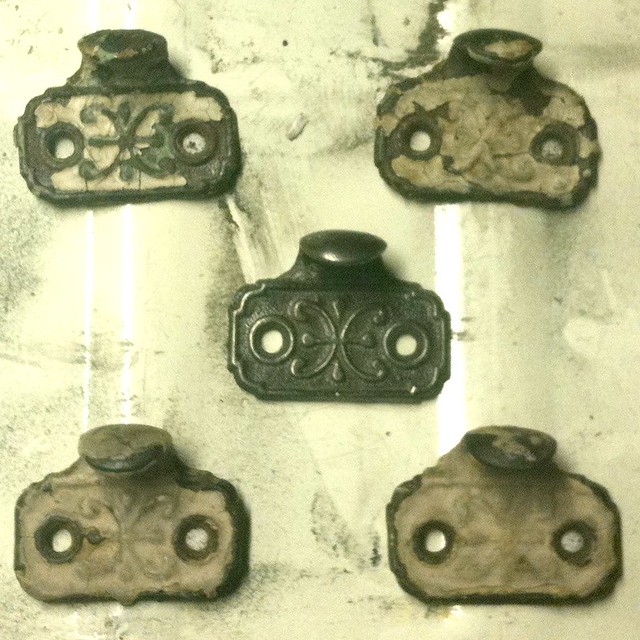
<p>Overall, this setup has worked wonders for our hardware restoration needs. Just look at what this tool was able to do to our window sash lifts.</p>
<p>
</p>
<div class="MediaContainer PhotoContainer"><a href="http://farm7.static.flickr.com/6023/5955260884_527c616cbe_z.jpg" rel="PhotoPopup" popupheight="480" popupwidth="640"><img alt="" src="https://farm7.static.flickr.com/6023/5955260884_527c616cbe.jpg" width="500" height="375" style="border-width: 0px; border-style: solid;"></a></div>
<p>It is really amazing to see an old piece of hardware come back to life with just a little bit of effort.</p>
<p>Do you have a favorite method for cleaning up and restoring hardware parts? Please share your tried and true methods that you always use to strip paint from non wood surfaces? Let me know, I'm looking to work on another "Trash to Treasure" find of Wendy's.</p><p><a href="https://www.oldtownhome.com/2011/7/19/Toolbox-Tuesday-Got-Rust-or-Paint-Wire-Wheel-It-on-the-Bench-Grinder/">Read Full Post</a></p>]]></content>
    <category term="Exclude-Teaser-Projects:Essential Tools" />
    <category term="Hardware" />
    <category term="Paint Removal" />
    <category term="Projects:Essential Tools" />
    <category term="Projects:Home Improvement" />
    <category term="Projects:Salvage" />
    <category term="Salvage" />
    <category term="Toolbox Tuesday" />
    <PostImage>http://farm7.static.flickr.com/6128/5955328342_ec49b64d4a.jpg</PostImage>
    <media:thumbnail url="https://farm7.static.flickr.com/6128/5955328342_ec49b64d4a_t.jpg" />
    <ExtensionElements>
      <Item>PostImage</Item>
      <Item>media:thumbnail</Item>
    </ExtensionElements>
  </entry>
  <entry>
    <guid>ea9bcadd-cd6b-44f7-ac8a-c991bd262fb1</guid>
    <id>https://www.oldtownhome.com/2011/7/13/Toiling-Away-on-the-New-Divided-Lite-Double-Doors/</id>
    <title>Toiling Away on the New Divided Lite Double Doors</title>
    <summary type="html"><![CDATA[<p>As part of our overall vestibule/curb appeal 2.0/new salvaged front door efforts, we've opted to change the configuration of the entry to the house. We're doing this by moving the current front door to the inner door, and then placing salvaged divided lite double doors on the front of the house. This will add an element of depth to the front of the house and will also allow the front doors to open as they were intended to (the current setup is odd and won't allow the door to fully open).</p><p>In a previous post we covered the <a href="http://www.oldtownhome.com/2011/6/29/Behind-Closed-Doors-Were-Stripping-Again/index.aspx">long and tedious paint stripping process on the new solid front door</a>. Well, I've been working over the last couple of weeks on removing the glass and getting the salvaged side lites that we've intended to turn into divided lite double doors into shape. We're about 75% through the process, so I figure it is a good time for an updates. But let's not forget what the doors looked like when we started this whole adventure.</p><div class="MediaContainer PhotoContainer"><a href="http://farm6.static.flickr.com/5142/5657580024_7cde1d5b18_z.jpg" rel="PhotoPopup" popupwidth="478" popupheight="640"><img alt="" width="374" height="500" style="border:0px solid;" src="https://farm6.static.flickr.com/5142/5657580024_7cde1d5b18.jpg"></a></div><p>Much of the glass was broken on one door, they were covered in multiple layers of paint, there were random holes, dents, and cuts, the edges of the doors weren't square, and they are actually about 3" too narrow and a bit short for the 36" opening where they will live. All in all, they were in pretty tough shape.</p><div class="ToolItem">
<iframe src="http://rcm.amazon.com/e/cm?t=oltoho-20&amp;o=1&amp;p=8&amp;l=as1&amp;asins=B001F0KO2S&amp;ref=qf_sp_asin_til&amp;fc1=3A3128&amp;IS2=1&amp;lt1=_blank&amp;m=amazon&amp;lc1=61838A&amp;bc1=FAFAF8&amp;bg1=FAFAF8&amp;f=ifr" style="width: 120px; height: 240px;" scrolling="no" marginwidth="0" marginheight="0" frameborder="0"></iframe>
</div><p>The first thing I decided to do was to remove the glass from the doors and work on paint stripping. These aren't two separate steps in this process since I kept getting sick of one thing and then moving to the other, though I should have stripped all of the paint and then removed the glass.&nbsp;</p><p>For paint removal on these doors I decided to try a new chemical stripper from the makers of Peel Away. They recently came out with an odorless and safe non caustic stripper called SmartStrip, and I've been wanting to give it a go for a while now. I ordered a gallon bucket from a seller on Amazon and we had it a few days later. I'll do a separate post about the Smart Strip process, but overall I'm quite pleased with the results.</p><div class="MediaContainer PhotoContainer"><a href="http://farm7.static.flickr.com/6003/5924462730_cf101f76cc_z.jpg" rel="PhotoPopup" popupwidth="478" popupheight="640"><img alt="" width="374" height="500" style="border:0px solid;" src="https://farm7.static.flickr.com/6003/5924462730_cf101f76cc.jpg"></a></div><p>At the same time I kept working on removing the old glazing putty and glass, trying to break as few panes of glass as possible. I used a heat gun for much of this process, warming the old putty until it was soft enough to be moved out of the way. It is a slow process, and one I really hate, but it's over and done with now and I couldn't be happier.</p> <a href="https://www.oldtownhome.com/2011/7/13/Toiling-Away-on-the-New-Divided-Lite-Double-Doors/">more</a>]]></summary>
    <published>2011-07-13T14:30:00.000-04:00</published>
    <updated>2011-07-13T14:30:00.000-04:00</updated>
    <link rel="alternate" href="https://www.oldtownhome.com/2011/7/13/Toiling-Away-on-the-New-Divided-Lite-Double-Doors/" />
    <author>
      <name>Alex</name>
    </author>
    <content type="html"><![CDATA[<p>As part of our overall vestibule/curb appeal 2.0/new salvaged front door efforts, we've opted to change the configuration of the entry to the house. We're doing this by moving the current front door to the inner door, and then placing salvaged divided lite double doors on the front of the house. This will add an element of depth to the front of the house and will also allow the front doors to open as they were intended to (the current setup is odd and won't allow the door to fully open).</p>
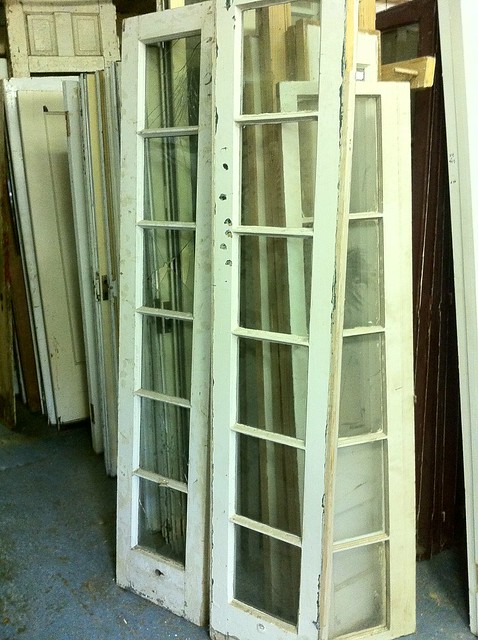
<p>In a previous post we covered the <a href="http://www.oldtownhome.com/2011/6/29/Behind-Closed-Doors-Were-Stripping-Again/index.aspx">long and tedious paint stripping process on the new solid front door</a>. Well, I've been working over the last couple of weeks on removing the glass and getting the salvaged side lites that we've intended to turn into divided lite double doors into shape. We're about 75% through the process, so I figure it is a good time for an updates. But let's not forget what the doors looked like when we started this whole adventure.</p>
<div class="MediaContainer PhotoContainer"><a href="http://farm6.static.flickr.com/5142/5657580024_7cde1d5b18_z.jpg" rel="PhotoPopup" popupwidth="478" popupheight="640"><img alt="" width="374" height="500" style="border:0px solid;" src="https://farm6.static.flickr.com/5142/5657580024_7cde1d5b18.jpg"></a></div>
<p>Much of the glass was broken on one door, they were covered in multiple layers of paint, there were random holes, dents, and cuts, the edges of the doors weren't square, and they are actually about 3" too narrow and a bit short for the 36" opening where they will live. All in all, they were in pretty tough shape.</p>
<div class="ToolItem">
<iframe src="http://rcm.amazon.com/e/cm?t=oltoho-20&amp;o=1&amp;p=8&amp;l=as1&amp;asins=B001F0KO2S&amp;ref=qf_sp_asin_til&amp;fc1=3A3128&amp;IS2=1&amp;lt1=_blank&amp;m=amazon&amp;lc1=61838A&amp;bc1=FAFAF8&amp;bg1=FAFAF8&amp;f=ifr" style="width: 120px; height: 240px;" scrolling="no" marginwidth="0" marginheight="0" frameborder="0"></iframe>
</div>
<p>The first thing I decided to do was to remove the glass from the doors and work on paint stripping. These aren't two separate steps in this process since I kept getting sick of one thing and then moving to the other, though I should have stripped all of the paint and then removed the glass.&nbsp;</p>
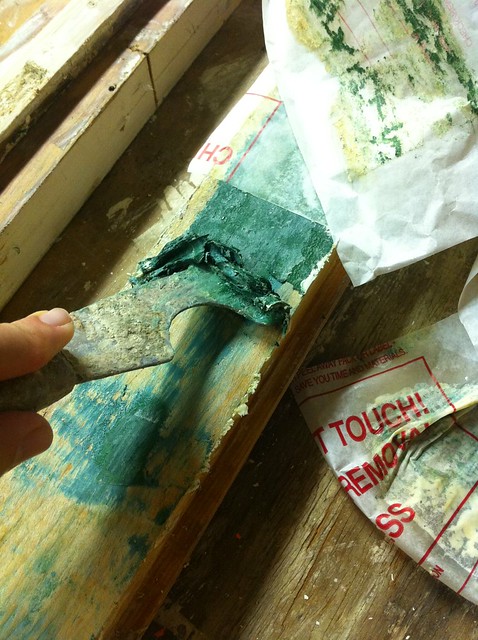
<p>For paint removal on these doors I decided to try a new chemical stripper from the makers of Peel Away. They recently came out with an odorless and safe non caustic stripper called SmartStrip, and I've been wanting to give it a go for a while now. I ordered a gallon bucket from a seller on Amazon and we had it a few days later. I'll do a separate post about the Smart Strip process, but overall I'm quite pleased with the results.</p>
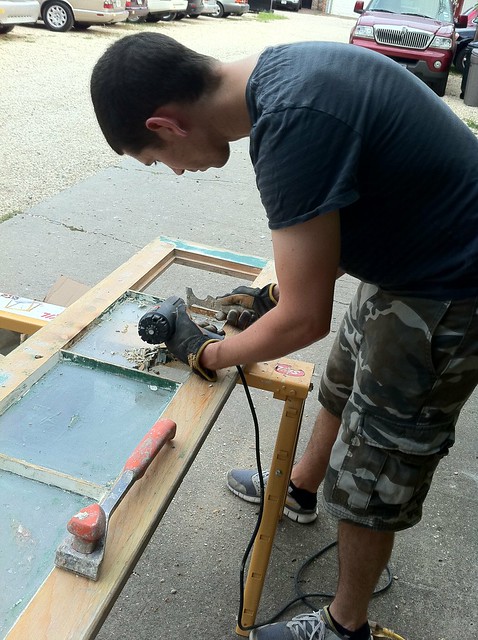
<div class="MediaContainer PhotoContainer"><a href="http://farm7.static.flickr.com/6003/5924462730_cf101f76cc_z.jpg" rel="PhotoPopup" popupwidth="478" popupheight="640"><img alt="" width="374" height="500" style="border:0px solid;" src="https://farm7.static.flickr.com/6003/5924462730_cf101f76cc.jpg"></a></div>
<p>At the same time I kept working on removing the old glazing putty and glass, trying to break as few panes of glass as possible. I used a heat gun for much of this process, warming the old putty until it was soft enough to be moved out of the way. It is a slow process, and one I really hate, but it's over and done with now and I couldn't be happier.</p>
<div class="MediaContainer PhotoContainer"><a href="http://farm7.static.flickr.com/6015/5900132060_144430c30f_z.jpg" rel="PhotoPopup" popupwidth="478" popupheight="640"><img alt="" width="374" height="500" style="border:0px solid;" src="https://farm7.static.flickr.com/6015/5900132060_144430c30f.jpg"></a></div>
<p>If you've ever removed glass from old windows or doors, there is one thing you probably know. The harder you try to not break the glass, the more likely you are to break it. So I adopted a careless attitude during this process and ended up only breaking a single pane of glass.</p>
<div class="MediaContainer PhotoContainer"><a href="http://farm6.static.flickr.com/5279/5900133812_f7144b622e_z.jpg" rel="PhotoPopup" popupwidth="478" popupheight="640"><img alt="" width="374" height="500" style="border:0px solid;" src="https://farm6.static.flickr.com/5279/5900133812_f7144b622e.jpg"></a></div>
<p>Once the glass was removed, I used the scrapers and 5-in-1 tool to remove the remainder of the old glazing putty.&nbsp;Then I turned my attention to squaring the edges of the doors so that we will be able to install them in their opening.</p>
<p>Since these doors were actually side lites on a house, they weren't ever meant to hang as doors. In order to eventually put these on the front of our house, I had to make sure the edges were square and the measurements were equal. To do this I used my circular saw with a scrap piece of straight lumber as a guide. I also used the other door to support the other side of the saw so I didn't end up letting it drop and messing up the cut.</p>
<div class="MediaContainer PhotoContainer"><a href="http://farm7.static.flickr.com/6005/5923911759_e7c1b56c59_z.jpg" rel="PhotoPopup" popupwidth="478" popupheight="640"><img alt="" width="374" height="500" style="border:0px solid;" src="https://farm7.static.flickr.com/6005/5923911759_e7c1b56c59.jpg"></a></div>
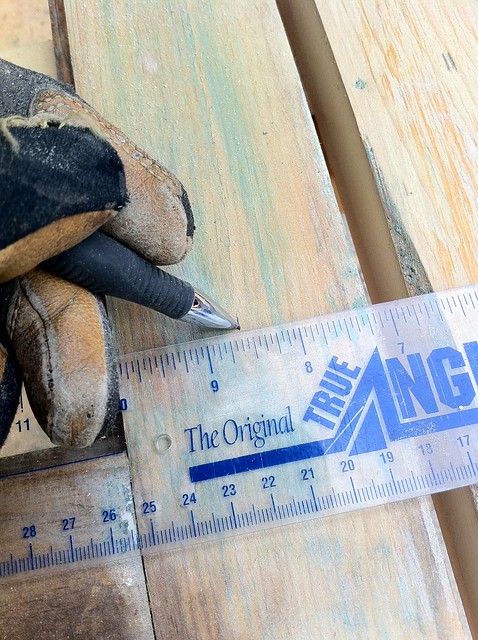
<p>I measured about 10 times on each cut just to be sure I was doing what I intended to do. Whenever I'm doing something like this where the cut needs to be pretty much perfect, I prefer to use a plastic ruler just to be sure I'm getting the mark right. Another tip I've heard but never do, make an arrow instead of a line, with the point of the arrow where the measurement is. It takes the guess work out of where on the line the actual point is.</p>
<div class="MediaContainer PhotoContainer"><a href="http://farm7.static.flickr.com/6026/5923912359_2c7030b18c_z.jpg" rel="PhotoPopup" popupwidth="478" popupheight="640"><img alt="" width="374" height="500" style="border:0px solid;" src="https://farm7.static.flickr.com/6026/5923912359_2c7030b18c.jpg"></a></div>
<p>The end result, the doors now have a consistent and even edge where they should close relatively tightly against each other. I'm probably going to add a stop between the doors (don't know exactly what this is called, but you usually see it on double doors), so the flat surface is necessary to nail that piece to the doors.</p>
<div class="MediaContainer PhotoContainer"><a href="http://farm7.static.flickr.com/6131/5923896399_517affae1d_z.jpg" rel="PhotoPopup" popupwidth="478" popupheight="640"><img alt="" width="374" height="500" style="border:0px solid;" src="https://farm7.static.flickr.com/6131/5923896399_517affae1d.jpg"></a></div>
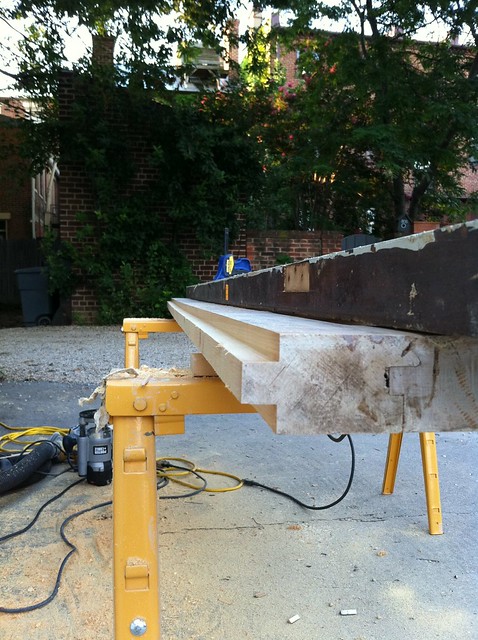
<p>Once the doors were square, I had to start prepping them to add the extra pieces to the outside edges. I decided that the best way to do this would be to cut the edge of the door with a tongue that an extension piece would accept in a groove. I would just need to dado the extension piece once I have it.</p>
<p>To make this cut, I used a simple rabetting bit in my router, set the depth to 1/2", and placed my guide board on the door to allow for a 3/4" relief.</p>
<div class="MediaContainer PhotoContainer"><a href="http://farm7.static.flickr.com/6136/5924459002_6af9af3ba5_z.jpg" rel="PhotoPopup" popupwidth="478" popupheight="640"><img alt="" width="374" height="500" style="border:0px solid;" src="https://farm7.static.flickr.com/6136/5924459002_6af9af3ba5.jpg"></a></div>
<p>I made many passes to remove the material before I hit the guide, otherwise I would have had a lot of tear out and the finished cut would have been horrible. I moved in about 1/4" per pass, just by eyeballing it. The only cut that really mattered was the final one against the guide.</p>
<div class="MediaContainer PhotoContainer"><a href="http://farm7.static.flickr.com/6001/5923915291_f5b5766226_z.jpg" rel="PhotoPopup" popupwidth="478" popupheight="640"><img alt="" width="374" height="500" style="border:0px solid;" src="https://farm7.static.flickr.com/6001/5923915291_f5b5766226.jpg"></a></div>
<p>As you can see, after repeating the process on both sides of the door, I was left with a nice bit of material for the tongue to which I will attach the extra grooved piece.</p>
<p>Since these aren't full mortise and tenon doors (being that they aren't really doors at all), I'm going to put a few 4" exterior screws from the sides into the rails of the door before we attach anything else. That should anchor everything together in a secure enough fashion that they won't come apart once they are hung.</p>
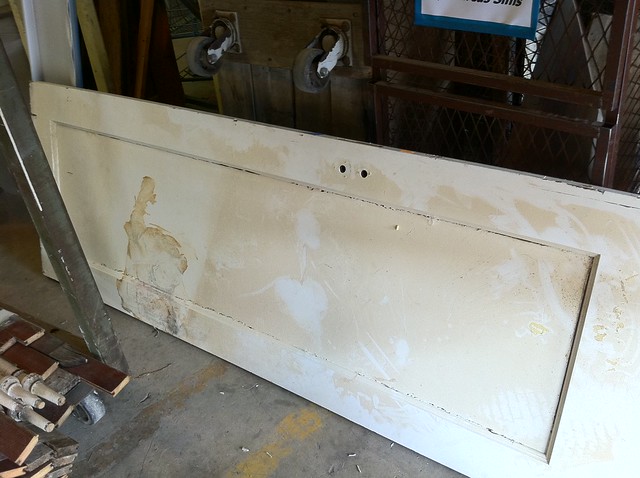
<p>We actually took a trip out to Community Forklift last weekend and bought a door we had planned to cut apart to use for the extra pieces we will need. After a long process, we got the door home and I started to disassemble it. What I thought was a solid and old pine door turned out to be a bunch of jointed wood with a veneer covering.&nbsp;Unfortunately, this won't work for us. Oh well, $20 down the drain. At least I got some good straight guides out of the deal. That's what you see my using in the photos above, the sides of the door we purchased.</p>
<div class="MediaContainer PhotoContainer"><a href="http://farm6.static.flickr.com/5072/5900151466_aa384ae85b_z.jpg" rel="PhotoPopup" popupwidth="640" popupheight="478"><img alt="" width="500" height="374" style="border:0px solid;" src="https://farm6.static.flickr.com/5072/5900151466_aa384ae85b.jpg"></a></div>
<p>Back to the drawing board on that one. It is a bit tough because the wood I need is rather thick. It needs to be a full 1 3/4" thick and must also be old pine. I think I might need to get a piece of salvaged lumber and have it planed to the correct thickness. Or perhaps, just maybe, this is just the excuse that I need to buy myself a bench planer. (Insert calculating laugh here.)</p>
<p>Well, at any rate, the work on the doors are progressing, albeit slower than I'd like. Hopefully we can get the necessary lumber and then get&nbsp;everything&nbsp;prepped for hanging. After that we'll install new pieces of old and wavy glass and then start painting.</p>
<p>I've been doing a ton of research on the paint we will use because we want an extremely shiny and smooth high gloss finish. I think we're going to use 1-Shot lettering enamel with the hardener. I've heard good things and saw a great post on Apartment Therapy where someone used it to paint a desk. The desk was white but it really had the look we are going for.</p>
<p>Do you have any tips for us on super high gloss and smooth paint for the doors? We're talking shiny like the door at <a href="http://news.bbc.co.uk/2/hi/uk_news/magazine/8677004.stm" target="_blank">10 Downing Street in London</a>. Let me know if you have any good tips.</p><p><a href="https://www.oldtownhome.com/2011/7/13/Toiling-Away-on-the-New-Divided-Lite-Double-Doors/">Read Full Post</a></p>]]></content>
    <category term="Curb Appeal" />
    <category term="Entryway" />
    <category term="Paint Removal" />
    <category term="Salvage" />
    <category term="Vestibule" />
    <PostImage>http://farm7.static.flickr.com/6023/5934027967_d90ec9c35d.jpg</PostImage>
    <media:thumbnail url="https://farm7.static.flickr.com/6023/5934027967_d90ec9c35d_t.jpg" />
    <ExtensionElements>
      <Item>PostImage</Item>
      <Item>media:thumbnail</Item>
    </ExtensionElements>
  </entry>
</feed>