<?xml version="1.0" encoding="utf-8"?>
<feed xmlns="http://www.w3.org/2005/Atom" xmlns:media="http://search.yahoo.com/mrss/">
  <title>Old Town Home Category: 'Insulation'</title>
  <updated>2012-07-18T11:30:00.000-04:00</updated>
  <id>http://www.oldtownhome.com/insulation/index.atom</id>
  <link rel="alternate" href="http://www.oldtownhome.com/insulation/index.atom" />
  <author>
    <name>Alex and Wendy</name>
    <uri>http://www.oldtownhome.com/</uri>
    <email>wendy@oldtownhome.com</email>
  </author>
  <entry>
    <guid>6fca9b86-1a77-450c-b2dd-3da65e4830bf</guid>
    <id>https://www.oldtownhome.com/2012/7/18/Attic-Insulation---or---How-to-Lose-8-Lbs-in-2-Hours/</id>
    <title>Attic Insulation - or - How to Lose 8 Lbs in 2 Hours</title>
    <summary type="html"><![CDATA[<p>Well, it's official, I think I can finally claim insulation victory!</p>
<p>
</p>
<div class="MediaContainer VideoEmbed"><iframe width="560" height="349" src="http://www.youtube.com/embed/GIeWjLC_SB0?wmode=transparent&amp;hd=1" frameborder="0" allowfullscreen="true"></iframe></div>
<p>This is a good feeling...no, a great feeling, and I'm so happy to tell you about this wonderful, though decidedly not very sexy, project. Wait a second, who said insulation is not sexy? Definitely not this guy, that's who.</p>
<p>When anyone buys an old home with the hopes of renovating it, it's nearly a given that the insulation in the home probably isn't really up to par. Not surprisingly, that's exactly the case with our home.</p>
<p>The walls of our home are largely plaster on brick, so there's really no chance for insulation without pulling down the plaster, furring out the wall, and spray foaming the junk out of it, but our attic is a different story. Since day one we've known the attic of our home had some seriously lacking insulation. At some point someone blew in a bunch of loose fill cellulose, but it was really old stuff and has gotten very compressed over the years. Whatever the R value may have been at install, I guarantee you it's probably somewhere in the .5-1 range today, and that's not going to cut it on 100+ degree summer days and frigid winter nights.</p>
<p>
</p>
<div class="MediaContainer PhotoContainer"><a href="http://farm6.staticflickr.com/5270/5644508188_4258340be1_z.jpg" rel="PhotoPopup" popupwidth="640" popupheight="480"><img alt="" width="500" height="375" style="border-width: 0px; border-style: solid;" src="https://farm6.staticflickr.com/5270/5644508188_4258340be1.jpg"></a></div>
<p>This summer has been a scorcher, and it seems a bit worse than most summers, which has resulted in our air conditioner running almost non stop. And though it's been incredibly warm, I've been spending many crazy days in our oven of an attic, both sealing up the <a href="http://www.oldtownhome.com/2012/6/19/Toolbox-Tuesday-Is-This-Duct-Sealant-Goo-Better-Than-Tape/index.aspx">leaky duct work</a>, and laying new fiberglass insulation in the attic.&nbsp;</p>
<p>This insulation venture actually started about five years ago during our <a href="http://oldtownhome.com/2012/7/13/Theres-No-Place-Like-Our-Home-Office-Before-and-After-Reveal/index.aspx">office renovation</a>. I was able to access the attic space at the rear of the house and noticed the seriously lacking insulation. Rather than just chalk it up to living in a leaky old house, I installed several rolls of unfaced fiberglass insulation throughout the back half of the house. The end result was a more comfortable, and seemingly more quite space, but we were far from done. A while later I laid insulation above our front bedroom. This is the master, so any additional insulation in this room can only make us more comfortable.&nbsp;</p>
<p></p></img> <a href="https://www.oldtownhome.com/2012/7/18/Attic-Insulation---or---How-to-Lose-8-Lbs-in-2-Hours/">more</a>]]></summary>
    <published>2012-07-18T11:30:00.000-04:00</published>
    <updated>2012-07-18T11:30:00.000-04:00</updated>
    <link rel="alternate" href="https://www.oldtownhome.com/2012/7/18/Attic-Insulation---or---How-to-Lose-8-Lbs-in-2-Hours/" />
    <author>
      <name>Alex</name>
    </author>
    <content type="html"><![CDATA[<p>Well, it's official, I think I can finally claim insulation victory!</p>
<p>
</p>
<div class="MediaContainer VideoEmbed"><iframe width="560" height="349" src="http://www.youtube.com/embed/GIeWjLC_SB0?wmode=transparent&amp;hd=1" frameborder="0" allowfullscreen="true"></iframe></div>
<p>This is a good feeling...no, a great feeling, and I'm so happy to tell you about this wonderful, though decidedly not very sexy, project. Wait a second, who said insulation is not sexy? Definitely not this guy, that's who.</p>
<p>When anyone buys an old home with the hopes of renovating it, it's nearly a given that the insulation in the home probably isn't really up to par. Not surprisingly, that's exactly the case with our home.</p>
<p>The walls of our home are largely plaster on brick, so there's really no chance for insulation without pulling down the plaster, furring out the wall, and spray foaming the junk out of it, but our attic is a different story. Since day one we've known the attic of our home had some seriously lacking insulation. At some point someone blew in a bunch of loose fill cellulose, but it was really old stuff and has gotten very compressed over the years. Whatever the R value may have been at install, I guarantee you it's probably somewhere in the .5-1 range today, and that's not going to cut it on 100+ degree summer days and frigid winter nights.</p>
<p>
</p>
<div class="MediaContainer PhotoContainer"><a href="http://farm6.staticflickr.com/5270/5644508188_4258340be1_z.jpg" rel="PhotoPopup" popupwidth="640" popupheight="480"><img alt="" width="500" height="375" style="border-width: 0px; border-style: solid;" src="https://farm6.staticflickr.com/5270/5644508188_4258340be1.jpg"></a></div>
<p>This summer has been a scorcher, and it seems a bit worse than most summers, which has resulted in our air conditioner running almost non stop. And though it's been incredibly warm, I've been spending many crazy days in our oven of an attic, both sealing up the <a href="http://www.oldtownhome.com/2012/6/19/Toolbox-Tuesday-Is-This-Duct-Sealant-Goo-Better-Than-Tape/index.aspx">leaky duct work</a>, and laying new fiberglass insulation in the attic.&nbsp;</p>
<p>This insulation venture actually started about five years ago during our <a href="http://oldtownhome.com/2012/7/13/Theres-No-Place-Like-Our-Home-Office-Before-and-After-Reveal/index.aspx">office renovation</a>. I was able to access the attic space at the rear of the house and noticed the seriously lacking insulation. Rather than just chalk it up to living in a leaky old house, I installed several rolls of unfaced fiberglass insulation throughout the back half of the house. The end result was a more comfortable, and seemingly more quite space, but we were far from done. A while later I laid insulation above our front bedroom. This is the master, so any additional insulation in this room can only make us more comfortable.&nbsp;</p>
<p></p>
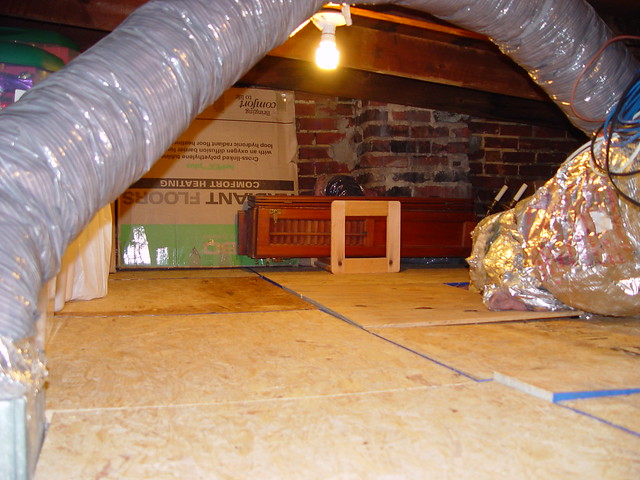
<p>Again, using unfaced insulation, I laid new insulation over the old. This was a dilemma for me. I hated the idea of putting down the new without removing the old, but the old stuff is everywhere, a mess, full of fiberglass that I don't want to disturb and get everywhere, and nearly unreachable in most instances. I know Steve over at <a href="http://www.ouroldrowhouse.com" target="_blank">OurOldRowhouse.com</a> hired someone to come in and vacuum it all out, but I just didn't think of that before starting this project some time ago. Perhaps I should have, but that slight oversight is on me. So instead, I cut more batts of fiberglass and filled the odd sized joist spaces, then cut some subfloor to lay in the attic, which has given us a very nice storage area.&nbsp;</p>
<p>
</p>
<div class="MediaContainer PhotoContainer"><a href="http://farm6.staticflickr.com/5306/5648025116_62fcd2fa4a_z.jpg" rel="PhotoPopup" popupwidth="640" popupheight="480"><img alt="" width="500" height="375" style="border-width: 0px; border-style: solid;" src="https://farm6.staticflickr.com/5306/5648025116_62fcd2fa4a.jpg"></a></div>
<p>With our master bedroom ceiling insulated, that left only the middle of the house without insulation, and there it sat...until this summer.&nbsp;</p>
<p>Back when the weather was just getting warm I set out on my mission to finish the insulation in the attic by buying several rolls of R30 unfaced insulation.&nbsp;</p>
<p>
</p>
<div class="MediaContainer PhotoContainer"><a href="http://farm6.staticflickr.com/5350/7181972233_4def99496d_z.jpg" rel="PhotoPopup" popupwidth="480" popupheight="640"><img alt="" width="375" height="500" style="border-width: 0px; border-style: solid;" src="https://farm6.staticflickr.com/5350/7181972233_4def99496d.jpg"></a></div>
<p>If you notice, I keep purchasing and installing the unfaced variety of insulation, which has no vapor barrier attached to it. It's important that this insulation doesn't have any sort of vapor barrier to anything to trap moisture. Since I'm installing this over other insulation, it has to breathe, otherwise it can promote mold growth by trapping moisture. Unfaced is the easiest here, but if only kraft paper faced insulation was available, I could have installed it with the paper facing up and the cut lots of slits in the paper with the utility knife to let it breathe.&nbsp;</p>
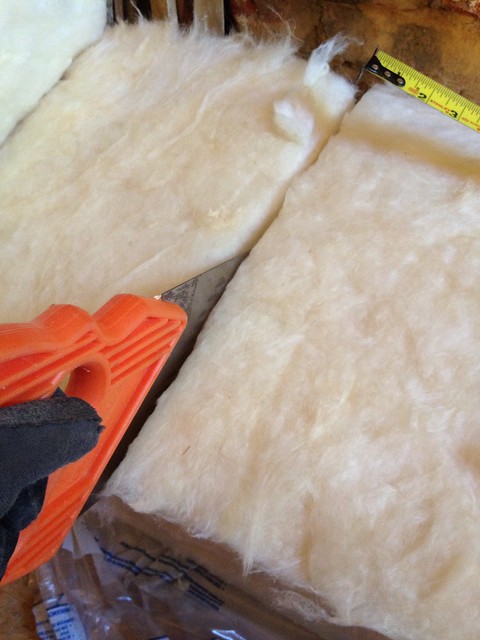
<p>Since the attic joists are a very inconsistent width, and nowhere close to 16", 18", or 24" on center, I wasn't able to just roll out the pieces. Instead I had to cut them all to roughly 24", then lay each piece perpendicular to the ceiling joists, slowly filling in the space. It made for a much slower going project, but was a necessary approach to ensure proper fit and the best possible insulation job.&nbsp;</p>
<p>
</p>
<div class="MediaContainer PhotoContainer"><a href="http://farm8.staticflickr.com/7227/7339770376_fdcf2bce9c_z.jpg" rel="PhotoPopup" popupwidth="480" popupheight="640"><img alt="" width="375" height="500" style="border-width: 0px; border-style: solid;" src="https://farm8.staticflickr.com/7227/7339770376_fdcf2bce9c.jpg"></a></div>
<p>On the day I was finishing up the insulation, it was actually one of the hottest days the DC area has ever experienced. Official temps reached 105 degrees, with unofficial readings in the 109-110 range. The heat index on this day was about 116 degrees...and I was spending my time in the attic, ugh!&nbsp;</p>
<p>Before I ventured into the attic I weighed myself. I wanted to see how much weight I would sweat away in the name of insulation. As I ventured up, I was a whopping 157 lbs (I know, I'm a beast of a man). Over the next two and a half hours I dragged myself around the various corners of the attic. Trust me when I tell you, any work in our attic is a full body workout.&nbsp;</p>
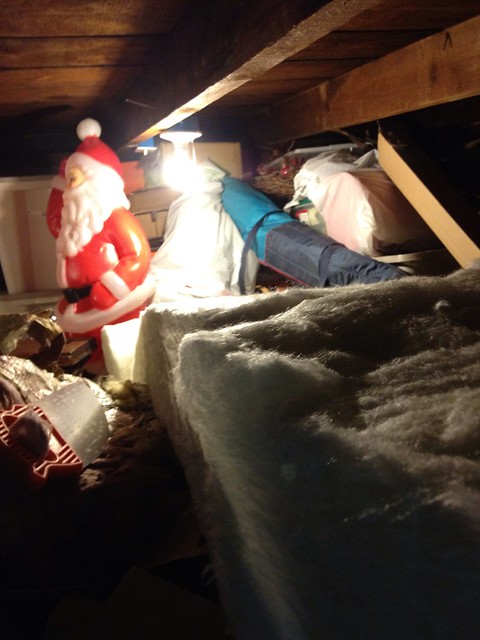
<p>The attic is tight with no room to stand or really even sit up. As a result, I am constantly in a situp position, or am using my arms to support and pull myself around by the various beams. I wasn't up there three minutes before I was sweating profusely, and given the nature of the work, long sleeves are a must. But hey, I was able to spend some good quality time with the plastic Santa bestowed upon us by a neighbor. (Don't ask.)</p>
<p>
</p>
<div class="MediaContainer PhotoContainer"><a href="http://farm8.staticflickr.com/7268/7594780542_11f87f0336_z.jpg" rel="PhotoPopup" popupwidth="480" popupheight="640"><img alt="" width="375" height="500" style="border-width: 0px; border-style: solid;" src="https://farm8.staticflickr.com/7268/7594780542_11f87f0336.jpg"></a></div>
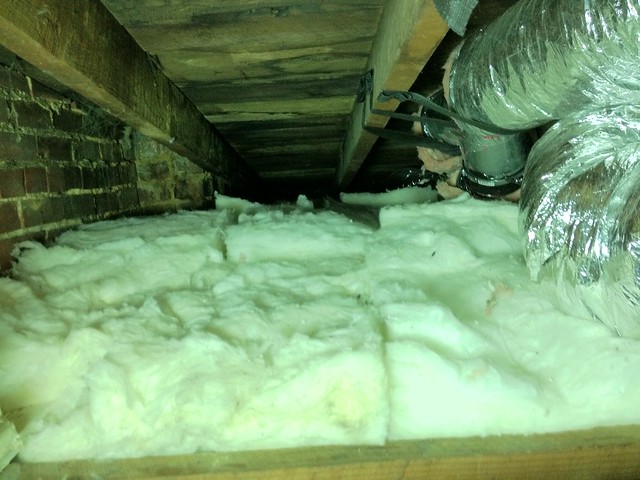
<p>I continued repeating the same process over and over. Cut a few pieces, move them to their spot, lay them in place. It sounds so simple, but it was simply exhausting. But over the course of the two and a half hours, our attic went from this (with lots of shoddy duct work that could be removed)...</p>
<p>
</p>
<div class="MediaContainer PhotoContainer"><a href="http://farm9.staticflickr.com/8011/7367240436_d91f2a81d6_z.jpg" rel="PhotoPopup" popupwidth="640" popupheight="480"><img alt="" width="500" height="375" style="border-width: 0px; border-style: solid;" src="https://farm9.staticflickr.com/8011/7367240436_d91f2a81d6.jpg"></a></div>
<p>...to this.&nbsp;</p>
<p>
</p>
<div class="MediaContainer PhotoContainer"><a href="http://farm9.staticflickr.com/8149/7594796708_4c7c75a38a_z.jpg" rel="PhotoPopup" popupwidth="640" popupheight="480"><img alt="" width="500" height="375" style="border-width: 0px; border-style: solid;" src="https://farm9.staticflickr.com/8149/7594796708_4c7c75a38a.jpg"></a></div>
<p>Yes, all of that old duct work is gone. The un-insulated duct you can see to the right is actually part of the <a href="http://www.oldtownhome.com/2012/6/13/A-Quiet-Inline-Bathroom-Exhaust-Fan/index.aspx">bathroom exhaust fan</a>, so no cause for concern there (but I think I'll still wrap it at some point. All of the next duct is fully insulated, so that should also help our cooling bills.</p>
<p>The work was a success! The middle of our house, at very long last, was finally insulated. After many long years of a slow and prolonged effort, the entire attic is finally insulated. We now have pillows of wonderful insulation to keep us warm in the winter, and cool in the summer.</p>
<p>I emerged from the attic as a victorious DIYer, and I jumped on the scale to see the weight I had lost. Total damage, I was down to 149.5 lbs, equating to nearly 8 lbs lost in about two and a half hours.&nbsp;Ridiculous.&nbsp;</p>
<p>
</p>
<div class="MediaContainer PhotoContainer"><a href="http://farm9.staticflickr.com/8022/7597195406_aede1574a4_z.jpg" rel="PhotoPopup" popupwidth="640" popupheight="640"><img alt="" width="500" height="500" style="border-width: 0px; border-style: solid;" src="https://farm9.staticflickr.com/8022/7597195406_aede1574a4.jpg"></a></div>
<p><em>Note:</em> I assure you that Wendy HATES the fact I put a photo of my feet on the Internet. She says they are disgusting and alien like. Also, the red marks on my right foot are all from dragging around in the attic, they're all bruised now.</p>
<p>Normally, when I post a photo like the next one, you can see how sweaty I am based on the light areas vs dark areas of my clothes. In this case, both my shirt and shorts were 100% dark area, soaked through.&nbsp;</p>
<p>
</p>
<div class="MediaContainer PhotoContainer"><a href="http://farm8.staticflickr.com/7277/7594766658_3894d336ff_z.jpg" rel="PhotoPopup" popupwidth="480" popupheight="640"><img alt="" width="375" height="500" style="border-width: 0px; border-style: solid;" src="https://farm8.staticflickr.com/7277/7594766658_3894d336ff.jpg"></a></div>
<p>I was completely drained and exhausted. After a shower in which I couldn't make the water cold enough, I pretty much laid down on the couch for a few hours and relished in my insulating fortitude. The best news, since this endeavor was completed, the air conditioner now turns on and off throughout the day, it doesn't just run 24x7 anymore.&nbsp;</p>
<p>Now if only I could get my butt in gear to build the <a href="http://oldtownhome.com/2011/12/26/A-Storm-Window-Commitment/index.aspx">storm windows</a>. I think the house might be downright comfortable almost all the time once we get to that point. Hrm, what I can do to get myself to work on that task? Only time will tell.</p>
<p>Have you done any insulating in your house? Did you face any of the similar challenges I faced during the process? And do you have any great successes or failures in your insulation process? Are your feet uglier than mine? Let us know.</p><p><a href="https://www.oldtownhome.com/2012/7/18/Attic-Insulation---or---How-to-Lose-8-Lbs-in-2-Hours/">Read Full Post</a></p>]]></content>
    <category term="Attic" />
    <category term="Header Image" />
    <category term="Insulation" />
    <category term="Projects:Home Improvement" />
    <PostImage>http://farm9.staticflickr.com/8022/7597195406_aede1574a4_n.jpg</PostImage>
    <media:thumbnail url="https://farm9.staticflickr.com/8022/7597195406_aede1574a4_t.jpg" />
    <ExtensionElements>
      <Item>PostImage</Item>
      <Item>media:thumbnail</Item>
    </ExtensionElements>
  </entry>
  <entry>
    <guid>8fe0f9c7-abfa-4637-8480-460297131992</guid>
    <id>https://www.oldtownhome.com/2012/3/1/Insulation-and-Drywall-Means-Progress-Our-Kitchen-Disaster-Part-3/</id>
    <title>Insulation and Drywall Means Progress: Our Kitchen Disaster Part 3</title>
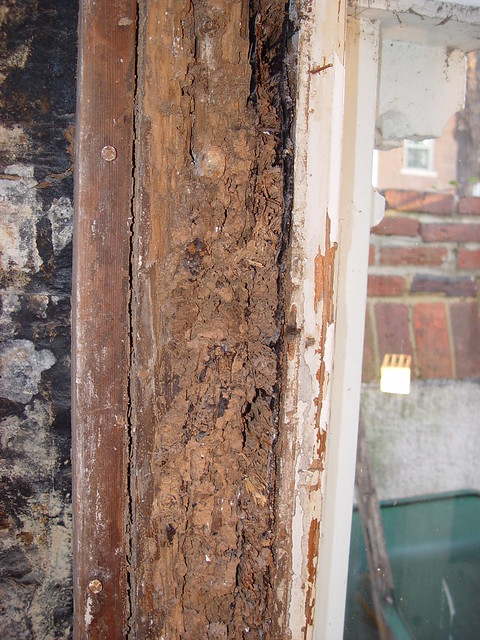
    <summary type="html"><![CDATA[<p>Termites, water damage, and structural damage, oh my! If you've been following along the last couple days, you know about the <a href="http://www.oldtownhome.com/2012/2/27/Our-Newlywed-Kitchen-Nightmare/index.aspx">roller coaster of emotions we experienced</a> at each critical moment of our kitchen disaster and rebuild. From feeling completely defeated, to feeling as if we could conquer the world, and right back to confused and bewildered, it seemed difficult to predict how we'd feel by the end of the day each morning we woke up. How would you feel if the main corner posts of your house had been so damaged by water and eaten away by termites that it looked like this?</p>
<p>
</p>
<div class="MediaContainer PhotoContainer"><a href="http://farm6.staticflickr.com/5061/5646528794_79cf04bb5a_z.jpg" rel="PhotoPopup" popupheight="640" popupwidth="480"><img alt="" src="https://farm6.staticflickr.com/5061/5646528794_79cf04bb5a.jpg" width="375" height="500" style="border-width: 0px;border-style: solid;"></a></div>
<p>It looks like a crumpled paper bag, not a solid 100 year old piece of 4x4 lumber.</p>
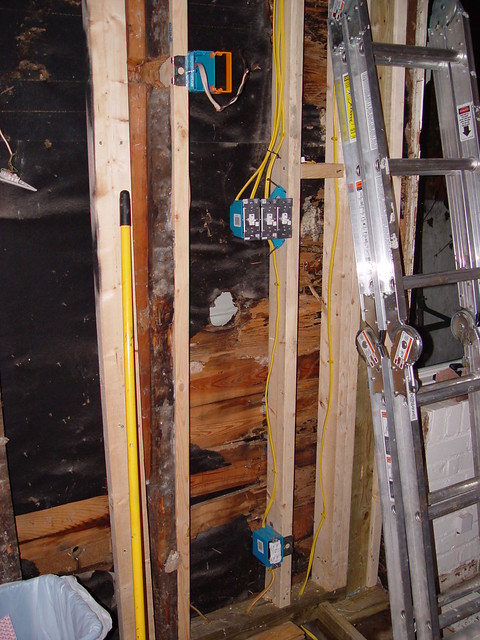
<p>We were able to stick with the project and as we ticked each major element off of our lengthy to do list, our confidence as DIYers grew. We had toiled away for a while on the <a href="http://www.oldtownhome.com/2012/2/29/Where-Do-We-Go-From-Here-Our-Kitchen-Nightmare-Part-2/index.aspx">demolition, electrical, and plumbing</a>, and finally had the kitchen and sun porch in good enough shape that we could begin to enclose all of our work. We were finally moving into the phase where are kitchen would begin to transform from hellhole back to a usable part of our home. However, before we could even begin to think about our finished drywall, we needed to insulate.&nbsp;</p>
<p>
</p>
<div class="MediaContainer &aring;PhotoContainer"><a href="http://farm6.staticflickr.com/5107/5646540326_b3ca858663_z.jpg" rel="PhotoPopup" popupheight="640" popupwidth="480"><img alt="" src="https://farm6.staticflickr.com/5107/5646540326_b3ca858663.jpg" width="375" height="500" style="border-width: 0px;border-style: solid;"></a></div>
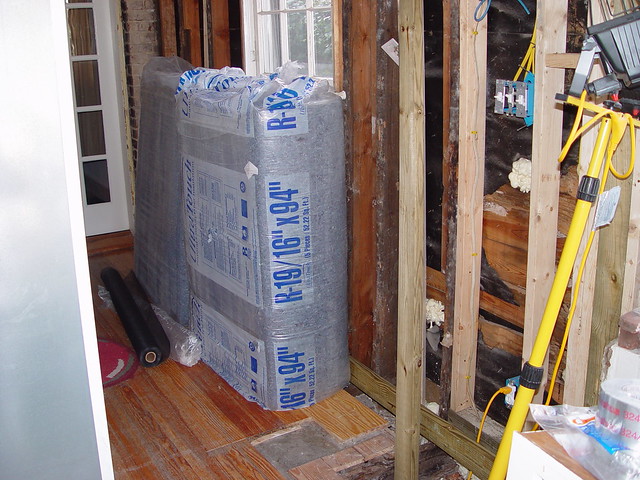
<p>In previous posts we mentioned how cold air seemed to blow through the walls with little difficulty, and we were not&nbsp;exaggerating. If you stood within about four feet of the wall you could physically feel the temperature drop. Beyond the cold, the room was loud, any and all noise easily transferred into the room as if there were no walls at all. We were interested in both the thermal insulating factors of an insulation material as well as the possibility for sound attenuation. But back in those days, before the&nbsp;prevalence&nbsp;of itch free and eco friendly insulation solutions, we feared we were stuck with fiberglass.</p>
<p>Through some extensive research I was able to locate an online store that I could order packages of UltraTouch recycled denim insulation.</p>
<p>
</p>
<div class="MediaContainer PhotoContainer"><a href="http://farm6.staticflickr.com/5149/5646545028_d8e4c181fe_z.jpg" rel="PhotoPopup" popupheight="480" popupwidth="640"><img alt="" src="https://farm6.staticflickr.com/5149/5646545028_d8e4c181fe.jpg" width="500" height="375" style="border-width: 0px;border-style: solid;"></a></div>
<p></p></img></img></img> <a href="https://www.oldtownhome.com/2012/3/1/Insulation-and-Drywall-Means-Progress-Our-Kitchen-Disaster-Part-3/">more</a>]]></summary>
    <published>2012-03-01T10:26:00.000-05:00</published>
    <updated>2012-03-01T10:26:00.000-05:00</updated>
    <link rel="alternate" href="https://www.oldtownhome.com/2012/3/1/Insulation-and-Drywall-Means-Progress-Our-Kitchen-Disaster-Part-3/" />
    <author>
      <name>Alex</name>
    </author>
    <content type="html"><![CDATA[<p>Termites, water damage, and structural damage, oh my! If you've been following along the last couple days, you know about the <a href="http://www.oldtownhome.com/2012/2/27/Our-Newlywed-Kitchen-Nightmare/index.aspx">roller coaster of emotions we experienced</a> at each critical moment of our kitchen disaster and rebuild. From feeling completely defeated, to feeling as if we could conquer the world, and right back to confused and bewildered, it seemed difficult to predict how we'd feel by the end of the day each morning we woke up. How would you feel if the main corner posts of your house had been so damaged by water and eaten away by termites that it looked like this?</p>
<p>
</p>
<div class="MediaContainer PhotoContainer"><a href="http://farm6.staticflickr.com/5061/5646528794_79cf04bb5a_z.jpg" rel="PhotoPopup" popupheight="640" popupwidth="480"><img alt="" src="https://farm6.staticflickr.com/5061/5646528794_79cf04bb5a.jpg" width="375" height="500" style="border-width: 0px;border-style: solid;"></a></div>
<p>It looks like a crumpled paper bag, not a solid 100 year old piece of 4x4 lumber.</p>
<p>We were able to stick with the project and as we ticked each major element off of our lengthy to do list, our confidence as DIYers grew. We had toiled away for a while on the <a href="http://www.oldtownhome.com/2012/2/29/Where-Do-We-Go-From-Here-Our-Kitchen-Nightmare-Part-2/index.aspx">demolition, electrical, and plumbing</a>, and finally had the kitchen and sun porch in good enough shape that we could begin to enclose all of our work. We were finally moving into the phase where are kitchen would begin to transform from hellhole back to a usable part of our home. However, before we could even begin to think about our finished drywall, we needed to insulate.&nbsp;</p>
<p>
</p>
<div class="MediaContainer &aring;PhotoContainer"><a href="http://farm6.staticflickr.com/5107/5646540326_b3ca858663_z.jpg" rel="PhotoPopup" popupheight="640" popupwidth="480"><img alt="" src="https://farm6.staticflickr.com/5107/5646540326_b3ca858663.jpg" width="375" height="500" style="border-width: 0px;border-style: solid;"></a></div>
<p>In previous posts we mentioned how cold air seemed to blow through the walls with little difficulty, and we were not&nbsp;exaggerating. If you stood within about four feet of the wall you could physically feel the temperature drop. Beyond the cold, the room was loud, any and all noise easily transferred into the room as if there were no walls at all. We were interested in both the thermal insulating factors of an insulation material as well as the possibility for sound attenuation. But back in those days, before the&nbsp;prevalence&nbsp;of itch free and eco friendly insulation solutions, we feared we were stuck with fiberglass.</p>
<p>Through some extensive research I was able to locate an online store that I could order packages of UltraTouch recycled denim insulation.</p>
<p>
</p>
<div class="MediaContainer PhotoContainer"><a href="http://farm6.staticflickr.com/5149/5646545028_d8e4c181fe_z.jpg" rel="PhotoPopup" popupheight="480" popupwidth="640"><img alt="" src="https://farm6.staticflickr.com/5149/5646545028_d8e4c181fe.jpg" width="500" height="375" style="border-width: 0px;border-style: solid;"></a></div>
<p></p>
<p>The name is just as it sounds. This particular insulation is made from recycled denim, and touts it's safety for the environment and no itch characteristics. Beyond the itch, this insulation is a no VOC, no warning label, and completely safe product. Their marketing materials even go as far as having babies crawl around on the exposed product.</p>
<p>We bought R-19 suited for 16" stud&nbsp;cavities, but we rarely had an easy fit. The studs in the old walls were anywhere from 6" wide to 19" in some places. This just meant lots of insulation cutting with a large cutting blade. Every time I had to cut or tear the&nbsp;insulation&nbsp;to get it into an opening, we were quite happy not to be working with fiberglass, that's for sure.</p>
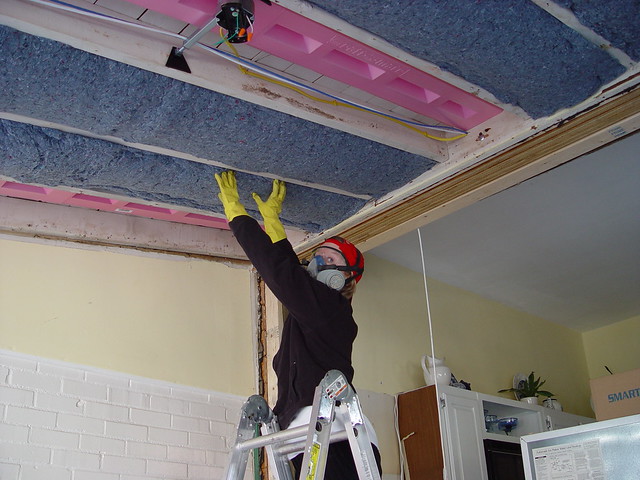
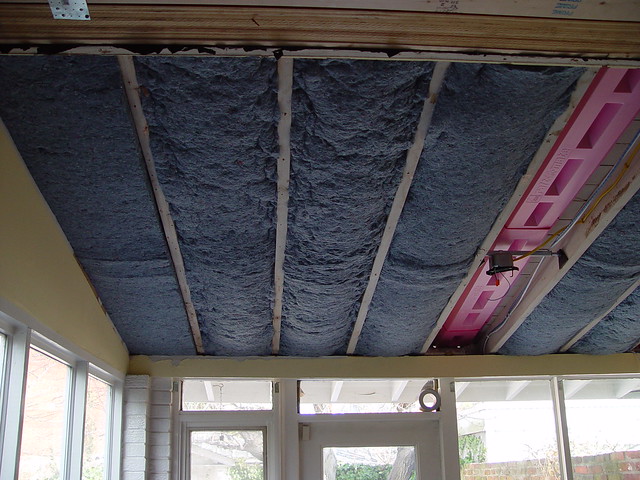
<p>We used the same insulation in the ceiling of the sun porch. Luckily, the roof rafters were all 16" on center in this part of our house (we believe it was added in the 1950s), so it was fairly easy to fit it all in those joist cavities.&nbsp;</p>
<p>
</p>
<div class="MediaContainer PhotoContainer"><a href="http://farm6.staticflickr.com/5186/5645980607_274baa275c_z.jpg" rel="PhotoPopup" popupheight="480" popupwidth="640"><img alt="" src="https://farm6.staticflickr.com/5186/5645980607_274baa275c.jpg" width="500" height="375" style="border-width: 0px;border-style: solid;"></a></div>
<p>Let's just say that Wendy, though assured of the product's safety, wasn't taking any chances. She had been scarred by the past experience and warnings of working with fiberglass and didn't want anything negative to come from this experience. You can't blame the girl for being safe. I do have to say, I didn't wear a respirator and my snot turned blue by the end of the day. Sort of like Smurf snot I guess.&nbsp;</p>
<p>
</p>
<div class="MediaContainer PhotoContainer"><a href="http://farm6.staticflickr.com/5107/5646545546_faa81b5fd7_z.jpg" rel="PhotoPopup" popupheight="480" popupwidth="640"><img alt="" src="https://farm6.staticflickr.com/5107/5646545546_faa81b5fd7.jpg" width="500" height="375" style="border-width: 0px;border-style: solid;"></a></div>
<p>One other thing to note in the photo above is the use of the pink foam channels in each ceiling joist cavity and the little holes in the eave at the end of the channel. Since there is a bare roof immediately above the insulation, the foam allows air to circulate in the area right beneath the sheathing. This is important in allowing the house to breathe a bit and will help prevent ice melt situations due to a roof that's just a bit too warm that can cause ice damming.</p>
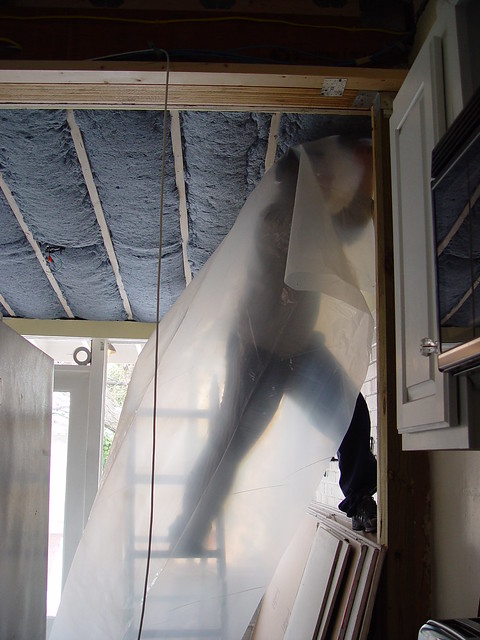
<p>Once the insulation was all in place we applied a vapor barrier of 3 mil plastic sheeting over all of the insulated surfaces. We chose this as our vapor barrier because of the fact that our insulation was un-faced. And if you're wondering, yes, I'm precariously standing with one foot on the ladder, and one on stacks of drywall...don't tell OSHA and don't try this at home.&nbsp;</p>
<p>
</p>
<div class="MediaContainer PhotoContainer"><a href="http://farm6.staticflickr.com/5061/5646546258_c5ace6a09c_z.jpg" rel="PhotoPopup" popupheight="640" popupwidth="480"><img alt="" src="https://farm6.staticflickr.com/5061/5646546258_c5ace6a09c.jpg" width="375" height="500" style="border-width: 0px;border-style: solid;"></a></div>
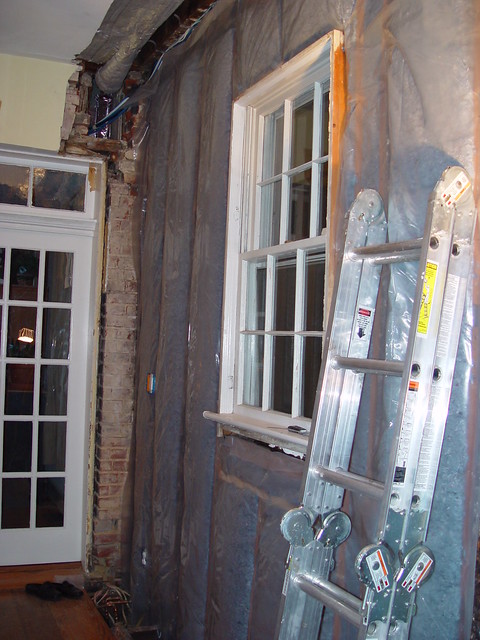
<p>Since we live in an area that typically is a cooler climate, we put the vapor battier to the inside of the wall and insulation. If we were further south (like in South Caroline or Florida), the vapor barrier would have gone in before the insulation, or better yet, on the exterior of the house before the sheathing. If you're doing insulation&nbsp;</p>
<p>
</p>
<div class="MediaContainer PhotoContainer"><a href="http://farm6.staticflickr.com/5222/5645982757_108b6b3f60_z.jpg" rel="PhotoPopup" popupheight="640" popupwidth="480"><img alt="" src="https://farm6.staticflickr.com/5222/5645982757_108b6b3f60.jpg" width="375" height="500" style="border-width: 0px;border-style: solid;"></a></div>
<p>Using our staple gun and a whole ton of staples, the vapor barrier went into place in almost no time at all. We were in business and moving full steam ahead. And the best thing about our insulation additions, the whole room went from cold, breezy, and loud, to warm(ish), still, and quiet. The insulation we used was absolutely doing its job.</p>
<p>Next we started installing the sheets of drywall. To help keep as much stiffness as possible and keep the noise down a little more, we went with 5/8" thick drywall. This seemed like a great idea and worked well while we were working on the wall. And we oriented the sheets and installed them horizontally. This detail does matter a bit as drywall actually has better&nbsp;rigidity when installed in this manner.&nbsp;</p>
<p>
</p>
<div class="MediaContainer PhotoContainer"><a href="http://farm6.staticflickr.com/5021/5646548236_0b80a613a6_z.jpg" rel="PhotoPopup" popupheight="640" popupwidth="480"><img alt="" src="https://farm6.staticflickr.com/5021/5646548236_0b80a613a6.jpg" width="375" height="500" style="border-width: 0px;border-style: solid;"></a></div>
<p>But this thickness left quite a bit to be desired with installing it on the sun porch ceiling without a deadman (a 2x4 or similar T shaped item) to assist with support. Holding 4'x8' sheets of 5/8" drywall on your head is NO fun. We have no photos of this part of the process. Why? Because our time was apparently better spent swearing at each other and the ceiling than it was taking pictures.</p>
<p>After skimming the whole wall and ceiling with several coats of joint compound to give it that old fashioned look of plaster, the whole room was really starting to look good...and like a room, not a bomb testing station.</p>
<p>
</p>
<div class="MediaContainer PhotoContainer"><a href="http://farm6.staticflickr.com/5069/5646582468_50dbb59660_z.jpg" rel="PhotoPopup" popupheight="640" popupwidth="480"><img alt="" src="https://farm6.staticflickr.com/5069/5646582468_50dbb59660.jpg" width="375" height="500" style="border-width: 0px;border-style: solid;"></a></div>
<p>We still had one major item left on the punch list before the interior project was complete, and that involved patching, repairing, and refinishing the 100 year old heart pine flooring, but the most important thing is that the room had insulated walls that were no longer full of termites. On the exterior we needed to address the issue that was ultimately causing the ice damming, but we can talk about that long and drawn out saga that nearly caused legal action at a later date. Let's just say, that story is a doozie.</p>
<p>Have you done any insulating in your house to improve energy efficiency? I know it's all the rage now, but remember, this project was back in 2004/2005. Using some eco friendly recycled and non-hazardous&nbsp;materials back then was practically cutting edge. These days you can find similar materials at your average building store, no need to special order.</p><p><a href="https://www.oldtownhome.com/2012/3/1/Insulation-and-Drywall-Means-Progress-Our-Kitchen-Disaster-Part-3/">Read Full Post</a></p>]]></content>
    <category term="Header Image" />
    <category term="Insulation" />
    <category term="Kitchen" />
    <PostImage>http://farm8.staticflickr.com/7185/6943908843_4bb326852e.jpg</PostImage>
    <media:thumbnail url="https://farm8.staticflickr.com/7185/6943908843_4bb326852e_t.jpg" />
    <ExtensionElements>
      <Item>PostImage</Item>
      <Item>media:thumbnail</Item>
    </ExtensionElements>
  </entry>
  <entry>
    <guid>207ac0eb-5945-4350-91be-bb24fc71de62</guid>
    <id>https://www.oldtownhome.com/2011/8/25/Old-Door-Weatherstripping-Dress-it-up-with-Spring-Bronze/</id>
    <title>Old Door Weatherstripping? Dress it up with Spring Bronze</title>
    <summary type="html"><![CDATA[<p>It's been a fun <a href="http://www.oldtownhome.com/Week-Of-Alex/">WEEK OF ALEX</a> series of posts, but my solitary posting is coming to a close as Wendy is due home later tonight. To be perfectly honest, I can't wait until she's back. I grew up an only child, so I can exist on my own pretty comfortably, but our home really isn't our home without Wendy here with me, it just feels sort of empty. Not to get too sappy on you, especially with all of the fun we've had with <a href="http://www.oldtownhome.com/Week-Of-Alex/">WEEK OF ALEX</a>. Don't worry, it's not you, it's me.</p>
<p>Since we moved into our house in 2003, the energy efficiency of our front door/vestibule area has always been a fairly significant issue. We've struggled with the fact that just getting near the door you can feel how warm or cold it is outside.</p>
<p>When I say it was bad, I mean it was bad. (Now you say: "How bad was it?")</p>
<p>It's so bad that In the heat of the summer and deep cold of the winter, you can almost see the money being sucked out of our pockets and blowing into the street. (That sounds almost like an HVAC commercial, I can see it now.)</p>
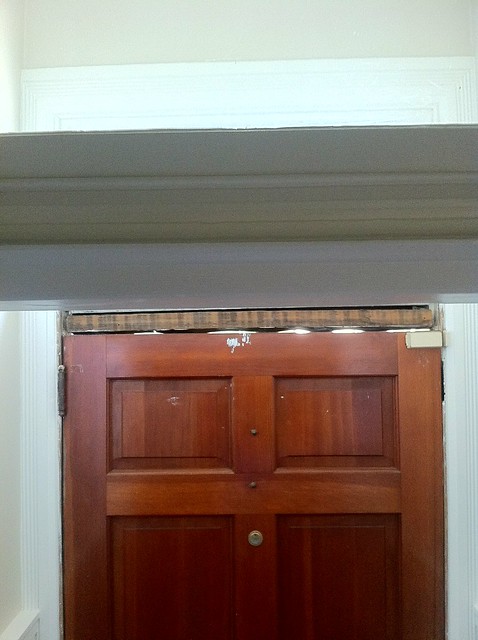
<p>It was so bad that you can actually see through the cracks in the door or above the door directly to the outside.</p>
<p>
</p>
<div class="MediaContainer PhotoContainer"><a href="http://farm7.static.flickr.com/6002/6020859086_993046f70c_z.jpg" rel="PhotoPopup" popupheight="640" popupwidth="478"><img alt="" src="https://farm7.static.flickr.com/6002/6020859086_993046f70c.jpg" width="374" height="500" style="border-width: 0px;border-style: solid;"></a></div>
<p>It was so bad that the old inner double doors would open on their own with the slightest breeze.</p>
<p>It was so bad that you could hear wind whistling through the large mail slot.</p>
<p>Do you get the picture? It was bad.</p>
<p>With our reconfiguration effort and adoption of our new salvaged front door, I wanted to do a few things to make our new setup more energy efficient while maintaining an historic look. In other words, I didn't want to cut into the door to install foam, compression weather stripping, or spring loaded vinyl weather stripping that pops out when you close the door. And I really didn't want to do anything like vinyl or foam that will quickly wear out or possibly grow mold.</p>
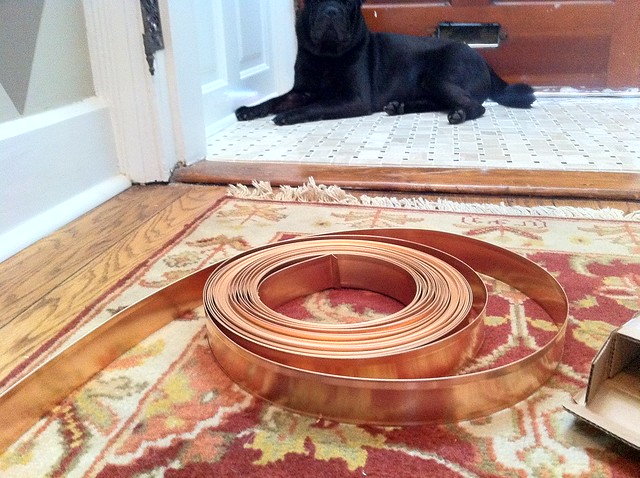
<p>The solution for historically correct weather stripping that will last another 100+ years is actually quite simple, it's called Spring Bronze. Spring Bronze is type of metal weatherstrip that is nailed to the door jamb on one side and springs away from the jamb on the other side. The idea is that it compresses against the door when it is closed, preventing drafts from infiltrating the interior of the house.</p>
<p>
</p>
<div class="MediaContainer PhotoContainer"><a href="http://farm7.static.flickr.com/6074/6078655130_c0308ef96e_z.jpg" rel="PhotoPopup" popupheight="478" popupwidth="640"><img alt="" src="https://farm7.static.flickr.com/6074/6078655130_c0308ef96e.jpg" width="500" height="374" style="border-width: 0px;border-style: solid;"></a></div>
<p>Over the years I've purchased all of my spring bronze from one place, <a href="http://www.kilianhardware.com/sprinbronwea.html" target="_blank">Killian Hardware</a>. They have so many cool things, like plaster buttons, very worth checking out their inventory.</p>
<p></p></img></img> <a href="https://www.oldtownhome.com/2011/8/25/Old-Door-Weatherstripping-Dress-it-up-with-Spring-Bronze/">more</a>]]></summary>
    <published>2011-08-25T09:52:00.000-04:00</published>
    <updated>2011-08-25T09:52:00.000-04:00</updated>
    <link rel="alternate" href="https://www.oldtownhome.com/2011/8/25/Old-Door-Weatherstripping-Dress-it-up-with-Spring-Bronze/" />
    <author>
      <name>Alex</name>
    </author>
    <content type="html"><![CDATA[<p>It's been a fun <a href="http://www.oldtownhome.com/Week-Of-Alex/">WEEK OF ALEX</a> series of posts, but my solitary posting is coming to a close as Wendy is due home later tonight. To be perfectly honest, I can't wait until she's back. I grew up an only child, so I can exist on my own pretty comfortably, but our home really isn't our home without Wendy here with me, it just feels sort of empty. Not to get too sappy on you, especially with all of the fun we've had with <a href="http://www.oldtownhome.com/Week-Of-Alex/">WEEK OF ALEX</a>. Don't worry, it's not you, it's me.</p>
<p>Since we moved into our house in 2003, the energy efficiency of our front door/vestibule area has always been a fairly significant issue. We've struggled with the fact that just getting near the door you can feel how warm or cold it is outside.</p>
<p>When I say it was bad, I mean it was bad. (Now you say: "How bad was it?")</p>
<p>It's so bad that In the heat of the summer and deep cold of the winter, you can almost see the money being sucked out of our pockets and blowing into the street. (That sounds almost like an HVAC commercial, I can see it now.)</p>
<p>It was so bad that you can actually see through the cracks in the door or above the door directly to the outside.</p>
<p>
</p>
<div class="MediaContainer PhotoContainer"><a href="http://farm7.static.flickr.com/6002/6020859086_993046f70c_z.jpg" rel="PhotoPopup" popupheight="640" popupwidth="478"><img alt="" src="https://farm7.static.flickr.com/6002/6020859086_993046f70c.jpg" width="374" height="500" style="border-width: 0px;border-style: solid;"></a></div>
<p>It was so bad that the old inner double doors would open on their own with the slightest breeze.</p>
<p>It was so bad that you could hear wind whistling through the large mail slot.</p>
<p>Do you get the picture? It was bad.</p>
<p>With our reconfiguration effort and adoption of our new salvaged front door, I wanted to do a few things to make our new setup more energy efficient while maintaining an historic look. In other words, I didn't want to cut into the door to install foam, compression weather stripping, or spring loaded vinyl weather stripping that pops out when you close the door. And I really didn't want to do anything like vinyl or foam that will quickly wear out or possibly grow mold.</p>
<p>The solution for historically correct weather stripping that will last another 100+ years is actually quite simple, it's called Spring Bronze. Spring Bronze is type of metal weatherstrip that is nailed to the door jamb on one side and springs away from the jamb on the other side. The idea is that it compresses against the door when it is closed, preventing drafts from infiltrating the interior of the house.</p>
<p>
</p>
<div class="MediaContainer PhotoContainer"><a href="http://farm7.static.flickr.com/6074/6078655130_c0308ef96e_z.jpg" rel="PhotoPopup" popupheight="478" popupwidth="640"><img alt="" src="https://farm7.static.flickr.com/6074/6078655130_c0308ef96e.jpg" width="500" height="374" style="border-width: 0px;border-style: solid;"></a></div>
<p>Over the years I've purchased all of my spring bronze from one place, <a href="http://www.kilianhardware.com/sprinbronwea.html" target="_blank">Killian Hardware</a>. They have so many cool things, like plaster buttons, very worth checking out their inventory.</p>
<p></p>
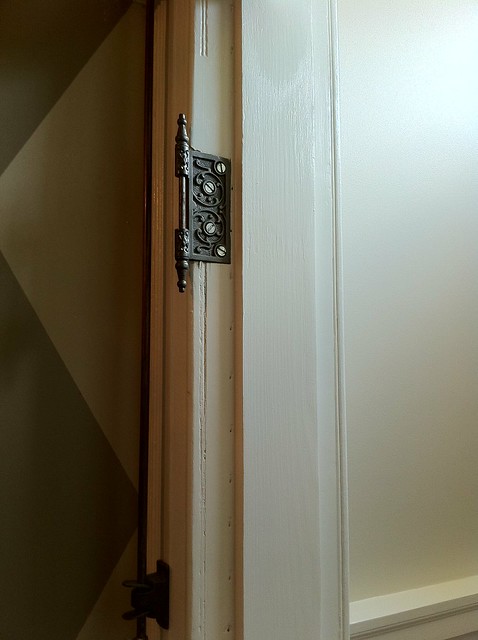
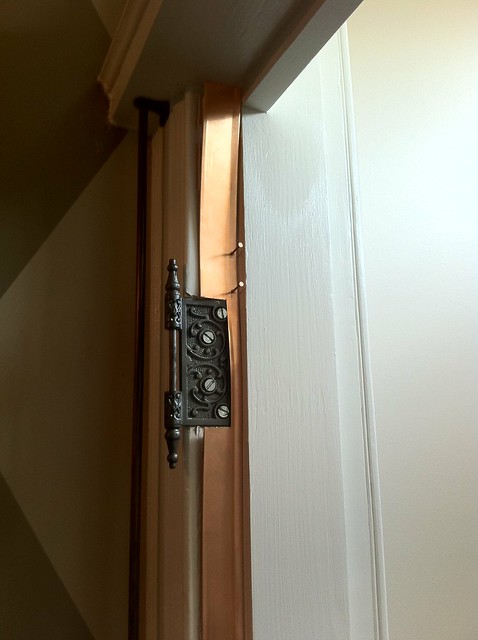
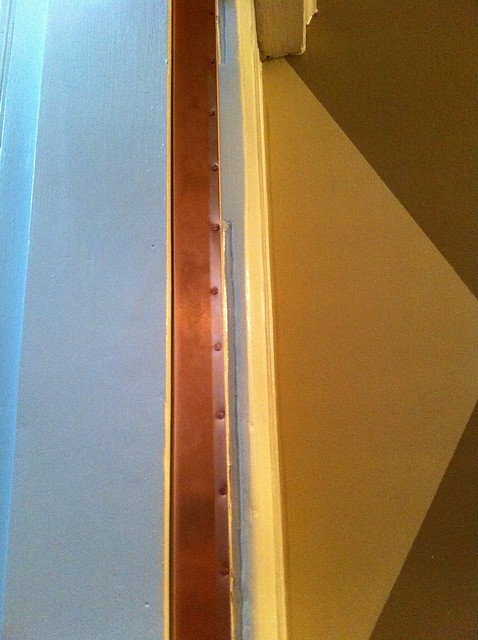
<p>I bought a 100' roll of 1 3/4" Spring Bronze a little while back and have been using it for window and door weatherstripping for a few years &nbsp;now. I decided to use this for the hinge side of the new door. As you can see from the following photo there used to be spring bronze weather stripping installed in this door way at some point. You can tell this by all of the nail holes that are still visible on the right hand side.</p>
<p>
</p>
<div class="MediaContainer PhotoContainer"><a href="http://farm7.static.flickr.com/6069/6078113025_4e221feff4_z.jpg" rel="PhotoPopup" popupheight="640" popupwidth="478"><img alt="" src="https://farm7.static.flickr.com/6069/6078113025_4e221feff4.jpg" width="374" height="500" style="border-width: 0px;border-style: solid;"></a></div>
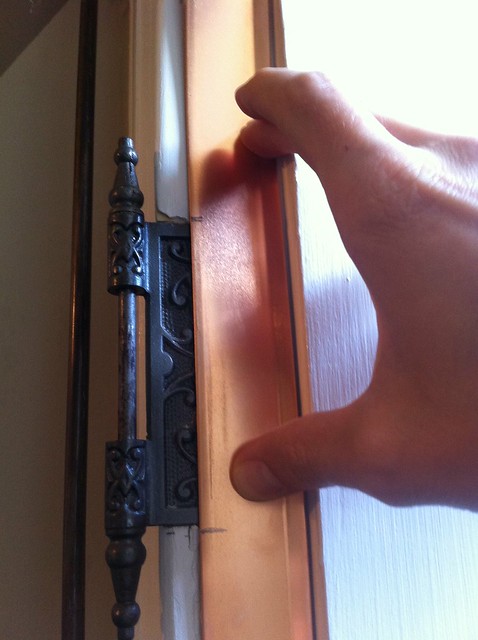
<p>I started by measuring the length of the door jamb to cut the necessary material from the roll. Since this was is going on the hinge side I needed to cut out a partial section of the material so it doesn't obstruct the hinge. The first step was to hold the Spring Bronze up to the jamb to mark the hinge locations.</p>
<p>
</p>
<div class="MediaContainer PhotoContainer"><a href="http://farm7.static.flickr.com/6190/6078113921_86956e0177_z.jpg" rel="PhotoPopup" popupheight="640" popupwidth="478"><img alt="" src="https://farm7.static.flickr.com/6190/6078113921_86956e0177.jpg" width="374" height="500" style="border-width: 0px;border-style: solid;"></a></div>
<p>Once the locations were marked, I used tin snips and normal scissors to cut away all of the back edge of the Spring Bronze. Then I lined the Spring Bronze up in the opening and partially drove two nails to get the weatherstripping started.</p>
<p>
</p>
<div class="MediaContainer PhotoContainer"><a href="http://farm7.static.flickr.com/6207/6078114159_5cc98b2846_z.jpg" rel="PhotoPopup" popupheight="640" popupwidth="478"><img alt="" src="https://farm7.static.flickr.com/6207/6078114159_5cc98b2846.jpg" width="374" height="500" style="border-width: 0px;border-style: solid;"></a></div>
<p>Though I've seen you are supposed to place the nails 1 1/4" &nbsp;apart, I like to place them a little further. Using a ruler, I make marks with a pencil every 1 1/2" so I have an easy time placing the nails.&nbsp;</p>
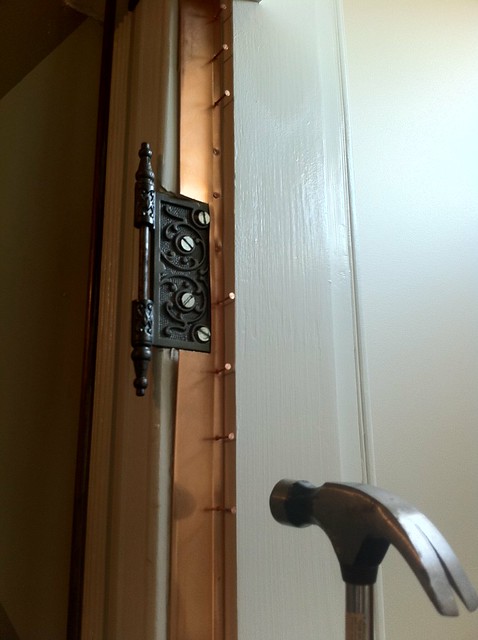
<p>On the hinge side the nails usually go towards the inside of the jamb. As the door closes the edge of the door pushed the Spring Bronze tight against the door and jamb. But the placement of the nails makes it very difficult to use a hammer to drive them all of the way in. So I used a small hammer &nbsp;working from the top to the bottom to place the nails just deep enough to secure the weatherstripping.</p>
<p>
</p>
<div class="MediaContainer PhotoContainer"><a href="http://farm7.static.flickr.com/6210/6078114431_ce1e1035d4_z.jpg" rel="PhotoPopup" popupheight="640" popupwidth="478"><img alt="" src="https://farm7.static.flickr.com/6210/6078114431_ce1e1035d4.jpg" width="374" height="500" style="border-width: 0px;border-style: solid;"></a></div>
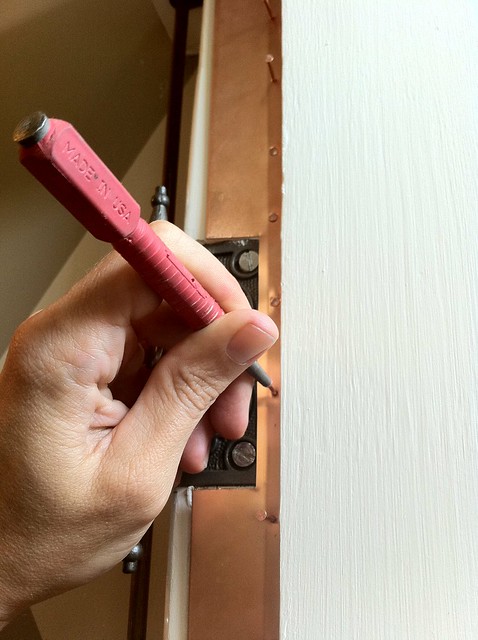
<p>Then I used a nail set to drive the nails the rest of the way into the jamb. This takes some patience, but you have so much more control driving the nail this way.</p>
<p>
</p>
<div class="MediaContainer PhotoContainer"><a href="http://farm7.static.flickr.com/6077/6078657032_9b4a24b25d_z.jpg" rel="PhotoPopup" popupheight="640" popupwidth="478"><img alt="" src="https://farm7.static.flickr.com/6077/6078657032_9b4a24b25d.jpg" width="374" height="500" style="border-width: 0px;border-style: solid;"></a></div>
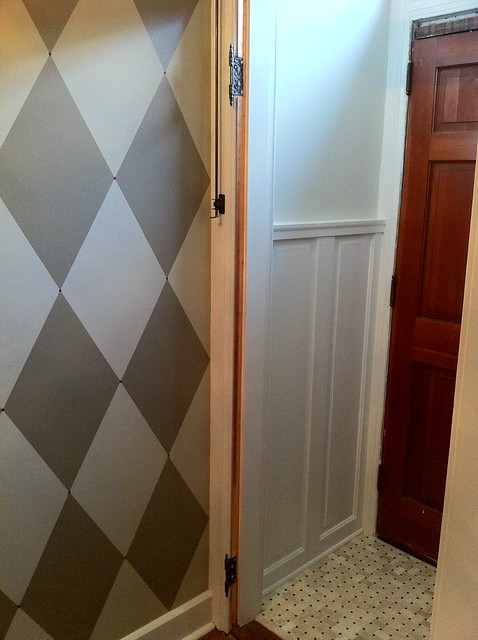
<p>Finally, after what seemed like hours of hammering (and I'm sure my neighbor thought another earthquake was&nbsp;occurring), the hinge side weatherstripping was securely in place and ready to protect us from the cold.</p>
<p>
</p>
<div class="MediaContainer PhotoContainer"><a href="http://farm7.static.flickr.com/6077/6078660064_f844058cfd_z.jpg" rel="PhotoPopup" popupheight="640" popupwidth="478"><img alt="" src="https://farm7.static.flickr.com/6077/6078660064_f844058cfd.jpg" width="374" height="500" style="border-width: 0px;border-style: solid;"></a></div>
<p>The knob/lock side of the door required a smaller 1 1/8" size of Spring Bronze because it is nailed on the opposite side of the jamb (the side towards the room), so I ordered a small kit from Killian for that. I following the same process as the other side, but was able to drive the nails all of the way in using just the hammer, no need for the nails set on this one.</p>
<p>
</p>
<div class="MediaContainer PhotoContainer"><a href="http://farm7.static.flickr.com/6186/6078660988_060cbf3992_z.jpg" rel="PhotoPopup" popupheight="640" popupwidth="478"><img alt="" src="https://farm7.static.flickr.com/6186/6078660988_060cbf3992.jpg" width="374" height="500" style="border-width: 0px;border-style: solid;"></a></div>
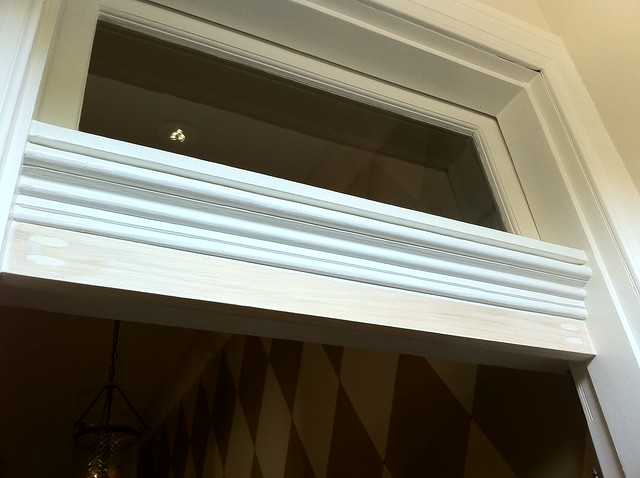
<p>One final thing I added before the whole weather stripping endeavor was an upper jamb stop for the door. The old opening didn't have one because someone added that molding at the top of the jamb. I have no idea why that happened, but we decided to leave it that way. The same thing happened on the outer front door, and that is why you could see right through the top of the door. So I cut a piece of scrap poplar that would fit in the opening. I installed it with pocket hole screws and then filled the holes with some wood epoxy.</p>
<div class="MediaContainer PhotoContainer"><a href="http://farm7.static.flickr.com/6089/6036052246_f0d302d30f_z.jpg" rel="PhotoPopup" popupheight="478" popupwidth="640"><img alt="" src="https://farm7.static.flickr.com/6089/6036052246_f0d302d30f.jpg" width="500" height="374" style="border-width: 0px;border-style: solid;"></a></div>
<p>Then I sanded the epoxy smooth an caulked the edges (using <a href="http://www.oldtownhome.com/2011/6/14/Toolbox-Tuesday-Do-Your-Best-Then-Caulk-the-Rest/index.aspx">Big-Stretch caulk</a>, of course).</p>
<p>
</p>
<div class="MediaContainer PhotoContainer"><a href="http://farm7.static.flickr.com/6076/6035498357_fd3dcf960d_z.jpg" rel="PhotoPopup" popupheight="478" popupwidth="640"><img alt="" src="https://farm7.static.flickr.com/6076/6035498357_fd3dcf960d.jpg" width="500" height="374" style="border-width: 0px;border-style: solid;"></a></div>
<p>I added a little primer and paint, and we were good to go.&nbsp;And that takes us one major step closer to putting the salvaged door in its permanent home.</p>
<p>Let's take a moment to see where we are on the massive front vestibule checklist. We're getting close, I can feel it.</p>
<p>
</p>
<ol style="list-style-type: lower-alpha;">
    <li><span style="text-decoration: line-through;">Sand extension piece smooth</span></li>
    <li><span style="text-decoration: line-through;">Install molding</span></li>
    <li><span style="text-decoration: line-through;">Fill nail holes</span></li>
    <li><span style="text-decoration: line-through;">Fill old holes and gaps</span></li>
    <li><span style="text-decoration: line-through;">Fill old hinge locations on door jamb</span></li>
    <li><span style="text-decoration: line-through;">Sand door jamb</span></li>
    <li><span style="text-decoration: line-through;">Prime door jamb</span></li>
    <li><span style="text-decoration: line-through;">Paint door jamb</span></li>
    <li><span style="text-decoration: line-through;">Install weather stripping</span></li>
    <li><span style="text-decoration: line-through;">Transfer peephole</span></li>
    <li><span style="text-decoration: line-through;">Transfer knocker</span></li>
    <li><span style="text-decoration: line-through;">Transfer rim lock</span></li>
    <li><span style="text-decoration: line-through;">Buy and install deadbolt (Dont need this step)</span></li>
    <li><span style="text-decoration: line-through;">Complete/fix mail slot</span>&nbsp;<span style="text-decoration: line-through;">Grrrr... Purchase new mail slot</span></li>
    <li><span style="text-decoration: line-through;">Final sanding</span></li>
    <li><span style="text-decoration: line-through;">Prime door</span></li>
    <li>Paint (possibly multiple coats with wet sanding for high gloss) <span style="text-decoration: line-through;">1/2 way done, outside is painted</span></li>
    <li>Darken screws in hinges</li>
</ol>
<p>So far so good. I really feel like I got a fair amount of work accomplished during the <a href="http://www.oldtownhome.com/Week-Of-Alex/">WEEK OF ALEX</a>. What do you think? Should Wendy be happy with what I've done, or should she come back into town tonight shaking her head and asking "WTF have you been doing, acting like this is a <a href="http://www.oldtownhome.com/Week-Of-Alex/">WEEK OF ALEX</a> or something?" To which I will say, "I no acting, Baby!"</p><p><a href="https://www.oldtownhome.com/2011/8/25/Old-Door-Weatherstripping-Dress-it-up-with-Spring-Bronze/">Read Full Post</a></p>]]></content>
    <category term="Insulation" />
    <category term="Projects:Home Improvement" />
    <category term="Vestibule" />
    <category term="Week of Alex" />
    <PostImage>http://farm7.static.flickr.com/6085/6079787880_76a5ce1274.jpg</PostImage>
    <media:thumbnail url="https://farm7.static.flickr.com/6085/6079787880_76a5ce1274_t.jpg" />
    <ExtensionElements>
      <Item>PostImage</Item>
      <Item>media:thumbnail</Item>
    </ExtensionElements>
  </entry>
</feed>