<?xml version="1.0" encoding="utf-8"?>
<feed xmlns="http://www.w3.org/2005/Atom" xmlns:media="http://search.yahoo.com/mrss/">
  <title>Old Town Home Category: 'Hardware'</title>
  <updated>2018-03-09T10:30:00.000-05:00</updated>
  <id>http://www.oldtownhome.com/hardware/index.atom</id>
  <link rel="alternate" href="http://www.oldtownhome.com/hardware/index.atom" />
  <author>
    <name>Alex and Wendy</name>
    <uri>http://www.oldtownhome.com/</uri>
    <email>wendy@oldtownhome.com</email>
  </author>
  <entry>
    <guid>22bdbb9c-9520-456e-b240-6b65bb0967fc</guid>
    <id>https://www.oldtownhome.com/2018/3/9/Keep-Cast-Iron-Rust-Free-With-a-Linseed-Oil-Bath---Window-Restoration-Part-3/</id>
    <title>Keep Cast Iron Rust Free With a Linseed Oil Bath - Window Restoration Part 3</title>
    <summary type="html"><![CDATA[<p>Antique cast iron architectural hardware is beautiful, but what's the best way to protect it from rusting? Would you believe it may be as simple as giving it a bath? </p><p>
</p><div class="MediaContainer PhotoContainer"><a href="https://farm5.staticflickr.com/4790/26837624808_5eb01d2b94_z.jpg" rel="PhotoPopup" popupheight="480" popupwidth="640"><img alt="" src="https://farm5.staticflickr.com/4790/26837624808_5eb01d2b94.jpg" width="500" height="375" style="border-width: 0px; border-style: solid;"></a></div><p>I picked up this method of treating cast iron many years ago while working in a window restoration shop. It's a tried and true method for protecting cast iron from rust, but there isn't a whole lot of information about it on the Internet. So it's our hope this will go a long way to helping others looking to restore their windows or other cast iron hardware in a classic and lasting manner.</p><p>We're very fortunate to have several of our original windows almost completely intact. This means that our original cast iron sash pulleys are also in place and fully functional. However, they were all creatively disguised by many layers of paint, hiding their utilitarian beauty.</p><p>
</p><div class="MediaContainer PhotoContainer"><a href="https://farm5.staticflickr.com/4775/39814327955_399716a105_z.jpg" rel="PhotoPopup" popupheight="640" popupwidth="480"><img alt="" src="https://farm5.staticflickr.com/4775/39814327955_399716a105.jpg" width="375" height="500" style="border-width: 0px; border-style: solid;"></a></div><p>As beautiful as these original architectural details may be once stripped, they're also made of cast iron and are prone to rust. A few years ago we stripped and reinstalled several of our pulleys without protecting them from the elements. Even though they aren't directly exposed to water, the humidity in the air and blowing rain or snow is enough to leave surface rust on exposed portions of the iron. The end result after a few years in the window frame is a fine coating of the orange-brown patina we'd like to avoid, especially since it begins to stain the sash ropes.</p> <a href="https://www.oldtownhome.com/2018/3/9/Keep-Cast-Iron-Rust-Free-With-a-Linseed-Oil-Bath---Window-Restoration-Part-3/">more</a>]]></summary>
    <published>2018-03-09T10:30:00.000-05:00</published>
    <updated>2018-03-09T10:30:00.000-05:00</updated>
    <link rel="alternate" href="https://www.oldtownhome.com/2018/3/9/Keep-Cast-Iron-Rust-Free-With-a-Linseed-Oil-Bath---Window-Restoration-Part-3/" />
    <author>
      <name>Alex</name>
    </author>
    <content type="html"><![CDATA[<p>Antique cast iron architectural hardware is beautiful, but what's the best way to protect it from rusting? Would you believe it may be as simple as giving it a bath? </p>
<p>
</p>
<div class="MediaContainer PhotoContainer"><a href="https://farm5.staticflickr.com/4790/26837624808_5eb01d2b94_z.jpg" rel="PhotoPopup" popupheight="480" popupwidth="640"><img alt="" src="https://farm5.staticflickr.com/4790/26837624808_5eb01d2b94.jpg" width="500" height="375" style="border-width: 0px; border-style: solid;" /></a></div>

<p>I picked up this method of treating cast iron many years ago while working in a window restoration shop. It's a tried and true method for protecting cast iron from rust, but there isn't a whole lot of information about it on the Internet. So it's our hope this will go a long way to helping others looking to restore their windows or other cast iron hardware in a classic and lasting manner.</p>
<p>We're very fortunate to have several of our original windows almost completely intact. This means that our original cast iron sash pulleys are also in place and fully functional. However, they were all creatively disguised by many layers of paint, hiding their utilitarian beauty.</p>
<p>
</p>
<div class="MediaContainer PhotoContainer"><a href="https://farm5.staticflickr.com/4775/39814327955_399716a105_z.jpg" rel="PhotoPopup" popupheight="640" popupwidth="480"><img alt="" src="https://farm5.staticflickr.com/4775/39814327955_399716a105.jpg" width="375" height="500" style="border-width: 0px; border-style: solid;" /></a></div>

<p>As beautiful as these original architectural details may be once stripped, they're also made of cast iron and are prone to rust. A few years ago we stripped and reinstalled several of our pulleys without protecting them from the elements. Even though they aren't directly exposed to water, the humidity in the air and blowing rain or snow is enough to leave surface rust on exposed portions of the iron. The end result after a few years in the window frame is a fine coating of the orange-brown patina we'd like to avoid, especially since it begins to stain the sash ropes.</p>
<p>
</p>
<div class="MediaContainer PhotoContainer"><a href="https://farm5.staticflickr.com/4780/39788595415_75049c4b98_z.jpg" rel="PhotoPopup" popupheight="640" popupwidth="480"><img alt="" src="https://farm5.staticflickr.com/4780/39788595415_75049c4b98.jpg" width="375" height="500" style="border-width: 0px; border-style: solid;" /></a></div>

<p>In the past we've coated some of our cast iron hardware, like rim locks and hinges, or other ferrous metal that may get wet (<a href="https://www.oldtownhome.com/2017/4/14/Bringing-Vintage-Chairs-Back-from-the-Brink-Using-Penetrol/">like outdoor chairs</a>), with low luster poly or Penetrol, but neither of those are very good options for these sash pulleys. The fact that the pulleys have moving parts and the sash ropes cause friction through use means that coating this hardware with something that can fracture and flake off isn't a great solution. </p>
<p>Last week we touted the rejuvenating characteristics of <a href="https://www.oldtownhome.com/2018/3/2/Window-Sash-Restoration-Part-2---Protecting-the-Sash-with-BLOPentine/">boiled linseed oil and turpentine (or Blopentine)</a> for breathing life into our old window sash, but what can linseed oil do for ferrous metal? Turns out, it can be a great option for keeping cast iron from rusting.</p>
<p>If you've ever tried seasoning cast iron (like what you might do to cast iron cookware) you might be familiar with using oil to keep it from rusting. The idea in what we're doing is very similar. Heating the pan and allowing the oil (often flaxseed oil for cast iron pots) to coat and protect the cast iron helps prevent the cast iron from rusting by keeping water away from direct contact with the metal. It essentially forms a thin protective film over the iron's pitted and porous surface.</p>
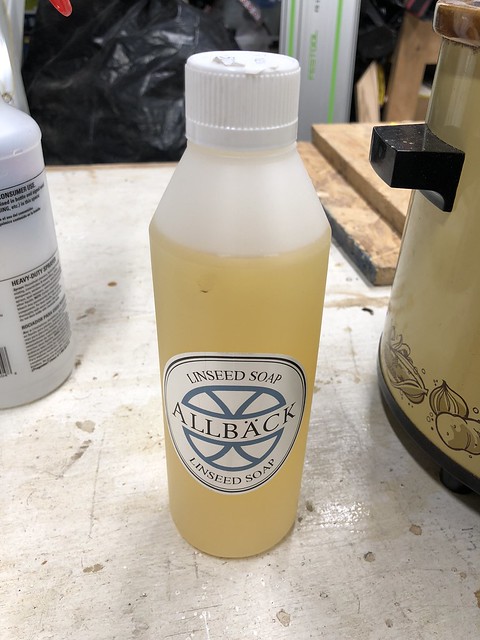
<p>In our case we're using some <a href="http://www.solventfreepaint.com/linseed_soap.htm" target="_blank">Linseed Oil Soap</a> from Allback, and we're giving our sash pulleys a linseed oil bath. The linseed oil soap is a mixture of organic linseed oil (not boiled linseed oil) and water, and can be diluted by adding it to the water in our "bath."</p>
<p>
</p>
<div class="MediaContainer PhotoContainer"><a href="https://farm5.staticflickr.com/4789/39788938135_96fb0211ea_z.jpg" rel="PhotoPopup" popupheight="640" popupwidth="480"><img alt="" src="https://farm5.staticflickr.com/4789/39788938135_96fb0211ea.jpg" width="375" height="500" style="border-width: 0px; border-style: solid;" /></a></div>

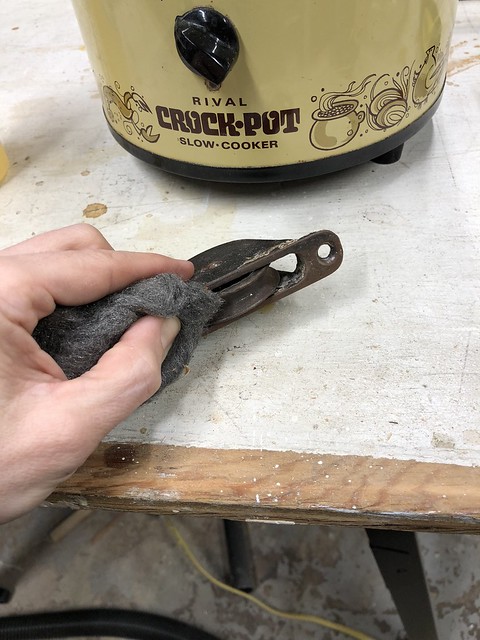
<p>For us the first step is to clean the sash pulleys of their rush with a little steel wool. We previously used a wire wheel to completely clean the paint, but this thin layer of rust was no match for a #1 and #00 steel wool pad. </p>
<p>
</p>
<div class="MediaContainer PhotoContainer"><a href="https://farm5.staticflickr.com/4784/39788595535_33a5f82c70_z.jpg" rel="PhotoPopup" popupheight="640" popupwidth="480"><img alt="" src="https://farm5.staticflickr.com/4784/39788595535_33a5f82c70.jpg" width="375" height="500" style="border-width: 0px; border-style: solid;" /></a></div>

<p>Once clean we moved onto the bath. We're using the vintage Crock-Pot I scored for free, coincidentally on the day after it was revealed on This Is Us (<strong><em>*SPOILER ALERT*</em></strong>) that Jack was killed by a vintage slow cooker, some crazy irony there, right?&nbsp;</p>
<p>
</p>
<div class="MediaContainer PhotoContainer"><a href="https://farm5.staticflickr.com/4785/26812327398_9f04c45db3_z.jpg" rel="PhotoPopup" popupheight="640" popupwidth="480"><img alt="" src="https://farm5.staticflickr.com/4785/26812327398_9f04c45db3.jpg" width="375" height="500" style="border-width: 0px; border-style: solid;" /></a></div>

<p>I added enough water to fully cover the sash pulleys and then put in a few squirts of the linseed oil soap. </p>
<p>
</p>
<div class="MediaContainer PhotoContainer"><a href="https://farm5.staticflickr.com/4774/40641608912_1d8518c733_z.jpg" rel="PhotoPopup" popupheight="480" popupwidth="640"><img alt="" src="https://farm5.staticflickr.com/4774/40641608912_1d8518c733.jpg" width="500" height="375" style="border-width: 0px; border-style: solid;" /></a></div>

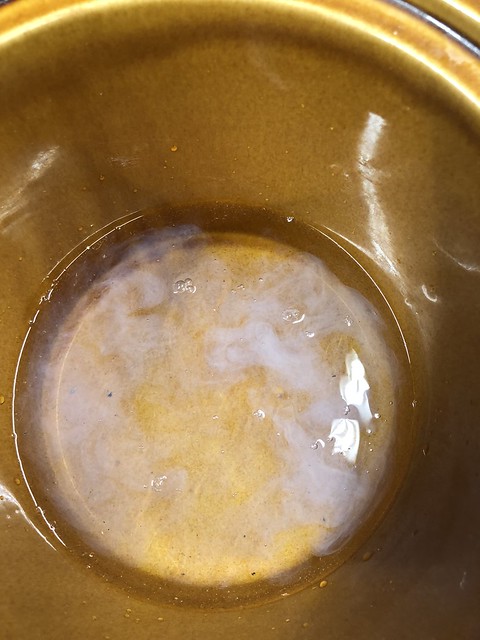
<p>The soap is slightly clouding the water to start...</p>
<p>
</p>
<div class="MediaContainer PhotoContainer"><a href="https://farm5.staticflickr.com/4777/40683812951_a25b023582_z.jpg" rel="PhotoPopup" popupheight="640" popupwidth="480"><img alt="" src="https://farm5.staticflickr.com/4777/40683812951_a25b023582.jpg" width="375" height="500" style="border-width: 0px; border-style: solid;" /></a></div>

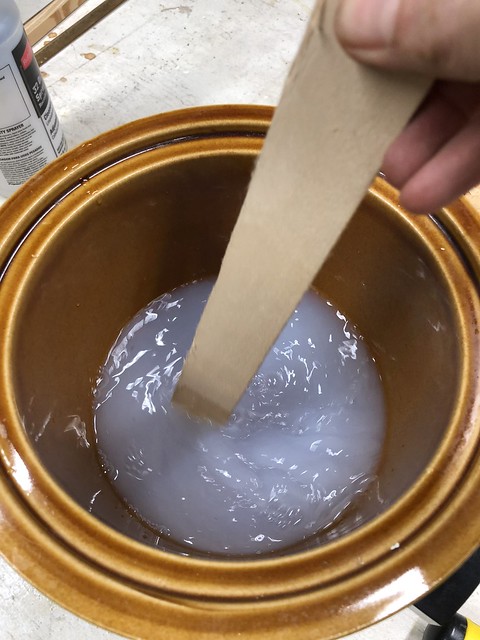
<p>...but mixes easily with the water to fully disperse.&nbsp;</p>
<p>
</p>
<div class="MediaContainer PhotoContainer"><a href="https://farm5.staticflickr.com/4789/39788595345_590dbca28a_z.jpg" rel="PhotoPopup" popupheight="640" popupwidth="480"><img alt="" src="https://farm5.staticflickr.com/4789/39788595345_590dbca28a.jpg" width="375" height="500" style="border-width: 0px; border-style: solid;" /></a></div>

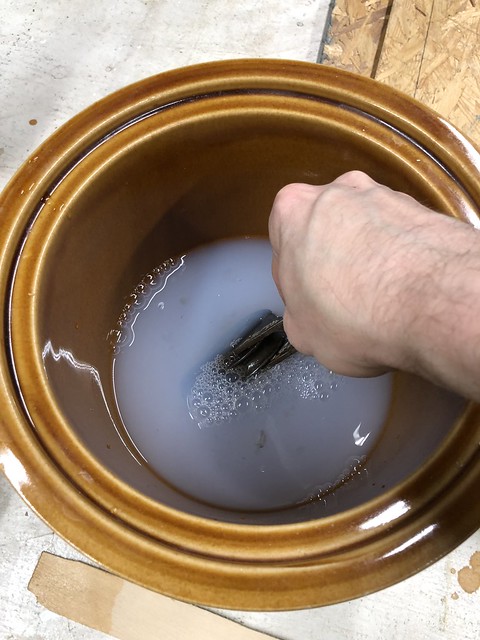
<p>I went ahead and put the Crock-Pot on high to warm the soapy water up, and dropped the pulleys into the cloud. </p>
<p>
</p>
<div class="MediaContainer PhotoContainer"><a href="https://farm5.staticflickr.com/4793/39973568864_5a7153d8be_z.jpg" rel="PhotoPopup" popupheight="640" popupwidth="480"><img alt="" src="https://farm5.staticflickr.com/4793/39973568864_5a7153d8be.jpg" width="375" height="500" style="border-width: 0px; border-style: solid;" /></a></div>

<p>Allowing them to soak in the hot mixture for several hours gives the linseed oil a chance to heat and fully coat and protect the cast iron. Also, this gives the mixture a chance to smell a little bit like hot gross fish. If you're into hot gross smelling fish, you'll really love this whole process!</p>
<p>While they cooked the water started to turn a bit brown. I periodically spun the pulleys around to make sure there was no trapped air or areas not fully exposed to the bath. As you can see from the photos, the case iron did slightly darken from the water and oil, but that's expected.</p>
<p>
</p>
<div class="MediaContainer PhotoContainer"><a href="https://farm5.staticflickr.com/4792/25812827877_789b70f9ca_z.jpg" rel="PhotoPopup" popupheight="640" popupwidth="480"><img alt="" src="https://farm5.staticflickr.com/4792/25812827877_789b70f9ca.jpg" width="375" height="500" style="border-width: 0px; border-style: solid;" /></a></div>

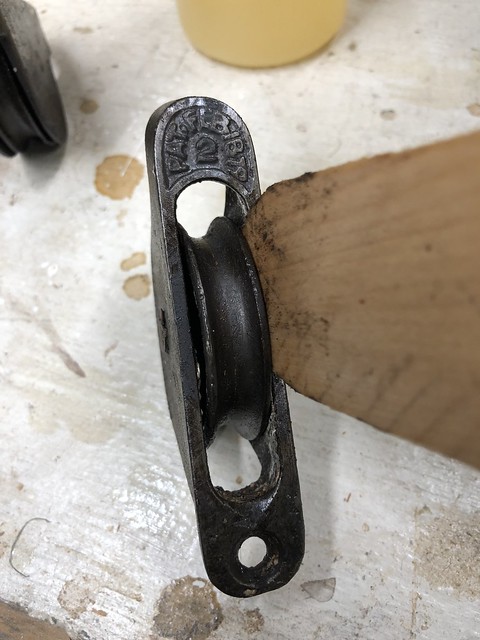
<p>After three hours or so I checked on the progress. Removing the pulleys from the hot oil bath revealed a great looking piece of hardware that's ready for another 100 years of service. </p>
<p>
</p>
<div class="MediaContainer PhotoContainer"><a href="https://farm5.staticflickr.com/4779/25814113087_0aa9e61788_z.jpg" rel="PhotoPopup" popupheight="640" popupwidth="480"><img alt="" src="https://farm5.staticflickr.com/4779/25814113087_0aa9e61788.jpg" width="375" height="500" style="border-width: 0px; border-style: solid;" /></a></div>

<p>The pulleys are slightly tacky right after they've been removed from the bath, but allowing them to dry overnight yielded a smooth and fully dried end result. The final finish is very matte and there is not a plastic film look to it at all, as you'd expect from a traditional poly.</p>
<p>
</p>
<div class="MediaContainer PhotoContainer"><a href="https://farm5.staticflickr.com/4780/39813889895_36fa711515_z.jpg" rel="PhotoPopup" popupheight="640" popupwidth="480"><img alt="" src="https://farm5.staticflickr.com/4780/39813889895_36fa711515.jpg" width="375" height="500" style="border-width: 0px; border-style: solid;" /></a></div>

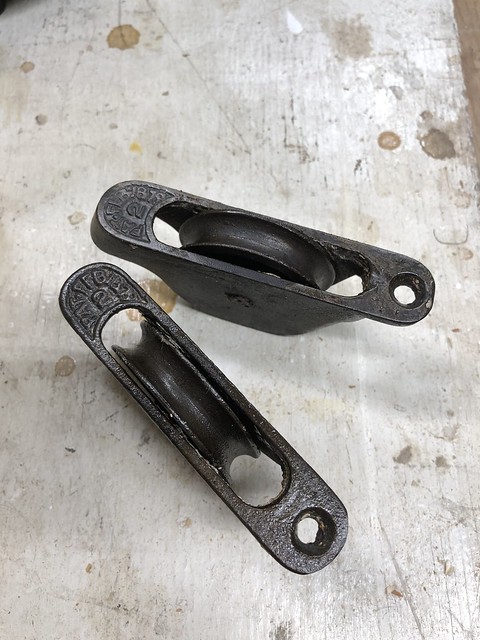
<p>Our sash pulleys, with patent date of Feb 1879, are once again ready for reinstall. These one screw Norris style pulleys (based on their shape and the specialized mortise necessary for the window frame) should no longer be prone to rust if they encounter a little bit of moisture. After the linseed oil bath they now have that classic cast iron dark grey patina. There is no film left following the bath and the coating is more or less baked in over the entire pulley. </p>
<p>
</p>
<div class="MediaContainer PhotoContainer"><a href="https://farm5.staticflickr.com/4790/26837624808_5eb01d2b94_z.jpg" rel="PhotoPopup" popupheight="480" popupwidth="640"><img alt="" src="https://farm5.staticflickr.com/4790/26837624808_5eb01d2b94.jpg" width="500" height="375" style="border-width: 0px; border-style: solid;" /></a></div>

<p>This linseed oil bath is a great option for hardware with movable parts that may be exposed to moisture. At the same time, it's even a great option if you want that raw cast iron look without the need for maintenance or a glossy coating of poly. We'll probably be using this method for future restoration of our rim locks after we're done cleaning off all of the rust.</p>
<p>Have you ever heard of using a linseed oil bath on cast iron hardware? Or maybe you're a fan of linseed oil soap as an organic and environmentally friendly method to cleanse difficult to clean surfaces? Would love to know if you found this tip useful and if you think you'll try it out some day.</p><p><a href="https://www.oldtownhome.com/2018/3/9/Keep-Cast-Iron-Rust-Free-With-a-Linseed-Oil-Bath---Window-Restoration-Part-3/">Read Full Post</a></p>]]></content>
    <category term="Hardware" />
    <category term="Header Image" />
    <category term="Projects:Salvage" />
    <category term="Restoration" />
    <category term="Salvage" />
    <category term="Tips and Tricks" />
    <category term="Window Restoration" />
    <category term="Window Restoration Series" />
    <PostImage>https://c1.staticflickr.com/5/4795/40668041682_993dcc2257_c.jpg</PostImage>
    <media:thumbnail url="https://c1.staticflickr.com/5/4795/40668041682_993dcc2257_t.jpg" />
    <ExtensionElements>
      <Item>PostImage</Item>
      <Item>media:thumbnail</Item>
    </ExtensionElements>
  </entry>
  <entry>
    <guid>0f1962e5-f343-42ef-9a97-5cf0ee6ec5d4</guid>
    <id>https://www.oldtownhome.com/2017/1/10/Office-Quick-Fix-Restoring-Antique-Door-Hardware/</id>
    <title>Office Quick Fix: Restoring Antique Door Hardware</title>
    <summary type="html"><![CDATA[<p>We're in the midst of a "<a href="https://www.oldtownhome.com/2016/12/9/My-Personal-DIY-Anthem---Jump-Around/" target="_blank">quick office makeover</a>" which has now stretched into weekend four of work.</p><p>At this point I believe we have about one or two more weekends of work left until we reach the finish line, and I'm absolutely thrilled with the progress. If you ask us, the true challenge when it comes to "quick" makeovers is actually twofold. First, you need to resign yourself to the fact that you're going to sink time and money into a project that may not be permanent. But for me, the bigger difficulty comes from a seemingly simple question, "Where do you stop?"</p><p>
</p><div class="MediaContainer PhotoContainer"><a href="https://farm6.staticflickr.com/5452/31429843156_d9fbcdf9f8_z.jpg" rel="PhotoPopup" popupheight="480" popupwidth="640"><img alt="" src="https://farm6.staticflickr.com/5452/31429843156_d9fbcdf9f8.jpg" width="500" height="375" style="border-width: 0px; border-style: solid;"></a></div><p>The closet door in this room was one of those discussion items for us, specifically when it came to the hardware. Alex and I both like to do things the "right" way. We don't like cutting corners and we love original details. But at the same time, it's a slippery slope when it comes to small architectural details that need restoration. Before you know it you're spending more time than you want on a "quick" project while leaving your "not-so-quick" projects abandoned just a room or two away.</p><p>In our office, we believe the the closet door and its hardware are original to the home dating back to 1908. Previous work to the room resulted in layer upon layer of paint being applied right over those beautiful cast iron strap hinges, leaving us with cracked, bumpy, chipped, and generally worse for the wear hardware on this door.</p><p>
</p> <a href="https://www.oldtownhome.com/2017/1/10/Office-Quick-Fix-Restoring-Antique-Door-Hardware/">more</a>]]></summary>
    <published>2017-01-10T10:00:00.000-05:00</published>
    <updated>2017-01-10T10:00:00.000-05:00</updated>
    <link rel="alternate" href="https://www.oldtownhome.com/2017/1/10/Office-Quick-Fix-Restoring-Antique-Door-Hardware/" />
    <author>
      <name>Wendy</name>
    </author>
    <content type="html"><![CDATA[<p>We're in the midst of a "<a href="https://www.oldtownhome.com/2016/12/9/My-Personal-DIY-Anthem---Jump-Around/" target="_blank">quick office makeover</a>" which has now stretched into weekend four of work.</p>
<p>At this point I believe we have about one or two more weekends of work left until we reach the finish line, and I'm absolutely thrilled with the progress. If you ask us, the true challenge when it comes to "quick" makeovers is actually twofold. First, you need to resign yourself to the fact that you're going to sink time and money into a project that may not be permanent. But for me, the bigger difficulty comes from a seemingly simple question, "Where do you stop?"</p>
<p>
</p>
<div class="MediaContainer PhotoContainer"><a href="https://farm6.staticflickr.com/5452/31429843156_d9fbcdf9f8_z.jpg" rel="PhotoPopup" popupheight="480" popupwidth="640"><img alt="" src="https://farm6.staticflickr.com/5452/31429843156_d9fbcdf9f8.jpg" width="500" height="375" style="border-width: 0px; border-style: solid;" /></a></div>

<p>The closet door in this room was one of those discussion items for us, specifically when it came to the hardware. Alex and I both like to do things the "right" way. We don't like cutting corners and we love original details. But at the same time, it's a slippery slope when it comes to small architectural details that need restoration. Before you know it you're spending more time than you want on a "quick" project while leaving your "not-so-quick" projects abandoned just a room or two away.</p>
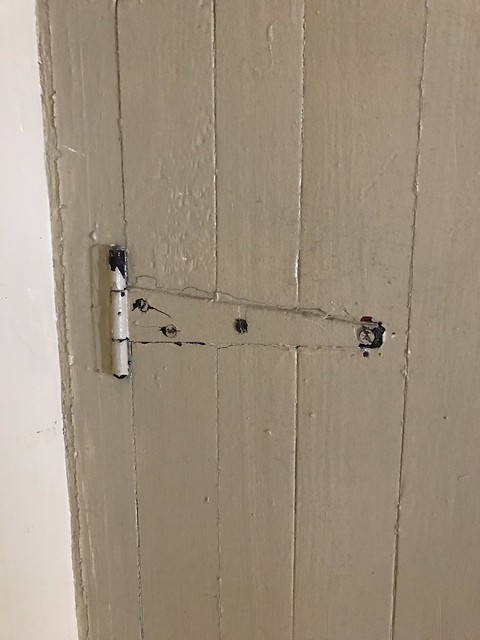
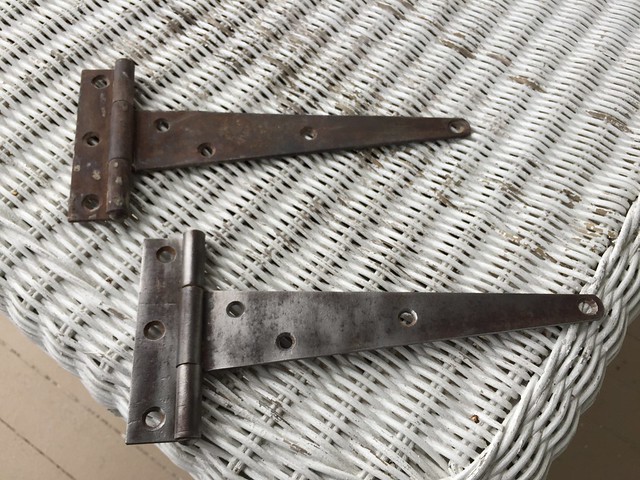
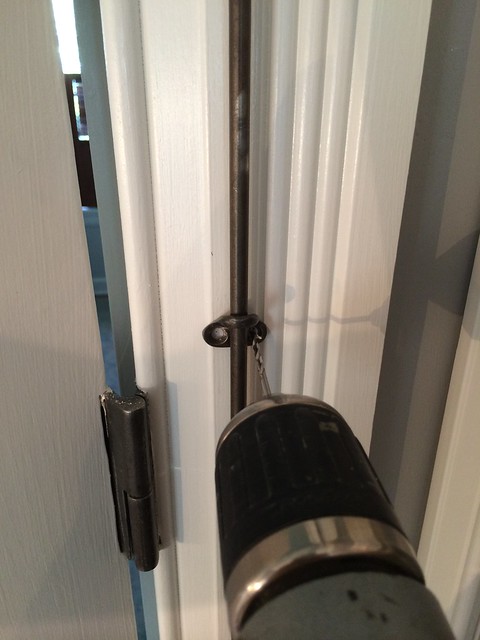
<p>In our office, we believe the the closet door and its hardware are original to the home dating back to 1908. Previous work to the room resulted in layer upon layer of paint being applied right over those beautiful cast iron strap hinges, leaving us with cracked, bumpy, chipped, and generally worse for the wear hardware on this door.</p>
<p>
</p>
<div class="MediaContainer PhotoContainer"><a href="https://farm6.staticflickr.com/5534/31473582085_3616a472ea_z.jpg" rel="PhotoPopup" popupheight="640" popupwidth="480"><img alt="" src="https://farm6.staticflickr.com/5534/31473582085_3616a472ea.jpg" width="375" height="500" style="border-width: 0px; border-style: solid;" /></a></div>
<p>Alex and I discussed whether or not we wanted to go the faster and easier route of just applying another coat of paint to the hardware to match our new trim color (Benjamin Moore's White Dove). But almost as soon as we started weighing the pros and cons of the work, we quickly realized that while we're trying to keep this makeover simple, taking a shortcut on this feature wasn't something we could live with. After all, we buy old houses because we love and appreciate the old and original details, and we wanted to bring these little details back into the decor, even if it took an extra few hours to get it looking right rather than spending even more time staring at paint covered hinges for years to come.</p>
<p>
</p>
<div class="MediaContainer PhotoContainer"><a href="https://farm6.staticflickr.com/5555/30665340413_d6f435237e_z.jpg" rel="PhotoPopup" popupheight="640" popupwidth="480"><img alt="" src="https://farm6.staticflickr.com/5555/30665340413_d6f435237e.jpg" width="375" height="500" style="border-width: 0px; border-style: solid;" /></a></div>

<p>With our decision made, after a few minutes of removing the door and hardware, we laid them out on our makeshift workbench and I got to work stripping them. For this project I used a product called SmartStrip. We've gone in many directions over the years when it comes to stripping period moulding and hardware, and we've liked this product <a href="http://www.oldtownhome.com/2013/12/23/Paint-Stripping-Approach-Revised---Status-Still-Hate-It/" target="_blank">since we used it on some window casings several years ago</a>. It's non-caustic (safe if you get it on your hands), Earth friendly, doesn't have a strong odor, and really does a great job. This is pretty amazing when comparing it to the harsh chemical strippers we once had to rely on.</p>
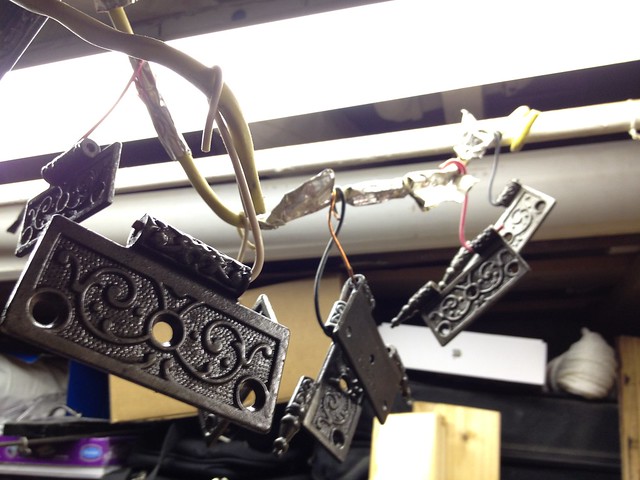
<p><em>I will say, if we had an extra crock pot that could have fit these hinges, we almost certainly would have used it instead. You really can't beat a simmer soak in soapy hot water to make the layers of paint almost fall off.</em></p>
<p>After putting on a pair of disposable latex gloves, I applied a coat of the product to each of the pieces of hardware using a small disposable foam brush.</p>
<p>
</p>
<div class="MediaContainer PhotoContainer"><a href="https://farm1.staticflickr.com/675/31633155625_ee62f6f30b_z.jpg" rel="PhotoPopup" popupheight="480" popupwidth="640"><img alt="" src="https://farm1.staticflickr.com/675/31633155625_ee62f6f30b.jpg" width="500" height="375" style="border-width: 0px; border-style: solid;" /></a></div>
<p>Once fully covered in the stripper, I then wrapped the hardware in waxed paper creating a protective layer that allows the product to stay wet and work its magic overnight. As long as it doesn't dry out, it's still actively stripping paint and the waxed paper takes over the role of Peel Away paper in keeping the stripper wet. The color bleed in the next photo showed me that the stripper was already starting to loosen the many layers of paint.</p>
<p>
</p>
<div class="MediaContainer PhotoContainer"><a href="https://farm1.staticflickr.com/380/31668165346_8851715015_z.jpg" rel="PhotoPopup" popupheight="640" popupwidth="480"><img alt="" src="https://farm1.staticflickr.com/380/31668165346_8851715015.jpg" width="375" height="500" style="border-width: 0px; border-style: solid;" /></a></div>
<p>The next morning I <a href="http://www.oldtownhome.com/2017/1/5/Primed-and-Painted-for-a-Transformation-Office-Makeover-Update/" target="_blank">resumed painting work in the office</a> while Alex stepped in to take over the stripping work. After giving the hardware a thorough scraping to remove the sludgy paint and a wipe down with several clean rags, the hardware already looked 90% better! You could see that it was likely originally painted black.</p>
<p>
</p>
<div class="MediaContainer PhotoContainer"><a href="https://farm1.staticflickr.com/443/30791712454_21633f1618_z.jpg" rel="PhotoPopup" popupheight="480" popupwidth="640"><img alt="" src="https://farm1.staticflickr.com/443/30791712454_21633f1618.jpg" width="500" height="375" style="border-width: 0px; border-style: solid;" /></a></div>
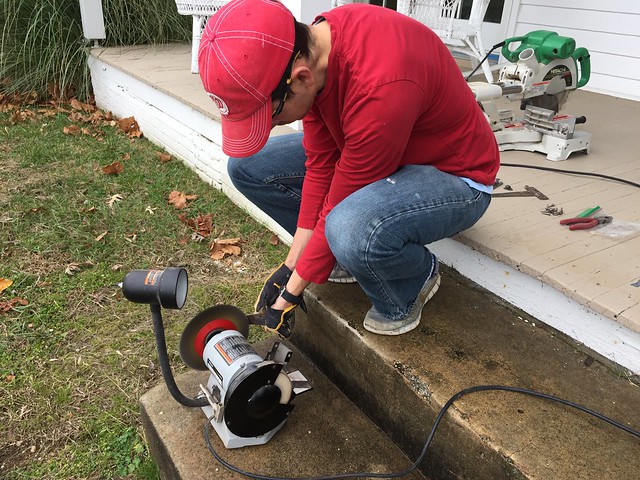
<p>While it may have originally been black, we want to go with the raw cast iron look. We've always liked the look of the raw cast iron on hardware in our Alexandria row house, so we'll stick with what we like. In this case, the final step to restoring the finish was to remove any rust and leftover paint by giving it a once over with a wire wheel or a whole lot of steel wool. Since we own a wire wheel, that's the route we went.&nbsp;</p>
<p>
</p>
<div class="MediaContainer PhotoContainer"><a href="https://farm6.staticflickr.com/5626/31074935104_bb4da292f3_z.jpg" rel="PhotoPopup" popupheight="480" popupwidth="640"><img alt="" src="https://farm6.staticflickr.com/5626/31074935104_bb4da292f3.jpg" width="500" height="375" style="border-width: 0px; border-style: solid;" /></a></div>
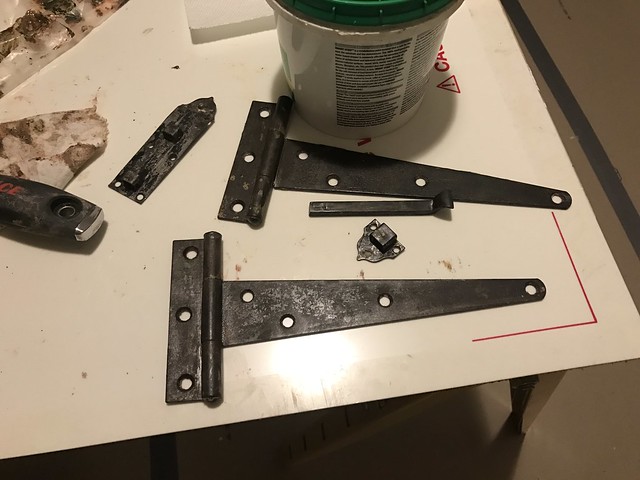
<p>It took Alex roughly 30 minutes to clean up the two hinges and two components of the slide lock. While he worked, I supervised. And by that, I mean I took photos and enjoyed a cup of tea while appreciating the view.</p>
<p>
</p>
<div class="MediaContainer PhotoContainer"><a href="https://farm1.staticflickr.com/358/31074933584_b3303b80c2_z.jpg" rel="PhotoPopup" popupheight="480" popupwidth="640"><img alt="" src="https://farm1.staticflickr.com/358/31074933584_b3303b80c2.jpg" width="500" height="375" style="border-width: 0px; border-style: solid;" /></a></div>
<p>Here's a look at the difference between the stripped hardware before and after cleaning it with the wire wheel.</p>
<p>
</p>
<div class="MediaContainer PhotoContainer"><a href="https://farm1.staticflickr.com/280/31798248101_d7a55654ba_z.jpg" rel="PhotoPopup" popupheight="480" popupwidth="640"><img alt="" src="https://farm1.staticflickr.com/280/31798248101_d7a55654ba.jpg" width="500" height="375" style="border-width: 0px; border-style: solid;" /></a></div>
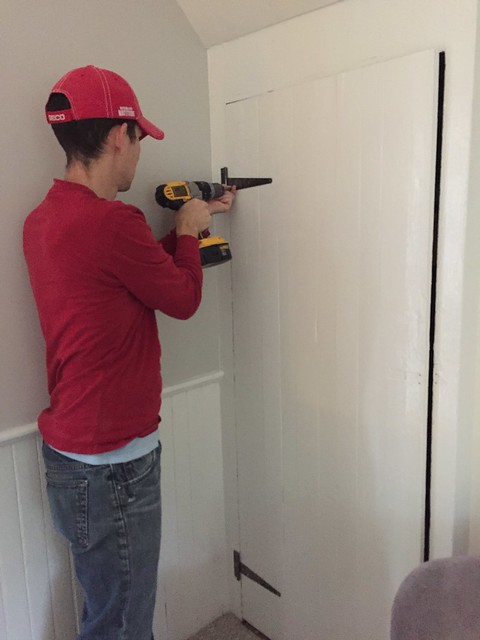
<p>Reinstalling the door was pretty straight forward since we were using the old screws and holes, but it was only easy because we had two people working on it. Initially we had no idea just how heavy that door was, but when we removed the hinges it turned out to be between 50 and 60 pounds. It's made of very dense and heavy old growth pine, so it was really helpful that Alex could hold it in place while I tightened one screw on each of the hinges to stabilize it. From there, he put the remaining screws back in.</p>
<p>
</p>
<div class="MediaContainer PhotoContainer"><a href="https://farm6.staticflickr.com/5339/31914893135_cb7028fe9e_z.jpg" rel="PhotoPopup" popupheight="640" popupwidth="480"><img alt="" src="https://farm6.staticflickr.com/5339/31914893135_cb7028fe9e.jpg" width="375" height="500" style="border-width: 0px; border-style: solid;" /></a></div>
<p>While it's easy for "quick" makeovers to become a slippery slope of add ons, thus dragging out timelines, in this case going the few extra steps to bring this hardware back to life is something I'm really glad we decided to do.&nbsp;</p>
<p>
</p>
<div class="MediaContainer PhotoContainer"><a href="https://farm6.staticflickr.com/5614/31635620551_a085c2ec7a_z.jpg" rel="PhotoPopup" popupheight="480" popupwidth="640"><img alt="" src="https://farm6.staticflickr.com/5614/31635620551_a085c2ec7a.jpg" width="500" height="375" style="border-width: 0px; border-style: solid;" /></a></div>
<p>The original closet door and hardware are one of the most interesting elements of the room, and now they really shine (in a non-shiny cast iron way). The dark metal hinges and slide bolt on the white trim paint really looks great.&nbsp;</p>
<p>
</p>
<div class="MediaContainer PhotoContainer"><a href="https://farm1.staticflickr.com/598/31844513950_8efde7fd9c_z.jpg" rel="PhotoPopup" popupheight="640" popupwidth="381"><img alt="" src="https://farm1.staticflickr.com/598/31844513950_8efde7fd9c.jpg" width="298" height="500" style="border-width: 0px; border-style: solid;" /></a></div>

<p>While our quick fix is moving right along, we still have a few more items to knock out before we can call this project "done." And in pretty typical form, we're still debating whether we want to keep the ceiling fan in the room after painting it white, or to add some light and interest to the room by installing a light fixture. I can tell you one thing for sure, this room is quickly becoming my favorite in the whole house, one little detail at a time.</p><p><a href="https://www.oldtownhome.com/2017/1/10/Office-Quick-Fix-Restoring-Antique-Door-Hardware/">Read Full Post</a></p>]]></content>
    <category term="Antique" />
    <category term="Hardware" />
    <category term="Header Image" />
    <category term="Projects:Home Improvement" />
    <category term="Restoration" />
    <category term="Water House" />
    <category term="Water House Office" />
    <PostImage>https://c1.staticflickr.com/1/388/31378228073_c7f0e63e3b.jpg</PostImage>
    <media:thumbnail url="https://c1.staticflickr.com/1/388/31378228073_c7f0e63e3b_t.jpg" />
    <ExtensionElements>
      <Item>PostImage</Item>
      <Item>media:thumbnail</Item>
    </ExtensionElements>
  </entry>
  <entry>
    <guid>9a48c41e-d1a8-461a-8638-ebd37586e011</guid>
    <id>https://www.oldtownhome.com/2014/8/20/Throw-it-Over-the-Transom-and-See-What-Happens/</id>
    <title>Throw it Over the Transom and See What Happens</title>
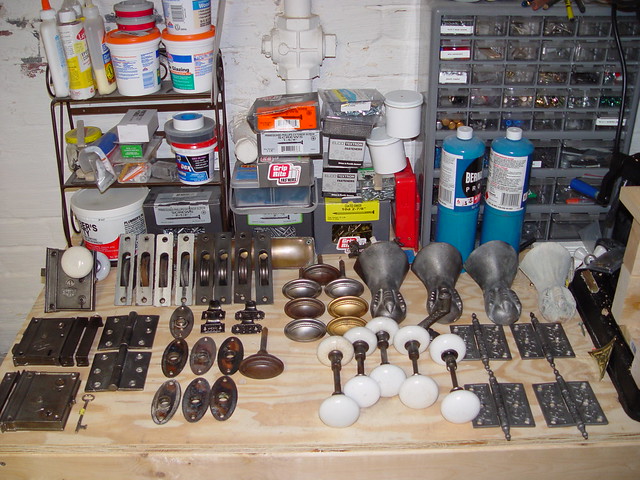
    <summary type="html"><![CDATA[<p>One of my absolute favorite aspects of our old home (and many old homes in general) is our house's period and restored architectural hardware. </p><p>
</p><div class="MediaContainer PhotoContainer"><a href="https://farm6.staticflickr.com/5109/5643991555_749197b2a7_z.jpg" rel="PhotoPopup" popupheight="480" popupwidth="640"><img alt="" src="https://farm6.staticflickr.com/5109/5643991555_749197b2a7.jpg" width="500" height="375" style="border-width: 0px; border-style: solid;"></a></div><p>Since moving into our home we've gone to great lengths to discover and restore period vintage hardware for our home. Whether that means scouring eBay or digging through the extras pile at a salvage yard, we've attempted to leave no knob unturned in our search.</p><p>Over the years on the blog we've covered our <a href="http://www.oldtownhome.com/2012/3/8/The-Anatomy-and-Restoration-of-a-Rim-Lock/">rim locks</a> at length, including their restoration. </p><p>
</p><div class="MediaContainer PhotoContainer"><a href="https://farm7.staticflickr.com/6106/6373342091_2007f42b7c_z.jpg" rel="PhotoPopup" popupheight="640" popupwidth="480"><img alt="" src="https://farm7.staticflickr.com/6106/6373342091_2007f42b7c.jpg" width="375" height="500" style="border-width: 0px; border-style: solid;"></a></div><p>We've mentioned our sash lifts, <a href="http://www.oldtownhome.com/2011/7/19/Toolbox-Tuesday-Got-Rust-or-Paint-Wire-Wheel-It-on-the-Bench-Grinder/">stripping their paint</a>, and how we've been tirelessly searching for just a few more matching lifts to complete the set. </p> <a href="https://www.oldtownhome.com/2014/8/20/Throw-it-Over-the-Transom-and-See-What-Happens/">more</a>]]></summary>
    <published>2014-08-20T10:29:00.000-04:00</published>
    <updated>2014-08-20T10:29:00.000-04:00</updated>
    <link rel="alternate" href="https://www.oldtownhome.com/2014/8/20/Throw-it-Over-the-Transom-and-See-What-Happens/" />
    <author>
      <name>Alex</name>
    </author>
    <content type="html"><![CDATA[<p>One of my absolute favorite aspects of our old home (and many old homes in general) is our house's period and restored architectural hardware. </p>
<p>
</p>
<div class="MediaContainer PhotoContainer"><a href="https://farm6.staticflickr.com/5109/5643991555_749197b2a7_z.jpg" rel="PhotoPopup" popupheight="480" popupwidth="640"><img alt="" src="https://farm6.staticflickr.com/5109/5643991555_749197b2a7.jpg" width="500" height="375" style="border-width: 0px; border-style: solid;" /></a></div>
<p>Since moving into our home we've gone to great lengths to discover and restore period vintage hardware for our home. Whether that means scouring eBay or digging through the extras pile at a salvage yard, we've attempted to leave no knob unturned in our search.</p>
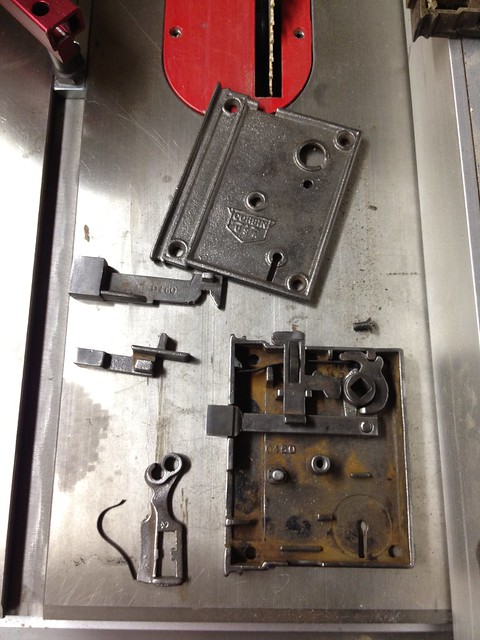
<p>Over the years on the blog we've covered our <a href="http://www.oldtownhome.com/2012/3/8/The-Anatomy-and-Restoration-of-a-Rim-Lock/">rim locks</a> at length, including their restoration. </p>
<p>
</p>
<div class="MediaContainer PhotoContainer"><a href="https://farm7.staticflickr.com/6106/6373342091_2007f42b7c_z.jpg" rel="PhotoPopup" popupheight="640" popupwidth="480"><img alt="" src="https://farm7.staticflickr.com/6106/6373342091_2007f42b7c.jpg" width="375" height="500" style="border-width: 0px; border-style: solid;" /></a></div>
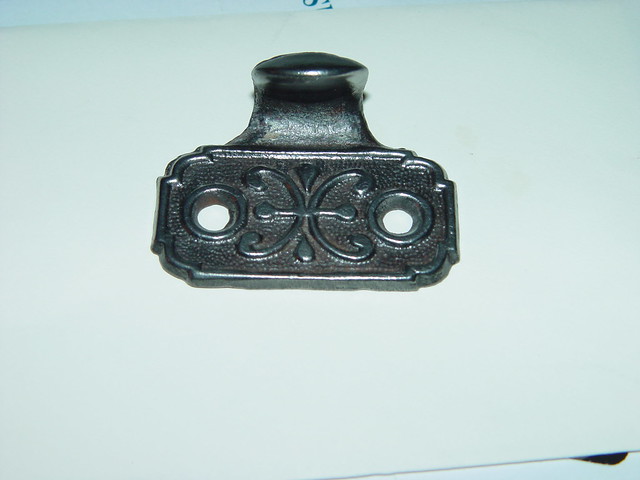
<p>We've mentioned our sash lifts, <a href="http://www.oldtownhome.com/2011/7/19/Toolbox-Tuesday-Got-Rust-or-Paint-Wire-Wheel-It-on-the-Bench-Grinder/">stripping their paint</a>, and how we've been tirelessly searching for just a few more matching lifts to complete the set. </p>
<p>
</p>
<div class="MediaContainer PhotoContainer"><a href="https://farm6.staticflickr.com/5306/5645783947_f3cb23048e_z.jpg" rel="PhotoPopup" popupheight="480" popupwidth="640"><img alt="" src="https://farm6.staticflickr.com/5306/5645783947_f3cb23048e.jpg" width="500" height="375" style="border-width: 0px; border-style: solid;" /></a></div>
<p>We've detailed the various hinges we're using on our salvaged and original doors, and the differences between the first floor and second floor hinges (decorative downstairs, simple up).</p>
<p>
</p>
<div class="MediaContainer PhotoContainer"><a href="https://farm7.staticflickr.com/6114/6346952943_021156d48b_z.jpg" rel="PhotoPopup" popupheight="480" popupwidth="640"><img alt="" src="https://farm7.staticflickr.com/6114/6346952943_021156d48b.jpg" width="500" height="375" style="border-width: 0px; border-style: solid;" /></a></div>
<p>And we've even showed off the cast iron slide bolt we installed on our vestibule doors and how it just happened to be very similar (in shape and size) to the one likely originally in this same place a century ago. </p>
<p>
</p>
<div class="MediaContainer PhotoContainer"><a href="https://farm7.staticflickr.com/6216/6373302481_9f2801e868_z.jpg" rel="PhotoPopup" popupheight="640" popupwidth="480"><img alt="" src="https://farm7.staticflickr.com/6216/6373302481_9f2801e868.jpg" width="375" height="500" style="border-width: 0px; border-style: solid;" /></a></div>
<p>But of all of the items we've discussed, and of all of the effort we've put into restoration of these antique architectural elements, my favorite, by far, is the work we've done to make our transom windows functional. </p>
<p>When we moved into our home we had four fixed/painted shut transom windows.</p>
<ol>
    <li>The exterior fixed front transom window above our entry door.<br />
    <br />
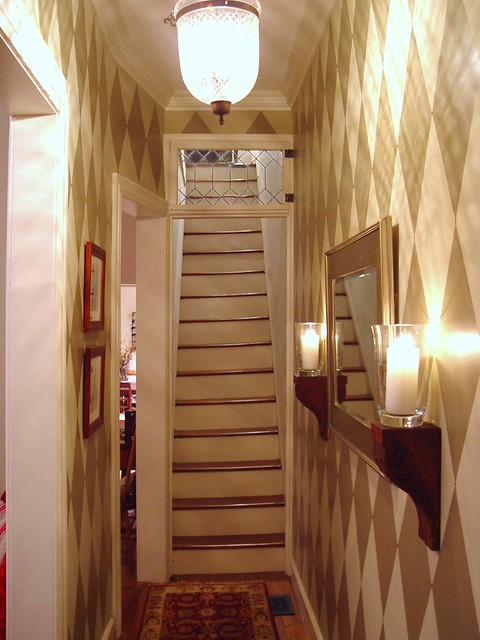
    <div class="MediaContainer PhotoContainer"><a href="https://farm6.staticflickr.com/5185/5692700833_f3846ab705_z.jpg" rel="PhotoPopup" popupheight="640" popupwidth="480"><img alt="" src="https://farm6.staticflickr.com/5185/5692700833_f3846ab705.jpg" width="375" height="500" style="border-width: 0px; border-style: solid;" /></a></div>
    </li>
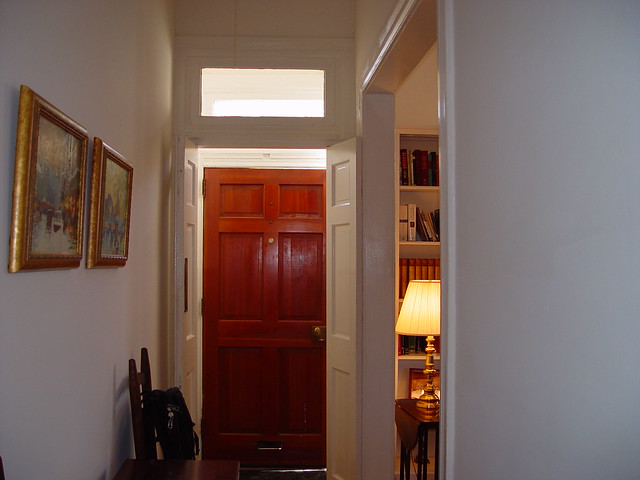
    <li>The interior fixed transom window above the front vestibule door (just two feet from the first).<br />
    <br />
    <div class="MediaContainer PhotoContainer"><a href="https://farm6.staticflickr.com/5261/5642078199_1c6b163233_z.jpg" rel="PhotoPopup" popupheight="480" popupwidth="640"><img alt="" src="https://farm6.staticflickr.com/5261/5642078199_1c6b163233.jpg" width="500" height="375" style="border-width: 0px; border-style: solid;" /></a></div>
    </li>
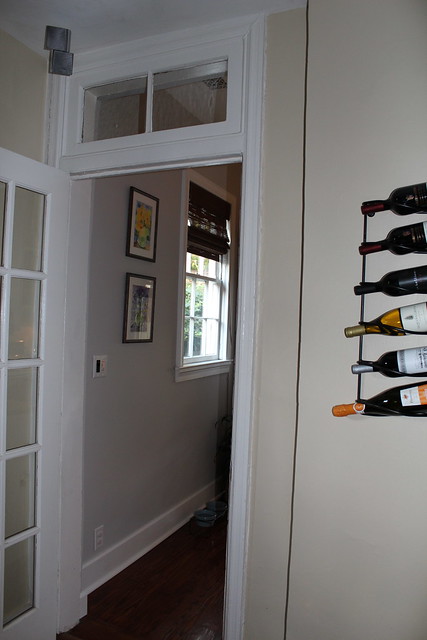
    <li>The interior fixed transom at the door from our kitchen into the family room, which was once the rear of our house until the kitchen addition was added in about 1900.<br />
    <br />
    <div class="MediaContainer PhotoContainer"><a href="https://farm8.staticflickr.com/7266/7780696774_766f837fc9_z.jpg" rel="PhotoPopup" popupheight="640" popupwidth="427"><img alt="" src="https://farm8.staticflickr.com/7266/7780696774_766f837fc9.jpg" width="333" height="500" style="border-width: 0px; border-style: solid;" /><br />
    &nbsp;</a></div>
    </li>
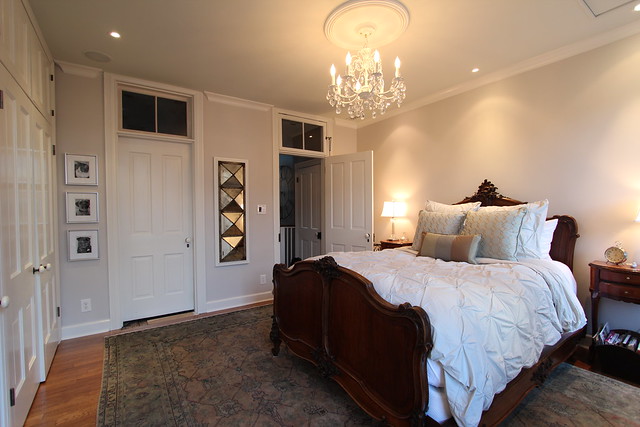
    <li>The interior master bedroom transom, painted shut, with hinges sloppily and incorrectly added to the side of the window.<br />
    <br />
    <div class="MediaContainer PhotoContainer"><a href="https://farm6.staticflickr.com/5025/5642656514_1cf7ba37ed_z.jpg" rel="PhotoPopup" popupheight="480" popupwidth="640"><img alt="" src="https://farm6.staticflickr.com/5025/5642656514_1cf7ba37ed.jpg" width="500" height="375" style="border-width: 0px; border-style: solid;" /><br />
    </a></div>
    </li>
</ol>
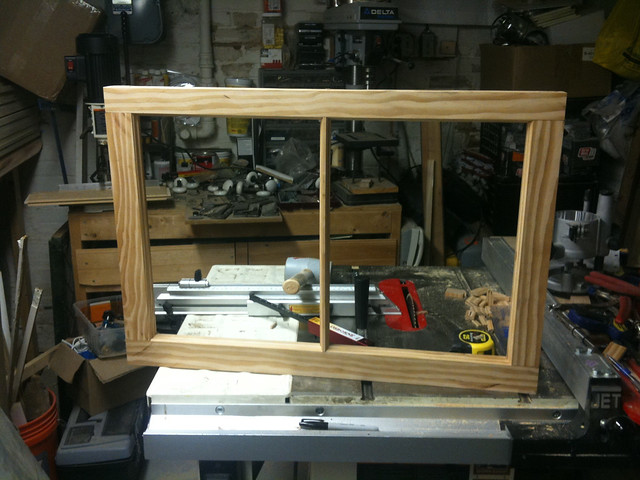
<p>Today we have six transom windows throughout the house. Yes, we've added two. At present, five are restored, four are functional, three have operational salvaged transom lifts, two of those lifts match exactly, and one was completely fabricated in our basement wood shop using salvaged glass. Tooting my own horn here, you'd be hard pressed to pick it out the new one among the others. :toot-toot:</p>
<p>The two we've added are:</p>
<ol>
    <li>The decorative leaded transom above our stair doorway from our entry hall. Added to fill the large open space, and based on some evidence a transom once existed there. (Yes, it's mounted incorrectly with face mounted hinges on the side because I didn't understand our bedroom transom was not mounted correctly at the time. I'll be fixing that at some point.)<br />
    <br />
    <div class="MediaContainer PhotoContainer"><a href="https://farm7.staticflickr.com/6148/5969559643_fc7028446d_z.jpg" rel="PhotoPopup" popupheight="640" popupwidth="480"><img alt="" src="https://farm7.staticflickr.com/6148/5969559643_fc7028446d.jpg" width="375" height="500" style="border-width: 0px; border-style: solid;" /><br />
    &nbsp;</a></div>
    </li>
    <li>The transom window (and whole jamb assembly) above our master bathroom door at left. That's the completely new one.<br />
    <br />
    <div class="MediaContainer PhotoContainer"><a href="https://farm8.staticflickr.com/7033/6534233075_66a6ceb06d_z.jpg" rel="PhotoPopup" popupheight="427" popupwidth="640"><img alt="" src="https://farm8.staticflickr.com/7033/6534233075_66a6ceb06d.jpg" width="500" height="333" style="border-width: 0px; border-style: solid;" /></a></div>
    </li>
</ol>
<p>Transom windows, the small hinged window detail that sits above both interior and exterior doors in many old homes, are a great Victorian era utilitarian design element that end up adding a tremendous amount of character to a home. Though they've been around long before Queen Victoria, they gained popularity during the architectural phase that credits her name.</p>
<p>
</p>
<div class="MediaContainer PhotoContainer"><a href="https://farm3.staticflickr.com/2571/4168421150_28cf9c61fb_z.jpg" rel="PhotoPopup" popupheight="480" popupwidth="640"><img alt="" src="https://farm3.staticflickr.com/2571/4168421150_28cf9c61fb.jpg" width="500" height="375" style="border-width: 0px; border-style: solid;" /></a><br />
<em>Reproduction mortise and tenon transom we built for our home.</em></div>
<p>Originally implemented to allow additional light into the usually dark rooms, even when doors were shut, the windows that are functional (which allows them to open and close on hinges) were created to allow heated or cool air to flow between rooms more readily. </p>
<p>
</p>
<div class="MediaContainer PhotoContainer"><a href="https://farm3.staticflickr.com/2732/5859851932_5dff0dc4a2_z.jpg" rel="PhotoPopup" popupheight="478" popupwidth="640"><img alt="" src="https://farm3.staticflickr.com/2732/5859851932_5dff0dc4a2.jpg" width="500" height="374" style="border-width: 0px; border-style: solid;" /></a></div>
<p>Since their inception they've even become part of everyday sayings. Have you ever heard someone say "I'm going to send it over the transom and see what happens," when talking about an idea? This expression has roots in the writers realm, where a writer would throw a manuscript, article, or other work over the publisher's closed door and through the sometimes open transom window, in hopes the publisher would pick it up, read it, and be struck by the work's brilliance. In a way, a blog is actually one giant experiment in "over the transom" writing.</p>
<p>It's been used in many ways over the years, such as in this political cartoon depicting bribery in a 1900 newspaper.</p>
<p>
</p>
<div class="MediaContainer PhotoContainer"><a href="https://farm6.staticflickr.com/5551/14980290145_75cf369a2d_z.jpg" rel="PhotoPopup" popupheight="640" popupwidth="463"><img alt="" src="https://farm6.staticflickr.com/5551/14980290145_75cf369a2d.jpg" width="362" height="500" style="border-width: 0px; border-style: solid;" /></a></div>
<p>But enough with the history lesson, let's talk about why we're discussing transoms today. </p>
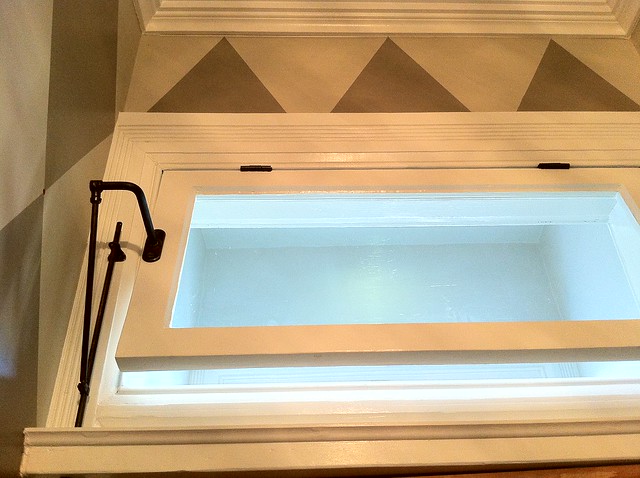
<p>After many years dreaming about this day (no, really, I've had dreams about it), the transom window above our master bathroom door is fully built, installed, painted, and 100% operational. And though I've talked about it once before, I want to cover just how one might go about installing a transom window lift in a bit more detail, as there seems to be a shocking lack of this type of information on the Internets. </p>
<p>
</p>
<div class="MediaContainer PhotoContainer"><a href="https://farm6.staticflickr.com/5262/5859833692_c8bc87e57d_z.jpg" rel="PhotoPopup" popupheight="166" popupwidth="640"><img alt="" src="https://farm6.staticflickr.com/5262/5859833692_c8bc87e57d.jpg" width="500" height="129" style="border-width: 0px; border-style: solid;" /></a></div>
<p>Installing a transom lift is not incredibly difficult, but it's a bit tedious. The main things you need to know before putting this piece of salvaged goodness into place are the basic measurements for what you're trying to achieve. </p>
<p>In our case, our ceilings are 9' tall, door is about 7' tall, the transom is about 2' tall, and the lift is about 4' long.</p>
<p>A transom lift consists of several key elements. </p>
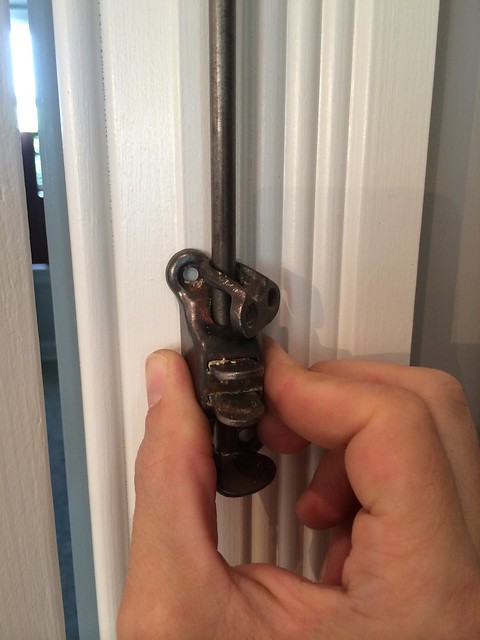
<p>1. The spring pinch clasp that sits near the bottom of the lift and allows the operator to set the open/closed position of the lift. This piece mounts to the wall and provides the lower support. </p>
<p>
</p>
<div class="MediaContainer PhotoContainer"><a href="https://farm6.staticflickr.com/5585/14976652031_8705aeac1a_z.jpg" rel="PhotoPopup" popupheight="640" popupwidth="480"><img alt="" src="https://farm6.staticflickr.com/5585/14976652031_8705aeac1a.jpg" width="375" height="500" style="border-width: 0px; border-style: solid;" /></a></div>
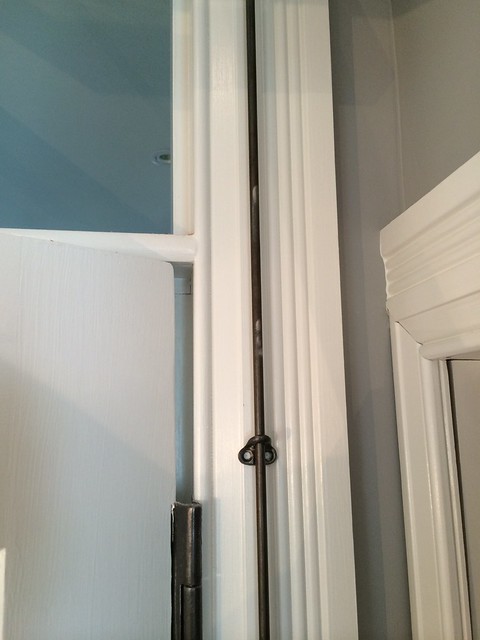
<p>2. The long rod that drives the whole thing extends from below the clasp to near the top of the transom. This rod is supported at several places, but is ultimately free moving. </p>
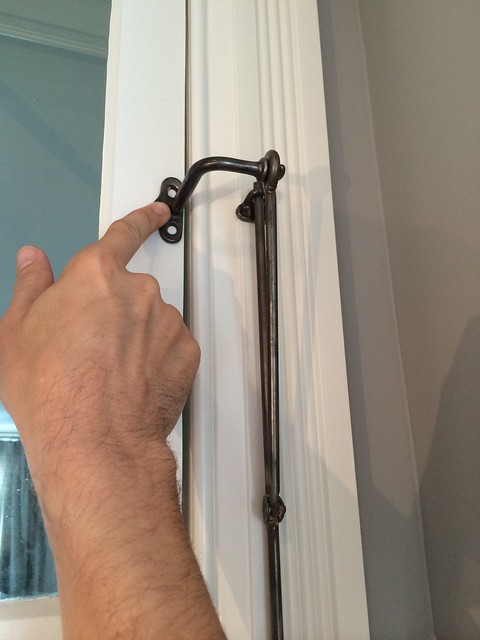
<p>3. Several supports that mount to the wall at the transom's midpoint and top connection and allow the rod to move up and down. These are often the pieces missing when buying salvaged transoms, so make sure all parts are there. </p>
<p>
</p>
<div class="MediaContainer PhotoContainer"><a href="https://farm4.staticflickr.com/3920/14793061179_efa64aa38b_z.jpg" rel="PhotoPopup" popupheight="640" popupwidth="480"><img alt="" src="https://farm4.staticflickr.com/3920/14793061179_efa64aa38b.jpg" width="375" height="500" style="border-width: 0px; border-style: solid;" /></a></div>
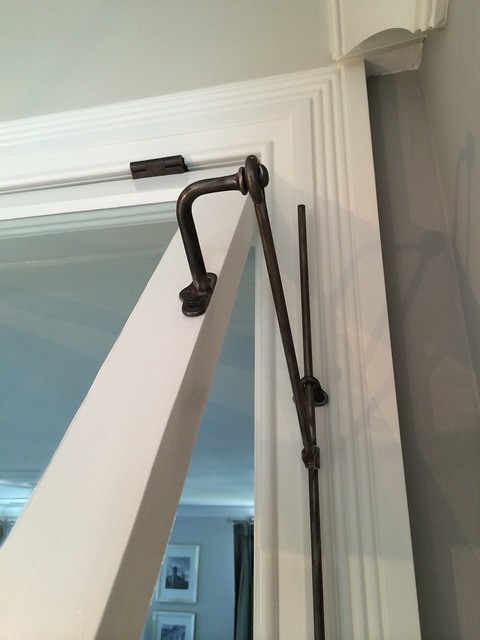
<p>4. The hinge assembly and lift mount bracket that attaches directly to the transom sash and is hinged against the transom rod. This hinge and the rod's upward motion is what actually opens the transom. </p>
<p>
</p>
<div class="MediaContainer PhotoContainer"><a href="https://farm4.staticflickr.com/3838/14979396622_43118644f9_z.jpg" rel="PhotoPopup" popupheight="640" popupwidth="480"><img alt="" src="https://farm4.staticflickr.com/3838/14979396622_43118644f9.jpg" width="375" height="500" style="border-width: 0px; border-style: solid;" /></a></div>
<p>In making our transom window operational, we want to achieve an install where we can open the window to about a 30 degree angle. This doesn't sound like much, but it's plenty to allow airflow without ending up with a weird hatch looking window, or one that's hard to get open or closed due to the weight of the window and its function. </p>
<p>I also consider the height of the window lift's operator (Wendy or me), and what a comfortable mounting height is to allow a person of average height to easily slide the window open. </p>
<p>All told, we chose a mount the clasp of our transom at a height of 50" above the floor. This is roughly the same height as a light switch, so it tends to work well. </p>
<p>If you're trying to mount a lift and need to pick a mounting height that works for your room that doesn't match our room's measurements, pinch the clasp and move the rod completely into the "up" position. This will make sure it's fully extended and you can determine where the upper extent of the rod reaches when in this position. This is important to ensure the rod won't run into the ceiling when fully up.</p>
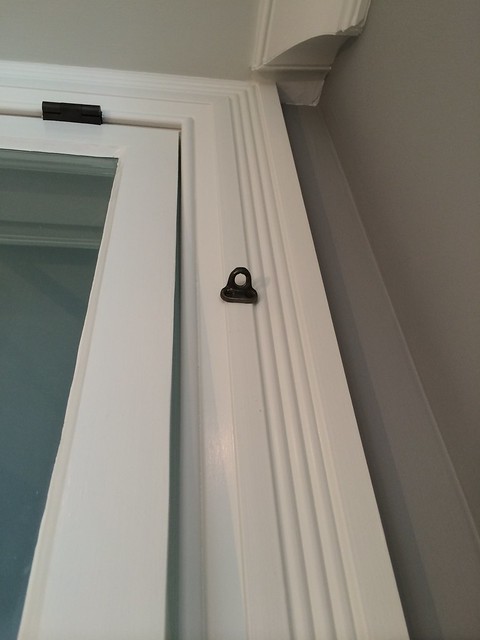
<p>Once you know where the clasp will go on your moulding, hold the whole assembly in place and mark your screw locations. While continuing to hold it all in place, climb onto a stool or ladder and place the upper support bracket about 1" above the lift's hinge. Then mark those screw locations. Remove and drill your pilot holes based on the marks.</p>
<p>
</p>
<div class="MediaContainer PhotoContainer"><a href="https://farm4.staticflickr.com/3897/14979745525_ed8891a917_z.jpg" rel="PhotoPopup" popupheight="640" popupwidth="480"><img alt="" src="https://farm4.staticflickr.com/3897/14979745525_ed8891a917.jpg" width="375" height="500" style="border-width: 0px; border-style: solid;" /></a></div>
<p>This upper support is one of the rod's guides and needs to be high enough not to interfere with the lifting of the transom rod, but low enough to keep the rod in place when it's totally lowered. </p>
<p>
</p>
<div class="MediaContainer PhotoContainer"><a href="https://farm6.staticflickr.com/5568/14976655031_64a593ee79_z.jpg" rel="PhotoPopup" popupheight="640" popupwidth="480"><img alt="" src="https://farm6.staticflickr.com/5568/14976655031_64a593ee79.jpg" width="375" height="500" style="border-width: 0px; border-style: solid;" /></a></div>
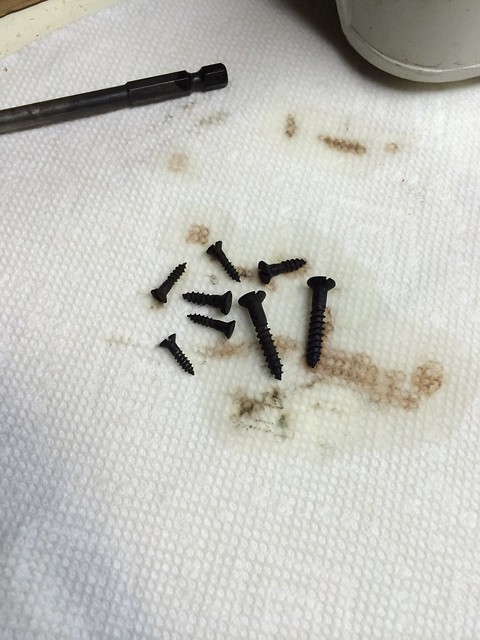
<p>We're using a combination of #4 (for the supports), #6 (for the clasp), and #8 (for the bracket) screws, so pilot hole sizes vary. We pre-antiqued our screws gun blue, making them appear aged and black to fit better with the hardware. You can ready more about that process on our <a href="http://www.oldtownhome.com/2012/2/24/How-To-Easily-Antique-Screws/">how to antique screws</a> post. I know, gripping stuff.</p>
<p>
</p>
<div class="MediaContainer PhotoContainer"><a href="https://farm6.staticflickr.com/5592/14979389182_6c3b3862f1_z.jpg" rel="PhotoPopup" popupheight="640" popupwidth="480"><img alt="" src="https://farm6.staticflickr.com/5592/14979389182_6c3b3862f1.jpg" width="375" height="500" style="border-width: 0px; border-style: solid;" /></a></div>
<p>Placing everything is pretty simple. Just secure the clasp and supports in your pilot holes and you're ready to move on. The middle support piece is still not attached at this point. </p>
<p>Next, pinch the clasp and lower the rod so that the hinge assembly, when collapsed against the wall, puts the top of the mount bracket near the upper support piece, and the upper section of the rod is still within that same support. This gives you the position of the rod when the transom is fully closed.</p>
<p>Climb back up onto the stool/ladder and position the lift mounting bracket against the sash to determine and mark the screw hole locations for the mounting bracket.</p>
<p>
</p>
<div class="MediaContainer PhotoContainer"><a href="https://farm6.staticflickr.com/5586/14793064159_77cdeda676_z.jpg" rel="PhotoPopup" popupheight="640" popupwidth="480"><img alt="" src="https://farm6.staticflickr.com/5586/14793064159_77cdeda676.jpg" width="375" height="500" style="border-width: 0px; border-style: solid;" /></a></div>
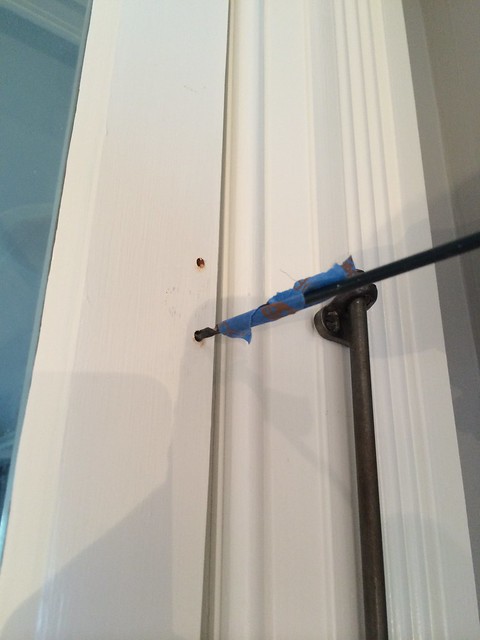
<p>When it comes time to drill the screw holes for the mounting bracket, it's best to put a little bit of tape on your drill bit to mark the depth you want to drill based on your screw length. I like to do this whenever I'm drilling a pilot hole on something that I could accidentally punch through the other side on, ruining my day and possibly my life.</p>
<p>
</p>
<div class="MediaContainer PhotoContainer"><a href="https://farm4.staticflickr.com/3859/14979397982_6ff83b540d_z.jpg" rel="PhotoPopup" popupheight="640" popupwidth="480"><img alt="" src="https://farm4.staticflickr.com/3859/14979397982_6ff83b540d.jpg" width="375" height="500" style="border-width: 0px; border-style: solid;" /></a></div>
<p>Once your pilot holes are in place, simply drive your screws to secure the mount.</p>
<p>The final step is simple. Position your middle support bracket where it will not impede the function of the lift, drill pilot holes, and attach the final support with your screws...</p>
<p>
</p>
<div class="MediaContainer PhotoContainer"><a href="https://farm6.staticflickr.com/5556/14793137358_98d55c7639_z.jpg" rel="PhotoPopup" popupheight="640" popupwidth="480"><img alt="" src="https://farm6.staticflickr.com/5556/14793137358_98d55c7639.jpg" width="375" height="500" style="border-width: 0px; border-style: solid;" /></a></div>
<p>...then take a step back to admire your fully functional transom window lift.&nbsp;</p>
<p>
</p>
<div class="MediaContainer PhotoContainer"><a href="https://farm6.staticflickr.com/5575/14976647181_a46a1c4cd9_z.jpg" rel="PhotoPopup" popupheight="640" popupwidth="480"><img alt="" src="https://farm6.staticflickr.com/5575/14976647181_a46a1c4cd9.jpg" width="375" height="500" style="border-width: 0px; border-style: solid;" /></a></div>
<p>I believe the transom lift hardware is actually one of the more rare items in today's old homes, as they're fairly delicate and many original lifts have been damaged and removed over the years. I've only seen a handful in all of the old homes and buildings we've been through, and most of those are completely painted over and barely or non functional.</p>
<p>I'm very proud to have not only made our transom windows functional, but to have also built such an accurate reproduction of our other transom window that future owners of our home may mistake it for an original elements...at least until they read our blog. ;-)</p><p><a href="https://www.oldtownhome.com/2014/8/20/Throw-it-Over-the-Transom-and-See-What-Happens/">Read Full Post</a></p>]]></content>
    <category term="Hardware" />
    <category term="Header Image" />
    <category term="Master Bathroom" />
    <category term="Transoms" />
    <PostImage>https://farm4.staticflickr.com/3880/14980360485_e4df8d1bf9.jpg</PostImage>
    <media:thumbnail url="https://farm4.staticflickr.com/3880/14980360485_e4df8d1bf9_t.jpg" />
    <ExtensionElements>
      <Item>PostImage</Item>
      <Item>media:thumbnail</Item>
    </ExtensionElements>
  </entry>
  <entry>
    <guid>5430a5b5-baad-4cd8-b8c7-c6b53f228543</guid>
    <id>https://www.oldtownhome.com/2013/5/8/Deep-Dark-Bathroom-Fixture-Secrets-Revealed/</id>
    <title>Deep, Dark, Bathroom Fixture Secrets Revealed</title>
    <summary type="html"><![CDATA[<p>Not to be too sensationalist with a post title, but I have an embarrassing admission to make. We've aired a few dirty secrets here on the blog in the past, and I think it's about time we publicly own up to this little known fact that both rivals and contributes to the <a href="http://www.oldtownhome.com/2013/1/7/Basement-Clean-Up-One-Small-Step/">hot mess that is our basement</a>. This little secret sits in boxes covered in dust, tucked away in a dark corner of shelving having not seen their intended use in years.</p><p>
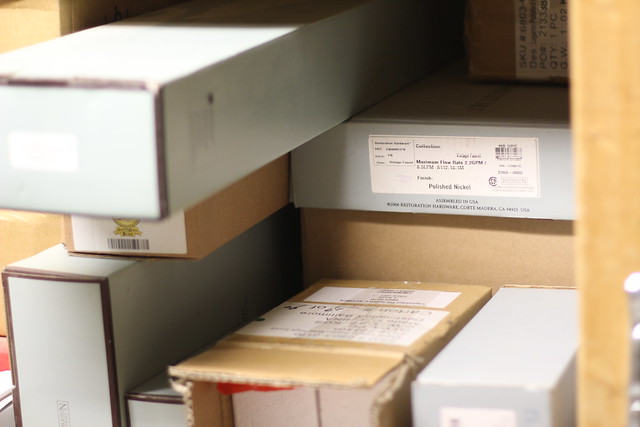
</p><div class="MediaContainer PhotoContainer"><a href="http://farm8.staticflickr.com/7377/8719478653_b677a51276_z.jpg" rel="PhotoPopup" popupheight="427" popupwidth="640"><img alt="" src="https://farm8.staticflickr.com/7377/8719478653_b677a51276.jpg" width="500" height="333" style="border-width: 0px; border-style: solid;"></a></div><p>Our secret? We're slow at renovating. We're also terrible at estimating project timelines. So much so, that we purchased the majority of our master bathroom hardware nearly five years ago. Yes, you read that right. During the summer of 2008, spurred on by a mean deal and a healthy dose of na&iuml;vet&eacute;, we bit the bullet and purchased a couple thousand dollars worth of bathroom hardware and accessories, because we were <em>sure</em> that we'd be renovating...and completing...our master bathroom in just a matter of a few short months. That was a long. time. ago.</p><p>Fast forward roughly 1,800 days (or 2,592,000 minutes if I want to feel really bad about the situation) and these boxed polished nickel friends of ours are sad, lonely reminders of what might have been and could hopefully be.</p><p>
</p><div class="MediaContainer PhotoContainer"><a href="http://farm8.staticflickr.com/7303/8720602596_fe199fe59d_z.jpg" rel="PhotoPopup" popupheight="427" popupwidth="640"><img alt="" src="https://farm8.staticflickr.com/7303/8720602596_fe199fe59d.jpg" width="500" height="333" style="border-width: 0px; border-style: solid;"></a></div><p>From time to time I venture down into our crowded basement and dig through the stacks of boxes to pay these lonely friends a little visit. I open the boxes and brush off a piece or two, just to check in on our purchase, but mostly to ensure our selections still jive with our design aesthetic.</p> <a href="https://www.oldtownhome.com/2013/5/8/Deep-Dark-Bathroom-Fixture-Secrets-Revealed/">more</a>]]></summary>
    <published>2013-05-08T20:02:00.000-04:00</published>
    <updated>2013-05-08T20:02:00.000-04:00</updated>
    <link rel="alternate" href="https://www.oldtownhome.com/2013/5/8/Deep-Dark-Bathroom-Fixture-Secrets-Revealed/" />
    <author>
      <name>Wendy</name>
    </author>
    <content type="html"><![CDATA[<p>Not to be too sensationalist with a post title, but I have an embarrassing admission to make. We've aired a few dirty secrets here on the blog in the past, and I think it's about time we publicly own up to this little known fact that both rivals and contributes to the <a href="http://www.oldtownhome.com/2013/1/7/Basement-Clean-Up-One-Small-Step/">hot mess that is our basement</a>. This little secret sits in boxes covered in dust, tucked away in a dark corner of shelving having not seen their intended use in years.</p>
<p>
</p>
<div class="MediaContainer PhotoContainer"><a href="http://farm8.staticflickr.com/7377/8719478653_b677a51276_z.jpg" rel="PhotoPopup" popupheight="427" popupwidth="640"><img alt="" src="https://farm8.staticflickr.com/7377/8719478653_b677a51276.jpg" width="500" height="333" style="border-width: 0px; border-style: solid;"></a></div>
<p>Our secret? We're slow at renovating. We're also terrible at estimating project timelines. So much so, that we purchased the majority of our master bathroom hardware nearly five years ago. Yes, you read that right. During the summer of 2008, spurred on by a mean deal and a healthy dose of na&iuml;vet&eacute;, we bit the bullet and purchased a couple thousand dollars worth of bathroom hardware and accessories, because we were <em>sure</em> that we'd be renovating...and completing...our master bathroom in just a matter of a few short months. That was a long. time. ago.</p>
<p>Fast forward roughly 1,800 days (or 2,592,000 minutes if I want to feel really bad about the situation) and these boxed polished nickel friends of ours are sad, lonely reminders of what might have been and could hopefully be.</p>
<p>
</p>
<div class="MediaContainer PhotoContainer"><a href="http://farm8.staticflickr.com/7303/8720602596_fe199fe59d_z.jpg" rel="PhotoPopup" popupheight="427" popupwidth="640"><img alt="" src="https://farm8.staticflickr.com/7303/8720602596_fe199fe59d.jpg" width="500" height="333" style="border-width: 0px; border-style: solid;"></a></div>
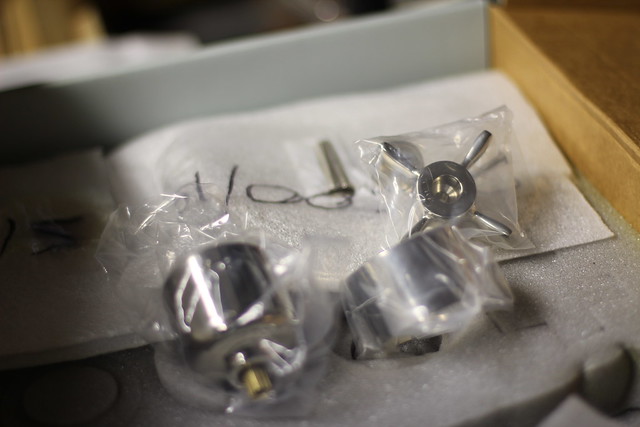
<p>From time to time I venture down into our crowded basement and dig through the stacks of boxes to pay these lonely friends a little visit. I open the boxes and brush off a piece or two, just to check in on our purchase, but mostly to ensure our selections still jive with our design aesthetic.</p>
<p>Lucky for me (and for my spouse) I'm still quite satisfied with our choices. These various accessories and hardware elements came from Restoration Hardware, way back when Old Town still had a Restoration Hardware just a short walk from our home. That fateful day many years ago their summer bathroom sale signage called to us like a siren song to pirates on a pillaging voyage down King Street, boasting discounts of 30%, beckoning us closer and closer as thoughts of a luxurious master bathroom clouded our judgement. The purchase of bath hardware, normally reserved for the last moments of a renovation, was an opportunity that was simply too good to pass up.</p>
<p>With so many options out there for bath hardware, making a decision on what brand and style to purchase can be quite a difficult proposition. We settled on using Restoration Hardware items in our master after using them in a smaller quantity in the guest bathroom, and we've been quite happy with both their look and performance. The hardware is heavy and solid enough to feel like very high end fixtures, but the sale-adjusted price tags bring the overall cost into a more reasonable range. It's more expensive than your typical entry level bath fixtures or those that you'll find at big box stores, but it's a fraction of the cost of places like Waterworks, where you can drop five Gs on a thermostatic pressure balanced control valve without batting an eyelash.</p>
<p>
</p>
<div class="MediaContainer PhotoContainer"><a href="http://farm8.staticflickr.com/7314/8719476765_70b5bccde6_z.jpg" rel="PhotoPopup" popupheight="427" popupwidth="640"><img alt="" src="https://farm8.staticflickr.com/7314/8719476765_70b5bccde6.jpg" width="500" height="333" style="border-width: 0px; border-style: solid;"></a></div>
<p>After much deliberation on style, we settled on not one option but a mix and match of two styles for our master bathroom to be -- known in RH speak as "Lugarno" and "Vintage." Umm seriously, how posh and pretentious does that sound?</p>
<p>
</p>
<div class="MediaContainer PhotoContainer"><a href="http://farm8.staticflickr.com/7288/8719516403_cc6699d3bb_z.jpg" rel="PhotoPopup" popupheight="312" popupwidth="640"><img alt="" src="https://farm8.staticflickr.com/7288/8719516403_cc6699d3bb.jpg" width="500" height="244" style="border-width: 0px; border-style: solid;"></a></div>
<p>"Why two styles," you might wonder? Because I'm picky like that. I didn't like the faucet in the Lugarno collection (the "mouth" looked too wide for me), and I didn't care for anything but the faucet in the Vintage collection. Some might call this "high maintenance," but I like to think of it as "deliberate." (Right, Alex?) After all, you're talking to the same woman who <a href="http://www.oldtownhome.com/2013/1/10/Goose-or-Telephone/">agonized over claw foot tub faucets, because one style looked to phallic.</a></p>
<p>It was not an impulsive decision in the least bit. In reality we, and by we I mean "I", absolutely agonized over this seemingly simple but life altering decision. I knew I'd need to look at these hardware pieces each and every day once they're finally installed, so I had to be secure and happy with my choice.&nbsp;</p>
<p>
</p>
<div class="MediaContainer PhotoContainer"><a href="http://farm8.staticflickr.com/7375/8719476911_b7bcac8423_z.jpg" rel="PhotoPopup" popupheight="427" popupwidth="640"><img alt="" src="https://farm8.staticflickr.com/7375/8719476911_b7bcac8423.jpg" width="500" height="333" style="border-width: 0px; border-style: solid;"></a></div>
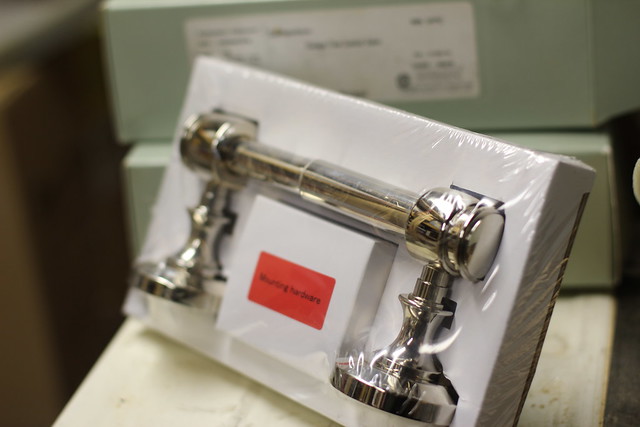
<p>So here we are, years after our purchase, waiting for the day we can eventually put these bad boys to use to do such amazing tasks as deliver water, support hanging towels, or provide a convenient method for toilet paper dispensing.</p>
<p>
</p>
<div class="MediaContainer PhotoContainer"><a href="http://farm8.staticflickr.com/7412/8720604088_4ebec82487_z.jpg" rel="PhotoPopup" popupheight="427" popupwidth="640"><img alt="" src="https://farm8.staticflickr.com/7412/8720604088_4ebec82487.jpg" width="500" height="333" style="border-width: 0px; border-style: solid;"></a></div>
<p>We've got all we need to move forward, but as the best instructions always say, "Just add bathroom." Well, something like that.</p>
<p>Some day, hopefully sooner than in five more years, we hope to be at a point where we might be able to install these accessories. And no, I'm not talking about installing them in some random place in our basement or kitchen, I'm talking about actually installing them in a master bathroom. A girl can dream!</p>
<p>
</p>
<div class="MediaContainer PhotoContainer"><a href="http://farm8.staticflickr.com/7434/8720601418_cfa77c5c05_z.jpg" rel="PhotoPopup" popupheight="427" popupwidth="640"><img alt="" src="https://farm8.staticflickr.com/7434/8720601418_cfa77c5c05.jpg" width="500" height="333" style="border-width: 0px; border-style: solid;"></a></div>
<p>If there's any benefit to doing a renovation where you purchase the expensive hardware elements months or years before you ever get to a point where you can use them, it does do wonders in making your project seem far more affordable and lower cost. No, not actually lower cost, but simply spread out over a sufficient number of years that you forget how much you actually spent. Either that or the fact that things probably cost less years ago when we actually purchased the goods. Yeah, I'll justify it to myself that way, but it doesn't mean I'll be any more happy about it.</p>
<p>Do you have any juicy deep and dark renovation secrets that you're in the mood to share? This is a supportive environment, not one fraught with judgement, so please feel free to spill the beans. I promise I'll leave a very nice response even if we're all silently judging you while doing it.&nbsp;</p><p><a href="https://www.oldtownhome.com/2013/5/8/Deep-Dark-Bathroom-Fixture-Secrets-Revealed/">Read Full Post</a></p>]]></content>
    <category term="Basement" />
    <category term="Hardware" />
    <category term="Header Image" />
    <category term="Master Bathroom" />
    <category term="Projects:Home Improvement" />
    <PostImage>http://farm8.staticflickr.com/7334/8720621962_0ae167d227.jpg</PostImage>
    <media:thumbnail url="https://farm8.staticflickr.com/7334/8720621962_0ae167d227_t.jpg" />
    <ExtensionElements>
      <Item>PostImage</Item>
      <Item>media:thumbnail</Item>
    </ExtensionElements>
  </entry>
  <entry>
    <guid>9992d01e-bda9-41b8-8776-f800f7df5c14</guid>
    <id>https://www.oldtownhome.com/2013/1/10/Goose-or-Telephone/</id>
    <title>Goose or Telephone?</title>
    <summary type="html"><![CDATA[<p>We've been making some big decisions in our house of late, many of which center around our never ending story of the master bathroom project. Though some of the big choices have come rather easy (of course we'd like a claw foot tub), one selection in particular I've been agonizing over for nearly the last decade is the choice between goose or telephone. Say what? Do I have you a little confused as to how a&nbsp;decision&nbsp;between&nbsp;a goose or a telephone might be a critical element in a bathroom renovation worthy debate for nearly 10 years? Trust me, it makes sense. I'm actually referring to the style of faucet we'll use for our salvaged claw foot tub. </p><p>Before I get ahead of myself, let me back up for a moment and share the story of how our claw foot tub came to our home, and how it&rsquo;s been quietly slumbering in our basement for the last nine years. </p><p>
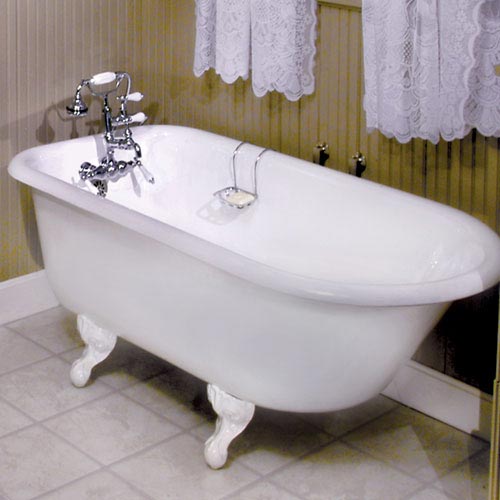
</p><div class="MediaContainer PhotoContainer"><a href="http://farm6.staticflickr.com/5226/5643584053_de2d9c22b2_z.jpg" rel="PhotoPopup" popupheight="640" popupwidth="480"><img alt="" src="https://farm6.staticflickr.com/5226/5643584053_de2d9c22b2.jpg" width="375" height="500" style="border-width: 0px; border-style: solid;"></a></div><p>As you may know, new cast iron tubs aren't cheap. Depending on style, size, and how they're made, they can easily run from about $1,000 on up to $3,000 and more. For the basic style that we like, $1,000 is a pretty good bet.</p><p>
</p><div class="MediaContainer PhotoContainer"><a href="http://farm9.staticflickr.com/8095/8367933132_b9a1931a99.jpg" rel="PhotoPopup" popupheight="500" popupwidth="500"><img alt="" src="https://farm9.staticflickr.com/8095/8367933132_b9a1931a99.jpg" width="500" height="500" style="border-width: 0px; border-style: solid;"></a></div><p>Though we knew we could buy a new tub, we also knew how many deals there were to be had with older tubs. The key here was to find an old tub that was in decent shape and wouldn't break the bank. We also really liked the idea of reusing an old tub that just needed a new home. The trick was simple, we had to find that good deal.</p> <a href="https://www.oldtownhome.com/2013/1/10/Goose-or-Telephone/">more</a>]]></summary>
    <published>2013-01-10T11:30:00.000-05:00</published>
    <updated>2013-01-10T11:30:00.000-05:00</updated>
    <link rel="alternate" href="https://www.oldtownhome.com/2013/1/10/Goose-or-Telephone/" />
    <author>
      <name>Wendy</name>
    </author>
    <content type="html"><![CDATA[<p>We've been making some big decisions in our house of late, many of which center around our never ending story of the master bathroom project. Though some of the big choices have come rather easy (of course we'd like a claw foot tub), one selection in particular I've been agonizing over for nearly the last decade is the choice between goose or telephone. Say what? Do I have you a little confused as to how a&nbsp;decision&nbsp;between&nbsp;a goose or a telephone might be a critical element in a bathroom renovation worthy debate for nearly 10 years? Trust me, it makes sense. I'm actually referring to the style of faucet we'll use for our salvaged claw foot tub. </p>
<p>Before I get ahead of myself, let me back up for a moment and share the story of how our claw foot tub came to our home, and how it&rsquo;s been quietly slumbering in our basement for the last nine years. </p>
<p>
</p>
<div class="MediaContainer PhotoContainer"><a href="http://farm6.staticflickr.com/5226/5643584053_de2d9c22b2_z.jpg" rel="PhotoPopup" popupheight="640" popupwidth="480"><img alt="" src="https://farm6.staticflickr.com/5226/5643584053_de2d9c22b2.jpg" width="375" height="500" style="border-width: 0px; border-style: solid;"></a></div>
<p>As you may know, new cast iron tubs aren't cheap. Depending on style, size, and how they're made, they can easily run from about $1,000 on up to $3,000 and more. For the basic style that we like, $1,000 is a pretty good bet.</p>
<p>
</p>
<div class="MediaContainer PhotoContainer"><a href="http://farm9.staticflickr.com/8095/8367933132_b9a1931a99.jpg" rel="PhotoPopup" popupheight="500" popupwidth="500"><img alt="" src="https://farm9.staticflickr.com/8095/8367933132_b9a1931a99.jpg" width="500" height="500" style="border-width: 0px; border-style: solid;"></a></div>
<p>Though we knew we could buy a new tub, we also knew how many deals there were to be had with older tubs. The key here was to find an old tub that was in decent shape and wouldn't break the bank. We also really liked the idea of reusing an old tub that just needed a new home. The trick was simple, we had to find that good deal.</p>
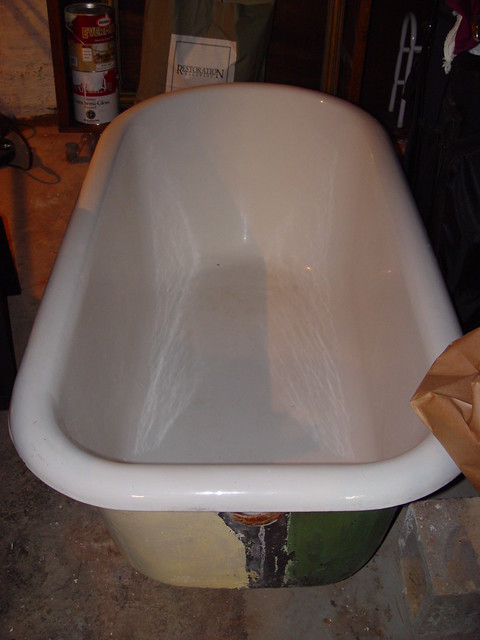
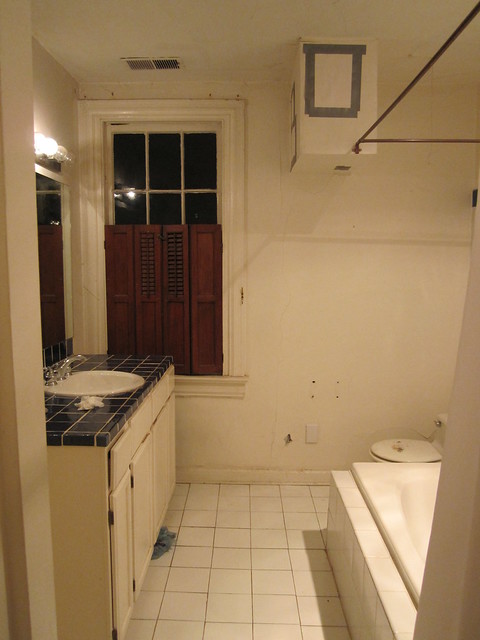
<p>Back in the summer of  2003, we were just a few months into home ownership. Our energy knew no bounds, but unfortunately our budget was quite the opposite. We turned to second hand stores and eBay as primary sources for home furnishings, and back in those days it felt like eBay was absolutely full of wonderful finds and great deals . While scouring eBay one night, Alex started perusing the claw foot tub selection, thinking ahead even back then to the day that we could overhaul the ugly 1980s master bathroom.</p>
<p>
</p>
<div class="MediaContainer PhotoContainer"><a href="http://farm6.staticflickr.com/5024/5656172331_8b1d5cda90_z.jpg" rel="PhotoPopup" popupheight="640" popupwidth="480"><img alt="" src="https://farm6.staticflickr.com/5024/5656172331_8b1d5cda90.jpg" width="375" height="500" style="border-width: 0px; border-style: solid;"></a></div>
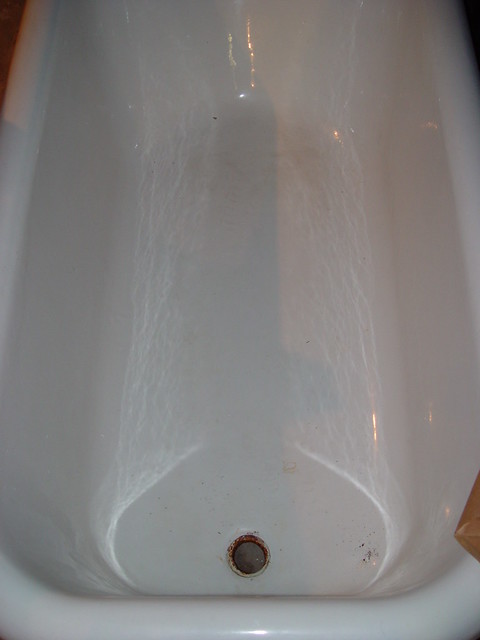
<p>Amid the large selection of damaged and rough around the edges options, he spotted one tub that looked to be in great condition. The tub had no bids but a starting price of just $150. This quickly attracted his attention, but his enthusiasm waned when we noticed the &ldquo;local pickup only&rdquo; disclaimer in the description. Since we don't have photos or screen shots of the process (this was back in 2003, after all), I'll pepper in the shots that we do have from that time. This photo shows what decent shape the interior of the tub is still in.</p>
<p>
</p>
<div class="MediaContainer PhotoContainer"><a href="http://farm6.staticflickr.com/5184/5643584403_3d84621e06_z.jpg" rel="PhotoPopup" popupheight="640" popupwidth="480"><img alt="" src="https://farm6.staticflickr.com/5184/5643584403_3d84621e06.jpg" width="375" height="500" style="border-width: 0px; border-style: solid;"></a></div>
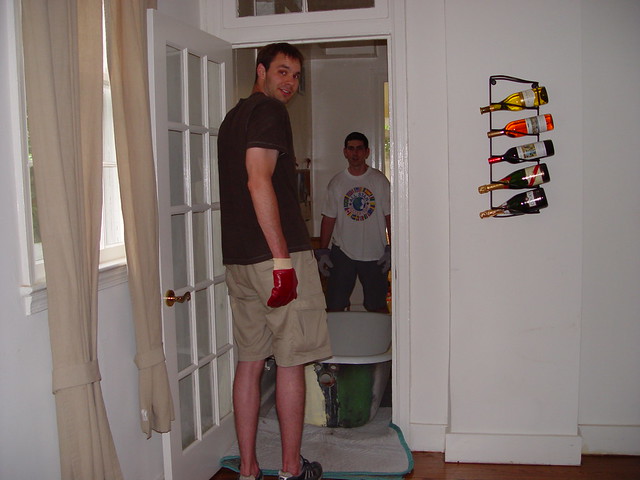
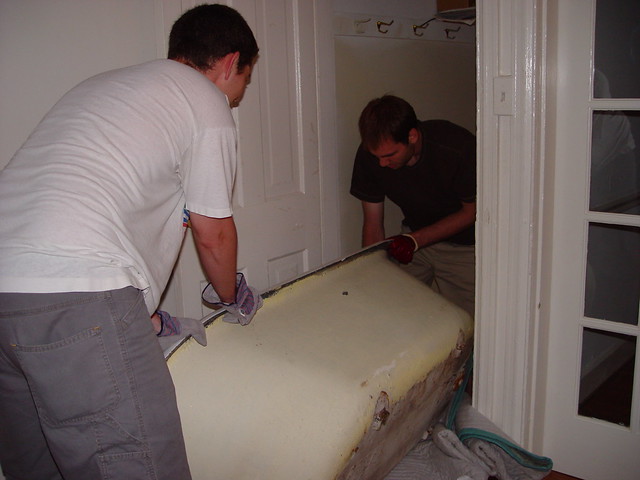
<p>But the stars must have aligned that day, because upon further inspection, he excitedly learned that this tub's location was listed as "Alexandria, Virginia"! Although we knew our bathroom project was years down the road, we simply couldn&rsquo;t pass up such a great deal. After securing the tub, we rented a truck from The Home Depot, enlisted the help of our friend Bull (yes, like from Night Court, a nickname earned when our 6'6" friend shaved his head in college), and drove to neighboring Del Ray (a neighborhood in Alexandria, adjacent to Old Town), where the tub was located. Here's Bull and Alex working to bring the tub in.</p>
<p>
</p>
<div class="MediaContainer PhotoContainer"><a href="http://farm6.staticflickr.com/5229/5643496675_e989691b92_z.jpg" rel="PhotoPopup" popupheight="480" popupwidth="640"><img alt="" src="https://farm6.staticflickr.com/5229/5643496675_e989691b92.jpg" width="500" height="375" style="border-width: 0px; border-style: solid;"></a></div>
<p>We met the current tub's owners in the yard of their home. They were flippers working on renovating the home and were discarding the tub in favor of a new fiberglass tub. Though we were a little sad for the bungalow they were working on, their loss was our gain and we hauled off our hefty addition.</p>
<p>Although getting the tub back to our house was relatively uneventful, moving the tub downstairs into our basement required the strength of ten men. The tub itself is in the neighborhood of 300-350 pounds, but the lip of the tub offers an easy carry handle. The problem comes when the tub needs to fit through the doorway that's more narrow than the tub is wide, and the tub needs to move onto it's side.&nbsp;</p>
<p>
</p>
<div class="MediaContainer PhotoContainer"><a href="http://farm6.staticflickr.com/5065/5643496973_bc0a32b2e8_z.jpg" rel="PhotoPopup" popupheight="480" popupwidth="640"><img alt="" src="https://farm6.staticflickr.com/5065/5643496973_bc0a32b2e8.jpg" width="500" height="375" style="border-width: 0px; border-style: solid;"></a></div>
<p>Somehow Bull and Alex, under my careful supervision, managed to wrangle this sucker down our rickety basement stairs without killing themselves. Here&rsquo;s a look at their victory celebration.</p>
<p>
</p>
<div class="MediaContainer PhotoContainer"><a href="http://farm6.staticflickr.com/5310/5643497917_7ff79334ab_z.jpg" rel="PhotoPopup" popupheight="480" popupwidth="640"><img alt="" src="https://farm6.staticflickr.com/5310/5643497917_7ff79334ab.jpg" width="500" height="375" style="border-width: 0px; border-style: solid;"></a></div>
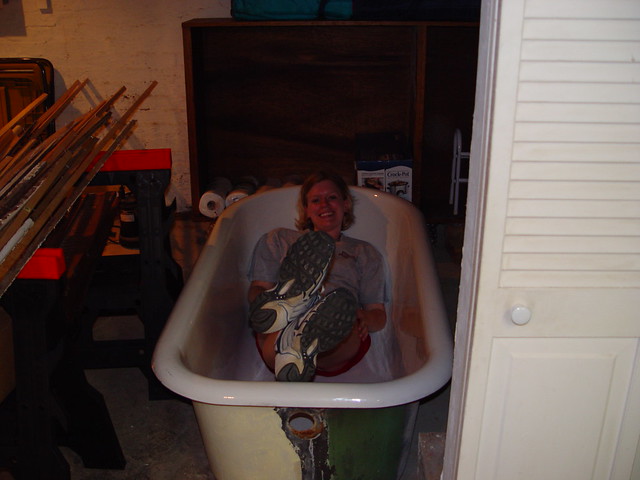
<p>I gave it the "dry fit" test, and was satisfied with what will be my future soaking tub.</p>
<p>
</p>
<div class="MediaContainer PhotoContainer"><a href="http://farm6.staticflickr.com/5222/5644066274_f1ebe82c00_z.jpg" rel="PhotoPopup" popupheight="480" popupwidth="640"><img alt="" src="https://farm6.staticflickr.com/5222/5644066274_f1ebe82c00.jpg" width="500" height="375" style="border-width: 0px; border-style: solid;"></a></div>
<p>This tub has sat in the same location now for nearly a decade, serving as a dust and junk collector, just waiting for its chance to be the center of attention in our new bathroom. You can barely see it buried below the mountain of junk in this photo from last year.&nbsp;</p>
<p>
</p>
<div class="MediaContainer PhotoContainer"><a href="http://farm8.staticflickr.com/7157/6638881423_b8c7e5ffb0_z.jpg" rel="PhotoPopup" popupheight="427" popupwidth="640"><img alt="" src="https://farm8.staticflickr.com/7157/6638881423_b8c7e5ffb0.jpg" width="500" height="333" style="border-width: 0px; border-style: solid;"></a></div>
<p>With the start of the New Year, we&rsquo;ve refocused our DIY ADD and are devoting our thoughts, plans, and time to taking on this project. Which brings us to present day.</p>
<p>While we plan out the look of the space, we knew it was high time to make a decision on the type of faucet we&rsquo;ll use for the tub. Ruling out deck mount options was relatively easy, as the access points are already located in the wall of the tub itself. Besides, deck mount options require a tub that's specifically designed with this in mind.</p>
<p>
</p>
<div class="MediaContainer PhotoContainer"><a href="http://farm9.staticflickr.com/8373/8366902207_e589dbcc4e_z.jpg" rel="PhotoPopup" popupheight="640" popupwidth="640"><img alt="" src="https://farm9.staticflickr.com/8373/8366902207_e589dbcc4e_m.jpg" width="240" height="240" style="border-width: 0px; border-style: solid;"></a></div>
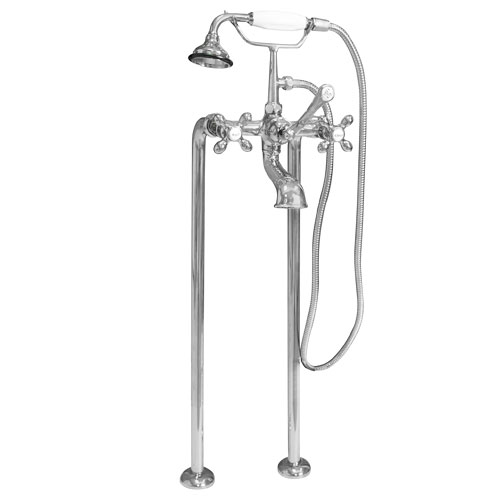
<p>Freestanding fixtures were also a consideration, but I wanted something more understated than that. Alex also has had a longstanding concern about using the freestanding fixtures that has to do with how easily they're supported and what sort of stress they put on the fittings. Not to mention the complication of needing to fill the existing supply holes in the wall of the tub.</p>
<p>
</p>
<div class="MediaContainer PhotoContainer"><a href="http://farm9.staticflickr.com/8044/8367962834_d3b23f73ff.jpg" rel="PhotoPopup" popupheight="500" popupwidth="500"><img alt="" src="https://farm9.staticflickr.com/8044/8367962834_d3b23f73ff_m.jpg" width="240" height="240" style="border-width: 0px; border-style: solid;"></a></div>
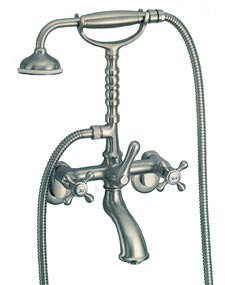
<p>That left us with the decision to mount the faucet in the existing holes, but we needed to decide on a style. Our options ranged primarily between a simple gooseneck faucet or the more commonly seen English style with telephone sprayer.</p>
<p>
</p>
<div class="MediaContainer PhotoContainer"><a href="http://farm9.staticflickr.com/8501/8366891205_ca1d4269f7.jpg" rel="PhotoPopup" popupheight="285" popupwidth="225"><img alt="" src="https://farm9.staticflickr.com/8501/8366891205_ca1d4269f7_m.jpg" width="189" height="240" style="border-width: 0px; border-style: solid;"></a>
<a href="http://farm9.staticflickr.com/8095/8365828746_55fd75ae34.jpg" rel="PhotoPopup" popupheight="500" popupwidth="500"><img alt="" src="https://farm9.staticflickr.com/8095/8365828746_55fd75ae34_m.jpg" width="240" height="240" style="border-width: 0px; border-style: solid;"></a></div>
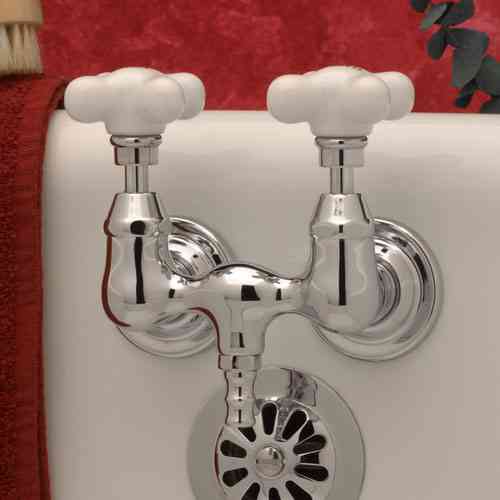
<p>We searched online and reviewed our various options. Of all the various styles there was one look in particular I didn&rsquo;t care for at all. The style of faucet that I just don't like are the ones with the &ldquo;downward spigots.&rdquo; These may be the most historically accurate, but perhaps it&rsquo;s my juvenile sense of humor that keeps me from liking these faucets. For some reason these spigots look way to phallic for my tastes. As I kept telling Alex when he'd suggest one of these faucets, &ldquo;No, I don't want any drippy penises in my tub!&rdquo; TMI? Sorry about that. He thinks I&rsquo;m crazy too.</p>
<p>
</p>
<div class="MediaContainer PhotoContainer"><a href="http://farm9.staticflickr.com/8097/8364757897_df44695c45.jpg" rel="PhotoPopup" popupheight="500" popupwidth="500"><img alt="" src="https://farm9.staticflickr.com/8097/8364757897_df44695c45.jpg" width="500" height="500" style="border-width: 0px; border-style: solid;"></a></div>
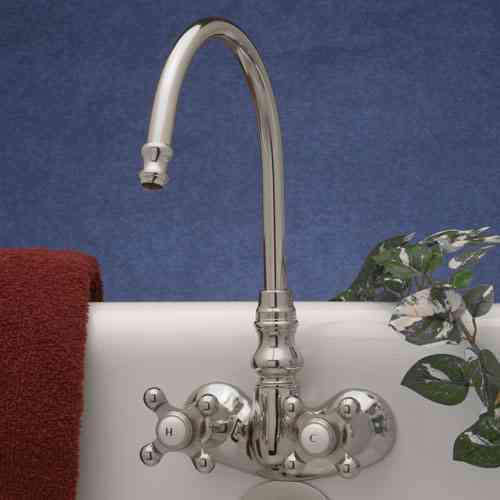
<p>On the other hand, I found I really liked the look of the wider mouthed spigot seen below. It&rsquo;s simple, almost utilitarian look really appealed to me. </p>
<p>
</p>
<div class="MediaContainer PhotoContainer"><a href="http://farm9.staticflickr.com/8234/8364796971_5844426df3.jpg" rel="PhotoPopup" popupheight="275" popupwidth="275"><img alt="" src="https://farm9.staticflickr.com/8234/8364796971_5844426df3.jpg" width="275" height="275" style="border-width: 0px; border-style: solid;"></a></div>
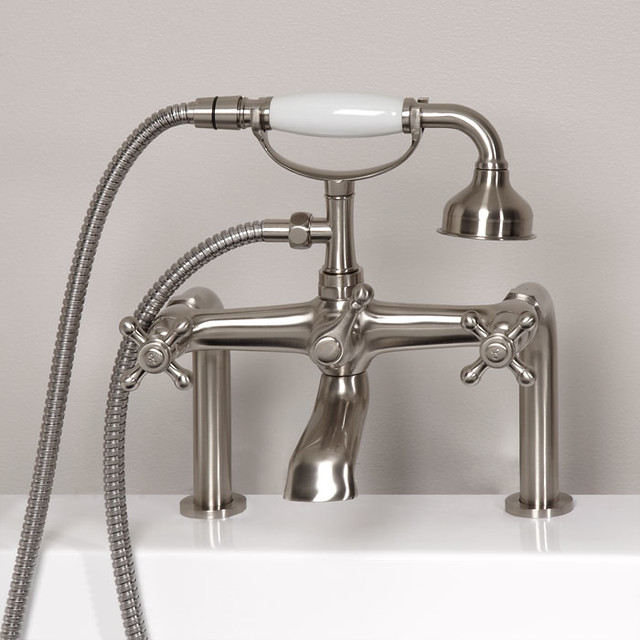
<p>Of the telephone style, it was easy to rule out those that were really large, overly complicated, and would take over as the focal point. I want the attention to be on the tub and bathroom, not on the hoses, levers, and pipes that make it all work.</p>
<p>
</p>
<div class="MediaContainer PhotoContainer"><a href="http://farm9.staticflickr.com/8096/8367933154_ec35ca925f.jpg" rel="PhotoPopup" popupheight="300" popupwidth="300"><img alt="" src="https://farm9.staticflickr.com/8096/8367933154_ec35ca925f.jpg" width="300" height="300" style="border-width: 0px; border-style: solid;"></a></div>
<p>After a lot of browsing, I found one tub mounted telephone style that was more understated. It&rsquo;s available in a polished nickel finish (the finish we tend to gravitate towards), and the price was more reasonable than many I&rsquo;ve seen over the years.  Hmm, maybe this telephone thing isn&rsquo;t so bad after all.</p>
<p>Several years ago I was 100% certain I wanted to go with the gooseneck, largely due to the size and cost of the English with telephone style, and my general dislike of the weird telephone cord that lays flat against the tub wall. But after using a handheld sprayer on our trip to Budapest this year, along with considering how much easier it will be to clean the tub if we have a sprayer, this option was suddenly more appealing to me. </p>
<p>With this research in hand, I hemmed and I hawed. I flipped and I flopped. And after enough internal debate to put congress to shame, I finally pulled the trigger. We&rsquo;re adding a phone to our bathroom, and not one that will make outbound calls. This beauty has been ordered, and is on her way to Old Town Home.</p>
<p>
</p>
<div class="MediaContainer PhotoContainer"><a href="http://farm9.staticflickr.com/8098/8364757881_1a85195feb.jpg" rel="PhotoPopup" popupheight="500" popupwidth="500"><img alt="" src="https://farm9.staticflickr.com/8098/8364757881_1a85195feb.jpg" width="500" height="500" style="border-width: 0px; border-style: solid;"></a></div>
<p>I&rsquo;m really excited to have finally made a selection. It feels like we&rsquo;re finally making the tough decisions that have presented mental roadblocks for us in our bathroom planning. Though this finish fixture piece of hardware has been ordered, don't let it fool you, we're nowhere close to install (I mean, NOWHERE)! But I&rsquo;m currently working on my full design plan for the space, and can&rsquo;t wait to share it with you. </p>
<p>Does anyone else own a claw foot tub? I&rsquo;d be curious to know how you like it, and what style faucet you use and prefer. Am I alone in my &ldquo;paralysis by analysis&rdquo; when it comes to making design choices? If you&rsquo;re stuck on something, I&rsquo;d love to know what&rsquo;s holding you back, and/or how you finally moved forward on a daunting renovation.</p><p><a href="https://www.oldtownhome.com/2013/1/10/Goose-or-Telephone/">Read Full Post</a></p>]]></content>
    <category term="Clawfoot Tub" />
    <category term="Hardware" />
    <category term="Header Image" />
    <category term="Master Bathroom" />
    <PostImage>http://farm9.staticflickr.com/8213/8368117432_37764f963d_n.jpg</PostImage>
    <media:thumbnail url="https://farm9.staticflickr.com/8213/8368117432_37764f963d_t.jpg" />
    <ExtensionElements>
      <Item>PostImage</Item>
      <Item>media:thumbnail</Item>
    </ExtensionElements>
  </entry>
</feed>