<?xml version="1.0" encoding="utf-8"?>
<feed xmlns="http://www.w3.org/2005/Atom" xmlns:media="http://search.yahoo.com/mrss/">
  <title>Old Town Home Category: 'Entryway'</title>
  <updated>2013-03-04T10:22:00.000-05:00</updated>
  <id>http://www.oldtownhome.com/entryway/index.atom</id>
  <link rel="alternate" href="http://www.oldtownhome.com/entryway/index.atom" />
  <author>
    <name>Alex and Wendy</name>
    <uri>http://www.oldtownhome.com/</uri>
    <email>wendy@oldtownhome.com</email>
  </author>
  <entry>
    <guid>917719c3-fdb7-45aa-bbd2-9f1a5f6deda4</guid>
    <id>https://www.oldtownhome.com/2013/3/4/Boobs-in-the-Hizzouse-You-Voted-Im-Listening/</id>
    <title>Boobs in the Hizzouse: You Voted, I'm Listening</title>
    <summary type="html"><![CDATA[<p>The boob is staying. Or at least that's what the popular vote dictates, much to my dismay. I'd like to thank everyone who voted in last weeks <a href="http://www.oldtownhome.com/2013/2/28/Reader-Poll-Bare-or-Covered-Up-That-is-the-Question/index.aspx">"au natural or cover that shit up" vote</a> in regards to our feminine looking (in my opinion) Victorian doorstop, despite the fact that my preference of breaking out the paint didn't come out on top. And to be honest, that makes me a little grumpy since I really like to be right.</p><p>
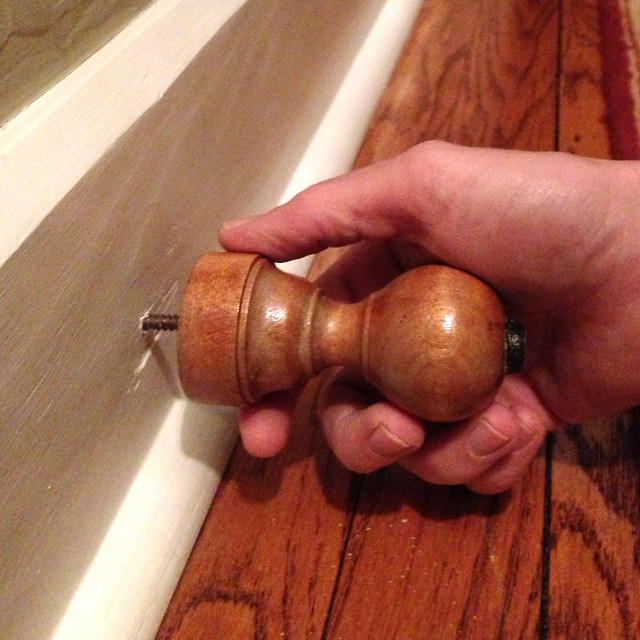
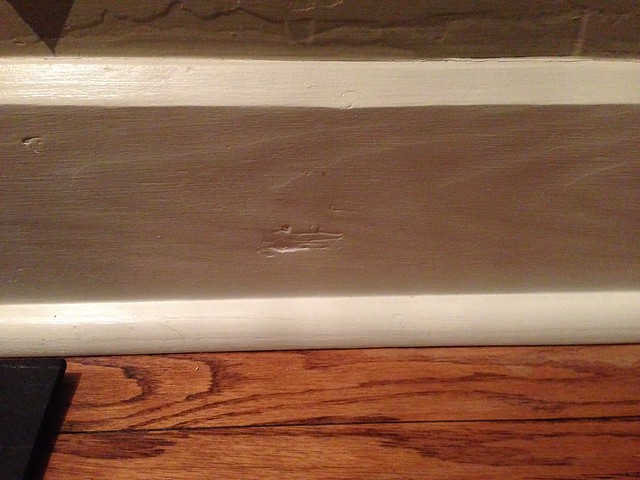
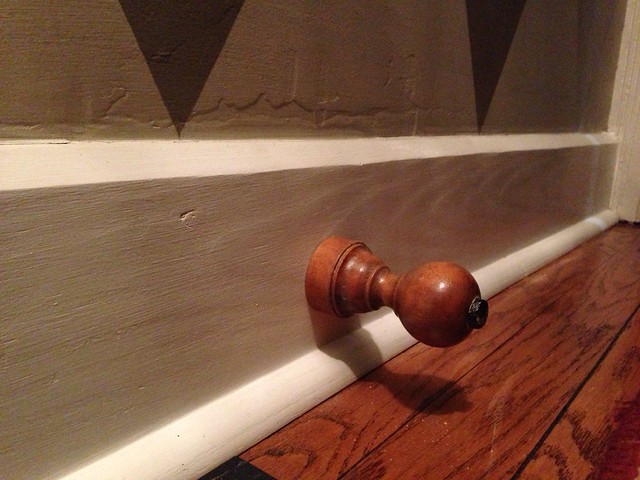
</p><div class="MediaContainer PhotoContainer"><a href="http://farm9.staticflickr.com/8376/8514947073_e6db4457b7_z.jpg" rel="PhotoPopup" popupheight="640" popupwidth="640"><img alt="" src="https://farm9.staticflickr.com/8376/8514947073_e6db4457b7.jpg" width="500" height="500" style="border-width: 0px; border-style: solid;"></a></div><p>Sore loser? Maybe. But given more than 200 readers took the time to voice their opinion, I have to respect that and go against my instinct to paint the doorstop. Naked boobs are in the hizzouse, and they're staying. For the time being at least. Oh the horror.</p><p>
</p><div class="MediaContainer PhotoContainer"><a href="http://farm9.staticflickr.com/8090/8514813381_df6cbf0aec_z.jpg" rel="PhotoPopup" popupheight="640" popupwidth="427"><img alt="" src="https://farm9.staticflickr.com/8090/8514813381_df6cbf0aec.jpg" width="333" height="500" style="border-width: 0px; border-style: solid;"></a></div><p>We still may experiment a bit, whether it be wrapping the door stop in white tissue paper (thanks to a commenter for that awesome idea) or even Photoshopping it to see how the color change might play out, but sadly I don't see a full blown makeover (and by that I mean a coat of paint)&nbsp;in the near future, I guess that's what I get for allowing us to put the decision in the hands of our readers.</p><p>In all honestly, I find the idea of inviting readers to vote on aspects of our home to be a lot of fun. We already welcome you into our home and lives in a virtual way most days of the week, and share the things we work on or plan to work on, so why not involve you all in some of the decision making that goes along with the process?</p> <a href="https://www.oldtownhome.com/2013/3/4/Boobs-in-the-Hizzouse-You-Voted-Im-Listening/">more</a>]]></summary>
    <published>2013-03-04T10:22:00.000-05:00</published>
    <updated>2013-03-04T10:22:00.000-05:00</updated>
    <link rel="alternate" href="https://www.oldtownhome.com/2013/3/4/Boobs-in-the-Hizzouse-You-Voted-Im-Listening/" />
    <author>
      <name>Wendy</name>
    </author>
    <content type="html"><![CDATA[<p>The boob is staying. Or at least that's what the popular vote dictates, much to my dismay. I'd like to thank everyone who voted in last weeks <a href="http://www.oldtownhome.com/2013/2/28/Reader-Poll-Bare-or-Covered-Up-That-is-the-Question/index.aspx">"au natural or cover that shit up" vote</a> in regards to our feminine looking (in my opinion) Victorian doorstop, despite the fact that my preference of breaking out the paint didn't come out on top. And to be honest, that makes me a little grumpy since I really like to be right.</p>
<p>
</p>
<div class="MediaContainer PhotoContainer"><a href="http://farm9.staticflickr.com/8376/8514947073_e6db4457b7_z.jpg" rel="PhotoPopup" popupheight="640" popupwidth="640"><img alt="" src="https://farm9.staticflickr.com/8376/8514947073_e6db4457b7.jpg" width="500" height="500" style="border-width: 0px; border-style: solid;"></a></div>
<p>Sore loser? Maybe. But given more than 200 readers took the time to voice their opinion, I have to respect that and go against my instinct to paint the doorstop. Naked boobs are in the hizzouse, and they're staying. For the time being at least. Oh the horror.</p>
<p>
</p>
<div class="MediaContainer PhotoContainer"><a href="http://farm9.staticflickr.com/8090/8514813381_df6cbf0aec_z.jpg" rel="PhotoPopup" popupheight="640" popupwidth="427"><img alt="" src="https://farm9.staticflickr.com/8090/8514813381_df6cbf0aec.jpg" width="333" height="500" style="border-width: 0px; border-style: solid;"></a></div>
<p>We still may experiment a bit, whether it be wrapping the door stop in white tissue paper (thanks to a commenter for that awesome idea) or even Photoshopping it to see how the color change might play out, but sadly I don't see a full blown makeover (and by that I mean a coat of paint)&nbsp;in the near future, I guess that's what I get for allowing us to put the decision in the hands of our readers.</p>
<p>In all honestly, I find the idea of inviting readers to vote on aspects of our home to be a lot of fun. We already welcome you into our home and lives in a virtual way most days of the week, and share the things we work on or plan to work on, so why not involve you all in some of the decision making that goes along with the process?</p>
<p>As novel as it may be, the idea of allowing someone else, or a group of someone elses, to make difficult or even simple decisions at critical points is obviously not a new concept. There are movies, books, websites, and even entire civilizations dedicated to this approach to decision making, but our blog and a relatively consistent daily readership has opened this world for us to implement in our home. Though I may not be particularly thrilled with the outcome of the poll, it's very cool to me that so many people would take the time to register their opinion on something as seemingly mundane as whether or not to paint a doorstop. After all, like any one of the thousands of large or small decisions needed in a home renovation or DIY project, something so small and theoretically unworthy of real debate can easily cause hangups and rethinks.</p>
<p>Perhaps this new mechanism for decision making could have greatly&nbsp;benefited&nbsp;our cause back when we were trying to decide what colors to paint our old bedroom when I took the unfortunate misstep of "ripe wheat."&nbsp;</p>
<p>
</p>
<div class="MediaContainer PhotoContainer"><a href="http://farm6.staticflickr.com/5261/5646175180_bc43c6fa69_z.jpg" rel="PhotoPopup" popupheight="480" popupwidth="640"><img alt="" src="https://farm6.staticflickr.com/5261/5646175180_bc43c6fa69.jpg" width="500" height="375" style="border-width: 0px; border-style: solid;"></a></div>
<p>Or maybe it could have steered us in a different direction when we opted early on to strip every door casing, window casing, and piece of&nbsp;molding&nbsp;in the house. Knowing what we know now, we would have appreciated a, "NOOOOO!!!! Whatever you do don't strip the paint, it's a form of hell there is no reprieve from!!!!" on that decision). Yep, we could have used some better guidance on that one. </p>
<p>
</p>
<div class="MediaContainer PhotoContainer"><a href="http://farm6.staticflickr.com/5190/5645785849_c5aac723d0_z.jpg" rel="PhotoPopup" popupheight="640" popupwidth="480"><img alt="" src="https://farm6.staticflickr.com/5190/5645785849_c5aac723d0.jpg" width="375" height="500" style="border-width: 0px; border-style: solid;"></a></div>
<p>However, this begs the question, what drives your vote? I know it's different for many people, but are you driven to cast your votes in polls like this based on your personal preferences, or do you tend to vote based on what would work best in the owners' home? Or perhaps you tend to vote on the option that requires the least or most effort by the&nbsp;implementer, just to make sure they're putting in the necessary level of effort on a project?&nbsp;</p>
<p>There are so many things that can drive a decision, but crowd sourcing that decision when we can't seem to agree on one internally may be our new go-to move. I mean, we're obviously far from&nbsp;infallible&nbsp;and don't always know what's best, so why not? But if we do ask for help in decision making, we just need to be ready to commit with the knowledge that sometimes we will need to just go forward with the decision, even if it deviates from the path we'd prefer. Fair is fair, and as I always say, "Don't ask the question if you're don't want to hear the answer."</p><p><a href="https://www.oldtownhome.com/2013/3/4/Boobs-in-the-Hizzouse-You-Voted-Im-Listening/">Read Full Post</a></p>]]></content>
    <category term="Entry Hall" />
    <category term="Entryway" />
    <category term="Header Image" />
    <PostImage>http://farm9.staticflickr.com/8388/8527397571_2a387855aa.jpg</PostImage>
    <media:thumbnail url="https://farm9.staticflickr.com/8388/8527397571_2a387855aa_t.jpg" />
    <ExtensionElements>
      <Item>PostImage</Item>
      <Item>media:thumbnail</Item>
    </ExtensionElements>
  </entry>
  <entry>
    <guid>be91e0b9-988c-4027-ac12-70a873a71111</guid>
    <id>https://www.oldtownhome.com/2013/2/28/Reader-Poll-Bare-or-Covered-Up-That-is-the-Question/</id>
    <title>Reader Poll: Bare or Covered Up. That is the Question</title>
    <summary type="html"><![CDATA[<p>Wendy and I have has an ongoing debate in our house that we need you to settle for us. The options are simple: "covered up" or "au natural," but the decision has our house divided. </p><p>It's an age old question that plagues home owners day and night, and more specifically, our home's doorstop. To paint or to not paint, that is the question. Please allow me to introduce the conundrum of the day and to present both sides of the facts that may ultimately sway your decision. At the conclusion of this post, we ask that you weigh in to help us tip the scales of justice in the appropriate direction. </p><p>After we completed <a href="http://www.oldtownhome.com/2012/2/23/Vestibule-Project-Status-Complete/index.aspx">our vestibule reconfiguration and front door restoration project</a>, we allowed a final detail to go unfinished for nearly a full year. We needed an interior baseboard door stop for our front door that would be both functional and aesthetic. Unfortunately for us, we weren't sure just what we wanted it to look like. I knew I wanted something that would look like it had always been there and had successfully stood the test of time, while Wendy wanted a doorstop that was unobtrusive and was not "hideous." We all know the standard style door stops that we often see in homes, and we both knew we were not interested in this look or style for our 1880s Victorian.</p><p>
</p><div class="MediaContainer PhotoContainer"><a href="http://farm9.staticflickr.com/8239/8515121068_4df597a1b8.jpg" rel="PhotoPopup" popupheight="455" popupwidth="490"><img alt="" src="https://farm9.staticflickr.com/8239/8515121068_4df597a1b8_m.jpg" width="240" height="223" style="border-width: 0px; border-style: solid;"></a></div><p>After extensive online research, time spent in antique stores and architectural salvage yards, and an exhaustive amount of time spent looking at door stops in homes for sale or on period TV shows and movies, we finally settled on the classic and accurate look for our Victorian front door. We decided it would be best to stick to the roots of what our home probably originally contained, in this case, a turned wood doorstop with hard rubber tip (like this one).</p><p>
</p> <a href="https://www.oldtownhome.com/2013/2/28/Reader-Poll-Bare-or-Covered-Up-That-is-the-Question/">more</a>]]></summary>
    <published>2013-02-28T12:38:00.000-05:00</published>
    <updated>2013-02-28T12:38:00.000-05:00</updated>
    <link rel="alternate" href="https://www.oldtownhome.com/2013/2/28/Reader-Poll-Bare-or-Covered-Up-That-is-the-Question/" />
    <author>
      <name>Alex</name>
    </author>
    <content type="html"><![CDATA[<p>Wendy and I have has an ongoing debate in our house that we need you to settle for us. The options are simple: "covered up" or "au natural," but the decision has our house divided. </p>
<p>It's an age old question that plagues home owners day and night, and more specifically, our home's doorstop. To paint or to not paint, that is the question. Please allow me to introduce the conundrum of the day and to present both sides of the facts that may ultimately sway your decision. At the conclusion of this post, we ask that you weigh in to help us tip the scales of justice in the appropriate direction. </p>
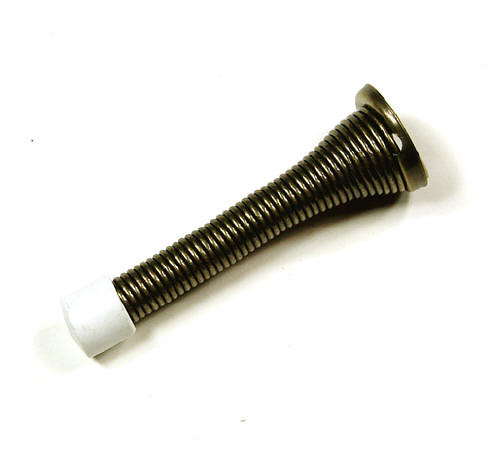
<p>After we completed <a href="http://www.oldtownhome.com/2012/2/23/Vestibule-Project-Status-Complete/index.aspx">our vestibule reconfiguration and front door restoration project</a>, we allowed a final detail to go unfinished for nearly a full year. We needed an interior baseboard door stop for our front door that would be both functional and aesthetic. Unfortunately for us, we weren't sure just what we wanted it to look like. I knew I wanted something that would look like it had always been there and had successfully stood the test of time, while Wendy wanted a doorstop that was unobtrusive and was not "hideous." We all know the standard style door stops that we often see in homes, and we both knew we were not interested in this look or style for our 1880s Victorian.</p>
<p>
</p>
<div class="MediaContainer PhotoContainer"><a href="http://farm9.staticflickr.com/8239/8515121068_4df597a1b8.jpg" rel="PhotoPopup" popupheight="455" popupwidth="490"><img alt="" src="https://farm9.staticflickr.com/8239/8515121068_4df597a1b8_m.jpg" width="240" height="223" style="border-width: 0px; border-style: solid;"></a></div>
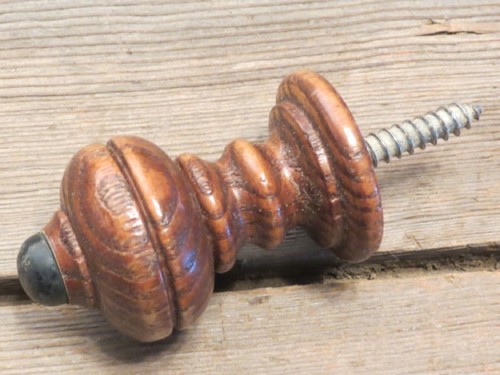
<p>After extensive online research, time spent in antique stores and architectural salvage yards, and an exhaustive amount of time spent looking at door stops in homes for sale or on period TV shows and movies, we finally settled on the classic and accurate look for our Victorian front door. We decided it would be best to stick to the roots of what our home probably originally contained, in this case, a turned wood doorstop with hard rubber tip (like this one).</p>
<p>
</p>
<div class="MediaContainer PhotoContainer"><a href="http://farm9.staticflickr.com/8383/8515133234_faee17569f.jpg" rel="PhotoPopup" popupheight="375" popupwidth="500"><img alt="" src="https://farm9.staticflickr.com/8383/8515133234_faee17569f_m.jpg" width="240" height="180" style="border-width: 0px; border-style: solid;"></a></div>
<p>Over the years I had seen many on eBay while I <a href="http://www.oldtownhome.com/2012/3/8/The-Anatomy-and-Restoration-of-a-Rim-Lock/index.aspx">hunted endlessly for antique rim locks and other door hardware</a>, so I returned to the auction giant to search for the perfect doorstop. I came across everything from the beautifully restored and extremely expensive, to the downright disgusting and broken. </p>
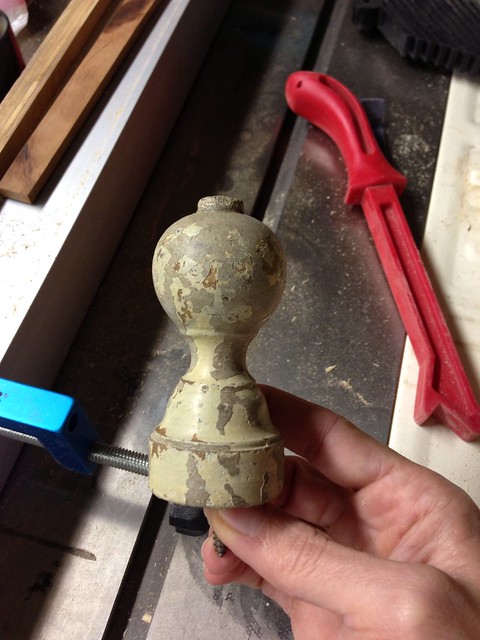
<p>To satisfy our needs, I wanted to find a doorstop that was in good shape, not broken, chipped, or cracked, and still possessed the original rear mounting screw fully intact and functional. After a bit more searching I found a winner. This paint covered and completely dirty antique doorstop was in need of a little TLC to bring it back to what it could and should be. When it arrived I knew just what I needed to do. </p>
<p>
</p>
<div class="MediaContainer PhotoContainer"><a href="http://farm9.staticflickr.com/8532/8513891797_528082d282_z.jpg" rel="PhotoPopup" popupheight="640" popupwidth="480"><img alt="" src="https://farm9.staticflickr.com/8532/8513891797_528082d282.jpg" width="375" height="500" style="border-width: 0px; border-style: solid;"></a></div>
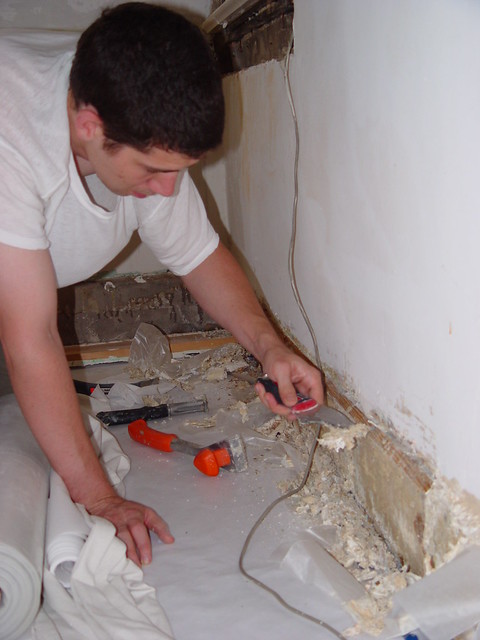
<p>I covered the doorstop with SmartStrip paint stripper and PeelAway paper (essentially wax paper) and let it sit overnight. The next day we had a mess but also had taken a step in the right direction.</p>
<p>
</p>
<div class="MediaContainer PhotoContainer"><a href="http://farm9.staticflickr.com/8210/8240251638_9109b46af5_z.jpg" rel="PhotoPopup" popupheight="640" popupwidth="480"><img alt="" src="https://farm9.staticflickr.com/8210/8240251638_9109b46af5.jpg" width="375" height="500" style="border-width: 0px; border-style: solid;"></a></div>
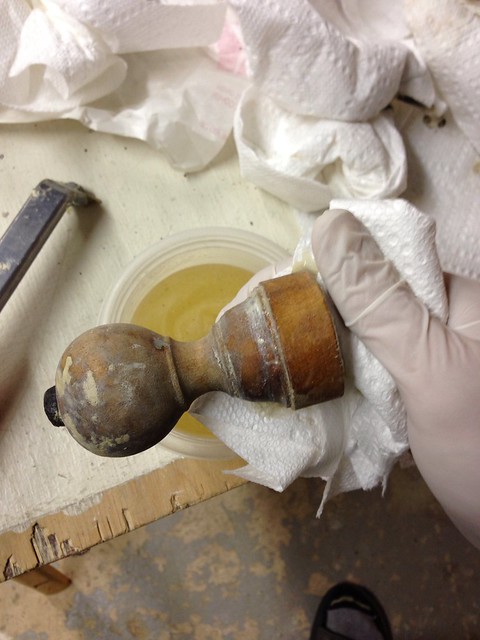
<p>If you remember this little doorstop project, it was during our manic "<a href="http://www.oldtownhome.com/2012/12/3/Its-Christmastime-in-the-City-Designer-Home-Tour-Behind-the-Scenes/index.aspx">OMG, let's get everything possible done before the Christmas home tour!!!</a>" phase last November/December, so we had our hands pretty full and were juggling several small projects at once. After removing the paint I used a little bit of Bix stripper to clean up the more intricate details on be doorstop.</p>
<p>
</p>
<div class="MediaContainer PhotoContainer"><a href="http://farm9.staticflickr.com/8202/8231884982_3123a693f8_z.jpg" rel="PhotoPopup" popupheight="640" popupwidth="480"><img alt="" src="https://farm9.staticflickr.com/8202/8231884982_3123a693f8.jpg" width="375" height="500" style="border-width: 0px; border-style: solid;"></a></div>
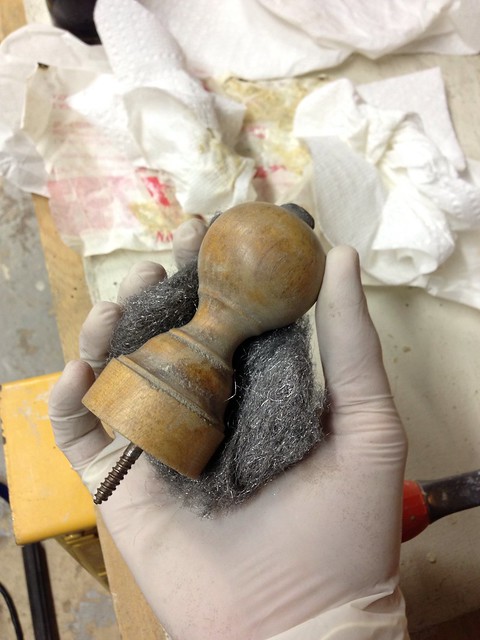
<p>Following more intricate work on the details, the stop's wood was really looking great. It was in wonderful shape, had no cracks or areas that needed to be patched, and it seemed like it would do the job nicely. Even the hard stop tip was in relatively good shape. Everything just needed a final sanding with some steel wool before I applied the finish coat.</p>
<p>
</p>
<div class="MediaContainer PhotoContainer"><a href="http://farm9.staticflickr.com/8197/8230822723_ed33c3eda7_z.jpg" rel="PhotoPopup" popupheight="640" popupwidth="480"><img alt="" src="https://farm9.staticflickr.com/8197/8230822723_ed33c3eda7.jpg" width="375" height="500" style="border-width: 0px; border-style: solid;"></a></div>
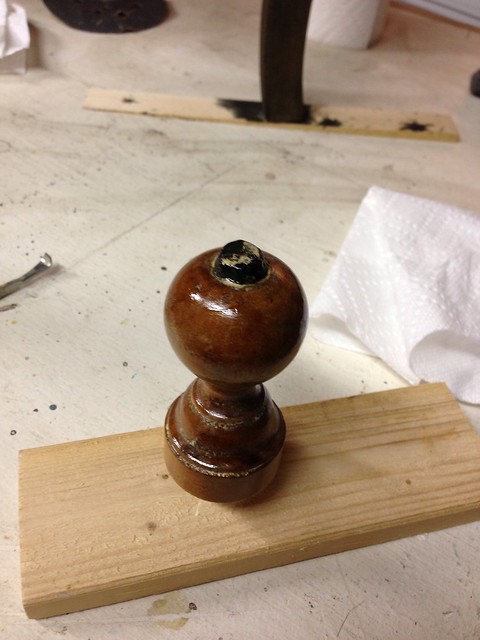
<p>To finish the doorstop, since the wood looked great, and we were pressed for time, we opted to simply apply several coats of shellac. This really made the rich color of the old growth wood pop, but it's the catalyst for our ongoing debate. </p>
<p>
</p>
<div class="MediaContainer PhotoContainer"><a href="http://farm9.staticflickr.com/8478/8230823885_68d7633a95_z.jpg" rel="PhotoPopup" popupheight="640" popupwidth="480"><img alt="" src="https://farm9.staticflickr.com/8478/8230823885_68d7633a95.jpg" width="375" height="500" style="border-width: 0px; border-style: solid;"></a></div>
<p>When I installed the stop it was easy to determine where it should go. The original door configuration was the same as our new set up, so there was already a hole and stop location clearly visible.</p>
<p>
</p>
<div class="MediaContainer PhotoContainer"><a href="http://farm9.staticflickr.com/8201/8230831949_f11d4f6106_z.jpg" rel="PhotoPopup" popupheight="480" popupwidth="640"><img alt="" src="https://farm9.staticflickr.com/8201/8230831949_f11d4f6106.jpg" width="500" height="375" style="border-width: 0px; border-style: solid;"></a></div>
<p>I just threaded this new stop into the old location and took a step back to admire our once-and-for-all finished project. </p>
<p>
</p>
<div class="MediaContainer PhotoContainer"><a href="http://farm9.staticflickr.com/8205/8230832865_097b417d36_z.jpg" rel="PhotoPopup" popupheight="480" popupwidth="640"><img alt="" src="https://farm9.staticflickr.com/8205/8230832865_097b417d36.jpg" width="500" height="375" style="border-width: 0px; border-style: solid;"></a></div>
<p>That's when Wendy piped up and said, "It seems like it works, but are we going to leave it unpainted? It looks like a giant boob sticking off of the baseboard." Incredulously I responded in a simply flabbergasted tone, "Yes! Unpainted...more like untainted." (I'm super clever like that.) It was beautiful in my eyes, perfect, better than I could have imagined, definitely not boob-like. Why would we want to paint it? </p>
<p>Due to our time crunch surrounding the home tour Wendy allowed the doorstop to remain untainted er, unpainted, in its installed location, but she's been tiring of this look lately and is once again beginning to put the pressure on me to "finish" this item once and for all with a coat of our baseboard paint.</p>
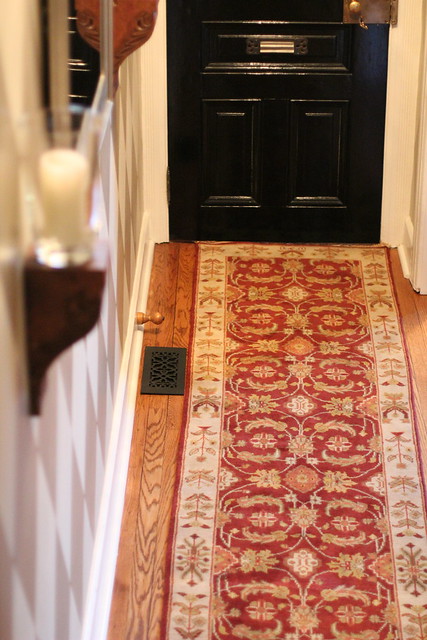
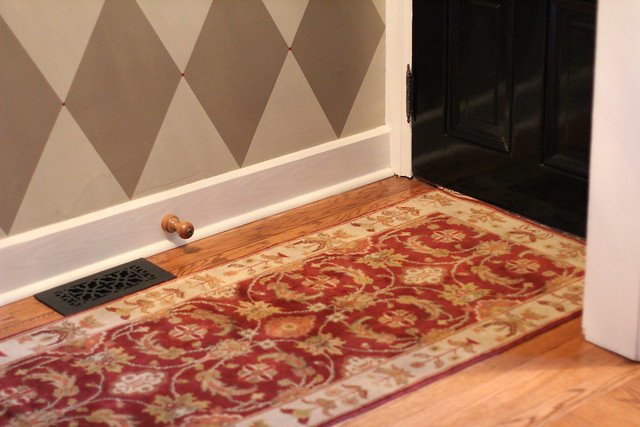
<p>From my perspective, it's rather simple. I like painting stuff as much as the next guy, but I also don't want to be a "cool, let's paint it!" kind of guy. But in this case, I think it's just wrong to apply paint. Sure, it's mounted directly to the white baseboard, but the majority of the time I'll be looking at this doorstop from the top of the stairs as I walk down. From this view the baseboard is not the backdrop of the view, but rather the wood floors are the backdrop. The shellac covered doorstop actually resembles the wood floors almost perfectly and allows the doorstop to more or less blend into its surroundings. I worry that painting the doorstop will work against this approach and will actually make it show up in a much more prevalent manner. Not to mention that leaving it unpainted is also more historically accurate.</p>
<p>
</p>
<div class="MediaContainer PhotoContainer"><a href="http://farm9.staticflickr.com/8095/8515928172_f2aaf1e2df_z.jpg" rel="PhotoPopup" popupheight="640" popupwidth="427"><img alt="" src="https://farm9.staticflickr.com/8095/8515928172_f2aaf1e2df.jpg" width="333" height="500" style="border-width: 0px; border-style: solid;"></a></div>
<p>Wendy, on the other hand, has her "boob" argument. More specifically, the fact that this "ugly" looking wood doorstop resembles a bare boob protruding from our otherwise nice baseboard molding.&nbsp;</p>
<p>
</p>
<div class="MediaContainer PhotoContainer"><a href="http://farm9.staticflickr.com/8102/8515929700_6119b7b253_z.jpg" rel="PhotoPopup" popupheight="427" popupwidth="640"><img alt="" src="https://farm9.staticflickr.com/8102/8515929700_6119b7b253.jpg" width="500" height="333" style="border-width: 0px; border-style: solid;"></a></div>
<p>Now we need your help. What's your vote. Do we keep it au natural, embracing the beauty of the wood and its ability to blend into the backdrop when we see it while walking down the stairs? Or do you think we should cover that boob in a coat of glossy white (leaving the black tip will stay unpainted)? We want you to choose sides and explain where your allegiances lie.&nbsp;</p>
<div style="width: 330px; margin: 0px auto;">
<iframe width="330" height="300" frameborder="0" src="http://www.oldtownhome.com/be-content/knobpoll.htm">
</iframe>
</div><p><a href="https://www.oldtownhome.com/2013/2/28/Reader-Poll-Bare-or-Covered-Up-That-is-the-Question/">Read Full Post</a></p>]]></content>
    <category term="Entryway" />
    <category term="Header Image" />
    <category term="Poll" />
    <PostImage>http://farm9.staticflickr.com/8376/8514947073_e6db4457b7.jpg</PostImage>
    <media:thumbnail url="https://farm9.staticflickr.com/8376/8514947073_e6db4457b7_t.jpg" />
    <ExtensionElements>
      <Item>PostImage</Item>
      <Item>media:thumbnail</Item>
    </ExtensionElements>
  </entry>
  <entry>
    <guid>0c43e3e2-449c-4db2-bc02-e9b747eea4af</guid>
    <id>https://www.oldtownhome.com/2011/12/5/And-the-Winner-of-the-Great-House-Numbers-Debate-is/</id>
    <title>And the Winner of the Great House Numbers Debate is...</title>
    <summary type="html"><![CDATA[<p>I'm so happy to report that we've finally come to a decision in the <a href="http://www.oldtownhome.com/2011/10/13/The-Great-House-Numbers-Debate/index.aspx">great house numbers debate</a>&nbsp;of 2011. As you may recall, Alex and I have been on the fence when it comes to what we wanted to do with the transom window over our front door. And with all the work we've been doing this last year to <a href="http://www.oldtownhome.com/vestibule/index.aspx">reconfigure and renovate our vestibule</a>, the time has come for us to pull the trigger.</p>
<p>The options we debated between were:</p>
<p>
</p>
<ol>
    <li>Numbers on a plate or plaque directly on the house.</li>
    <li>Numbers on the door.</li>
    <li>Numbers in the transom.</li>
    <li>Other (like painted on the sidewalk, graffiti on the stairs, or some other random display that may work in theory but would never work in reality).</li>
</ol>
<p>After many thoughtful, insightful, and helpful comments from all of our readers, and after much deliberation the winner is...(drum roll please)...
</p>
<p><span class="Apple-tab-span" style="white-space: pre;">	</span>3. Numbers in the transom with original glass!</p>
<p>It was a tough decision, and not one made lightly, largely due to the fact that we had purchased a leaded glass window for the space nearly nine years ago. Not only do I love the leaded glass, but I consider it an investment of both money and time. Time you might wonder? Well, the leaded glass, like many other things in our house, has been moved from one precarious location to another in our basement hellhole, and I consider it no small feat that it's survived the last nine years. I'm sure it will keep moving over the next several years and will ultimately be broken only when we finally figure out a place where we want to install it. &nbsp;</p>
<p>But alas, I finally caved to Alex's pressure to pursue the numbers in the transom option, in part because I think it will look really classic, in part because I dreaded the thought of trying to keep the leaded glass clean, in part because most of our readers suggested this route, and in part because I didn't particularly love any of the other house number options. Lots of parts went into this decision, that's for sure.</p>
<p>We had a couple of options on how to proceed with these numbers. The classic approach was to apply gold leaf and hand paint the numbers and their black shadow/outline on the window ourselves. You might be able to guess, but Alex was pushing for this option. Though I have no doubt we could tackle this, there are just too many other projects going on right now, so I had to veto his gumption as I had found a nearly as authentic option that was far easier to implement.</p>
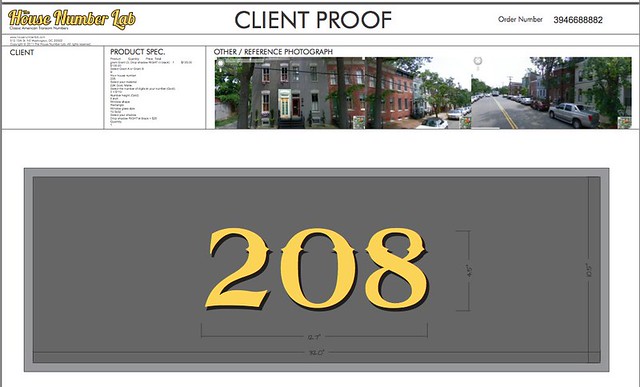
<p>We opted to work with a Washington, DC-based company called <a href="http://www.housenumberlab.com/" target="_blank">The House Number Lab</a>. They offer a large assortment of number styles as well as materials to choose from, each in historically accurate and completely custom fonts and sizes that are tailored to our specific install. After careful consideration, and some internal debate, we settled on a 22 carat matte gold in "The Grant B" style font with a heavy drop shadow to the left in black. We think it's a classic font that will work well with the style of our home, but we went with the "B" option which introduces a small extra flourish on the numbers for a little extra oomph.&nbsp;Who knew there would be so many options?&nbsp;</p>
<p></p> <a href="https://www.oldtownhome.com/2011/12/5/And-the-Winner-of-the-Great-House-Numbers-Debate-is/">more</a>]]></summary>
    <published>2011-12-05T09:12:00.000-05:00</published>
    <updated>2011-12-05T09:12:00.000-05:00</updated>
    <link rel="alternate" href="https://www.oldtownhome.com/2011/12/5/And-the-Winner-of-the-Great-House-Numbers-Debate-is/" />
    <author>
      <name>Wendy</name>
    </author>
    <content type="html"><![CDATA[<p>I'm so happy to report that we've finally come to a decision in the <a href="http://www.oldtownhome.com/2011/10/13/The-Great-House-Numbers-Debate/index.aspx">great house numbers debate</a>&nbsp;of 2011. As you may recall, Alex and I have been on the fence when it comes to what we wanted to do with the transom window over our front door. And with all the work we've been doing this last year to <a href="http://www.oldtownhome.com/vestibule/index.aspx">reconfigure and renovate our vestibule</a>, the time has come for us to pull the trigger.</p>
<p>The options we debated between were:</p>
<p>
</p>
<ol>
    <li>Numbers on a plate or plaque directly on the house.</li>
    <li>Numbers on the door.</li>
    <li>Numbers in the transom.</li>
    <li>Other (like painted on the sidewalk, graffiti on the stairs, or some other random display that may work in theory but would never work in reality).</li>
</ol>
<p>After many thoughtful, insightful, and helpful comments from all of our readers, and after much deliberation the winner is...(drum roll please)...
</p>
<p><span class="Apple-tab-span" style="white-space: pre;">	</span>3. Numbers in the transom with original glass!</p>
<p>It was a tough decision, and not one made lightly, largely due to the fact that we had purchased a leaded glass window for the space nearly nine years ago. Not only do I love the leaded glass, but I consider it an investment of both money and time. Time you might wonder? Well, the leaded glass, like many other things in our house, has been moved from one precarious location to another in our basement hellhole, and I consider it no small feat that it's survived the last nine years. I'm sure it will keep moving over the next several years and will ultimately be broken only when we finally figure out a place where we want to install it. &nbsp;</p>
<p>But alas, I finally caved to Alex's pressure to pursue the numbers in the transom option, in part because I think it will look really classic, in part because I dreaded the thought of trying to keep the leaded glass clean, in part because most of our readers suggested this route, and in part because I didn't particularly love any of the other house number options. Lots of parts went into this decision, that's for sure.</p>
<p>We had a couple of options on how to proceed with these numbers. The classic approach was to apply gold leaf and hand paint the numbers and their black shadow/outline on the window ourselves. You might be able to guess, but Alex was pushing for this option. Though I have no doubt we could tackle this, there are just too many other projects going on right now, so I had to veto his gumption as I had found a nearly as authentic option that was far easier to implement.</p>
<p>We opted to work with a Washington, DC-based company called <a href="http://www.housenumberlab.com/" target="_blank">The House Number Lab</a>. They offer a large assortment of number styles as well as materials to choose from, each in historically accurate and completely custom fonts and sizes that are tailored to our specific install. After careful consideration, and some internal debate, we settled on a 22 carat matte gold in "The Grant B" style font with a heavy drop shadow to the left in black. We think it's a classic font that will work well with the style of our home, but we went with the "B" option which introduces a small extra flourish on the numbers for a little extra oomph.&nbsp;Who knew there would be so many options?&nbsp;</p>
<p></p>
<p>Honestly though we had a tougher time choosing the material than the font. It just boils down to the fact that we're just not big fans of gold. If you look around our house (or at us), you'll notice that our wedding rings, wedding china, picture frames, mirrors, and accessories all are silver. Chandeliers that once were brass or gold, I've long since spray painted another color. So it was tough for us to go against our silver tendencies and choose the more classic, and more historically accurate gold tone. But as a "meet you in the middle" decision, we went with the matte over the burnished gold, for a more muted hue. &nbsp;</p>
<p>Glenn, owner of The House Numbers Lab, was great to work with. We opted to see proofs before having the numbers made -- an option that adds time to the order but is totally worth it in my opinion. Initially we placed the order for 5" high numbers, but after seeing the proof, and hanging the to-scale print out in our transom, I felt it looked just a little too imposing. After sending Glenn an email, he quickly sent us back 4" and 4.5" versions to take a look at. The small adjustment made all the difference, and we knew the 4" was just right.&nbsp;</p>
<p>
</p>
<div class="MediaContainer PhotoContainer"><a href="http://farm8.staticflickr.com/7148/6457808751_7245258758_z.jpg" rel="PhotoPopup" popupheight="387" popupwidth="640"><img alt="" src="https://farm8.staticflickr.com/7148/6457808751_7245258758.jpg" width="500" height="303" style="border-width: 0px;border-style: solid;"></a></div>
<p>After a several weeks-long wait for our order (due to an expected delay by the gold supplier), our numbers arrived the middle of last week in a neatly packaged protective box. We were excited to get them up on the window as it marked a significant step toward the completion of our <a href="http://www.oldtownhome.com/curb-appeal/index.aspx">Curb Appeal 2.0</a>, but with the weather cooling and the sun setting so early, we had to wait for a good warm weather day to apply them above 50 degrees.&nbsp;</p>
<p>
</p>
<div class="MediaContainer PhotoContainer"><a href="http://farm8.staticflickr.com/7144/6457546365_2220638dd6_z.jpg" rel="PhotoPopup" popupheight="480" popupwidth="640"><img alt="" src="https://farm8.staticflickr.com/7144/6457546365_2220638dd6.jpg" width="500" height="375" style="border-width: 0px;border-style: solid;"></a></div>
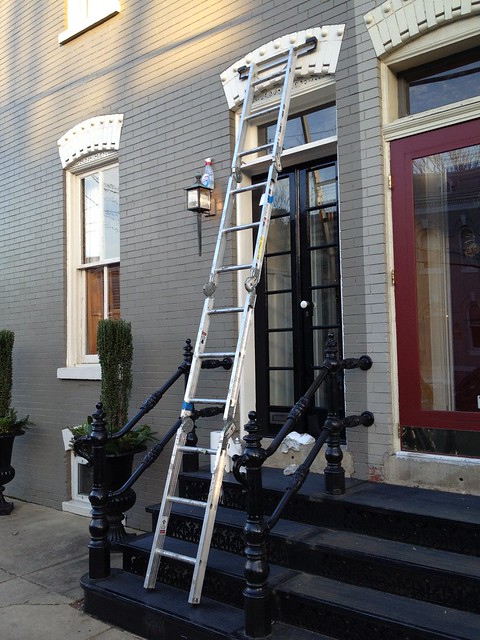
<p>Yesterday was a downright balmy December day with highs approaching 60 degrees, so we decided to pull the trigger and go for it.&nbsp;The House Numbers Lab website includes detailed instructions on how to best install, and in addition to the number decals, the package comes with a plastic&nbsp;squeegee to smooth the numbers during install and a dry erase marker to properly mark the center of the window. We just needed to grab some supplies to clean the window and a pair of scissors, tape, a tape measure, and the ladder to aid in the install.</p>
<p>Alex kicked off the project by setting up the ladder to clean the windows, inside and out. The glass was a mess because of the road dirt that typically collects outside, so I'm always happy when a project calls for cleaning the transom window.&nbsp;</p>
<p>
</p>
<div class="MediaContainer PhotoContainer"><a href="http://farm8.staticflickr.com/7009/6456397121_8f74c3c883_z.jpg" rel="PhotoPopup" popupheight="640" popupwidth="480"><img alt="" src="https://farm8.staticflickr.com/7009/6456397121_8f74c3c883.jpg" width="375" height="500" style="border-width: 0px;border-style: solid;"></a></div>
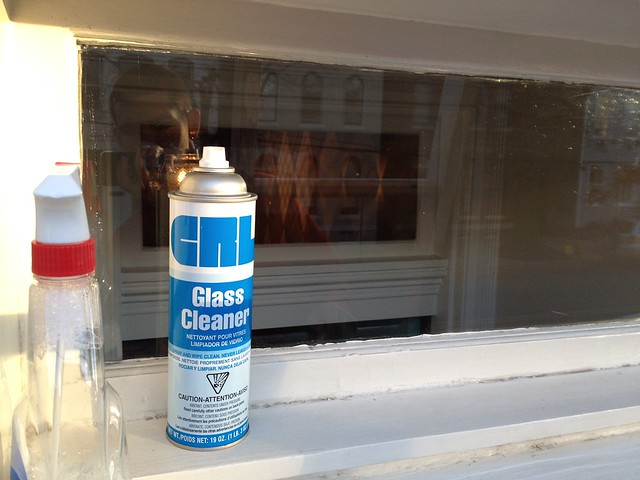
<p>He used a regular window cleaner followed by an alcohol based glass cleaner that we received years ago when installing our show glass doors. This is meant to leave an ultra clean surface that is perfect for the&nbsp;adherence&nbsp;of sticky substances to a clean window.</p>
<p>
</p>
<div class="MediaContainer PhotoContainer"><a href="http://farm8.staticflickr.com/7151/6456389209_966ebd8264_z.jpg" rel="PhotoPopup" popupheight="480" popupwidth="640"><img alt="" src="https://farm8.staticflickr.com/7151/6456389209_966ebd8264.jpg" width="500" height="375" style="border-width: 0px;border-style: solid;"></a></div>
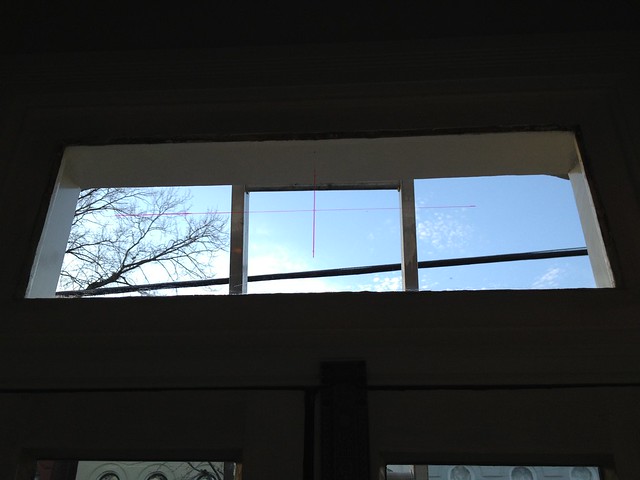
<p>Once everything was clean, he measured the absolute center point of the transom glass and made a cross using the dry erase marker on the outside of the glass to give the numbers a guide for install.</p>
<p>
</p>
<div class="MediaContainer PhotoContainer"><a href="http://farm8.staticflickr.com/7141/6456395887_e2d8a898f6_z.jpg" rel="PhotoPopup" popupheight="480" popupwidth="640"><img alt="" src="https://farm8.staticflickr.com/7141/6456395887_e2d8a898f6.jpg" width="500" height="375" style="border-width: 0px;border-style: solid;"></a></div>
<p>The next step was to tape the numbers to the inside of the window and take a step back to be sure they were level, centered, and looked the way we wanted them too. This is an important step because there is no turning back once they are up on the glass.&nbsp;</p>
<p>
</p>
<div class="MediaContainer PhotoContainer"><a href="http://farm8.staticflickr.com/7151/6456897021_112ac65c41_z.jpg" rel="PhotoPopup" popupheight="427" popupwidth="640"><img alt="" src="https://farm8.staticflickr.com/7151/6456897021_112ac65c41.jpg" width="500" height="333" style="border-width: 0px;border-style: solid;"></a></div>
<p>We decided that they needed to come up a little bit on the right since the window is a little out of level. So we made that slight adjustment and Alex got to work sticking them onto the glass.&nbsp;</p>
<p>Following the instructions closely, Alex peeled, stuck, squeegeed, and smoothed until the numbers were fully in place.</p>
<p>
</p>
<div class="MediaContainer PhotoContainer"><a href="http://farm8.staticflickr.com/7161/6457049439_04fe1ee3fd_z.jpg" rel="PhotoPopup" popupheight="640" popupwidth="427"><img alt="" src="https://farm8.staticflickr.com/7161/6457049439_04fe1ee3fd.jpg" width="333" height="500" style="border-width: 0px;border-style: solid;"></a></div>
<p>He then carefully (and I mean carefully -- it took him forever) peeled the backing off of the numbers. I think we were both getting excited, but he took his time to be sure the numbers didn't peel off of the house.</p>
<p>
</p>
<div class="MediaContainer PhotoContainer"><a href="http://farm8.staticflickr.com/7018/6457086257_bbe9728ce6_z.jpg" rel="PhotoPopup" popupheight="427" popupwidth="640"><img alt="" src="https://farm8.staticflickr.com/7018/6457086257_bbe9728ce6.jpg" width="500" height="333" style="border-width: 0px;border-style: solid;"></a></div>
<p>A few minutes later we had the numbers fully installed. The final step was to wipe off the red cross on the outside of the window and remove the extra dots from the interior.</p>
<p>
</p>
<div class="MediaContainer PhotoContainer"><a href="http://farm8.staticflickr.com/7146/6457091259_3d5eea9fed_z.jpg" rel="PhotoPopup" popupheight="427" popupwidth="640"><img alt="" src="https://farm8.staticflickr.com/7146/6457091259_3d5eea9fed.jpg" width="500" height="333" style="border-width: 0px;border-style: solid;"></a></div>
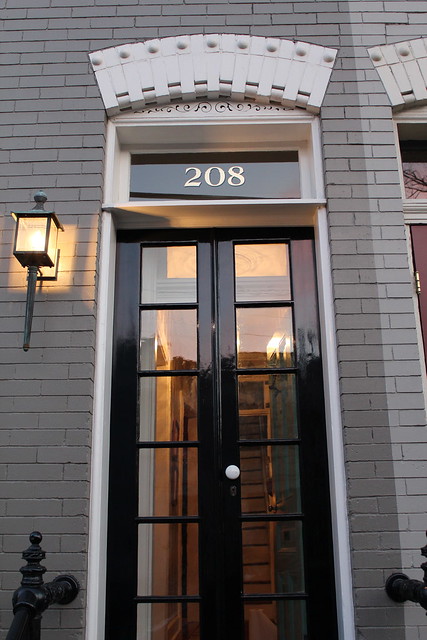
<p>The final and fully installed numbers turned out really nice! It was wonderful, it didn't require either of us spending hours with gold leaf, stencils, and free hand painting over the course of several days, though I'm sure that would have been very <em>fun</em>. (Sarcasm fully intended.)&nbsp;</p>
<p>
</p>
<div class="MediaContainer PhotoContainer"><a href="http://farm8.staticflickr.com/7160/6457109145_66d87a2cce_z.jpg" rel="PhotoPopup" popupheight="640" popupwidth="427"><img alt="" src="https://farm8.staticflickr.com/7160/6457109145_66d87a2cce.jpg" width="333" height="500" style="border-width: 0px;border-style: solid;"></a></div>
<p>And for those of you following the front vestibule progress and our <a href="http://www.oldtownhome.com/2011/11/22/Getting-a-Handle-on-the-French-Door-Projectand-We-Want-Your-Opinion/index.aspx">debate over the color of the door knob</a>, we've pulled the trigger and ordered a new (well, old actually) knob in black. It's on its way.&nbsp;</p>
<p>What do you think? Did we make the right choice? Do you like the gold we chose? I'd say we're both really happy with our selection. Our house numbers really fit in with the rest of the area and the look is very historically accurate to the period of our home. I think we can call this one mission accomplished.</p>
<div id="radePasteHelper" style="border:0px solid red;position: absolute; left: -10000px; top: 0px; width: 1px; height: 1px; overflow-x: hidden; overflow-y: hidden;">
<li style="list-style-image: none; font-size: 14px; line-height: 23px; background-color: #fafaf8;">Numbers on a plate or plaque directly on the house.</li>
<li style="list-style-image: none; font-size: 14px; line-height: 23px; background-color: #fafaf8;">Numbers on the door.</li>
<li style="list-style-image: none; font-size: 14px; line-height: 23px; background-color: #fafaf8;">Numbers in the transom.</li>
<li style="list-style-image: none; font-size: 14px; line-height: 23px; background-color: #fafaf8;">Other (like painted on the sidewalk, graffiti on the stairs, or some other random display that may work in theory but would never work in reality).</li>
</div><p><a href="https://www.oldtownhome.com/2011/12/5/And-the-Winner-of-the-Great-House-Numbers-Debate-is/">Read Full Post</a></p>]]></content>
    <category term="Curb Appeal" />
    <category term="Entryway" />
    <category term="Header Image" />
    <category term="Transoms" />
    <category term="Vestibule" />
    <PostImage>http://farm8.staticflickr.com/7151/6457744875_27b6859270_z.jpg</PostImage>
    <media:thumbnail url="https://farm8.staticflickr.com/7151/6457744875_27b6859270_t.jpg" />
    <ExtensionElements>
      <Item>PostImage</Item>
      <Item>media:thumbnail</Item>
    </ExtensionElements>
  </entry>
  <entry>
    <guid>ea9bcadd-cd6b-44f7-ac8a-c991bd262fb1</guid>
    <id>https://www.oldtownhome.com/2011/7/13/Toiling-Away-on-the-New-Divided-Lite-Double-Doors/</id>
    <title>Toiling Away on the New Divided Lite Double Doors</title>
    <summary type="html"><![CDATA[<p>As part of our overall vestibule/curb appeal 2.0/new salvaged front door efforts, we've opted to change the configuration of the entry to the house. We're doing this by moving the current front door to the inner door, and then placing salvaged divided lite double doors on the front of the house. This will add an element of depth to the front of the house and will also allow the front doors to open as they were intended to (the current setup is odd and won't allow the door to fully open).</p><p>In a previous post we covered the <a href="http://www.oldtownhome.com/2011/6/29/Behind-Closed-Doors-Were-Stripping-Again/index.aspx">long and tedious paint stripping process on the new solid front door</a>. Well, I've been working over the last couple of weeks on removing the glass and getting the salvaged side lites that we've intended to turn into divided lite double doors into shape. We're about 75% through the process, so I figure it is a good time for an updates. But let's not forget what the doors looked like when we started this whole adventure.</p><div class="MediaContainer PhotoContainer"><a href="http://farm6.static.flickr.com/5142/5657580024_7cde1d5b18_z.jpg" rel="PhotoPopup" popupwidth="478" popupheight="640"><img alt="" width="374" height="500" style="border:0px solid;" src="https://farm6.static.flickr.com/5142/5657580024_7cde1d5b18.jpg"></a></div><p>Much of the glass was broken on one door, they were covered in multiple layers of paint, there were random holes, dents, and cuts, the edges of the doors weren't square, and they are actually about 3" too narrow and a bit short for the 36" opening where they will live. All in all, they were in pretty tough shape.</p><div class="ToolItem">
<iframe src="http://rcm.amazon.com/e/cm?t=oltoho-20&amp;o=1&amp;p=8&amp;l=as1&amp;asins=B001F0KO2S&amp;ref=qf_sp_asin_til&amp;fc1=3A3128&amp;IS2=1&amp;lt1=_blank&amp;m=amazon&amp;lc1=61838A&amp;bc1=FAFAF8&amp;bg1=FAFAF8&amp;f=ifr" style="width: 120px; height: 240px;" scrolling="no" marginwidth="0" marginheight="0" frameborder="0"></iframe>
</div><p>The first thing I decided to do was to remove the glass from the doors and work on paint stripping. These aren't two separate steps in this process since I kept getting sick of one thing and then moving to the other, though I should have stripped all of the paint and then removed the glass.&nbsp;</p><p>For paint removal on these doors I decided to try a new chemical stripper from the makers of Peel Away. They recently came out with an odorless and safe non caustic stripper called SmartStrip, and I've been wanting to give it a go for a while now. I ordered a gallon bucket from a seller on Amazon and we had it a few days later. I'll do a separate post about the Smart Strip process, but overall I'm quite pleased with the results.</p><div class="MediaContainer PhotoContainer"><a href="http://farm7.static.flickr.com/6003/5924462730_cf101f76cc_z.jpg" rel="PhotoPopup" popupwidth="478" popupheight="640"><img alt="" width="374" height="500" style="border:0px solid;" src="https://farm7.static.flickr.com/6003/5924462730_cf101f76cc.jpg"></a></div><p>At the same time I kept working on removing the old glazing putty and glass, trying to break as few panes of glass as possible. I used a heat gun for much of this process, warming the old putty until it was soft enough to be moved out of the way. It is a slow process, and one I really hate, but it's over and done with now and I couldn't be happier.</p> <a href="https://www.oldtownhome.com/2011/7/13/Toiling-Away-on-the-New-Divided-Lite-Double-Doors/">more</a>]]></summary>
    <published>2011-07-13T14:30:00.000-04:00</published>
    <updated>2011-07-13T14:30:00.000-04:00</updated>
    <link rel="alternate" href="https://www.oldtownhome.com/2011/7/13/Toiling-Away-on-the-New-Divided-Lite-Double-Doors/" />
    <author>
      <name>Alex</name>
    </author>
    <content type="html"><![CDATA[<p>As part of our overall vestibule/curb appeal 2.0/new salvaged front door efforts, we've opted to change the configuration of the entry to the house. We're doing this by moving the current front door to the inner door, and then placing salvaged divided lite double doors on the front of the house. This will add an element of depth to the front of the house and will also allow the front doors to open as they were intended to (the current setup is odd and won't allow the door to fully open).</p>
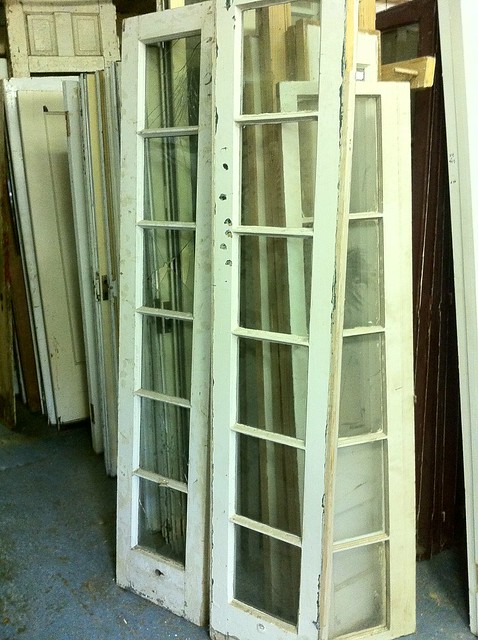
<p>In a previous post we covered the <a href="http://www.oldtownhome.com/2011/6/29/Behind-Closed-Doors-Were-Stripping-Again/index.aspx">long and tedious paint stripping process on the new solid front door</a>. Well, I've been working over the last couple of weeks on removing the glass and getting the salvaged side lites that we've intended to turn into divided lite double doors into shape. We're about 75% through the process, so I figure it is a good time for an updates. But let's not forget what the doors looked like when we started this whole adventure.</p>
<div class="MediaContainer PhotoContainer"><a href="http://farm6.static.flickr.com/5142/5657580024_7cde1d5b18_z.jpg" rel="PhotoPopup" popupwidth="478" popupheight="640"><img alt="" width="374" height="500" style="border:0px solid;" src="https://farm6.static.flickr.com/5142/5657580024_7cde1d5b18.jpg"></a></div>
<p>Much of the glass was broken on one door, they were covered in multiple layers of paint, there were random holes, dents, and cuts, the edges of the doors weren't square, and they are actually about 3" too narrow and a bit short for the 36" opening where they will live. All in all, they were in pretty tough shape.</p>
<div class="ToolItem">
<iframe src="http://rcm.amazon.com/e/cm?t=oltoho-20&amp;o=1&amp;p=8&amp;l=as1&amp;asins=B001F0KO2S&amp;ref=qf_sp_asin_til&amp;fc1=3A3128&amp;IS2=1&amp;lt1=_blank&amp;m=amazon&amp;lc1=61838A&amp;bc1=FAFAF8&amp;bg1=FAFAF8&amp;f=ifr" style="width: 120px; height: 240px;" scrolling="no" marginwidth="0" marginheight="0" frameborder="0"></iframe>
</div>
<p>The first thing I decided to do was to remove the glass from the doors and work on paint stripping. These aren't two separate steps in this process since I kept getting sick of one thing and then moving to the other, though I should have stripped all of the paint and then removed the glass.&nbsp;</p>
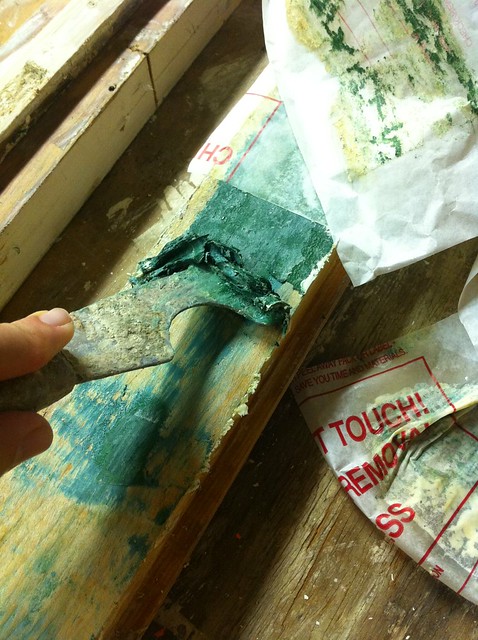
<p>For paint removal on these doors I decided to try a new chemical stripper from the makers of Peel Away. They recently came out with an odorless and safe non caustic stripper called SmartStrip, and I've been wanting to give it a go for a while now. I ordered a gallon bucket from a seller on Amazon and we had it a few days later. I'll do a separate post about the Smart Strip process, but overall I'm quite pleased with the results.</p>
<div class="MediaContainer PhotoContainer"><a href="http://farm7.static.flickr.com/6003/5924462730_cf101f76cc_z.jpg" rel="PhotoPopup" popupwidth="478" popupheight="640"><img alt="" width="374" height="500" style="border:0px solid;" src="https://farm7.static.flickr.com/6003/5924462730_cf101f76cc.jpg"></a></div>
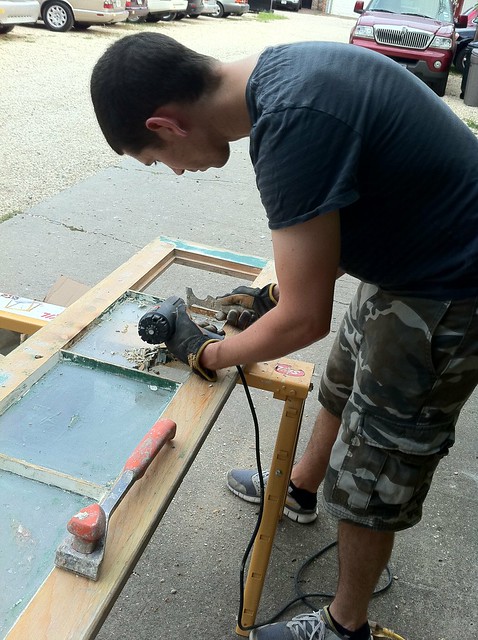
<p>At the same time I kept working on removing the old glazing putty and glass, trying to break as few panes of glass as possible. I used a heat gun for much of this process, warming the old putty until it was soft enough to be moved out of the way. It is a slow process, and one I really hate, but it's over and done with now and I couldn't be happier.</p>
<div class="MediaContainer PhotoContainer"><a href="http://farm7.static.flickr.com/6015/5900132060_144430c30f_z.jpg" rel="PhotoPopup" popupwidth="478" popupheight="640"><img alt="" width="374" height="500" style="border:0px solid;" src="https://farm7.static.flickr.com/6015/5900132060_144430c30f.jpg"></a></div>
<p>If you've ever removed glass from old windows or doors, there is one thing you probably know. The harder you try to not break the glass, the more likely you are to break it. So I adopted a careless attitude during this process and ended up only breaking a single pane of glass.</p>
<div class="MediaContainer PhotoContainer"><a href="http://farm6.static.flickr.com/5279/5900133812_f7144b622e_z.jpg" rel="PhotoPopup" popupwidth="478" popupheight="640"><img alt="" width="374" height="500" style="border:0px solid;" src="https://farm6.static.flickr.com/5279/5900133812_f7144b622e.jpg"></a></div>
<p>Once the glass was removed, I used the scrapers and 5-in-1 tool to remove the remainder of the old glazing putty.&nbsp;Then I turned my attention to squaring the edges of the doors so that we will be able to install them in their opening.</p>
<p>Since these doors were actually side lites on a house, they weren't ever meant to hang as doors. In order to eventually put these on the front of our house, I had to make sure the edges were square and the measurements were equal. To do this I used my circular saw with a scrap piece of straight lumber as a guide. I also used the other door to support the other side of the saw so I didn't end up letting it drop and messing up the cut.</p>
<div class="MediaContainer PhotoContainer"><a href="http://farm7.static.flickr.com/6005/5923911759_e7c1b56c59_z.jpg" rel="PhotoPopup" popupwidth="478" popupheight="640"><img alt="" width="374" height="500" style="border:0px solid;" src="https://farm7.static.flickr.com/6005/5923911759_e7c1b56c59.jpg"></a></div>
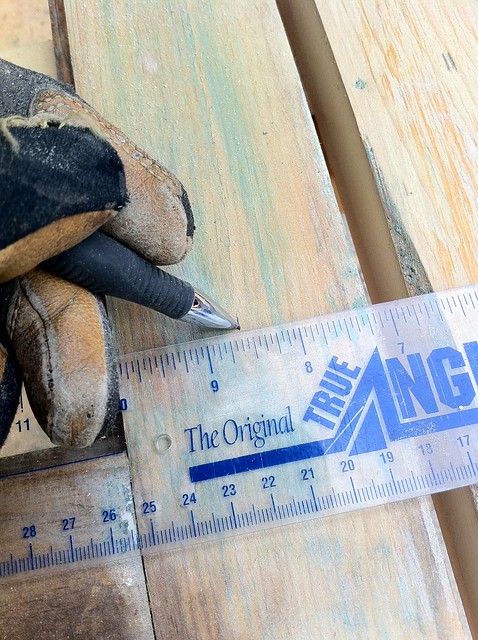
<p>I measured about 10 times on each cut just to be sure I was doing what I intended to do. Whenever I'm doing something like this where the cut needs to be pretty much perfect, I prefer to use a plastic ruler just to be sure I'm getting the mark right. Another tip I've heard but never do, make an arrow instead of a line, with the point of the arrow where the measurement is. It takes the guess work out of where on the line the actual point is.</p>
<div class="MediaContainer PhotoContainer"><a href="http://farm7.static.flickr.com/6026/5923912359_2c7030b18c_z.jpg" rel="PhotoPopup" popupwidth="478" popupheight="640"><img alt="" width="374" height="500" style="border:0px solid;" src="https://farm7.static.flickr.com/6026/5923912359_2c7030b18c.jpg"></a></div>
<p>The end result, the doors now have a consistent and even edge where they should close relatively tightly against each other. I'm probably going to add a stop between the doors (don't know exactly what this is called, but you usually see it on double doors), so the flat surface is necessary to nail that piece to the doors.</p>
<div class="MediaContainer PhotoContainer"><a href="http://farm7.static.flickr.com/6131/5923896399_517affae1d_z.jpg" rel="PhotoPopup" popupwidth="478" popupheight="640"><img alt="" width="374" height="500" style="border:0px solid;" src="https://farm7.static.flickr.com/6131/5923896399_517affae1d.jpg"></a></div>
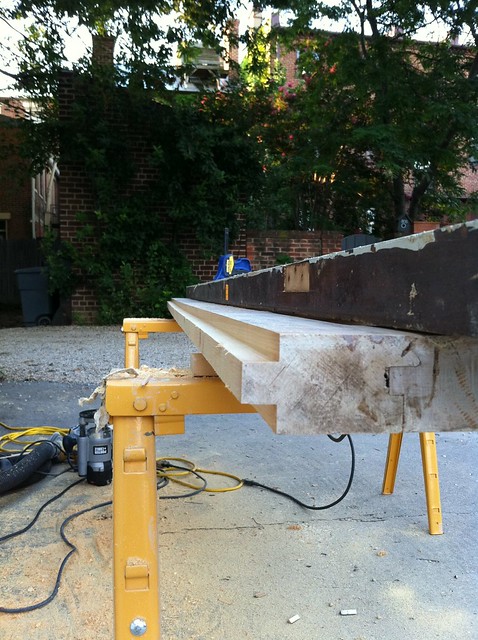
<p>Once the doors were square, I had to start prepping them to add the extra pieces to the outside edges. I decided that the best way to do this would be to cut the edge of the door with a tongue that an extension piece would accept in a groove. I would just need to dado the extension piece once I have it.</p>
<p>To make this cut, I used a simple rabetting bit in my router, set the depth to 1/2", and placed my guide board on the door to allow for a 3/4" relief.</p>
<div class="MediaContainer PhotoContainer"><a href="http://farm7.static.flickr.com/6136/5924459002_6af9af3ba5_z.jpg" rel="PhotoPopup" popupwidth="478" popupheight="640"><img alt="" width="374" height="500" style="border:0px solid;" src="https://farm7.static.flickr.com/6136/5924459002_6af9af3ba5.jpg"></a></div>
<p>I made many passes to remove the material before I hit the guide, otherwise I would have had a lot of tear out and the finished cut would have been horrible. I moved in about 1/4" per pass, just by eyeballing it. The only cut that really mattered was the final one against the guide.</p>
<div class="MediaContainer PhotoContainer"><a href="http://farm7.static.flickr.com/6001/5923915291_f5b5766226_z.jpg" rel="PhotoPopup" popupwidth="478" popupheight="640"><img alt="" width="374" height="500" style="border:0px solid;" src="https://farm7.static.flickr.com/6001/5923915291_f5b5766226.jpg"></a></div>
<p>As you can see, after repeating the process on both sides of the door, I was left with a nice bit of material for the tongue to which I will attach the extra grooved piece.</p>
<p>Since these aren't full mortise and tenon doors (being that they aren't really doors at all), I'm going to put a few 4" exterior screws from the sides into the rails of the door before we attach anything else. That should anchor everything together in a secure enough fashion that they won't come apart once they are hung.</p>
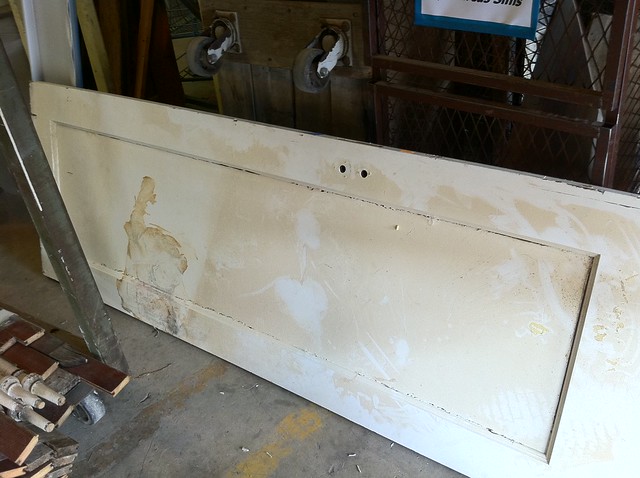
<p>We actually took a trip out to Community Forklift last weekend and bought a door we had planned to cut apart to use for the extra pieces we will need. After a long process, we got the door home and I started to disassemble it. What I thought was a solid and old pine door turned out to be a bunch of jointed wood with a veneer covering.&nbsp;Unfortunately, this won't work for us. Oh well, $20 down the drain. At least I got some good straight guides out of the deal. That's what you see my using in the photos above, the sides of the door we purchased.</p>
<div class="MediaContainer PhotoContainer"><a href="http://farm6.static.flickr.com/5072/5900151466_aa384ae85b_z.jpg" rel="PhotoPopup" popupwidth="640" popupheight="478"><img alt="" width="500" height="374" style="border:0px solid;" src="https://farm6.static.flickr.com/5072/5900151466_aa384ae85b.jpg"></a></div>
<p>Back to the drawing board on that one. It is a bit tough because the wood I need is rather thick. It needs to be a full 1 3/4" thick and must also be old pine. I think I might need to get a piece of salvaged lumber and have it planed to the correct thickness. Or perhaps, just maybe, this is just the excuse that I need to buy myself a bench planer. (Insert calculating laugh here.)</p>
<p>Well, at any rate, the work on the doors are progressing, albeit slower than I'd like. Hopefully we can get the necessary lumber and then get&nbsp;everything&nbsp;prepped for hanging. After that we'll install new pieces of old and wavy glass and then start painting.</p>
<p>I've been doing a ton of research on the paint we will use because we want an extremely shiny and smooth high gloss finish. I think we're going to use 1-Shot lettering enamel with the hardener. I've heard good things and saw a great post on Apartment Therapy where someone used it to paint a desk. The desk was white but it really had the look we are going for.</p>
<p>Do you have any tips for us on super high gloss and smooth paint for the doors? We're talking shiny like the door at <a href="http://news.bbc.co.uk/2/hi/uk_news/magazine/8677004.stm" target="_blank">10 Downing Street in London</a>. Let me know if you have any good tips.</p><p><a href="https://www.oldtownhome.com/2011/7/13/Toiling-Away-on-the-New-Divided-Lite-Double-Doors/">Read Full Post</a></p>]]></content>
    <category term="Curb Appeal" />
    <category term="Entryway" />
    <category term="Paint Removal" />
    <category term="Salvage" />
    <category term="Vestibule" />
    <PostImage>http://farm7.static.flickr.com/6023/5934027967_d90ec9c35d.jpg</PostImage>
    <media:thumbnail url="https://farm7.static.flickr.com/6023/5934027967_d90ec9c35d_t.jpg" />
    <ExtensionElements>
      <Item>PostImage</Item>
      <Item>media:thumbnail</Item>
    </ExtensionElements>
  </entry>
  <entry>
    <guid>c792650e-94f3-411d-b788-e8fb70fd3170</guid>
    <id>https://www.oldtownhome.com/2011/6/29/Behind-Closed-Doors-Were-Stripping-Again/</id>
    <title>Behind Closed Doors: We're Stripping Again</title>
    <summary type="html"><![CDATA[<p>Last week we covered our&nbsp;<a href="http://www.oldtownhome.com/2011/6/20/Salvage-Yard-Adventures-The-Quest-to-Find-Doors-and-a-Deal/index.aspx" style="color: #61838a; text-decoration: none;">very fortunate salvage yard find of our new front doors</a>. We understood just how lucky we were to find exactly what we were looking for, but also knew that good luck on the front end was a simplified beginning to a project that was sure to get much more tedious and difficult.</p><p>The doors we had selected, while perfect from a styling and age standpoint, were in really tough shape. The primary door's mortise and tenon joints had begun failing, leaving large gaps and wobbly construction. It was also a bit out of square, having been shaved down a little for its previous opening. If this door was on This Old House, Norm or Tommy might have said it was "toast."</p><div class="MediaContainer PhotoContainer"><a href="http://farm6.static.flickr.com/5150/5657005017_fd39669c3b_z.jpg" rel="PhotoPopup" popupheight="478" popupwidth="640"><img alt="" src="https://farm6.static.flickr.com/5150/5657005017_fd39669c3b.jpg" width="500" height="374" style="border-width: 0px;border-style: solid;"></a></div><p>The double doors had gouges, holes, and small cuts all over the wood, and many of the panes of glass were broken.</p><div class="MediaContainer PhotoContainer"><a href="http://farm6.static.flickr.com/5142/5657580024_7cde1d5b18_z.jpg" rel="PhotoPopup" popupheight="640" popupwidth="478"><img alt="" src="https://farm6.static.flickr.com/5142/5657580024_7cde1d5b18.jpg" width="374" height="500" style="border-width: 0px;border-style: solid;"></a></div><p>And both doors had thick layers of peeling and flaking paint that would need to be removed before we could repaint. Thus began our lengthy paint stripping and door repair process to whip these doors that had seen better days into their top fighting shape.</p><p>When the doors were delivered from The Brass Knob, the first thing we decided to tackle was the stripping of the new main door. I got the door setup on saw horses in our little cramped basement, and started the process.&nbsp;</p><div class="MediaContainer PhotoContainer"><a href="http://farm6.static.flickr.com/5261/5658850418_4704a41425_z.jpg" rel="PhotoPopup" popupheight="640" popupwidth="478"><img alt="" src="https://farm6.static.flickr.com/5261/5658850418_4704a41425.jpg" width="374" height="500" style="border-width: 0px;border-style: solid;"></a></div><p>The first step was to remove the molding around each of the door's five panels on both sides. The molding was held in place by two small rusty nails and layers of paint. I scored the paint with my utility knife, then used my <a href="http://www.oldtownhome.com/2011/4/26/Toolbox-Tuesday-Three-Must-Haves-for-Any-Toolbox/index.aspx">prybar</a> and <a href="http://www.oldtownhome.com/2011/6/21/Toolbox-Tuesday-The-Tools-You-Need-to-Strip-Paint-Like-a-Pro/index.aspx">5-in-1 tool</a> to get under the molding and begin gently easy the molding up, a little from each side of the piece I was working on, until it easily came up. It's important to work back and forth like that, otherwise you're sure to break the piece of molding you are trying to remove. This step takes patience, that's for sure.</p> <a href="https://www.oldtownhome.com/2011/6/29/Behind-Closed-Doors-Were-Stripping-Again/">more</a>]]></summary>
    <published>2011-06-29T09:33:00.000-04:00</published>
    <updated>2011-06-29T09:33:00.000-04:00</updated>
    <link rel="alternate" href="https://www.oldtownhome.com/2011/6/29/Behind-Closed-Doors-Were-Stripping-Again/" />
    <author>
      <name>Alex</name>
    </author>
    <content type="html"><![CDATA[<p>Last week we covered our&nbsp;<a href="http://www.oldtownhome.com/2011/6/20/Salvage-Yard-Adventures-The-Quest-to-Find-Doors-and-a-Deal/index.aspx" style="color: #61838a; text-decoration: none;">very fortunate salvage yard find of our new front doors</a>. We understood just how lucky we were to find exactly what we were looking for, but also knew that good luck on the front end was a simplified beginning to a project that was sure to get much more tedious and difficult.</p>
<p>The doors we had selected, while perfect from a styling and age standpoint, were in really tough shape. The primary door's mortise and tenon joints had begun failing, leaving large gaps and wobbly construction. It was also a bit out of square, having been shaved down a little for its previous opening. If this door was on This Old House, Norm or Tommy might have said it was "toast."</p>
<div class="MediaContainer PhotoContainer"><a href="http://farm6.static.flickr.com/5150/5657005017_fd39669c3b_z.jpg" rel="PhotoPopup" popupheight="478" popupwidth="640"><img alt="" src="https://farm6.static.flickr.com/5150/5657005017_fd39669c3b.jpg" width="500" height="374" style="border-width: 0px;border-style: solid;"></a></div>
<p>The double doors had gouges, holes, and small cuts all over the wood, and many of the panes of glass were broken.</p>
<div class="MediaContainer PhotoContainer"><a href="http://farm6.static.flickr.com/5142/5657580024_7cde1d5b18_z.jpg" rel="PhotoPopup" popupheight="640" popupwidth="478"><img alt="" src="https://farm6.static.flickr.com/5142/5657580024_7cde1d5b18.jpg" width="374" height="500" style="border-width: 0px;border-style: solid;"></a></div>
<p>And both doors had thick layers of peeling and flaking paint that would need to be removed before we could repaint. Thus began our lengthy paint stripping and door repair process to whip these doors that had seen better days into their top fighting shape.</p>
<p>When the doors were delivered from The Brass Knob, the first thing we decided to tackle was the stripping of the new main door. I got the door setup on saw horses in our little cramped basement, and started the process.&nbsp;</p>
<div class="MediaContainer PhotoContainer"><a href="http://farm6.static.flickr.com/5261/5658850418_4704a41425_z.jpg" rel="PhotoPopup" popupheight="640" popupwidth="478"><img alt="" src="https://farm6.static.flickr.com/5261/5658850418_4704a41425.jpg" width="374" height="500" style="border-width: 0px;border-style: solid;"></a></div>
<p>The first step was to remove the molding around each of the door's five panels on both sides. The molding was held in place by two small rusty nails and layers of paint. I scored the paint with my utility knife, then used my <a href="http://www.oldtownhome.com/2011/4/26/Toolbox-Tuesday-Three-Must-Haves-for-Any-Toolbox/index.aspx">prybar</a> and <a href="http://www.oldtownhome.com/2011/6/21/Toolbox-Tuesday-The-Tools-You-Need-to-Strip-Paint-Like-a-Pro/index.aspx">5-in-1 tool</a> to get under the molding and begin gently easy the molding up, a little from each side of the piece I was working on, until it easily came up. It's important to work back and forth like that, otherwise you're sure to break the piece of molding you are trying to remove. This step takes patience, that's for sure.</p>
<div class="MediaContainer PhotoContainer"><a href="http://farm6.static.flickr.com/5310/5658278137_603020eca2_z.jpg" rel="PhotoPopup" popupheight="640" popupwidth="478"><img alt="" src="https://farm6.static.flickr.com/5310/5658278137_603020eca2.jpg" width="374" height="500" style="border-width: 0px;border-style: solid;"></a></div>
<p>As I removed each piece, I would label the back of the piece of molding, using pencil, with it's original location on the door. This way I could be sure to put all of the pieces back in their correct locations. &nbsp;I used a simple lettering system that noted SIDE OF DOOR, LOCATION OF PANEL, LOCATION IN PANEL. I used O = Outside, I = Inside, TL = Top Left, TR = Top Right, M = Middle, BL = Bottom Left, BR = Bottom Right, L = Left, and R = Right. So you can see in the photo above, the small piece on the right is labeled O M R. This means that is the Outside, Middle, Right piece of molding. We have 40 pieces of molding that we needed to keep track of and strip, so this was an essential part of the process.</p>
<p>Once all of the pieces had been lifted, I removed all of the tiny nails with my nail pullers. Again, slowly and carefully, with the piece I was removing the nails from laying firmly on the table, otherwise I would have put too much force on the piece of wood and it would have broken. I also pulled the nails from the back of the wood, which left little external evidence of the nail on the surface.</p>
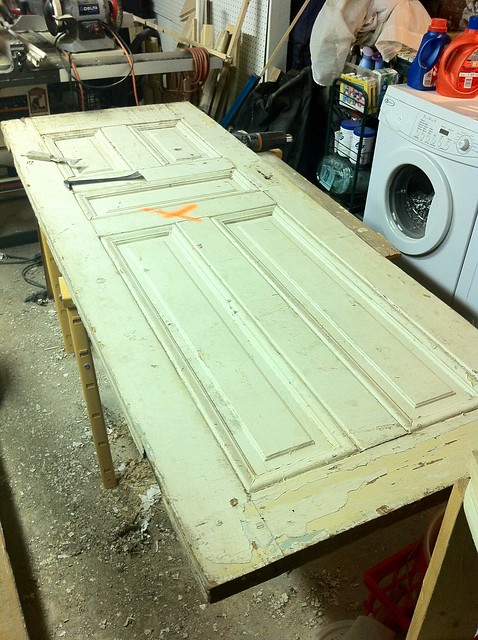
<p>With the molding removed, we moved onto stripping the door and its panels. Because of the large flat areas of the door, I opted to use the heat gun to do the majority of this stripping. In retrospect, I wish I would have used Peel Away 7 or something similar on this piece, but I guess I was in a bit of a masochistic mood that day. (I'm shaking my head while writing this.) After a couple of hours we had the first side fully stripped, and it looked pretty good.</p>
<div class="MediaContainer PhotoContainer"><a href="http://farm6.static.flickr.com/5089/5364660437_64e59ff9cf_z.jpg" rel="PhotoPopup" popupheight="640" popupwidth="478"><img alt="" src="https://farm6.static.flickr.com/5089/5364660437_64e59ff9cf.jpg" width="374" height="500" style="border-width: 0px;border-style: solid;"></a></div>
<p>I then sanded the whole thing with 120 grit sandpaper on the orbital sander, and '0' steel wool for the raised panel areas. This really cleaned it up nicely.</p>
<div class="MediaContainer PhotoContainer"><a href="http://farm6.static.flickr.com/5208/5364659915_e015d545be_z.jpg" rel="PhotoPopup" popupheight="640" popupwidth="478"><img alt="" src="https://farm6.static.flickr.com/5208/5364659915_e015d545be.jpg" width="374" height="500" style="border-width: 0px;border-style: solid;"></a></div>
<p>The photo above shows the one piece of O M R molding I mentioned earlier, stripped and set in place. All of the short pieces of molding were really easy to strip. I poured some Bix chemical stripper into a joint compound plastic tray, and then just let them sit in the stripper bath for a few hours. Then I would take them out, wipe the paint off, and put them back in if there was still paint that needed to be loosened.</p>
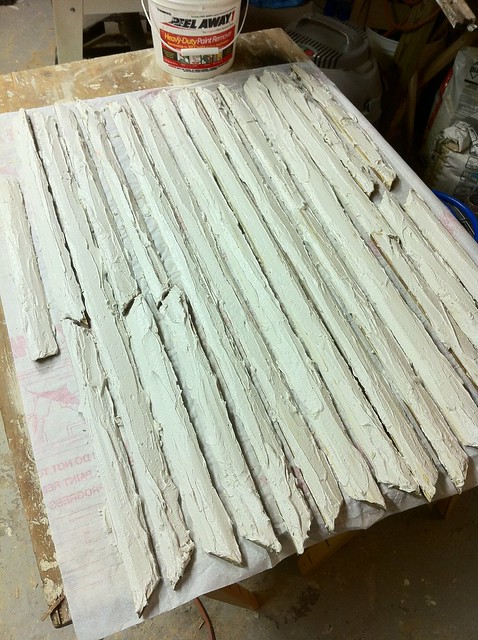
<p>The short pieces may have been easy, but the long pieces were a real pain. The paint was so thick that I decided I was going to use Peel Away 1 on them. First, I laid them all out on the table in an organized fashion.</p>
<div class="MediaContainer PhotoContainer"><a href="http://farm6.static.flickr.com/5184/5657332803_b160faf83f_z.jpg" rel="PhotoPopup" popupheight="640" popupwidth="478"><img alt="" src="https://farm6.static.flickr.com/5184/5657332803_b160faf83f.jpg" width="374" height="500" style="border-width: 0px;border-style: solid;"></a></div>
<p>Next, I covered them in Peel Away 1. Whenever I use that stuff, I feel like I am icing a cake...and I'm really bad at applying cake icing. But the icing smells a little like fish, so the cake must be horrible. It's a bit of a boring process, so these are the random thoughts that go through my head. But once I was done, the <span style="text-decoration: line-through;">cake</span>&nbsp;molding looked like this.</p>
<p>
</p>
<div class="MediaContainer PhotoContainer"><a href="http://farm6.static.flickr.com/5141/5657909314_92b04a4a9c_z.jpg" rel="PhotoPopup" popupheight="640" popupwidth="478"><img alt="" src="https://farm6.static.flickr.com/5141/5657909314_92b04a4a9c.jpg" width="374" height="500" style="border-width: 0px;border-style: solid;"></a></div>
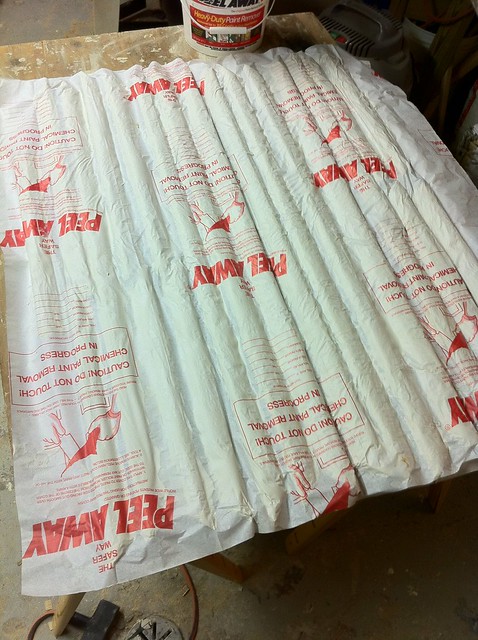
<p>Then I covered the pieces of molding with a sheet of Peel Away paper to keep the Peel Away 1 wet longer so that it could stay active for longer (remember, you can use wax paper).&nbsp;</p>
<p>
</p>
<div class="MediaContainer PhotoContainer"><a href="http://farm6.static.flickr.com/5303/5657338185_e2c58279a6_z.jpg" rel="PhotoPopup" popupheight="640" popupwidth="478"><img alt="" src="https://farm6.static.flickr.com/5303/5657338185_e2c58279a6.jpg" width="374" height="500" style="border-width: 0px;border-style: solid;"></a></div>
<p>At this point, I called it a night, knowing the Peel Away 1 would need about 16-24 hours to work, and that I probably had a hell day of paint removal ahead of me. It looks so neat and organized at this stage, but that is just the calm before the smelly and messy storm.</p>
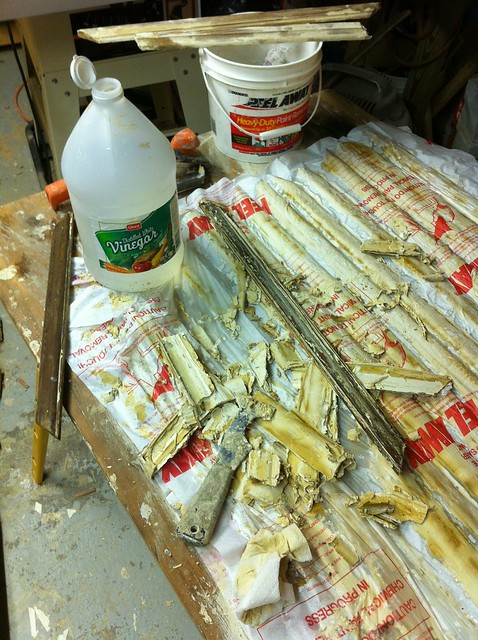
<p>The next day, I started removing the paper and paint. The chemical process leaves a brown and water sludge that seems to get <strong>everywhere</strong>. It stinks, it sprays, it gets on your clothes, and it burns when it gets on your skin. It is a slow process and you need to have patience.</p>
<p>
</p>
<div class="MediaContainer PhotoContainer"><a href="http://farm6.static.flickr.com/5062/5657438931_da6b9f92e1_z.jpg" rel="PhotoPopup" popupheight="640" popupwidth="478"><img alt="" src="https://farm6.static.flickr.com/5062/5657438931_da6b9f92e1.jpg" width="374" height="500" style="border-width: 0px;border-style: solid;"></a></div>
<p>Once you get the paper removed and as much of the paint scrapped off of the pieces as possible, it is important to wash the paint off and neutralize the stripped wood. To do this, I used many rolls of paper towels and vinegar. The vinegar is the neutralizing agent and needs to coat the entire surface. It is also really good at getting the residual gunk cleaned off of the surfaces.</p>
<p>
</p>
<div class="MediaContainer PhotoContainer"><a href="http://farm6.static.flickr.com/5182/5658015732_645543c1e3_z.jpg" rel="PhotoPopup" popupheight="640" popupwidth="478"><img alt="" src="https://farm6.static.flickr.com/5182/5658015732_645543c1e3.jpg" width="374" height="500" style="border-width: 0px;border-style: solid;"></a></div>
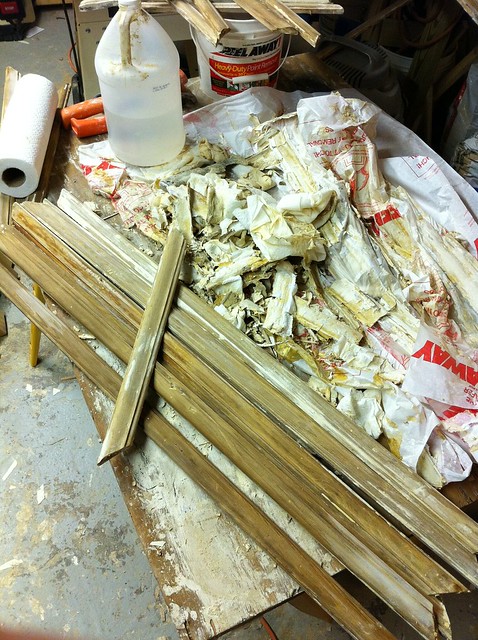
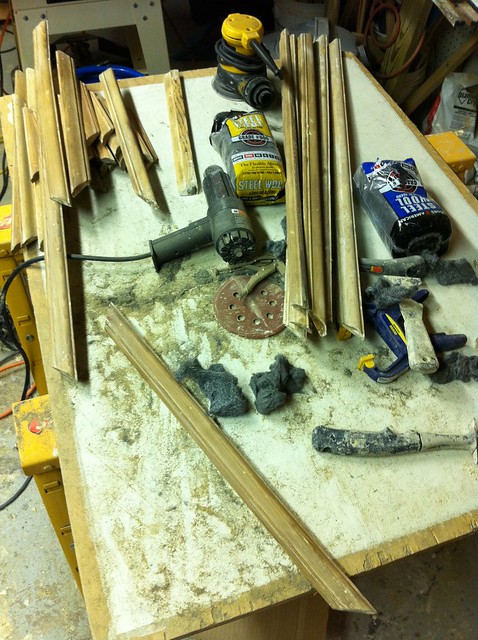
<p>Stripping this many small pieces is much more challenging than a large door. You need to clean the pieces, keep them out of the gunk, move them to another place to dry, and fight every urge to knock into everything in the cramped basement while trying to work quickly but deliberately.&nbsp;Once all of the Peel Away had been removed, cleaned up, and disposed of, I let the pieces of molding dry for a few days before I started to do final paint removal and sanding.&nbsp;</p>
<p>
</p>
<div class="MediaContainer PhotoContainer"><a href="http://farm3.static.flickr.com/2097/5810239143_07453e8c3e_z.jpg" rel="PhotoPopup" popupheight="640" popupwidth="478"><img alt="" src="https://farm3.static.flickr.com/2097/5810239143_07453e8c3e.jpg" width="374" height="500" style="border-width: 0px;border-style: solid;"></a></div>
<p>The Peel Away does a good job of paint removal, but all of these pieces had some intricate details that held onto bits of paint. In order to finish this paint removal job, I used the heat gun to remove the stubborn paint that had held on, and then sanded each piece with '1' and then '000' steel wool. It was a long process, and one that took its toll on my hands (I'm so thankful for <a href="http://www.oldtownhome.com/2011/6/7/Toolbox-Tuesday-The-Gloves-Come-Off-Not-All-Work-Gloves-are-Created-Equal/index.aspx">good work gloves</a>), but the end results are 40 pieces of completely bare and nicely painted door panel molding, just waiting to be&nbsp;re-installed.</p>
<p>The last major thing we needed to fix on the entry door before we would be able to hang it was the fact that the joints had failed. If you picked the door up and held it vertical, similar to the way it would hang on hinges, the whole thing would sag and&nbsp;separate&nbsp;a bit. To fix this, I decided to pull it apart a little bit more, re-glue the joints as best as I could, then clamp the door together and install some dowels at each point.</p>
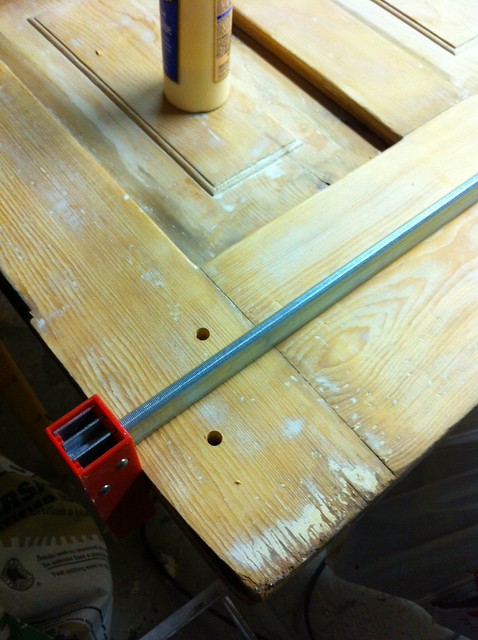
<p>With the joints glued up, I used my cabinet clamps to secure the whole door from side to side, then drilled two holes into each mortise around the door. The holes don't go all of the way through the door, just about 3/4 of the way. This would give the dowels enough hold into the tenons of the pieces, without exposing the holes to the weather outside.</p>
<p>
</p>
<div class="MediaContainer PhotoContainer"><a href="http://farm6.static.flickr.com/5229/5658016309_725674c8e4_z.jpg" rel="PhotoPopup" popupheight="640" popupwidth="478"><img alt="" src="https://farm6.static.flickr.com/5229/5658016309_725674c8e4.jpg" width="374" height="500" style="border-width: 0px;border-style: solid;"></a></div>
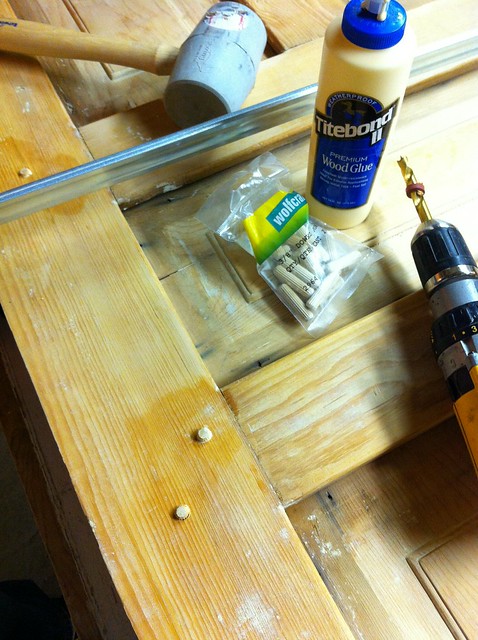
<p>Then I filled the holes with some glue, and tapped the dowels into their holes with a rubber mallet. If the glue didn't overflow the hole, I would remove the dowel and put in a bit more glue. As the glue dried, the dowels also expanded a little bit, leaving an extremely solid hold at two points in each joint.</p>
<p>
</p>
<div class="MediaContainer PhotoContainer"><a href="http://farm6.static.flickr.com/5226/5658018933_0fec7f6630_z.jpg" rel="PhotoPopup" popupheight="640" popupwidth="478"><img alt="" src="https://farm6.static.flickr.com/5226/5658018933_0fec7f6630.jpg" width="374" height="500" style="border-width: 0px;border-style: solid;"></a></div>
<p>The dowels protruded from the door a bit, so I had to sand them smooth after the glue had dried.&nbsp;</p>
<p>
</p>
<div class="MediaContainer PhotoContainer"><a href="http://farm6.static.flickr.com/5141/5658023071_e62b595e4e_z.jpg" rel="PhotoPopup" popupheight="640" popupwidth="478"><img alt="" src="https://farm6.static.flickr.com/5141/5658023071_e62b595e4e.jpg" width="374" height="500" style="border-width: 0px;border-style: solid;"></a></div>
<p>Once everything had dried up, the door is now as solid and stable as the day it was made. A quick shave and sand of the dowels and they are flush with the door.</p>
<p>This was a lot of effort to strip and fix one door, but the door is quite beautiful. We're still working on stripping the double doors and hope to have that post up later this week. We also need to work on fitting the doors to the openings and mortising the hinges, but that comes later. Let's take a quick look at our progress.</p>
<p>
</p>
<ol>
    <li style="padding-bottom: 0px; padding-left: 0px; padding-right: 0px; list-style-image: none; padding-top: 2px;"><span style="text-decoration: line-through;"><a href="http://www.oldtownhome.com/2011/6/13/Entry-Vestibule-The-Smallest-Room-in-the-House/index.aspx">Renovate the space, walls, ceiling, molding, strip, patch, paint</a></span> </li>
    <li style="padding-bottom: 0px; padding-left: 0px; padding-right: 0px; list-style-image: none; padding-top: 2px;"><span style="text-decoration: line-through;">Install new tile floor </span></li>
    <li style="padding-bottom: 0px; padding-left: 0px; padding-right: 0px; list-style-image: none; padding-top: 2px;">Purchase antique mail slot - still looking</li>
    <li style="padding-bottom: 0px; padding-left: 0px; padding-right: 0px; list-style-image: none; padding-top: 2px;">Replace&nbsp;interior doors&nbsp;with stripped and fitted salvaged door - <strong>(Stripping Done!)</strong></li>
    <li style="padding-bottom: 0px; padding-left: 0px; padding-right: 0px; list-style-image: none; padding-top: 2px;">Replace&nbsp;exterior door with salvaged door after stripping and replacing glass panes </li>
    <li style="padding-bottom: 0px; padding-left: 0px; padding-right: 0px; list-style-image: none; padding-top: 2px;"><span style="text-decoration: line-through;"><a href="http://www.oldtownhome.com/2011/6/22/Transoms-A-Window-of-Possibilities/index.aspx">Make&nbsp;interior transom window operational</a> </span></li>
    <li style="padding-bottom: 0px; padding-left: 0px; padding-right: 0px; list-style-image: none; padding-top: 2px;">Replace&nbsp;exterior transom window with either leaded glass or painted house numbers, we're not sure on this step yet - <strong>(Any votes from readers?)</strong></li>
</ol>
<p>Stay tuned as this project is moving right along. We're also getting close on a paint color selection for the new front door. We want something that is very different from all of our neighbors, as well as something that pops. We can't wait to wrap this project up!</p><p><a href="https://www.oldtownhome.com/2011/6/29/Behind-Closed-Doors-Were-Stripping-Again/">Read Full Post</a></p>]]></content>
    <category term="Entryway" />
    <category term="Header Image" />
    <category term="Paint Removal" />
    <category term="Projects:Paint" />
    <category term="Projects:Salvage" />
    <category term="Salvage" />
    <category term="Trash to Treasure" />
    <category term="Vestibule" />
    <PostImage>http://farm6.static.flickr.com/5155/5884768738_b1e5abcbde.jpg</PostImage>
    <media:thumbnail url="https://farm6.static.flickr.com/5155/5884768738_b1e5abcbde_t.jpg" />
    <ExtensionElements>
      <Item>PostImage</Item>
      <Item>media:thumbnail</Item>
    </ExtensionElements>
  </entry>
</feed>