<?xml version="1.0" encoding="utf-8"?>
<feed xmlns="http://www.w3.org/2005/Atom" xmlns:media="http://search.yahoo.com/mrss/">
  <title>Old Town Home Category: 'Ask Old Town Home'</title>
  <updated>2013-12-11T14:55:00.000-05:00</updated>
  <id>http://www.oldtownhome.com/ask-old-town-home/index.atom</id>
  <link rel="alternate" href="http://www.oldtownhome.com/ask-old-town-home/index.atom" />
  <author>
    <name>Alex and Wendy</name>
    <uri>http://www.oldtownhome.com/</uri>
    <email>wendy@oldtownhome.com</email>
  </author>
  <entry>
    <guid>a254f667-0ba3-41e2-9841-511b32383752</guid>
    <id>https://www.oldtownhome.com/2013/12/11/Ask-Old-Town-Home---How-Should-We-Handle-Our-Old-Stairs/</id>
    <title>Ask Old Town Home - How Should We Handle Our Old Stairs?</title>
    <summary type="html"><![CDATA[<p>If there's a group of people we understand and identify with the most, it's easily the relatively small community of old home owners who are undertaking renovations either partially or fully on their own. It's one thing to own an old house, another to renovate it, but it's a whole other world to take on part or all of the work on your own. Any time we get together, either in person or virtually, I swear it's half party and half support group meeting.</p><p>Last week we were contacted by the fellow old house renovators and bloggers of <a href="http://www.yellowbrickhome.com/" target="_blank">Yellow Brick Home</a>. Kim and Scott had a staircase dilemma. Their 120 year old Chicago home's stairs had seen better days. After removing the burgundy carpet that covered the stairs when they purchased the home (and undertaking a rather large renovation that included opening up the entryway), the treads and risers were chipped, pitted, and covered with cracked paint. After going through the many different options in their heads, Kim reached out to us for our two cents on how to handle their stairway conundrum.&nbsp;</p><div class="AskQuote" style="margin: 5px 15px; padding: 10px; background-color: #d9e7ea;">
<p><em>Scott and I keep going back and forth on a project, and we're just feeling really, really stuck. After consuming way too many hours trying to figure out the best way to do this, I thought I'd give it a try and ask you guys what you thought. Any input would be very, very much appreciated - so thank you in advance.</em></p>
<p><em>Okay, the project is our staircase! We simply want to paint the risers white and the treads black. The problem? We did a lead test on them, and the stairs are currently covered in lead paint. They're really pocked and chipped in a ton of places, so we would have to really lay on wood filler and sand, sand, sand - which we can't do with lead paint! So, we considered using Peel Away (1 or 7?) to get rid of it, but we've never used that before, and to be honest, we're worried it's going to be a MASSIVE task (not that we're looking for an easy way out, but removing lead paint is so far from our idea of a good time).</em></p>
<p><em>The other option would be to replace the risers and treads. I started pulling apart the top 2 steps tonight, and it took me about 30-40 minutes to do that, but I still need to pull out the rusty, 100 year old nails. So, suffice it to say that we have 16 steps, it would be an entire day of just pulling up the stairs, then potentially another day or two to put together treads and risers (we found treads at Lowes for $10/ea). Then we got nervous that maybe there's more of a science to building stairs then just that...</em></p>
<p><em>Have you encountered anything like this? Would you say that Peel Away is easy enough to use so we can fill/sand the stairs and paint them so they look decent? Or would it be so much of a nightmare, that building new treads/risers would actually be the better choice?</em></p>
<p><em></em></p>
<em>
<p class="MediaContainer PhotoContainer"><a href="http://farm8.staticflickr.com/7361/11325215663_73fe8b8ee9_z.jpg" rel="PhotoPopup" popupheight="440" popupwidth="550"><img alt="" src="https://farm8.staticflickr.com/7361/11325215663_73fe8b8ee9.jpg" width="500" height="400" style="border-width: 0px; border-style: solid;"></a></p>
<p class="MediaContainer PhotoContainer">Photo Credit:&nbsp;<a href="http://www.yellowbrickhome.com/" target="_blank">Yellow Brick Home</a></p>
</em>
<p><em></em></p>
</div><p>Well, talk about a question that is absolutely and 100% right in our wheelhouse! We've both been there and done that, and we know exactly the dilemma they're dealing with. Back when we bought our house our stairs were covered in ugly carpet, and we had dreams of removing the carpet to find beautiful stairs that didn't need any work (I think we had been watching too many renovation reality shows). </p><p>
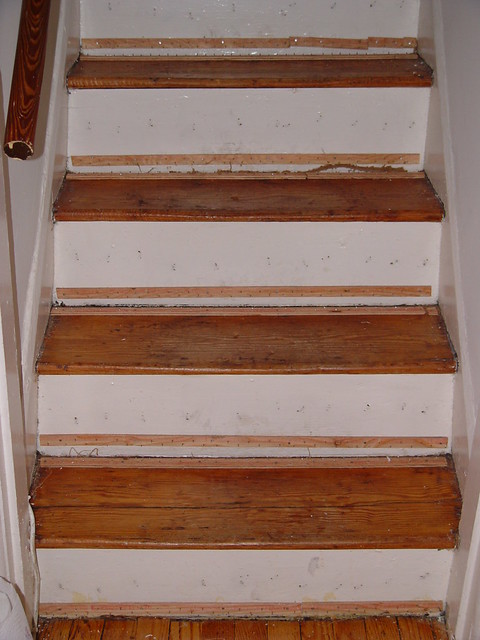
</p><div class="MediaContainer PhotoContainer"><a href="http://farm6.staticflickr.com/5010/5643387532_f38e1c54ab_z.jpg" rel="PhotoPopup" popupheight="640" popupwidth="480"><img alt="" src="https://farm6.staticflickr.com/5010/5643387532_f38e1c54ab.jpg" width="375" height="500" style="border-width: 0px; border-style: solid;"></a></div><p>Instead, we found great treads that needed to be refinished and risers full of lumpy paint, some of which was likely lead based.</p><p>
</p> <a href="https://www.oldtownhome.com/2013/12/11/Ask-Old-Town-Home---How-Should-We-Handle-Our-Old-Stairs/">more</a>]]></summary>
    <published>2013-12-11T14:55:00.000-05:00</published>
    <updated>2013-12-11T14:55:00.000-05:00</updated>
    <link rel="alternate" href="https://www.oldtownhome.com/2013/12/11/Ask-Old-Town-Home---How-Should-We-Handle-Our-Old-Stairs/" />
    <author>
      <name>Alex</name>
    </author>
    <content type="html"><![CDATA[<p>If there's a group of people we understand and identify with the most, it's easily the relatively small community of old home owners who are undertaking renovations either partially or fully on their own. It's one thing to own an old house, another to renovate it, but it's a whole other world to take on part or all of the work on your own. Any time we get together, either in person or virtually, I swear it's half party and half support group meeting.</p>
<p>Last week we were contacted by the fellow old house renovators and bloggers of <a href="http://www.yellowbrickhome.com/" target="_blank">Yellow Brick Home</a>. Kim and Scott had a staircase dilemma. Their 120 year old Chicago home's stairs had seen better days. After removing the burgundy carpet that covered the stairs when they purchased the home (and undertaking a rather large renovation that included opening up the entryway), the treads and risers were chipped, pitted, and covered with cracked paint. After going through the many different options in their heads, Kim reached out to us for our two cents on how to handle their stairway conundrum.&nbsp;</p>
<div class="AskQuote" style="margin: 5px 15px; padding: 10px; background-color: #d9e7ea;">
<p><em>Scott and I keep going back and forth on a project, and we're just feeling really, really stuck. After consuming way too many hours trying to figure out the best way to do this, I thought I'd give it a try and ask you guys what you thought. Any input would be very, very much appreciated - so thank you in advance.</em></p>
<p><em>Okay, the project is our staircase! We simply want to paint the risers white and the treads black. The problem? We did a lead test on them, and the stairs are currently covered in lead paint. They're really pocked and chipped in a ton of places, so we would have to really lay on wood filler and sand, sand, sand - which we can't do with lead paint! So, we considered using Peel Away (1 or 7?) to get rid of it, but we've never used that before, and to be honest, we're worried it's going to be a MASSIVE task (not that we're looking for an easy way out, but removing lead paint is so far from our idea of a good time).</em></p>
<p><em>The other option would be to replace the risers and treads. I started pulling apart the top 2 steps tonight, and it took me about 30-40 minutes to do that, but I still need to pull out the rusty, 100 year old nails. So, suffice it to say that we have 16 steps, it would be an entire day of just pulling up the stairs, then potentially another day or two to put together treads and risers (we found treads at Lowes for $10/ea). Then we got nervous that maybe there's more of a science to building stairs then just that...</em></p>
<p><em>Have you encountered anything like this? Would you say that Peel Away is easy enough to use so we can fill/sand the stairs and paint them so they look decent? Or would it be so much of a nightmare, that building new treads/risers would actually be the better choice?</em></p>
<p><em></em></p>
<em>
<p class="MediaContainer PhotoContainer"><a href="http://farm8.staticflickr.com/7361/11325215663_73fe8b8ee9_z.jpg" rel="PhotoPopup" popupheight="440" popupwidth="550"><img alt="" src="https://farm8.staticflickr.com/7361/11325215663_73fe8b8ee9.jpg" width="500" height="400" style="border-width: 0px; border-style: solid;"></a></p>
<p class="MediaContainer PhotoContainer">Photo Credit:&nbsp;<a href="http://www.yellowbrickhome.com/" target="_blank">Yellow Brick Home</a></p>
</em>
<p><em></em></p>
</div>
<p>Well, talk about a question that is absolutely and 100% right in our wheelhouse! We've both been there and done that, and we know exactly the dilemma they're dealing with. Back when we bought our house our stairs were covered in ugly carpet, and we had dreams of removing the carpet to find beautiful stairs that didn't need any work (I think we had been watching too many renovation reality shows). </p>
<p>
</p>
<div class="MediaContainer PhotoContainer"><a href="http://farm6.staticflickr.com/5010/5643387532_f38e1c54ab_z.jpg" rel="PhotoPopup" popupheight="640" popupwidth="480"><img alt="" src="https://farm6.staticflickr.com/5010/5643387532_f38e1c54ab.jpg" width="375" height="500" style="border-width: 0px; border-style: solid;"></a></div>
<p>Instead, we found great treads that needed to be refinished and risers full of lumpy paint, some of which was likely lead based.</p>
<p>
</p>
<div class="MediaContainer PhotoContainer"><a href="http://farm6.staticflickr.com/5028/5642819103_916f6e2f56_z.jpg" rel="PhotoPopup" popupheight="640" popupwidth="480"><img alt="" src="https://farm6.staticflickr.com/5028/5642819103_916f6e2f56.jpg" width="375" height="500" style="border-width: 0px; border-style: solid;"></a></div>
<p>We were thoroughly discouraged, but we threw our apprehension to the wind (while maintaining our caution in dealing with the lead paint) and decided to take the bull by the horns and strip the risers using Peel Away 7.</p>
<p>
</p>
<div class="MediaContainer PhotoContainer"><a href="http://farm6.staticflickr.com/5186/5642837657_c04915e3e9_z.jpg" rel="PhotoPopup" popupheight="480" popupwidth="640"><img alt="" src="https://farm6.staticflickr.com/5186/5642837657_c04915e3e9.jpg" width="500" height="375" style="border-width: 0px; border-style: solid;"></a></div>
<p>It wasn't an easy task by any means, but it turned out absolutely great, and our stairs are one of the aspects of our home, cracks, dings, and all, that keep the soul of the house intact and provide that real old house charm and character.&nbsp;</p>
<p>
</p>
<div class="MediaContainer PhotoContainer"><a href="http://farm8.staticflickr.com/7435/11325082034_3e8758e9ed_z.jpg" rel="PhotoPopup" popupheight="640" popupwidth="426"><img alt="" src="https://farm8.staticflickr.com/7435/11325082034_3e8758e9ed.jpg" width="333" height="500" style="border-width: 0px; border-style: solid;"></a></div>
<p>If you want to read more about our stairs, be sure to <a href="http://www.oldtownhome.com/entry-hall/index.aspx">check out our entry hall posts</a>, but the reason for today's Ask Old Town Home has to do with Kim and Scott's stairs.</p>
<p>In looking over Kim's email I was brought right back to our early days in working on our house and the decisions we made. While we're happy with our outcome, Kim's end goal of black painted treads and white risers meant that she could entertain several different approaches to satisfy her desired outcome.</p>
<p>In my response I first climbed onto my old house soap box and supported the idea of keeping the old stairs intact and then laid out the two different scenarios I would consider if I were tackling their project with their goals in mind. They ranged from intensive and very time consuming to, well, slightly less intensive and mildly time consuming.&nbsp;</p>
<p><em>(Remember, almost nothing when working on an old house should ever truly be fast and easy. If it's fast and easy, there's a good chance it may not be a very good solution. Sad fact.)</em></p>
<h3>Old House Soap Box</h3>
<p>Honestly, I can empathize with Kim's hesitation, and thoughts on taking out and possibly replacing the stairs, we had similar initial thoughts when looking at our slanted and slightly damaged stairs, but I'm pretty much going to absolutely suggest against that approach for several reasons (beyond the fact that I'm simply an old house nut and would hate to see those stairs go, in part or in whole).</p>
<p>The thing to remember is the age of the stairs, they were built to last. Sure, they might be chipped, pitted, and covered with lead based paint, but the stairs and parts themselves, at 120 plus years old, are likely in good shape.</p>
<p>First, old stairs are truly built to last, and the parts you can find at big boxes and normal lumber yards are not the old growth pine old homes are blessed with. The new stuff is unstable, tends to easily warp/splinter, and isn't cut to the correct dimensions for older homes. And if the stairs are sound structurally, without major cracks in treads, wobbly pieces, or significant damage, they're worth saving over covering or replacing.</p>
<p>Second, to properly replace treads and risers you essentially need to take apart the entire stair assembly, and the baseboards, and possibly other items that get into the whole "old house can of worms" that can easily spiral into a whole host of other unwanted projects (and you'd also have no way to get upstairs for a while).</p>
<p>And third, rebuilding stairs is just plain hard, especially when I'm willing to bet that the risers and treads are all slightly different size, shape, etc. Not significant differences, but old home differences, enough to throw you off by an inch or two once you reach the top in a full rebuild with consistent dimensions.</p>
<p>Given my feelings on "older is almost always better," I think you can probably also guess my feelings on re-covering treads and risers with new wood, it's sacrilege. &nbsp;As I've said, I think old stairs are part of the true soul of an old house, and covering them with new wood is unnecessarily robbing a piece of that soul. Not to mention that it's something you can't just undo. When you cover old stairs you need to cut off the bullnose overhang of each tread. I just don't like it.</p>
<p class="MediaContainer PhotoContainer"><a href="http://farm6.staticflickr.com/5527/10733054523_ef330bc4b4_z.jpg" rel="PhotoPopup" popupheight="640" popupwidth="480"><img alt="" src="https://farm6.staticflickr.com/5527/10733054523_ef330bc4b4.jpg" width="375" height="500" style="border-width: 0px; border-style: solid;"></a></p>
<p class="MediaContainer PhotoContainer"><em>This is what happens when you suggest taking out old stairs.</em></p>
<p>Okay, I'm off of the "old is always awesome" soap box again and ready to offer up a few constructive solutions to achieve the stair goals Kim and Scott are looking for.</p>
<p>As I see it, given their desire to have painted stairs, there are two very doable options. One is relatively straight forward and one is...not at easy.</p>
<h3>Option 1 -- The Not As Easy Approach</h3>
<p>Strip all of that old paint off of the stairs, top to bottom, and then repaint. This will give you perfectly smooth stairs that are free of lead paint, but this obviously has it's significant drawbacks.</p>
<p>Speaking as someone who was exposed to lead during a summer job, I'm personally both paranoid about additional lead exposure, and also comforted that my issue was 17 years ago and I've not cut my ear off or otherwise gone mad at this point, and I spent 8 hours a day, 5 days a week, for 3 months breathing in lead dust without a mask or anything else to protect me.&nbsp;</p>
<p>That being said, lead paint removal isn't like nuclear waste removal, and a DIYer can still take care of the job as long as proper precautions are taken. You'll need to check with your local jurisdiction on guidelines and preferred approaches for lead paint removal, as well as friendly advice. They'll likely recommend things like removing the paint using a paint stripper that is made for lead paint removal,sanding the surface by properly protecting the surrounding area and while using a mask that's rated for lead paint (and then thoroughly washing your clothes when you're done), and properly disposing of the paint and debris in accepted locations and correct vessels. All said, this type of paint stripping is definitely within reason for two capable adults, and far less of a massive undertaking than replacing stair risers and treads, you just need to be prepared to do the research and take the necessary precautions.</p>
<p>Given that we stripped the paint off the risers and stringer baseboards on our stairs when we bought the house 11 years ago, I can say that it's both doable and tedious, but the stairs look awesome when you're done.</p>
<div class="ToolItem">
<iframe src="http://rcm-na.amazon-adsystem.com/e/cm?t=oltoho-20&amp;o=1&amp;p=8&amp;l=as1&amp;asins=B001F0KO2S&amp;IS1=1&amp;ref=qf_sp_asin_til&amp;fc1=3A3128&amp;lt1=_blank&amp;m=amazon&amp;lc1=61838A&amp;bc1=FAFAF8&amp;bg1=FAFAF8&amp;f=ifr" style="width: 120px; height: 240px;" scrolling="no" marginwidth="0" marginheight="0" frameborder="0"></iframe>
</div>
<p>If I were doing it today I would use the product called SmartStrip instead of Peel Away 1 or 7. You put it on, cover it with wax paper, then let it sit for about 18-24 hours. Then, come back with a flat pull scraper and scrape off what will come off. I scrape leaving the wax paper on and just scrape the paper right off with the paint. The first coat will likely not get more than the first few layers of paint. I wouldn't try to scrape more than that as you'll get into the lead dust zone, just take off what will come off. Then, put another coat of the SmartStrip, let it sit covered in wax paper again for 18-24 hours, then come back with the scraper. After the 2nd coat with this stuff I've had great luck in getting almost full removal. Stairs are also not horribly difficult since it's all flat surfaces, except for the nose of the treads, so you won't have to resort to dental tools for detailed areas.</p>
<p>As you work you'll want a garbage bag nearby so you can throw the wax paper and paint residue away right away. It's like a gross sludge, but that's what makes it so lead dust isn't an issue. The sludge means low/no dust since heat and sanding are not involved. One thing to consider, expect the sludge to get on your clothes, which will not wash out.</p>
<p>I'd try it out on a few stairs just to see how it goes. If you think you can tackle it do every other stair for the first round. That way you can still use the stairs while the stripper is on. Once you have it all stripped then do the stairs that you didn't complete already. After you've done the treads and risers, come back through and do the baseboards (actually can't quite tell if they're still there or not from the photo).</p>
<p>That being said, I'd really only take this route if you wanted to strip the stairs and stain them, or if the paint on them is so thick that you simply cant live with all of the drips (which was our case).</p>
<h3>Option 2 -- The "easier" approach</h3>
<p>My second, and much easier proposed approach is to go ahead and paint them, covering up the lead based paint. (The term of the day is "encapsulation.")</p>
<p>
</p>
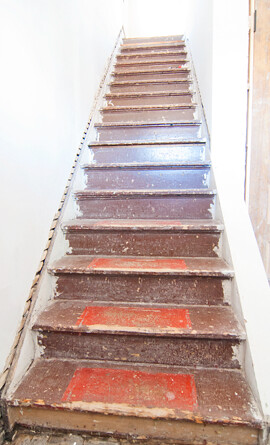
<p class="MediaContainer PhotoContainer"><a href="http://farm6.staticflickr.com/5537/11325861903_4047cd3f0f.jpg" rel="PhotoPopup" popupheight="445" popupwidth="270"><img alt="" src="https://farm6.staticflickr.com/5537/11325861903_4047cd3f0f.jpg" width="270" height="445" style="border-width: 0px; border-style: solid;"></a></p>
<p class="MediaContainer PhotoContainer"><em>Photo Credit: <a href="http://www.yellowbrickhome.com/" target="_blank">Yellow Brick Home</a></em></p>
<p>I know there are dings and such, but the bad ones are easy to fill, and the sanding needed to smooth the wood filler wouldn't end up throwing up Pigpen style clouds of lead if you take the right approach.</p>
<p>To get started, grab the supplies you'll need. An alkyd/oil based primer, a random orbit sander attached to a <a href="http://www.oldtownhome.com/2011/9/20/Toolbox-Tuesday-A-Good-Shop-Vac-Really-Sucks/">Shop-Vac with a HEPA filter attached to it</a>, plastic for protecting the surrounding rooms, and a <a href="http://www.oldtownhome.com/2012/1/10/Toolbox-Tuesday-Breathe-In-Breathe-Out----Choosing-the-Right-Respirator/">dust mask rated for lead exposure</a>. That will take care of the lead issues, especially if you get a long Vac hose and have the vacuum sit in an enclosed area away from you while you're sanding. The key here is that you're not sanding the paint, you're sanding the filler.&nbsp;</p>
<p>Next, paint the stairs with your high quality alkyd/oil exterior primer (interior/exterior works too). Paint before filling any of the chips or gaps. Once the paint dries, fill all of the things you need to fill with a high quality wood filler. I don't have a specific brand that I like for this, but it should be something stable that won't shrink or crack. It doesn't need to be epoxy, but that it needs to stand up to foot traffic.</p>
<p>Once the wood filler spots have dried, sand the wood filler smooth with the sander, but since you painted the stairs with the oil based primer, you're not throwing dust all over the place, the primer is your barrier. Still, wear a good mask while doing this.</p>
<p>Once smooth, prime the stairs with another coat of oil based primer to cover any primer you sanded off and the new wood filler. You'll need to let the primer dry completely, which can take a while for the oil based stuff, and it can be pretty stinky, but it's worth it for the top coat.</p>
<p>Finally, paint the stairs with a high gloss exterior grade oil enamel (like the stuff they use on porches). This is why I suggest the oil primer, as it's necessary for the oil top coat. Be sure the paint you select is meant for wood, because several stores have been trying to pass off the formula for metal as an "all purpose." The best part about this paint is that It will dry really hard and will seal in any lead paint.</p>
<p>If you're painting the risers and stringer white, but the treads black, I'd actually paint the whole stairs white for the first coat, then start working on the different colors. I'd probably end up doing about three total top coats with a 24 hour dry time between coats. This obviously makes walking up and down the stairs a challenge, so timing of all of this is key.</p>
<p>In the end, I'm rather sure you'll have exactly the look you want, with a little added old house character in the way of pits and bumps.</p>
<p>This is easily the most economical, easiest, and most effective. Taking this approach also leaves the stairs intact, as you aren't cutting off the nose of each tread, and aren't changing the height of the first step or top stair riser. The best news is that you can always take another approach later if you're not happy with the results.</p>
<p>What do you think? If you were doing Kim's stairs and wanted black painted treads and white risers, how would you have gone about accomplishing it? Would you have primed, filled, and painted, or would you go the whole route of stripping? Or would you try your hand at modifying and resurfacing?&nbsp;</p>
<p>If you want to see how Kim and Scott ended up handling the situation, check out their <a href="http://www.yellowbrickhome.com/2013/12/10/the-stairs-step-1/" target="_blank">blog post about their weekend's worth of efforts</a>. I'd say it turned out pretty great.</p>
<p class="MediaContainer"><a href="http://www.oldtownhome.com/be-content/ask-old-town-home.aspx"><img alt="" src="https://farm8.staticflickr.com/7100/7170596992_d613bdf988.jpg" width="331" height="69" style="border-width: 0px; border-style: solid;"></a></p>
<p><em>Disclaimer: Ask Old Town Home is meant simply as a friendly bit of advice and is provided free of charge. It is your responsibility to fully research any and all items related to projects or suggestions to ensure proper safety and code precautions and regulations are fully followed. In other words, any advice we provide is just our opinion, and our opinion is only worth the price we charge for it. :-)</em></p><p><a href="https://www.oldtownhome.com/2013/12/11/Ask-Old-Town-Home---How-Should-We-Handle-Our-Old-Stairs/">Read Full Post</a></p>]]></content>
    <category term="Ask Old Town Home" />
    <category term="Header Image" />
    <PostImage>http://farm4.staticflickr.com/3680/11327825825_6b00044107.jpg</PostImage>
    <media:thumbnail url="https://farm4.staticflickr.com/3680/11327825825_6b00044107_t.jpg" />
    <ExtensionElements>
      <Item>PostImage</Item>
      <Item>media:thumbnail</Item>
    </ExtensionElements>
  </entry>
  <entry>
    <guid>450f7896-8f28-4c60-9066-1bd3afc1fcf8</guid>
    <id>https://www.oldtownhome.com/2013/8/28/Ask-Old-Town-Home-As-New-Homeowners-Where-Do-We-Start/</id>
    <title>Ask Old Town Home: As New Homeowners, Where Do We Start?</title>
    <summary type="html"><![CDATA[<p>Whether you're a seasoned DIY veteran or someone attempting to get settled into your first apartment, I'd venture to guess we've all asked ourselves the same question: "Where do I start?" Moving into a new home and/or attempting a renovation can be a daunting process. You may not have any furniture, or maybe your furniture doesn't fit your new space, both literally and figuratively. Budgets may be tight, and let's face it, no one wants to invest a lot of money and time into a project or furnishings that they'll later regret.&nbsp;</p><p>Old Town Home readers Nathan and Jenn reached out with a similar challenge, as they prepare to move into their first home:&nbsp;</p><div class="AskQuote" style="margin: 5px 15px; padding: 10px; background-color: #d9e7ea;">
<p><em>Hello Wendy &amp; Alex, My fianc&eacute;, Jenn, and I have been following your blog for over a year now and we wanted to say 'Thank you' and tell you how much we love all of the renovation tips you&rsquo;ve added over the years. We are huge fans of Old Town and we are currently in the process of buying our first home there! ... We were wondering if you have any advice for a couple just starting to fix an old home. Like which projects should you start first and which project you should wait on. I guess our question is: if you had to start work on your home all over again, what order would you do things in? Thanks again, Nathan &amp; Jenn</em></p>
</div><p>Thinking back to the first months and even first years in our home, we dealt with this exact challenge. Here we were, in our early 20s, having invested nearly every penny into the "home of our dreams." The problem was...many of our friends and family thought it was more of a nightmare. <a href="http://www.oldtownhome.com/2011/4/25/Lets-Start-at-the-Very-Beginning/index.aspx">Cracked plaster, dated bathrooms and kitchen, damaged hardwood floors</a>, inefficient heating and cooling systems, and a general bachelor pad vibe didn't exactly scream "welcome to our beautiful home." Though we had little knowhow and even fewer funds, we possessed willingness to put in some sweat equity and we had a vision.&nbsp;</p><p>The two things you really can't change about a house are its age and location. After a lengthy search, we ultimately chose our home because it's located in the historic district of Old Town Alexandria, just a stone's throw from the main shopping and dining district in town, and we also loved the elements of Victorian charm that had withstood both the test of time as well as the shoddy renovation attempts of homeowners past.&nbsp;</p><p>
</p><div class="MediaContainer PhotoContainer"><a href="http://farm7.staticflickr.com/6130/5985221044_0853b533df_z.jpg" rel="PhotoPopup" popupheight="640" popupwidth="480"><img alt="" src="https://farm7.staticflickr.com/6130/5985221044_0853b533df.jpg" width="375" height="500" style="border-width: 0px; border-style: solid;"></a></div><p>That being said, we also lucked into a lot of our decisions. We may not have had the foresight to think through a lot of the choices we made, but in retrospect, many of these choices are ones that we'd do all over again:</p> <a href="https://www.oldtownhome.com/2013/8/28/Ask-Old-Town-Home-As-New-Homeowners-Where-Do-We-Start/">more</a>]]></summary>
    <published>2013-08-28T12:26:00.000-04:00</published>
    <updated>2013-08-28T12:26:00.000-04:00</updated>
    <link rel="alternate" href="https://www.oldtownhome.com/2013/8/28/Ask-Old-Town-Home-As-New-Homeowners-Where-Do-We-Start/" />
    <author>
      <name>Wendy</name>
    </author>
    <content type="html"><![CDATA[<p>Whether you're a seasoned DIY veteran or someone attempting to get settled into your first apartment, I'd venture to guess we've all asked ourselves the same question: "Where do I start?" Moving into a new home and/or attempting a renovation can be a daunting process. You may not have any furniture, or maybe your furniture doesn't fit your new space, both literally and figuratively. Budgets may be tight, and let's face it, no one wants to invest a lot of money and time into a project or furnishings that they'll later regret.&nbsp;</p>
<p>Old Town Home readers Nathan and Jenn reached out with a similar challenge, as they prepare to move into their first home:&nbsp;</p>
<div class="AskQuote" style="margin: 5px 15px; padding: 10px; background-color: #d9e7ea;">
<p><em>Hello Wendy &amp; Alex, My fianc&eacute;, Jenn, and I have been following your blog for over a year now and we wanted to say 'Thank you' and tell you how much we love all of the renovation tips you&rsquo;ve added over the years. We are huge fans of Old Town and we are currently in the process of buying our first home there! ... We were wondering if you have any advice for a couple just starting to fix an old home. Like which projects should you start first and which project you should wait on. I guess our question is: if you had to start work on your home all over again, what order would you do things in? Thanks again, Nathan &amp; Jenn</em></p>
</div>
<p>Thinking back to the first months and even first years in our home, we dealt with this exact challenge. Here we were, in our early 20s, having invested nearly every penny into the "home of our dreams." The problem was...many of our friends and family thought it was more of a nightmare. <a href="http://www.oldtownhome.com/2011/4/25/Lets-Start-at-the-Very-Beginning/index.aspx">Cracked plaster, dated bathrooms and kitchen, damaged hardwood floors</a>, inefficient heating and cooling systems, and a general bachelor pad vibe didn't exactly scream "welcome to our beautiful home." Though we had little knowhow and even fewer funds, we possessed willingness to put in some sweat equity and we had a vision.&nbsp;</p>
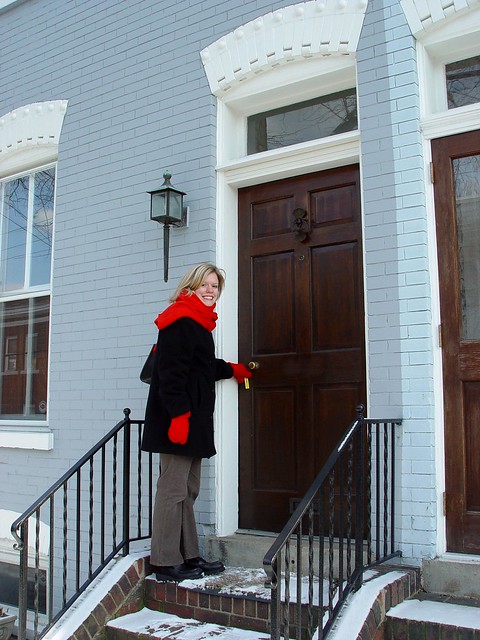
<p>The two things you really can't change about a house are its age and location. After a lengthy search, we ultimately chose our home because it's located in the historic district of Old Town Alexandria, just a stone's throw from the main shopping and dining district in town, and we also loved the elements of Victorian charm that had withstood both the test of time as well as the shoddy renovation attempts of homeowners past.&nbsp;</p>
<p>
</p>
<div class="MediaContainer PhotoContainer"><a href="http://farm7.staticflickr.com/6130/5985221044_0853b533df_z.jpg" rel="PhotoPopup" popupheight="640" popupwidth="480"><img alt="" src="https://farm7.staticflickr.com/6130/5985221044_0853b533df.jpg" width="375" height="500" style="border-width: 0px; border-style: solid;"></a></div>
<p>That being said, we also lucked into a lot of our decisions. We may not have had the foresight to think through a lot of the choices we made, but in retrospect, many of these choices are ones that we'd do all over again:</p>
<p><strong>Plan Your Move In Carefully</strong></p>
<p>If you have the luxury of choosing your settlement date to give you a bit of overlap with your current housing situation, I'd recommend giving yourself some time to transition into the new house. We closed on our house approximately 3 weeks before our lease expired. This window gave us enough time to knock out some of the messier projects that would be miserable, if not impossible, to live through.&nbsp;</p>
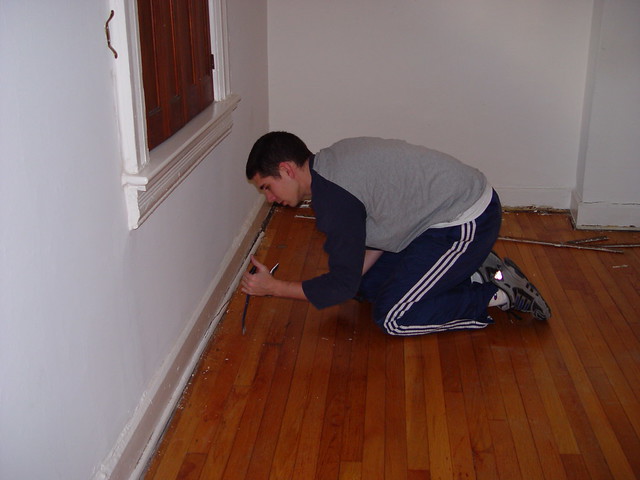
<p>For example, we knew we wanted to have our hardwood floors repaired and refinished, as well as start to tackle our phase one work in the kitchen. Not having much experience at this point, we had to be honest with ourselves and our timeline. Therefore, we hired out the work on the floors (one of the best decisions we could have made) so that it freed us up to start in on the kitchen. Just minutes after closing, we had prepped the house for the floor work, including ripping up the disgusting carpet on the stairs, as well as removing the shoe molding throughout the house. It made us feel like we were accomplishing something while letting the pros handle the really hard work.</p>
<p>
</p>
<div class="MediaContainer PhotoContainer"><a href="http://farm6.staticflickr.com/5022/5643390740_71b0d35930_z.jpg" rel="PhotoPopup" popupheight="480" popupwidth="640"><img alt="" src="https://farm6.staticflickr.com/5022/5643390740_71b0d35930.jpg" width="500" height="375" style="border-width: 0px; border-style: solid;"></a></div>
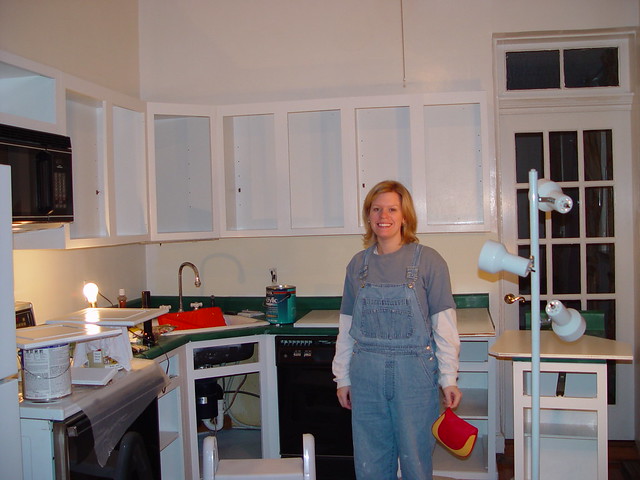
<p>While the floors in the rest of the house were being worked on, we sanded and painted the cabinets, replaced the hardware, and completed our <a href="http://oldtownhome.com/2011/11/3/Quick-Kitchen-Counter-Update---With-Textured-Spray-Paint/">budget spray paint treatment on the kitchen counters</a>. That way, on the day of move in, the messiest work at that time was already checked off the list.</p>
<p>
</p>
<div class="MediaContainer PhotoContainer"><a href="http://farm6.staticflickr.com/5263/5643419542_07c113084c_z.jpg" rel="PhotoPopup" popupheight="480" popupwidth="640"><img alt="" src="https://farm6.staticflickr.com/5263/5643419542_07c113084c.jpg" width="500" height="375" style="border-width: 0px; border-style: solid;"></a></div>
<p><strong>Start with Small, Inexpensive Projects</strong></p>
<p>This is your home, not a 30 minute reality home improvement show. Transforming your new space into a home takes time, and chances are, in a first time homebuyer situation, you don't have vast experience to draw from just yet. Therefore I'd recommend starting with small projects that you (and members of your household, family, or friend group that feel like helping out) can knock out with limited time, resources, and expertise.</p>
<p>
</p>
<div class="MediaContainer PhotoContainer"><a href="http://farm6.staticflickr.com/5024/5643991386_ff4fa7f3e6_z.jpg" rel="PhotoPopup" popupheight="480" popupwidth="640"><img alt="" src="https://farm6.staticflickr.com/5024/5643991386_ff4fa7f3e6.jpg" width="500" height="375" style="border-width: 0px; border-style: solid;"></a></div>
<p>Painting is a great project that falls into this category. It's inexpensive as far as house project are concerned, is a great project for beginners, and it's easy to fix if you mess up or aren't happy with the results.&nbsp;</p>
<div class="ToolItem">
<iframe src="http://rcm-na.amazon-adsystem.com/e/cm?t=oltoho-20&amp;o=1&amp;p=8&amp;l=as1&amp;asins=1612331807&amp;IS1=1&amp;ref=qf_sp_asin_til&amp;fc1=3A3128&amp;lt1=_blank&amp;m=amazon&amp;lc1=61838A&amp;bc1=FAFAF8&amp;bg1=FAFAF8&amp;f=ifr" style="width: 120px; height: 240px;" scrolling="no" marginwidth="0" marginheight="0" frameborder="0"></iframe>
</div>
<p>Another great project for the more adventurous, though it requires a nicer saw and set of tools, is crown molding. It can really dress up a room and give an additional level of visual interest. There are guides all over the place on how to do it, and as long as you're painting the crown, you can use <a href="http://www.oldtownhome.com/2011/6/14/Toolbox-Tuesday-Do-Your-Best-Then-Caulk-the-Rest/">ample amounts of caulk</a> to mask common first timer mistakes.&nbsp;</p>
<p>For us, we did both paint and crown molding in a single room as our first project after we moved in. This gave us a great sense of accomplishment while also going easy on our budget. We borrowed a saw from my dad, bought this "how to install crown molding" guide off the internet and the necessary angle measuring tools, and we learned as we went. It took us a while to finish the project, but we felt great when we were done.</p>
<p>Launching into a major bathroom or kitchen renovation, while enticing because of the big impact it can bring, is obviously costly. And not having lived in or gotten to know how you use your house, you risk making mistakes that can be costly, which actually brings me to my next point.&nbsp;</p>
<p><strong>Accept That You're Going to Make Mistakes</strong></p>
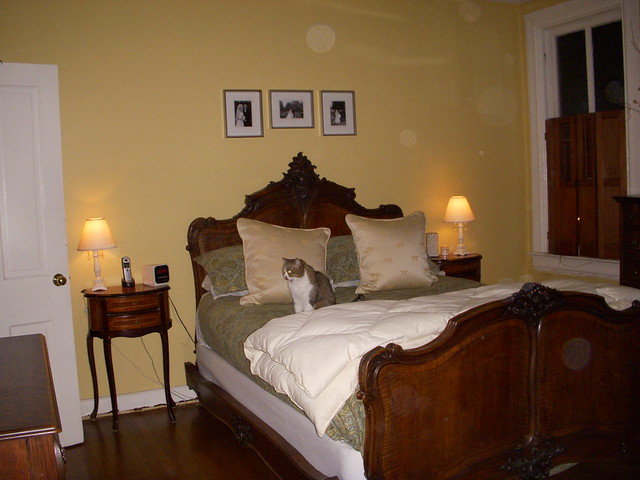
<p>There will be that moment or moments when you have that sinking feeling in your gut. Maybe it's because your first attempt at crown molding yielded gaps in the corners (as ours did). Perhaps it's because the "soothing" color you chose for your bedroom looks like cat vomit. (Ahem, Behr's Ripe Wheat.)</p>
<p>
</p>
<div class="MediaContainer PhotoContainer"><a href="http://farm6.staticflickr.com/5027/5666491139_79907234f2_z.jpg" rel="PhotoPopup" popupheight="480" popupwidth="640"><img alt="" src="https://farm6.staticflickr.com/5027/5666491139_79907234f2.jpg" width="500" height="375" style="border-width: 0px; border-style: solid;"></a></div>
<p>Whatever the case may be, chances are you can fix your mistakes. It's part of the learning process after all. Give yourself or your partner time to shriek, cry, stomp, swear, and then dust yourself off and figure out how to fix it and move on. You'll learn as much from the mistakes you make as you will from the projects you finish. Just remember to be patient with yourself as you work through the inevitable bumps in the road.</p>
<p><strong>Know Your Limits</strong></p>
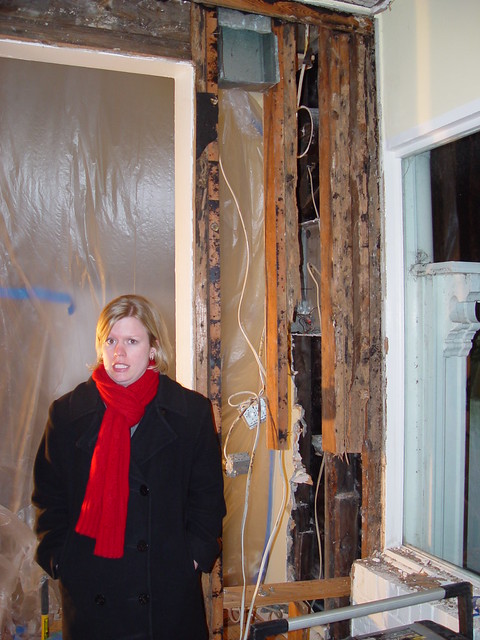
<p>We're all about DIY here at Old Town Home, but there are limits, especially when safety is concerned, i.e. we don't mess around with projects that involve gas or structural work without a qualified person leading the effort. Like the time we discovered massive water and termite damage in our sun porch. We were well out of our league, and needed help.</p>
<p>
</p>
<div class="MediaContainer PhotoContainer"><a href="http://farm6.staticflickr.com/5069/5646525674_b26cf7ba89_z.jpg" rel="PhotoPopup" popupheight="640" popupwidth="480"><img alt="" src="https://farm6.staticflickr.com/5069/5646525674_b26cf7ba89.jpg" width="375" height="500" style="border-width: 0px; border-style: solid;"></a></div>
<p>Know what your limits are and where your expertise runs out. If you have no idea how to tackle something and you can risk injuring yourself or causing expensive or irreparable damage to your home, call in the pros.</p>
<p>As you work more projects your skills will build. We have far more confidence today than we ever imagined we'd have in doing home projects, but that all came from time and effort spent while knowing our limits.</p>
<p><strong>Keep Your Plan Flexible</strong></p>
<p>I always scratch my head when I hear of someone renovating/gutting/reworking their home before they've even moved in. After you live in the space for a while, you may find that you use it differently than you anticipated, or that your ideas change and evolve to better suit your needs.&nbsp;</p>
<p>When we first moved in, we were going to use the front two rooms as a "double parlor" for living and entertaining space, and we located the dining room next to the kitchen.&nbsp;</p>
<p>
</p>
<div class="MediaContainer PhotoContainer"><a href="http://farm6.staticflickr.com/5187/5645760441_a11b24b2e3_z.jpg" rel="PhotoPopup" popupheight="480" popupwidth="640"><img alt="" src="https://farm6.staticflickr.com/5187/5645760441_a11b24b2e3.jpg" width="500" height="375" style="border-width: 0px; border-style: solid;"></a></div>
<p>After living with it for a while, we realized that the front rooms didn't lend themselves well to how we live, and we were happier splitting the rooms into a formal entertaining space, formal dining space, and casual TV watching space.</p>
<div class="MediaContainer PhotoContainer"><a href="http://farm8.staticflickr.com/7032/6655981731_f76a8873fc_z.jpg" rel="PhotoPopup" popupheight="427" popupwidth="640"><img alt="" src="https://farm8.staticflickr.com/7032/6655981731_f76a8873fc.jpg" width="500" height="333" style="border-width: 0px; border-style: solid;"></a></div>
<p>Thinking ahead, we've love to flip flop the kitchen and the family room, so that the kitchen is adjacent to both our dining and casual living spaces...something that we would never have thought of in our early years. Had we run headlong into the renovation, we'd have a home that is far less functional and enjoyable than the one we've molded.</p>
<p><strong>Limit Your Work Zone</strong></p>
<p>When we moved in, we had an..ahem...eccentric fellow living next door who was also a "DIY renovator." His problem? His approach was very all or nothing, and he decided to strip all the original molding throughout the house in one fell swoop. That meant that every room in his house was a work zone, and there was nowhere to escape from the mess. Ultimately this lead to him giving up on the molding and starting on the plaster in each room.&nbsp;</p>
<p>I'm sure you can picture where I'm going with this, as it was not a pretty site when the home was sold at the mid point of every single project. My point is, where possible, try to tackle one room or one project at a time. Create separate work zones and living zones, so at the end of a long day you can escape from the mess and enjoy some family time in your new home.&nbsp;</p>
<div class="MediaContainer PhotoContainer"><a href="http://farm6.staticflickr.com/5270/5643411373_19d864c096_z.jpg" rel="PhotoPopup" popupheight="480" popupwidth="640"><img alt="" src="https://farm6.staticflickr.com/5270/5643411373_19d864c096.jpg" width="500" height="375" style="border-width: 0px; border-style: solid;"></a></div>
<p>Without this defined separation of work space and living space, I don't think there's any way I could have lived through a renovation. Too much chaos, disarray, and general discomfort leads to failed renovation efforts and unhappy homeowners in just about every scenario.</p>
<p><strong>Be Prepared for the Unexpected</strong></p>
<p>Living in an old home presents its own unique set of unexpected challenges, many of which are lurking behind walls and out of sight. We feel the tradeoff in the age and history of an old home, especially one in an historic district, is absolutely worth the risk, but it's important to remember the risks are there. Understanding that project scope can grow, budgets may need to increase, and not everyone who has ever worked on your house may have been of the most professional caliber are all important aspects of living in and working on an old house.</p>
<p>This point actually gets back to my earlier points about starting smaller and in a single area. We spent those early years in our house working on less expensive projects and saving as much money as we could. When we ran into the <a href="http://oldtownhome.com/2012/2/27/Our-Newlywed-Kitchen-Nightmare/index.aspx">water and bug induced damage in our kitchen</a>, which&nbsp;required a good chunk of change to correct, we were shocked, but somewhat prepared given our work at saving money. Had we been spending on projects as fast as we earned, when the unexpected popped up we wouldn't have been able to properly deal with it.</p>
<p>I hope this advice is helpful and resonates with homebuyers that are interested in doing some work to make their new space their own. As an <a href="http://www.wendysantantonio.com" target="_blank">Alexandria real estate agent</a> I love working with first time homebuyers. Their energy, excitement, and enthusiasm often reminds me of where we were at that stage in our lives.&nbsp;It's very fulfilling to help people make the choices necessary to turn their dreams into reality.&nbsp;I only wish that everyone could get as much enjoyment and satisfaction out of their home purchase (and resulting work) as we have.&nbsp;</p>
<p><strong><em>8/28/2013 Edit from Alex</em></strong></p>
<p>One thing we left off the list that I thought of last night is a very important item with a new house.&nbsp;</p>
<p><strong>Address Critical Issues Early</strong></p>
<p>When moving into a new home there will be a mix of projects you want to do, and projects you must do. A leaking roof, malfunctioning HVAC, clogged plumbing, or any number of items that could result in further damage and expense if left unresolved may be facing you. For us, it was a leaking skylight that wasn't found during our home inspection and started leaking just a few weeks after we moved in. In cases such as these, it's best to address them sooner than later. If your heat isn't functioning properly, it's often better to have someone take a look at giving you a temporary fix before resorting to tearing the whole thing out and replacing it, and for a leaky roof, try to patch it before you get to the point where you're tearing the whole thing off and replacing it. But try to understand your situation, your options, and your approach before making any major decisions.&nbsp;</p>
<p class="MediaContainer"><a href="http://www.oldtownhome.com/be-content/ask-old-town-home.aspx"><img alt="" src="https://farm8.staticflickr.com/7100/7170596992_d613bdf988.jpg" width="331" height="69" style="border-width: 0px; border-style: solid;"></a></p>
<p><em>Disclaimer: Ask Old Town Home is meant simply as a friendly bit of advice and is provided free of charge. It is your responsibility to fully research any and all items related to projects or suggestions to ensure proper safety and code precautions and regulations are fully followed. In other words, any advice we provide is just our opinion, and our opinion is only worth the price we charge for it. :-)</em></p><p><a href="https://www.oldtownhome.com/2013/8/28/Ask-Old-Town-Home-As-New-Homeowners-Where-Do-We-Start/">Read Full Post</a></p>]]></content>
    <category term="Ask Old Town Home" />
    <category term="Header Image" />
    <PostImage>http://farm8.staticflickr.com/7004/6712848755_ed2e2c9ed8.jpg</PostImage>
    <media:thumbnail url="https://farm8.staticflickr.com/7004/6712848755_ed2e2c9ed8_t.jpg" />
    <ExtensionElements>
      <Item>PostImage</Item>
      <Item>media:thumbnail</Item>
    </ExtensionElements>
  </entry>
  <entry>
    <guid>b3752035-db35-49ab-a2cb-f01666359575</guid>
    <id>https://www.oldtownhome.com/2012/11/7/Ask-Old-Town-Home-How-to-Cure-a-Drafty-Door/</id>
    <title>Ask Old Town Home: How to Cure a Drafty Door</title>
    <summary type="html"><![CDATA[<p>As the winter closes in and our windows and doors begin letting in the dreaded drafts of cold air, many of us are looking for ways to make things a little more weather tight. From storm windows to weather stripping, there are hundreds of little tips and tricks to get the most out of your home's energy efficiency, but what happens when the typical approach isn't sufficient?</p><p>Local Old Town resident and fellow old house owner Kate asks:</p><div class="AskQuote" style="margin: 5px 15px; padding: 10px; background-color: #d9e7ea; font-size: 0.9em;">
<p> <em>Our front door has a pretty big gap where it meets the threshold. Short of using a draft dodger, what can we do to help make it a tad bit more energy efficient (keeping in mind we are not the handiest of folks). The problem is that the door is not squared in the corners, and we're not sure the door sweeps you find at the hardware store will provide enough clearance. Any ideas, short of replacing the door (which would not be the best plan according to the BAR - Board of Architectural Review)? Thanks!</em></p>
</div><p>This question deals with a topic that affects many home owners, regardless of the home's age. Settling, adjustments, or original install can all leave gaps at the bottom of the front door that are hard to solve without throwing something in front of the door.&nbsp;Sure, there are the obvious answers to the problem, like a wiener dog door stop.&nbsp;</p><p>
</p><div class="MediaContainer PhotoContainer"><a href="http://farm8.staticflickr.com/7261/8164270886_0f2f16786f.jpg" rel="PhotoPopup" popupheight="333" popupwidth="432"><img alt="" src="https://farm8.staticflickr.com/7261/8164270886_0f2f16786f.jpg" width="432" height="333" style="border-width: 0px; border-style: solid;"></a></div><p>If you don't like wiener dogs, there are always many other options that you may be a fan of, like this snake/dragon...</p><p>
</p> <a href="https://www.oldtownhome.com/2012/11/7/Ask-Old-Town-Home-How-to-Cure-a-Drafty-Door/">more</a>]]></summary>
    <published>2012-11-07T13:09:00.000-05:00</published>
    <updated>2012-11-07T13:09:00.000-05:00</updated>
    <link rel="alternate" href="https://www.oldtownhome.com/2012/11/7/Ask-Old-Town-Home-How-to-Cure-a-Drafty-Door/" />
    <author>
      <name>Alex</name>
    </author>
    <content type="html"><![CDATA[<p>As the winter closes in and our windows and doors begin letting in the dreaded drafts of cold air, many of us are looking for ways to make things a little more weather tight. From storm windows to weather stripping, there are hundreds of little tips and tricks to get the most out of your home's energy efficiency, but what happens when the typical approach isn't sufficient?</p>
<p>Local Old Town resident and fellow old house owner Kate asks:</p>
<div class="AskQuote" style="margin: 5px 15px; padding: 10px; background-color: #d9e7ea; font-size: 0.9em;">
<p> <em>Our front door has a pretty big gap where it meets the threshold. Short of using a draft dodger, what can we do to help make it a tad bit more energy efficient (keeping in mind we are not the handiest of folks). The problem is that the door is not squared in the corners, and we're not sure the door sweeps you find at the hardware store will provide enough clearance. Any ideas, short of replacing the door (which would not be the best plan according to the BAR - Board of Architectural Review)? Thanks!</em></p>
</div>
<p>This question deals with a topic that affects many home owners, regardless of the home's age. Settling, adjustments, or original install can all leave gaps at the bottom of the front door that are hard to solve without throwing something in front of the door.&nbsp;Sure, there are the obvious answers to the problem, like a wiener dog door stop.&nbsp;</p>
<p>
</p>
<div class="MediaContainer PhotoContainer"><a href="http://farm8.staticflickr.com/7261/8164270886_0f2f16786f.jpg" rel="PhotoPopup" popupheight="333" popupwidth="432"><img alt="" src="https://farm8.staticflickr.com/7261/8164270886_0f2f16786f.jpg" width="432" height="333" style="border-width: 0px; border-style: solid;"></a></div>
<p>If you don't like wiener dogs, there are always many other options that you may be a fan of, like this snake/dragon...</p>
<p>
</p>
<div class="MediaContainer PhotoContainer"><a href="http://farm8.staticflickr.com/7126/8164247391_aa90ba51c8.jpg" rel="PhotoPopup" popupheight="360" popupwidth="460"><img alt="" src="https://farm8.staticflickr.com/7126/8164247391_aa90ba51c8.jpg" width="460" height="360" style="border-width: 0px; border-style: solid;"></a><br>
<em>Photo Credit: <a href="http://www.ikeahackers.net/2007/02/cute-draft-stopper.html" target="_blank">Allison Gryski</a></em></div>
<p>...but there's got to be a better solution when you aren't interested in putting long stuffed animals in front of your door (no matter how much fun they can be to look at).</p>
<p>In Kate's situation, the various options are complicated by a few limiting factors. First, she's squarely in the historic district, so she can't do any alterations to the exterior of her house without getting Board of Architectural Review approval if the changes would affect how her door or house would look. This means no storm doors or a lengthy process to get a new door approved to replace the old one. Secondly, her front door opens right into the living space of her house, which makes the need for a less invasive approach more desirable.&nbsp;</p>
<p>In our case, our front door opens to our entry hallway, and before you even get to the hallway, we have our entry vestibule. Though we have the same problem with a gap below our front door, it isn't as much of a concern since our outer French doors act as storm doors and stop the air movement, thus reducing drafts. Some cold air still sneaks in under the door, but since it's in our entry hallway we don't worry much about it as it doesn't really affect living space.</p>
<p>
</p>
<div class="MediaContainer PhotoContainer"><a href="http://farm8.staticflickr.com/7205/6778023824_3ecc2c28b0_z.jpg" rel="PhotoPopup" popupheight="640" popupwidth="640"><img alt="" src="https://farm8.staticflickr.com/7205/6778023824_3ecc2c28b0.jpg" width="500" height="500" style="border-width: 0px; border-style: solid;"></a></div>
<p>Kate's house has a beautiful wood front door that keeps with the style of her house. So any solution would be to make an alteration to her existing front door to integrate weather stripping that could block the worst of the cold weather drafts.</p>
<p>
</p>
<div class="MediaContainer PhotoContainer"><a href="http://farm6.staticflickr.com/5222/5677731167_10c805e26d_z.jpg" rel="PhotoPopup" popupheight="640" popupwidth="478"><img alt="" src="https://farm6.staticflickr.com/5222/5677731167_10c805e26d.jpg" width="374" height="500" style="border-width: 0px; border-style: solid;"></a></div>
<p>Depending on the inside clearance once the door opens, Kate could always apply a single interior weather sweep. This is available at any big box store and installs on the interior of the door. When the door shuts, the rubber acts as a sort of gasket to block drafts. Though it is easy to install, it is only marginally effective because it is one small piece of rubber and doesn't do any more than block than sit in front of the gap. To complicate matters, it is more easily damaged than it should be, and it may not work at all if the interior floor of the house is out of level, which would limit the ability to open the door inward.</p>
<div class="ToolItem">
<iframe src="http://rcm.amazon.com/e/cm?t=oltoho-20&amp;o=1&amp;p=8&amp;l=as1&amp;asins=B000KZV1XU&amp;IS1=1&amp;ref=qf_sp_asin_til&amp;fc1=3A3128&amp;lt1=_blank&amp;m=amazon&amp;lc1=61838A&amp;bc1=FAFAF8&amp;bg1=FAFAF8&amp;f=ifr" style="width: 120px; height: 240px;" scrolling="no" marginwidth="0" marginheight="0" frameborder="0"></iframe>
</div>
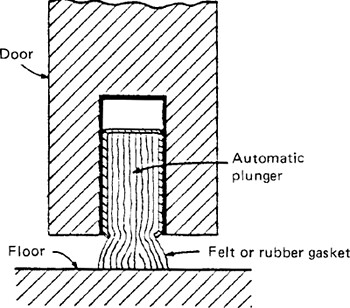
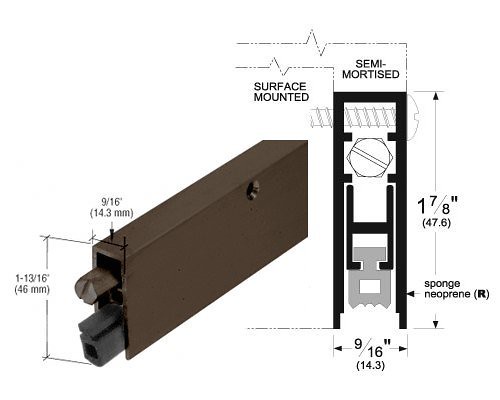
<p>The option I'd go with in this situation is a bit more difficult to install, but it works more effectively and will result in a much better seal without the potential for damage. The product I'd use is a weather stripping device called an "Automatic Door Bottom."</p>
<p>This cool energy saver is actually mortised into the bottom of the door. When the door is open, the weather stripping mechanism is retracted into the bottom of the door.&nbsp;</p>
<p>However, as the door closes, the side of the door against the jamb has a small rod or button that is depressed by the door jamb. This button activates a lever that pushes the weather stripping gasket down towards the floor, creating a tight seal between the door and the threshold.&nbsp;</p>
<p>
</p>
<div class="MediaContainer PhotoContainer"><a href="http://farm8.staticflickr.com/7253/8164222313_2399ae0e18.jpg" rel="PhotoPopup" popupheight="308" popupwidth="350"><img alt="" src="https://farm8.staticflickr.com/7253/8164222313_2399ae0e18.jpg" width="350" height="308" style="border-width: 0px; border-style: solid;"></a></div>
<p>This is all done using a multi-block rubber or felt gasket (not just a single piece), and it is forced into place rather than just sitting there. The hope is that the adjustable gasket can be set low enough to cover the entire gap.</p>
<p>
</p>
<div class="MediaContainer PhotoContainer"><a href="http://farm9.staticflickr.com/8479/8164262294_7e50e9d057.jpg" rel="PhotoPopup" popupheight="400" popupwidth="500"><img alt="" src="https://farm9.staticflickr.com/8479/8164262294_7e50e9d057.jpg" width="500" height="400" style="border-width: 0px; border-style: solid;"></a></div>
<p>As I said, it's a more difficult install as it requires routing the bottom of your door and embedding this item right into the door, but it is worth the effort to get weather blocking results without any noticeable interior or exterior modifications to your door.</p>
<p>It's also important to prime the routed area with an oil based primer prior to install to keep any water from infiltrating the door, otherwise you'd end up with potential rot issues over the years, which is far worse than any door drafts.</p>
<p>What do you think of my advice to our question? Do you have any preferred methods for dodging door drafts in your house? Have any experience installing or using the weather stripping gasket that deploys when you close your door? I've seen it a few times and it seems to really work, but I'd love some more first hand opinions on the matter.</p>
<p class="MediaContainer"><a href="http://www.oldtownhome.com/be-content/ask-old-town-home.aspx"><img alt="" src="https://farm8.staticflickr.com/7100/7170596992_d613bdf988.jpg" width="331" height="69" style="border-width: 0px; border-style: solid;"></a></p>
<p><em>Disclaimer: Ask Old Town Home is meant simply as a friendly bit of advice and is provided free of charge. It is your responsibility to fully research any and all items related to projects or suggestions to ensure proper safety and code precautions and regulations are fully followed. In other words, any advice we provide is just our opinion, and our opinion is only worth the price we charge for it. :-)</em></p><p><a href="https://www.oldtownhome.com/2012/11/7/Ask-Old-Town-Home-How-to-Cure-a-Drafty-Door/">Read Full Post</a></p>]]></content>
    <category term="Ask Old Town Home" />
    <category term="Header Image" />
    <category term="Weather Stripping" />
    <PostImage>http://farm9.staticflickr.com/8486/8164293818_1722093a43.jpg</PostImage>
    <media:thumbnail url="https://farm9.staticflickr.com/8486/8164293818_1722093a43_t.jpg" />
    <ExtensionElements>
      <Item>PostImage</Item>
      <Item>media:thumbnail</Item>
    </ExtensionElements>
  </entry>
  <entry>
    <guid>fd8bce3f-957d-40fd-b60d-1aad9cabbd86</guid>
    <id>https://www.oldtownhome.com/2012/11/2/Ask-Old-Town-Home-Are-Pocket-Hole-Screws-Really-the-Bees-Knees/</id>
    <title>Ask Old Town Home: Are Pocket Hole Screws Really the Bee's Knees?</title>
    <summary type="html"><![CDATA[<p>We've had several "Ask Old Town Home" submissions over the last few weeks, but we've been so busy getting things done around our house that we've been pretty lax with getting back to people. Rather than let ourselves slack off any longer, I think it's high time we start to get caught up. We'll be answering several of our pending questions over the next month, and we're getting started with this one.</p>
<h3>Usefulness of Pocket Screws</h3>
<p>Frequent commenter and wonderful supporter of our blog "Threadbndr" asks:</p>
<div class="AskQuote" style="margin: 5px 15px; padding: 10px; font-size: 0.9em; background-color: #d9e7ea;">
<p> <em>I notice on your <a href="http://www.oldtownhome.com/2012/9/10/Fixing-Our-Crap-Cabinets-and-Starting-the-Butcher-Block-Installation/index.aspx">kitchen counter install</a>, you used biscuit joins. Can you give your opinion on the pros and cons of biscuits over the pocket screws (Kreg Jig) that John uses over at Young House Love? I need one or the other to put two cabinet doors back together that have split vertically. Which do you think would be easier for a DYI person who is, at best, intermediate level?</em></p>
</div>
<p>This is a great question, mostly because I feel like I have a decent perspective on it and have "seen the light" as far as pocket holes are concerned. I'll apologize in advance for the long winded response.</p>
<p>Quite honestly, there's been a bit of an epidemic of "pocket-holers" as I like to call them. But I also think it's high time many of us, as ardent and capable DIYers (even those of a self described "intermediate" level, grew out of the pocket hole crutch. </p>
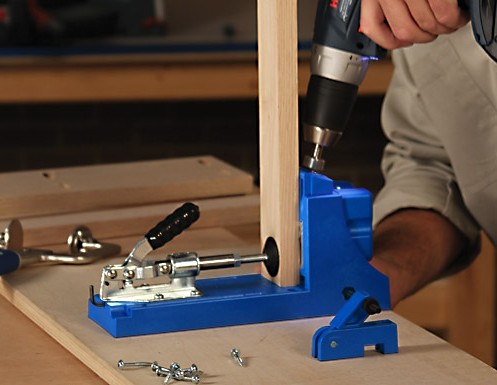
<p>I, like many DIYers, was an eager adopter of the "Pocket Hole Technology," after seeing Tommy or Norm use it on This Old House. Whether they were assembling a face frame for a cabinet, or securing a miter in a long run of molding, I was intrigued and wanted to try it.</p>
<p>
</p>
<div class="MediaContainer PhotoContainer"><a href="http://farm9.staticflickr.com/8190/8147744823_1514643cf7.jpg" rel="PhotoPopup" popupheight="385" popupwidth="497"><img alt="" src="https://farm9.staticflickr.com/8190/8147744823_1514643cf7.jpg" width="497" height="385" style="border-width: 0px; border-style: solid;"></a></div>
<div class="ToolItem"><iframe src="http://rcm-na.amazon-adsystem.com/e/cm?t=oltoho-20&amp;o=1&amp;p=8&amp;l=as1&amp;asins=B0009VD03Y&amp;IS1=1&amp;ref=qf_sp_asin_til&amp;fc1=3A3128&amp;lt1=_blank&amp;m=amazon&amp;lc1=61838A&amp;bc1=FAFAF8&amp;bg1=FAFAF8&amp;f=ifr" style="width: 120px; height: 240px;" scrolling="no" marginwidth="0" marginheight="0" frameborder="0"></iframe>
</div>
<p>I picked up a Kreg pocket hole set and began pocket holing everything. I was a pocket hole master. The jig, drill bit, and screws is an absolutely great tool, and one that almost any DIYer should include in their toolbox, hands down!&nbsp;</p>
<p>I can say, without a doubt, I absolutely love my pocket hole jig and I probably use it monthly if not weekly. The problem is, it really wasn't the right tool for everything I ended up using it for. </p>
<p>Pocket hole screws are a wonderful way of joining to prices of wood, as long as you don't mind the hole it leaves, and you don't mind the gaps that can easily appear through the growing and shrinking of wood. Pocket holes are perfect for things where the holes themselves are always and forever concealed. A perfect example of their ideal use is in the construction of cabinet boxes. You can use the pocket holes to secure almost the whole thing, and you can do it in a way where you will never see the hole, even if your head is inside of the cabinet. However, not all uses are quite as ideal. </p>
<p></p></img> <a href="https://www.oldtownhome.com/2012/11/2/Ask-Old-Town-Home-Are-Pocket-Hole-Screws-Really-the-Bees-Knees/">more</a>]]></summary>
    <published>2012-11-02T11:07:00.000-04:00</published>
    <updated>2012-11-02T11:07:00.000-04:00</updated>
    <link rel="alternate" href="https://www.oldtownhome.com/2012/11/2/Ask-Old-Town-Home-Are-Pocket-Hole-Screws-Really-the-Bees-Knees/" />
    <author>
      <name>Alex</name>
    </author>
    <content type="html"><![CDATA[<p>We've had several "Ask Old Town Home" submissions over the last few weeks, but we've been so busy getting things done around our house that we've been pretty lax with getting back to people. Rather than let ourselves slack off any longer, I think it's high time we start to get caught up. We'll be answering several of our pending questions over the next month, and we're getting started with this one.</p>
<h3>Usefulness of Pocket Screws</h3>
<p>Frequent commenter and wonderful supporter of our blog "Threadbndr" asks:</p>
<div class="AskQuote" style="margin: 5px 15px; padding: 10px; font-size: 0.9em; background-color: #d9e7ea;">
<p> <em>I notice on your <a href="http://www.oldtownhome.com/2012/9/10/Fixing-Our-Crap-Cabinets-and-Starting-the-Butcher-Block-Installation/index.aspx">kitchen counter install</a>, you used biscuit joins. Can you give your opinion on the pros and cons of biscuits over the pocket screws (Kreg Jig) that John uses over at Young House Love? I need one or the other to put two cabinet doors back together that have split vertically. Which do you think would be easier for a DYI person who is, at best, intermediate level?</em></p>
</div>
<p>This is a great question, mostly because I feel like I have a decent perspective on it and have "seen the light" as far as pocket holes are concerned. I'll apologize in advance for the long winded response.</p>
<p>Quite honestly, there's been a bit of an epidemic of "pocket-holers" as I like to call them. But I also think it's high time many of us, as ardent and capable DIYers (even those of a self described "intermediate" level, grew out of the pocket hole crutch. </p>
<p>I, like many DIYers, was an eager adopter of the "Pocket Hole Technology," after seeing Tommy or Norm use it on This Old House. Whether they were assembling a face frame for a cabinet, or securing a miter in a long run of molding, I was intrigued and wanted to try it.</p>
<p>
</p>
<div class="MediaContainer PhotoContainer"><a href="http://farm9.staticflickr.com/8190/8147744823_1514643cf7.jpg" rel="PhotoPopup" popupheight="385" popupwidth="497"><img alt="" src="https://farm9.staticflickr.com/8190/8147744823_1514643cf7.jpg" width="497" height="385" style="border-width: 0px; border-style: solid;"></a></div>
<div class="ToolItem"><iframe src="http://rcm-na.amazon-adsystem.com/e/cm?t=oltoho-20&amp;o=1&amp;p=8&amp;l=as1&amp;asins=B0009VD03Y&amp;IS1=1&amp;ref=qf_sp_asin_til&amp;fc1=3A3128&amp;lt1=_blank&amp;m=amazon&amp;lc1=61838A&amp;bc1=FAFAF8&amp;bg1=FAFAF8&amp;f=ifr" style="width: 120px; height: 240px;" scrolling="no" marginwidth="0" marginheight="0" frameborder="0"></iframe>
</div>
<p>I picked up a Kreg pocket hole set and began pocket holing everything. I was a pocket hole master. The jig, drill bit, and screws is an absolutely great tool, and one that almost any DIYer should include in their toolbox, hands down!&nbsp;</p>
<p>I can say, without a doubt, I absolutely love my pocket hole jig and I probably use it monthly if not weekly. The problem is, it really wasn't the right tool for everything I ended up using it for. </p>
<p>Pocket hole screws are a wonderful way of joining to prices of wood, as long as you don't mind the hole it leaves, and you don't mind the gaps that can easily appear through the growing and shrinking of wood. Pocket holes are perfect for things where the holes themselves are always and forever concealed. A perfect example of their ideal use is in the construction of cabinet boxes. You can use the pocket holes to secure almost the whole thing, and you can do it in a way where you will never see the hole, even if your head is inside of the cabinet. However, not all uses are quite as ideal. </p>
<p></p>
<p>One of the places I used, or rather abused, pocket hole screws is in the construction of our <a href="http://www.oldtownhome.com/2012/5/24/From-Porta-Potty-to-Secret-Garden---Building-a-Custom-Gate/index.aspx">garden gate</a>. I use pocket holes to join all of the pieces of lumber along their edges. This left a whole lot of holes on the exterior of the door that I then need to fill with epoxy wood filler, let dry, them sand them smooth. </p>
<p>
</p>
<div class="MediaContainer PhotoContainer"><a href="http://farm6.staticflickr.com/5263/5646024805_13c8e0e666_z.jpg" rel="PhotoPopup" popupheight="640" popupwidth="480"><img alt="" src="https://farm6.staticflickr.com/5263/5646024805_13c8e0e666.jpg" width="375" height="500" style="border-width: 0px; border-style: solid;"></a></div>
<p>It worked, sure, but the results were less than ideal. The pocket holes can only hold the wood together so well, and the gaps left behind allow water between the board which has resulted in a fair amount of warping over the years. Additionally, though sanded smooth, you can still see the outline of the epoxy and holes all over the outside of the gate. And finally, when you have thick material, and you are only pocket holing one side, and the joined boards tend to cup towards the side of the pocket holes. </p>
<p>The pocket holes for our door worked, but if I had used a different tool the job would use been done faster, would have looked better, and I wouldn't be thinking about building a new door today. But I was a young DIY newbie at that time and simply didn't know better. </p>
<p>So, the big question, what tool should you use? Unfortunately, there's not a simple "one size fits all" answer. The tool you should select depends heavily on the job you are doing. </p>
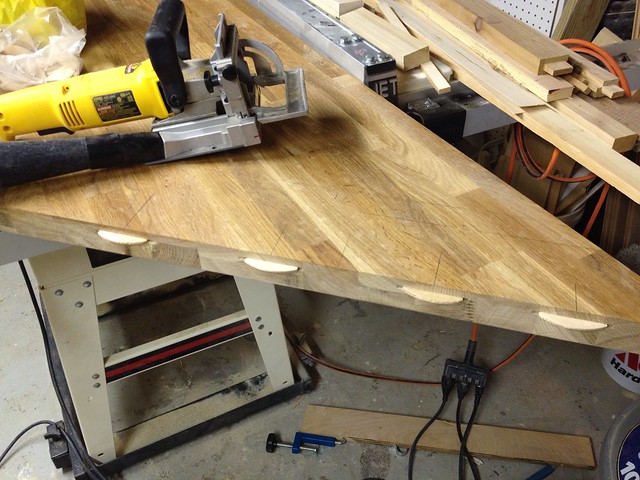
<p>In terms of the performance of biscuit joining versus pocket screws, here's my take on it. This tool is one of my favorites and makes short work of joining two pieces of wood in a permanent and extremely strong bond.&nbsp;As you may remember, I used a <a href="http://www.oldtownhome.com/2011/12/13/Toolbox-Tuesday-Need-to-Join-Some-Boards-Grab-Your-Biscuits/" style="text-decoration: underline;">biscuit joiner</a>&nbsp;when&nbsp;joining several pieces of butcher block to make our new&nbsp;<a href="http://www.oldtownhome.com/2012/9/10/Fixing-Our-Crap-Cabinets-and-Starting-the-Butcher-Block-Installation/index.aspx" style="text-decoration: underline;">counter tops</a>.&nbsp;</p>
<p>
</p>
<div class="MediaContainer PhotoContainer"><a href="http://farm9.staticflickr.com/8293/7872422710_c61a30b9cc_z.jpg" rel="PhotoPopup" popupheight="480" popupwidth="640"><img alt="" src="https://farm9.staticflickr.com/8293/7872422710_c61a30b9cc.jpg" width="500" height="375" style="border-width: 0px; border-style: solid;"></a></div>
<p>In our reader's case, biscuit joining may be the better option to repair her split cabinet doors, assuming the split is along an already existing seam in the wood and you have a flat face to work with.</p>
<p>It makes slotted cuts in either piece of material, then you glue and insert little wooden "biscuits" in those slots and clamp the joint together. When the glue dries the little biscuits swell as they absorb the water from the glue, which cements them in the materials they are joining. As long as you have a good set of clamps, and a few hours to wait, you are in good shape.</p>
<p>The end result is a joint that is ridiculously strong, extremely clean, and completely invisible. I absolutely should have used this approach to join the pieces of lumber for our garden gate, and I often think about rebuilding it in this way. </p>
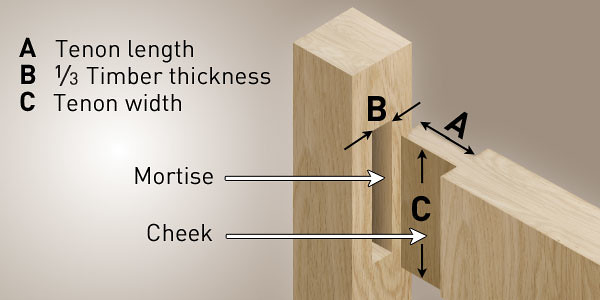
<p>Beyond a biscuit joiner, another great approach is through the use of mortise and tenons. This is the tried and true approach to woodworking that has been around for thousands of years (no joke). On our recent vacation to Vienna, during a trip to a local museum I was admiring the mortise and tenon construction of ancient Egyptian sarcophagi (I had to look up the plural of sarcophagus). Yes, I'm a nerd like that. </p>
<p>
</p>
<div class="MediaContainer PhotoContainer"><a href="http://farm9.staticflickr.com/8186/8147651619_e6073dabc7.jpg" rel="PhotoPopup" popupheight="318" popupwidth="500"><img alt="" src="https://farm9.staticflickr.com/8186/8147651619_e6073dabc7.jpg" width="500" height="318" style="border-width: 0px; border-style: solid;"></a></div>
<p>A mortise is a hole cut in one piece of material that accepts a tenon in another piece of material. The mortise and tenon form a joint made up of only the materials being joined, possible a peg or stay, and maybe some glue (depending on the situation), which creates an extremely strong bond and reliable connection of materials that is completely concealed, and leaving you without holes to deal with after the fact. </p>
<p>
</p>
<div class="MediaContainer PhotoContainer"><a href="http://farm9.staticflickr.com/8470/8147639007_459433b541_z.jpg" rel="PhotoPopup" popupheight="300" popupwidth="600"><img alt="" src="https://farm9.staticflickr.com/8470/8147639007_459433b541.jpg" width="500" height="250" style="border-width: 0px; border-style: solid;"></a></div>
<p>The mortise and tenon is tried and true, but it does require a lot of patience and the right tools. From <a href="http://www.oldtownhome.com/2012/3/27/Toolbox-Tuesday-Bench-Top-Mortiser/">mortising machines</a> or jigs attached to drill presses, to<a href="http://www.oldtownhome.com/2011/11/8/Toolbox-Tuesday-Get-Your-Groove-On-with-a-Stacked-Dado-Blade/"> dado blades</a> and/or tenoning jigs to cut your tenons on the table saw, it's a major undertaking for the novice and occasional DIY woodworker. But good news, technology has created an easier alternative. </p>
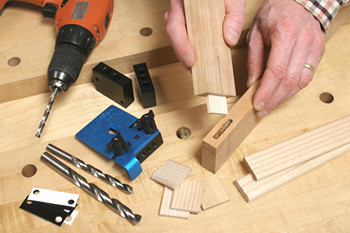
<p>Today you can buy these great tenonning jigs and pre-made loose tenons. Using your normal drill you attach the jig to the material, drill using the guide to a max depth, then insert the beaded tenons into the mortises along with a little glue. </p>
<p>
</p>
<div class="MediaContainer PhotoContainer"><a href="http://farm9.staticflickr.com/8190/8147709896_f4a8ff667f.jpg" rel="PhotoPopup" popupheight="233" popupwidth="350"><img alt="" src="https://farm9.staticflickr.com/8190/8147709896_f4a8ff667f.jpg" width="350" height="233" style="border-width: 0px; border-style: solid;"></a><br>
Photo Credit: <a href="http://www.woodworkersjournal.com/resource/JigBasedJoinery/LooseTenons/index_print.html" target="_blank">Woodworker's Journal</a></div>
<p>You're left with a joint that is at least as strong as the biscuits if not stronger. You can pick this jig and the tenons up on Amazon or from Rockler. </p>
<div class="MediaContainer">
<iframe src="http://rcm-na.amazon-adsystem.com/e/cm?t=oltoho-20&amp;o=1&amp;p=8&amp;l=as1&amp;asins=B001DT5CPK&amp;IS1=1&amp;ref=qf_sp_asin_til&amp;fc1=3A3128&amp;lt1=_blank&amp;m=amazon&amp;lc1=61838A&amp;bc1=FAFAF8&amp;bg1=FAFAF8&amp;f=ifr" style="width: 120px; height: 240px;" scrolling="no" marginwidth="0" marginheight="0" frameborder="0"></iframe>
<iframe src="http://rcm-na.amazon-adsystem.com/e/cm?t=oltoho-20&amp;o=1&amp;p=8&amp;l=as1&amp;asins=B008FYISBG&amp;IS1=1&amp;ref=qf_sp_asin_til&amp;fc1=3A3128&amp;lt1=_blank&amp;m=amazon&amp;lc1=61838A&amp;bc1=FAFAF8&amp;bg1=FAFAF8&amp;f=ifr" style="width: 120px; height: 240px;" scrolling="no" marginwidth="0" marginheight="0" frameborder="0"></iframe>
<iframe src="http://rcm-na.amazon-adsystem.com/e/cm?t=oltoho-20&amp;o=1&amp;p=8&amp;l=as1&amp;asins=B001DSZ39Q&amp;IS1=1&amp;ref=qf_sp_asin_til&amp;fc1=3A3128&amp;lt1=_blank&amp;m=amazon&amp;lc1=61838A&amp;bc1=FAFAF8&amp;bg1=FAFAF8&amp;f=ifr" style="width: 120px; height: 240px;" scrolling="no" marginwidth="0" marginheight="0" frameborder="0"></iframe>
</div>
<p>This may also work really well for joining purposes, and is probably a better option than the biscuit joiner if the split is not consistent. You would be able to drill into either side of the doors, taking care to line up your holes, then pop the tenons into either side and camp the doors together.</p>
<p>There are actually several other similar technologies worth looking into, all with the same benefits and advantages over pocket holes. </p>
<p>Beyond what I've discussed above, there are also countless other approaches in woodworking to join materials together (though most will not apply to split cabinet doors). From dovetails to relief cuts, rabbets, and dados, there are a ton of options for almost every situation. Each one requires tools, jigs, and know how (or at least a curiosity and willingness to try something new), but with each approach you are rounding out your skill set as a DIYer. I actually own a dovetail jig and the necessary router bits that we bought back when I was working on the office desk. I made the drawer for the desk using half blind dovetails (half-blind are the ones were you can see the dovetails when looking at the side of the drawer, but not the front). I absolutely love how they turned out and can't wait to use it on something else in the future. It's just a matter of finding the right project to use it on.</p>
<p>
</p>
<div class="MediaContainer PhotoContainer"><a href="http://farm6.staticflickr.com/5263/5649860130_9292bdc1f0_z.jpg" rel="PhotoPopup" popupheight="480" popupwidth="640"><img alt="" src="https://farm6.staticflickr.com/5263/5649860130_9292bdc1f0.jpg" width="500" height="375" style="border-width: 0px; border-style: solid;"></a></div>
<p>I hope this helps to answer the question, though I'm sure it provides a more complex answer than you would anticipate for a simple question. I guess I should actually summarize with a more simplified response, below:</p>
<p>Though pocket holes and their accompanying pan head screws are great in many situations, and are easy to work with, there are many other options for accomplishing the same or similar end results using alternate tools or approaches. Many times, these alternate options are actually much better suited for the project, and are completely within the realm of the intermediate DIYer, leaving fewer holes to either fill or ignore, and resulting in a stronger bond than pocket holes offer.</p>
<p>For your cabinet doors, I'd look into the biscuit joiner if the split is even and consistent (like the edge of two pieces of wood), or look into the tenons and mortising jig if it is more of a puzzle to put them back together. If you were to use a pocket hole you will end up with large holes on the backside of the doors that you would need to then fill, sand, and paint. You also will end up with the potential for the split to keep showing up in that spot since the hold of pocket holes isn't as strong as glue to wood.</p>
<p>What do you think of my advice to our question? Are you an abuser of the pocket hole approach as I once was? I think the first step is admitting you have a problem, that's when recovery can truly happen. Let me know what you think, and if you have any preferred methods for joining materials.</p>
<p class="MediaContainer"><a href="http://www.oldtownhome.com/be-content/ask-old-town-home.aspx"><img alt="" src="https://farm8.staticflickr.com/7100/7170596992_d613bdf988.jpg" width="331" height="69" style="border-width: 0px; border-style: solid;"></a></p>
<p><em>Disclaimer: Ask Old Town Home is meant simply as a friendly bit of advice and is provided free of charge. It is your responsibility to fully research any and all items related to projects or suggestions to ensure proper safety and code precautions and regulations are fully followed. In other words, any advice we provide is just our opinion, and our opinion is only worth the price we charge for it. :-)</em></p><p><a href="https://www.oldtownhome.com/2012/11/2/Ask-Old-Town-Home-Are-Pocket-Hole-Screws-Really-the-Bees-Knees/">Read Full Post</a></p>]]></content>
    <category term="Ask Old Town Home" />
    <category term="Header Image" />
    <category term="Tools" />
    <PostImage>http://farm9.staticflickr.com/8053/8147783686_7e50e90013_n.jpg</PostImage>
    <media:thumbnail url="https://farm9.staticflickr.com/8053/8147783686_7e50e90013_t.jpg" />
    <ExtensionElements>
      <Item>PostImage</Item>
      <Item>media:thumbnail</Item>
    </ExtensionElements>
  </entry>
  <entry>
    <guid>321f1e7d-a587-49f1-81cf-a97916fc8e36</guid>
    <id>https://www.oldtownhome.com/2012/8/1/Ask-Old-Town-Home-What-Should-We-Do-With-This-Fireplace/</id>
    <title>Ask Old Town Home: What Should We Do With This Fireplace?</title>
    <summary type="html"><![CDATA[<p>A few weeks back we received a question submitted through Facebook from Anita K. She asked:</p><div class="AskQuote" style="margin: 5px 15px; padding: 10px; background-color: #d9e7ea; font-size: 0.9em;">
<p><em>This fireplace needs updating....would love some suggestions on what to replace the tile with.&nbsp;</em></p>
<div class="MediaContainer PhotoContainer"><a href="http://farm8.staticflickr.com/7117/7690168360_1d31af573c_z.jpg" rel="PhotoPopup" popupheight="640" popupwidth="480"><img alt="" src="https://farm8.staticflickr.com/7117/7690168360_1d31af573c.jpg" width="375" height="500" style="border-width: 0px; border-style: solid;"></a></div>
</div><p>Additionally, Anita points out that they plan on using this space as a family room, and would like to mount a television above the fireplace as the focal point in the room.</p><p>Anita's house is a 1915 craftsman style home, and the tile on the fireplace surround as well as the wood appears to be original to the home, which does complicate the situation a bit. I'm typically inclined to say "keep the original stuff original," but I know that doesn't always jive with the home's owners and their aesthetic.&nbsp;</p><p>In the case of this surround, I don't think removal or covering of the tile, or at least some of the tile, is the worst thing in the world. The scale of the firebox versus that of the tile and height of the mantel just feels a bit off.&nbsp;</p><p>Craftsman, or arts and crafts, style mantels tend to be stained oak, and are often integrated right into the wall, rather than placed right on the front and applied to the fireplace. They also often make use of the colored glazed ceramic tiles you see in the photo above. Unfortunately, these tiles (especially those on the floor) have seen better days. In the case of Anita's house, the floor tiles are badly cracked and damaged.</p><p>In our opinion, Anita has a couple of options here, and each involves slightly varying degrees of effort.</p> <a href="https://www.oldtownhome.com/2012/8/1/Ask-Old-Town-Home-What-Should-We-Do-With-This-Fireplace/">more</a>]]></summary>
    <published>2012-08-01T11:09:00.000-04:00</published>
    <updated>2012-08-01T11:09:00.000-04:00</updated>
    <link rel="alternate" href="https://www.oldtownhome.com/2012/8/1/Ask-Old-Town-Home-What-Should-We-Do-With-This-Fireplace/" />
    <author>
      <name>Alex</name>
    </author>
    <content type="html"><![CDATA[<p>A few weeks back we received a question submitted through Facebook from Anita K. She asked:</p>
<div class="AskQuote" style="margin: 5px 15px; padding: 10px; background-color: #d9e7ea; font-size: 0.9em;">
<p><em>This fireplace needs updating....would love some suggestions on what to replace the tile with.&nbsp;</em></p>
<div class="MediaContainer PhotoContainer"><a href="http://farm8.staticflickr.com/7117/7690168360_1d31af573c_z.jpg" rel="PhotoPopup" popupheight="640" popupwidth="480"><img alt="" src="https://farm8.staticflickr.com/7117/7690168360_1d31af573c.jpg" width="375" height="500" style="border-width: 0px; border-style: solid;"></a></div>
</div>
<p>Additionally, Anita points out that they plan on using this space as a family room, and would like to mount a television above the fireplace as the focal point in the room.</p>
<h3>Old Town Home's Answer</h3>
<p>Anita's house is a 1915 craftsman style home, and the tile on the fireplace surround as well as the wood appears to be original to the home, which does complicate the situation a bit. I'm typically inclined to say "keep the original stuff original," but I know that doesn't always jive with the home's owners and their aesthetic.&nbsp;</p>
<p>In the case of this surround, I don't think removal or covering of the tile, or at least some of the tile, is the worst thing in the world. The scale of the firebox versus that of the tile and height of the mantel just feels a bit off.&nbsp;</p>
<p>Craftsman, or arts and crafts, style mantels tend to be stained oak, and are often integrated right into the wall, rather than placed right on the front and applied to the fireplace. They also often make use of the colored glazed ceramic tiles you see in the photo above. Unfortunately, these tiles (especially those on the floor) have seen better days. In the case of Anita's house, the floor tiles are badly cracked and damaged.</p>
<p>In our opinion, Anita has a couple of options here, and each involves slightly varying degrees of effort.</p>
<p>1. Replace the tile with a tile that works for you. The tiles, though very cool, are nearly impossible to remove, match, and repair. Also, the color is very specific, and will not be easily integrated into most decors. Though the tile is original, it may be too difficult to keep. <a href="http://artsandcraftshomes.com/sources-for-arts-crafts-tile/" target="_blank">ArtsAndCraftsHomes.com has a great resource for finding reproduction tile that might work great for your home.</a>&nbsp;</p>
<p>Another option, though less in keeping with the style of the home, is to replace the tile with something more natural and earthy, like slate. Though&nbsp;the use of something natural, like slate, is not in line with the arts and crafts movement, it could work.</p>
<div class="MediaContainer"><a href="http://www.houzz.com/photos/681910/Craftsman-Fireplace-traditional-living-room-portland" target="_blank"><img alt="" src="http://st.houzz.com/simages/681910_0_8-5145-traditional-living-room.jpg" width="500" height="752" style="border-width: 0px; border-style: solid;"></a></div>
<div style="color: #444444; text-align: center;"><small><em><a style="text-decoration: none; color: #444444;" href="http://www.houzz.com/photos/traditional/living-room" target="_blank">Traditional Living Room design</a> by <a style="text-decoration: none; color: #444444;" href="http://www.houzz.com/professionals/design-build/portland">Portland Design-build</a> <a style="text-decoration: none; color: #444444;" href="http://www.houzz.com/pro/chellyw/craftsman-design-and-renovation">Craftsman Design and Renovation</a></em></small></div>
<p>2. Balance the fireplace with the firebox by building a second integrated mantel lower on the wall. The firebox is small, and the surround is tall and huge. You can balance the whole thing by making the mantel feel lower, without the need to tear anything out. Replicate the style of the upper mantel by duplicating its key features in a second mantel a little lower and closer to the firebox. Doing this will also make the whole thing feel a little less imposing, and will give you a good space to mount the television, while still keeping with the style of the house and the surrounding molding in the room. I would also make the area between the two mantels either painted plaster or oak, rather than extending the tile or stone. Here's an example that is somewhat similar to Anita's configuration. If done the right way, leaving much of the original tile in place works, but a more desired look can still be achieved.</p>
<div class="MediaContainer"><a href="http://www.houzz.com/photos/121842/Library-traditional-home-office-grand-rapids" target="_blank"><img alt="" src="http://st.houzz.com/simages/121842_0_8-5247-traditional-home-office.jpg" width="500" height="340" style="border-width: 0px; border-style: solid;"></a></div>
<div style="color: #444444; text-align: center;"><small><em><a style="text-decoration: none; color: #444444;" href="http://www.houzz.com/photos/traditional/home-office" target="_blank">Traditional Home Office design</a> by <a style="text-decoration: none; color: #444444;" href="http://www.houzz.com/professionals/architect/grand-rapids">Grand Rapids Architect</a> <a style="text-decoration: none; color: #444444;" href="http://www.houzz.com/pro/visbeen/visbeen-associates-inc">Visbeen Associates, Inc.</a></em></small></div>
<p>3. SALVAGE, SALVAGE, SALVAGE!!! This is a great opportunity to leverage something from a great architectural salvage store for installation in your home. Sadly, fireplace mantels are some of the most frequently removed items from an old home. For whatever reason, if a mantel isn't an owner's style, they just can't stand to see it stay. But mantels are important in a home and easy enough to remove in one piece that old and cool ones often end up in salvage yards. In this case, some old home's loss is your remarkable gain. You can usually pick up mantels that are in great shape for less than it would cost in materials to build. At the very least, you could find some old and broken down mantels that might allow you to disassemble and use the salvaged wood in anything that you're building.</p>
<p>
</p>
<div class="MediaContainer PhotoContainer"><a href="http://farm8.staticflickr.com/7251/7690384682_0be9f4132d.jpg" rel="PhotoPopup" popupheight="460" popupwidth="345"><img alt="" src="https://farm8.staticflickr.com/7251/7690384682_0be9f4132d.jpg" width="345" height="460" style="border-width: 0px; border-style: solid;"></a><br>
<em>Photo Credit: <a href="http://www.architecturalwarehouse.com/" target="_blank">ArchitecturalWarehouse.com</a></em></div>
<p>The added benefit of these mantels and materials is that they often have a great patina to them that tends to work quite well when trying to integrate it with a specific home's style. And this fact is especially true if you're looking for an old mantel to go with the style and look of a slightly older home. </p>
<p>No matter the case, you'll need to start by running any necessary electrical or wiring for the TV (so all of your cables can remain hidden). I think this process alone will help you determine just how invasive the work you're doing will need to be. Nothing dictates the extent of a project more than putting holes in walls.</p>
<p>What do y'all think of our ideas? Would you prefer to see the tiles stay or go? Do you think the height of the current mantel is good, or do you think the whole thing needs to go and be replaced with something shorter?</p>
<p>What about a salvaged mantel? Have you ever salvaged a mantel for install in your home? Did you have any difficulty finding the right size, style, price, or quality of mantel you were lookin for? Any expected difficulties that you had to deal with? Do share, we're very curious. </p>
<p class="MediaContainer"><a href="http://www.oldtownhome.com/be-content/ask-old-town-home.aspx"><img alt="" src="https://farm8.staticflickr.com/7100/7170596992_d613bdf988.jpg" width="331" height="69" style="border-width: 0px; border-style: solid;"></a></p>
<p><em>Disclaimer: Ask Old Town Home is meant simply as a friendly bit of advice and is provided free of charge. It is your responsibility to fully research any and all items related to projects or suggestions to ensure proper safety and code precautions and regulations are fully followed. In other words, any advice we provide is just our opinion, and our opinion is only worth the price we charge for it. :-)</em></p><p><a href="https://www.oldtownhome.com/2012/8/1/Ask-Old-Town-Home-What-Should-We-Do-With-This-Fireplace/">Read Full Post</a></p>]]></content>
    <category term="Ask Old Town Home" />
    <category term="Header Image" />
    <PostImage>http://farm8.staticflickr.com/7260/7691608578_bdbd884a9b.jpg</PostImage>
    <media:thumbnail url="https://farm8.staticflickr.com/7260/7691608578_bdbd884a9b_t.jpg" />
    <ExtensionElements>
      <Item>PostImage</Item>
      <Item>media:thumbnail</Item>
    </ExtensionElements>
  </entry>
</feed>